
Gulf states call off meeting with Iran, Houthis launch new attack on Saudi
Sign up now: Get ST's newsletters delivered to your inbox

A satellite image shows the damage at the Saudi Arabia east-west pipeline after a strike that hit it on Sept 11.
PHOTO: REUTERS
- Diplomatic talks on managing Strait of Hormuz shipping were postponed, delaying a potential regional agreement amid rising tensions and attacks near key oil routes.
- Saudi Arabia's main oil pipeline was shut after drone strikes, risking 4% of global oil supply and causing oil prices and US diesel costs to surge.
- Houthi rebels intensified attacks on Saudi targets and Red Sea areas, complicating regional security and prompting limited US support despite Saudi requests for military aid.
AI generated
TAIZ, Yemen/DUBAI – Arab states in the Gulf called off a meeting with Iran planned for Sept 14, while Yemen’s Houthis launched a new attack on Saudi Arabia after fighting that has extended the Middle East war to another theatre and further jeopardised global oil supplies.
The Iran-aligned Houthis in Yemen said they fired dozens of missiles and drones on Sept 14 at a Saudi military airbase in Khamis Mushait, near the border, hitting aircraft hangars, radar systems, runways and ammunition depots. They described the attack as retaliation for hundreds of Saudi air strikes on Yemen in recent days.
The Saudi authorities announced brief emergency alerts there and in three other southern cities which have previously come under Houthi fire.
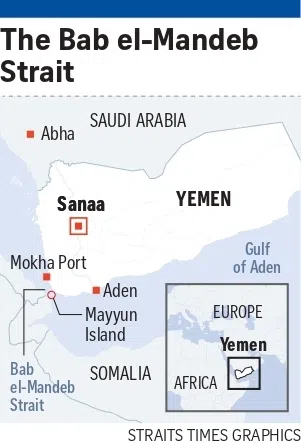
The Houthis launched a lightning advance last week in Yemen, culminating in the seizure of an island at the mouth of the Red Sea on Sept 11.
A separate attack that day, which Riyadh blamed on Iran-backed fighters in Iraq, knocked out Saudi Arabia’s east-west pipeline, the main route for Middle East oil bypassing the blockaded Strait of Hormuz.
Oil prices jump
Crude oil prices rose more than 3 per cent on Sept 14, when the market reopened after the weekend, while the politically sensitive average retail price of diesel in the United States hit a new all-time high above US$6.23 a gallon.
Traders say the closure of the Saudi pipeline could cut off as much as 4 per cent of global oil supply unless it is reopened within days. Images from space show sections of the pipeline damaged by fires. Riyadh has not given a firm estimate for how long it will be shut.
Oman had been due to host a meeting on Sept 14 with Iran and Gulf states to discuss negotiations aimed at reopening Hormuz, the world’s most important oil shipping lane, largely closed since the US and Israel attacked Iran at the end of February.
But Oman’s Foreign Minister Sayyid Badr Albusaidi announced overnight that the meeting had been postponed “in the interests of consensus”. Iran said the postponement was at the request of Saudi Arabia.
Meanwhile, Iran issued a list of 77 ships it said had violated its protocols for operating in the Strait of Hormuz. Any ship on the list would face “restrictions on future passages, including fines, detention or confiscation”, and other ships that assisted them by accepting transfers of cargo would be added to the list.
War’s expansion a dilemma for Trump
The upsurge of fighting in Yemen poses a dilemma for Washington, which is under pressure to aid its Saudi allies but anxious not to expand the costly war to a new theatre.
Saudi Arabia has led an Arab coalition battling the Houthis for more than a decade, after the mountain fighters captured Yemen’s capital in 2014. The war there had largely been quiet under a ceasefire for the past few years, but fighting has now resumed, with the Houthis driving back forces from a Saudi-backed government based in the south.
Thousands of Yemenis have fled inland from the coast to escape fighting as the Houthis swept into cities, including the historic Red Sea port of Mokha, last week.
Aisha Muhammad, an elderly woman burning twigs to heat a kettle in government-held territory near Taiz, told Reuters she had left behind two daughters and three sons who had been unable to escape.
“They can’t even go out to the market to get food and drinking water. They are being blocked and shot at, so they are trapped inside their homes,” she said. “They cannot reach us, and we cannot return to them. This is a trial from God.”
On Sept 11, the Houthis captured Perim Island, inside the Bab el-Mandeb, the “Gate of Tears” strait, at the mouth of the Red Sea.
US President Donald Trump is under pressure to end the war to relieve the global energy shortage and lower prices that are hurting the fortunes of his Republican Party ahead of mid-term elections in November.
Three sources have told Reuters that Washington has so far rebuffed pleas from Saudi Arabia’s Crown Prince Mohammed bin Salman to intervene in Yemen.
Trump confirmed at the weekend that he had spoken to the prince, and said the Houthis had also phoned asking Washington to keep out of the dispute.
The US bombed the Houthis in 2025 for two months, but Trump called off that campaign after reaching a ceasefire with the group, which he said had promised not to attack ships in the Red Sea.
Trump, who attended a golf tournament at one of his resorts in Ireland, said he expected the Iran war to end shortly after the elections in November, after which the price of oil would “drop like a rock”. REUTERS