
Old guard scores an unexpected win in Democratic Party’s civil war
Sign up now: Get ST's newsletters delivered to your inbox

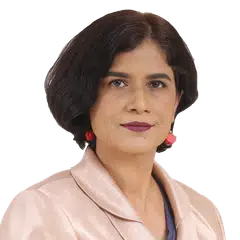
Francesca Hong (left) lost the Aug 11 Democratic primary for governor of Wisconsin in a tightly fought race to David Crowley.
PHOTOS: AFP
- The Democratic Party faces a civil war between left-wing insurgents and establishment centrists, highlighted by Francesca Hong's narrow primary loss and other mixed progressive wins.
- The Democratic Socialists of America (DSA) have grown rapidly and influenced key races, advocating for social ownership, universal healthcare, and controversial reforms like abolishing police and ICE.
- Party leaders worry that radical left candidates risk alienating voters and aiding Republicans, especially in swing states critical for the November midterms and 2026 elections.
AI generated
PHILADELPHIA – The insurgent left-wing movement in the Democratic Party has suffered a setback after a string of high-profile victories that bared intense infighting within the party.
Francesca Hong, a 37-year-old Korean-American single mother who calls herself a “Democratic Socialist”, lost the Aug 11 Democratic primary for governor of Wisconsin in a tightly fought race.
The winner was the party’s preferred candidate David Crowley, who secured a margin of 0.4 per cent with 98 per cent of the vote tallied, Associated Press reported.
But it was not a total loss for the left wing; Peggy Flanagan beat a moderate in Minnesota’s senatorial primary on the same night that Hong fell short.
Her defeat came a week after the progressive wing of the party was celebrating its most consequential win – the victory of Abdul El-Sayed in Michigan’s senate race over a moderate backed by the party establishment. It was proof it could prevail in a large swing state, not just in deep-blue coasts and cities.
Hong is a member of the Democratic Socialists of America (DSA), an organisation that often fields or endorses candidates who fight on Democratic Party tickets.
Founded in 1982, DSA has seen its membership double over the last two years to around 100,000, boosted by the election in 2025 of one of its most high-profile members, New York City’s charismatic mayor Zohran Mamdani.
New York Representative Alexandria Ocasio-Cortez (AOC) is another DSA star while Vermont Senator Bernie Sanders, an independent who caucuses with the Democrats, endorses DSA positions although he is not a member. El-Sayed has said he is “not technically or practically DSA” but has close ties with DSA activists.
This primary season has also seen several candidates endorsed or aligned with the DSA prevail in mayoral races in key cities like Washington DC, Los Angeles and Seattle.
Together, they have spearheaded a successful left-wing revolt within the Democratic Party, which is a broad coalition spanning an array of ideologies – centrists, liberals, progressives and democratic socialists and others. The labels describe where they stand on questions of economics, social policy, institutional change and political strategy.
Broadly, the DSA subscribes to an economic system in which ownership and decision-making are more social and democratic, rather than corporate and private. Its positions on universal healthcare, subsidised childcare and higher taxes on the wealthy are popular, especially with young and college-educated Democrats.
More controversially, it seeks to abolish several core US institutions like police and prisons, Immigration and Customs Enforcement, the electoral college and the Senate.
But these are not the default positions of every DSA member. Mamdani and AOC, for instance, have backed away from their earlier calls of defunding the police which had alarmed the Democratic Party establishment.
Still, their positions, especially the opposition to US ally Israel, can cause acute discomfort among the traditional Democrats. El-Sayed, for instance, has accused Israel of committing genocide against Palestinians in Gaza. He is close to the leftist streamer Hasan Piker, who has said “America deserved 9/11”.
The sharp, eye-catching ascent of the DSA-aligned progressives has bared searing divisions within the party.
Veteran Democratic strategist James Carville, credited for Bill Clinton’s 1992 White House win, has vociferously objected to how far-left candidates, who identify themselves as democratic socialists, run in primaries dressed as Democrats.
“Call yourself something else,” he said in a recent podcast interview. “You’re not a Democrat! Why not get your own name?”
The party leadership needs to weigh in to protect its brand, he added.
“There are people that are actually appropriating the name of the Democratic Party while they’re running against the Democratic Party,” Carville said. “Well, the party should be able to take some measures to protect its brand.”
Political analyst David Axelrod, the architect of Barack Obama’s presidential bid in 2008, said the Republicans would capitalise on the left-wingers’ radical positions to the disadvantage of the Democratic Party in the Nov 3 midterm elections.
It would be good for El-Sayed if Hong lost her bid, Axelrod tweeted ahead of the Wisconsin primaries.
“He is a serious person. She is a font of zany liberal, faculty lounge exotica,” he said in a reference to some of Hong’s controversial statements, such as opposing Thanksgiving because she said it celebrated colonialism.
The Republicans will link them as “philosophical kin” to deflect attention from their own weaknesses rooted in President Donald Trump’s low approval ratings, Axelrod said.
The electability of the insurgents is a serious issue for the Democrats, especially in battlegrounds like Wisconsin and Michigan which frequently swing between parties.
Crowley, who stands to become Wisconsin’s first black governor, will face Tom Tiffany, a loyalist belonging to Trump’s Make America Great Again (MAGA) movement.
El-Sayed will battle Mike Rogers, a seven-term congressman, an establishment Republican who has adopted MAGA positions on tough immigration enforcement, tariffs and cultural traditionalism. Their fight in November could determine which party controls the Senate.
Others who captured national attention when they defeated long-serving Democratic incumbents may get an easy pass because they are candidates in blue strongholds. For example, Melat Kiros in Colorado, and Darializa Avila Chevalier and Claire Valdez, both contesting in New York.
In Philadelphia, a high-profile constituency considered the throbbing heart of the Democratic Party, DSA-endorsed Chris Rabb is likely to be elected unopposed.
This is more about dissatisfaction with the system and the elites who run it than it is about ideology, said Prof Justin Vaughn who teaches political science at Coastal Carolina University.
“The DSA is just a vehicle, my hunch is that most people voting for their candidates aren’t making affirmative pro-socialist choices, but rather anti-system, anti-elite choices,” he said. “Both major parties could co-opt this energy if they were willing to make changes, but that also seems very unlikely.”
Both parties face internal battles, said John Geer, a political scientist and an expert on US elections at Vanderbilt University.
“The GOP sees the MAGA wing battle more traditional Republicans for power. For the Democrats, it is progressives versus centrists,” he told The Straits Times.
These battles are inevitable when you have a two-party system, he added.
“If one wing, say the MAGA-ites, splits from the GOP, that assures the Democrats would win nearly all elections, since the Republican vote is split. So, these battles matter, but they will not define the 2026 midterms,” he said.
“What will define these upcoming elections is the fundamentals, that the ‘out’ party usually picks up seats in the midterms and when you throw in an unpopular president, an unpopular war and nagging inflation, the conditions favour the Democrats.
“We are still a long way from election day, but these facts give the Democrats an edge at this point,” Geer said.
Economic issues remain at the forefront of the election but polling from the Pew Research Center, published on July 23, says neither party is seen as having an advantage on these issues.
Americans are now almost evenly split over which party they most agree with on economic policies: 37 per cent say the Democratic Party, while 36 per cent say the Republican Party.
The survey also found that Trump looms large in the campaign although he is not on the ballot in November. Some 42 per cent see their upcoming vote as a vote against him while 22 per cent think of it as a vote for him.
It remains to be seen if the insurgent Democrats, strongly focused more on the Palestinian cause, will pivot to putting Trump more squarely in the crosshairs.
But in the meantime, the focus now shifts to the next faceoff between progressives and establishment Democrats in Florida where DSA-endorsed Oliver Larkin will square off against two-term Democratic congressman Jared Moskowitz on Aug 18.
