
News analysis
Tussle over Turks bedevils talks on phase two of Gaza peace plan
Sign up now: Get ST's newsletters delivered to your inbox

Officials in Israel have hinted that Mr Netanyahu’s meeting with Mr Trump is now scheduled for Dec 29.
PHOTO: REUTERS
LONDON – Israel’s Prime Minister Benjamin Netanyahu has confirmed that the second phase of the US-brokered plan to end the war in Gaza is about to begin.
Speaking on Dec 8 after meeting German Chancellor Friedrich Merz, who visited Israel, Mr Netanyahu said he would hold “decisive” discussions with US President Donald Trump “at the end of the month” on how to achieve the plan’s second stage.
Officials in Israel have hinted that Mr Netanyahu’s meeting with Mr Trump is now scheduled for Dec 29, although there is no confirmation of this from Washington.
Still, a furious diplomatic tussle is unfolding over every detail of what the next stage in the Gaza peace process should include.
The deal brokered by President Trump on Oct 9 envisages three phases. The first involved an immediate ceasefire and the return of the 20 living Israelis held as hostages by Hamas, the militant Palestinian organisation, as well as the remains of 28 dead Israelis, in exchange for the release of 2,000 Palestinian detainees held in Israel’s jails.
Israel has complained that Hamas dragged its feet over the release of hostages. And the Hamas-run Health Ministry in Gaza has claimed that over 370 civilians were killed in Israeli violations of the ceasefire.
On the whole, however, the ceasefire holds and, although most of Gaza’s residents remain homeless, they are now receiving adequate food and humanitarian supplies. Under US pressure, Israel also recently agreed to open the Rafah border crossing, allowing Palestinians with special permits to leave Gaza for Egypt.
But the second stage is guaranteed to be far trickier. It calls for the setting up of the international bodies to supervise the application of the deal, plus the creation of a civilian authority to administer the territory.
It also envisages a substantial withdrawal of Israeli soldiers – who still occupy half of Gaza – and their replacement with an International Security Force (ISF) that will disarm Hamas and ensure the necessary conditions for the start of Gaza’s reconstruction.
Since these are all the steps that will shape Gaza’s fate for years to come, it’s not surprising that every detail is now hotly contested.
The least controversial matter is the composition of the so-called Board of Peace, designed to be the highest political authority for Gaza. There is agreement that the board will include around 10 Arab and Western leaders and be led by President Trump. Its primary purpose will be largely ceremonial.
However, no consensus exists over the composition of the International Executive Board, which will be expected to perform the real work of supervising proceedings in Gaza.
Both Arab states and Israel have accepted that Mr Steve Witkoff, the US President’s golf buddy and close diplomatic adviser, as well as Mr Jared Kushner, Mr Trump’s son-in-law, will be members of this executive body. But many Arab leaders reject the planned participation of former British prime minister Tony Blair in either the Peace Board or in any executive capacity.
Sky News Arabia, the media network based in the Emirates, reported on Dec 9 that the Palestinian Authority (PA), the internationally recognised government of all Palestinian territories, opposes Mr Blair’s participation “due to the lack of clarity on his end regarding the authority’s role in managing Gaza and the alignment of his position with the Israeli government’s policies”. Put simply, the Arabs consider Mr Blair too pro-Israeli.
A separate diplomatic tussle is continuing over the composition of the Palestinian technocratic government, which will operate under the executive board and is expected to take over the running of Gaza from Hamas.
There is agreement that this provisional government will include 12 to 15 Palestinians who have management and business experience but are not affiliated with either Hamas or other Palestinian parties and factions.
But such people are hard to find, especially since the PA is widely regarded as both corrupt and incompetent. The US-based Axios news platform claims that at least half of an initial list of 25 Palestinian administrators has been ruled out by objections from various parties.
Yet by far the biggest political confrontation is over the composition of the ISF, the military force expected to be deployed in Gaza to disarm Hamas and take over policing and security duties.
To be acceptable to the local population, the ISF has to be composed of Arab or Muslim forces. And to be effective, it will need thousands of soldiers and will be deployed on the ground for years.
Indonesia, Azerbaijan, Egypt and Turkey are all Muslim or Muslim-majority nations with the necessary large military structures, and all have expressed an interest in contributing to the ISF.
However, Mr Netanyahu strenuously objects to the presence of any Turkish forces, which he views as hostile to the Jewish state.
“I have a very clear opinion on that,” Mr Netanyahu recently said when asked about Turkey’s potential military presence in Gaza. “Guess what it is? I think you know it!” he joked with journalists.
And although it won’t admit this in public, Egypt is also not enamoured with the idea of Turkish troops present near its borders.
The snag for the US is that Turkish President Recep Tayyip Erdogan is the only regional leader capable of persuading Hamas to disarm and relinquish power to more moderate Palestinian elements, so Turkey’s presence in the ISF is a matter of necessity.
The US is therefore putting pressure on Israel to drop its objections. In pointed remarks on Dec 5, Mr Tom Barrack, the US Ambassador to Turkey and a key American envoy for the Middle East, urged Mr Netanyahu to accept the presence of Turkish troops, saying: “If I were personally advising Netanyahu, I would say that’s one of the most brilliant things he could do.”
Meanwhile, US diplomats suggest that President Trump is in a hurry, and that he intends to announce the start of the second stage in his peace deal as early as Dec 18, well before he receives the Israeli Prime Minister.
And the Turks seem confident they will be invited to deploy a substantial force in Gaza. “Trump will convince Netanyahu; the solution in Gaza is Mehmetcik”, read a banner headline in a key Turkish daily newspaper on Dec 9, using the affectionate nickname for all Turkish soldiers.
Others, however, are not so sure. “The Gaza ceasefire is at a critical moment,” warns Sheikh Muhammad al Thani, Qatar’s Prime Minister.
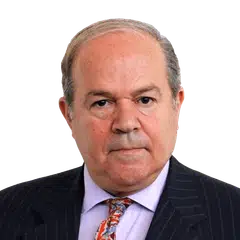
Jonathan Eyal is based in London and Brussels and writes on global political and security matters.
