
News analysis
Iran has broken two of its cardinal principles in its choice of a new leader
Sign up now: Get ST's newsletters delivered to your inbox

Mr Mojtaba Khamenei’s elevation betrays the fragile, precarious nature of Iran’s clerical rulers and may be a prelude to further power struggles.
PHOTO: REUTERS
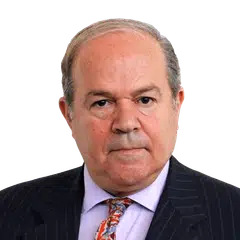
- Mojtaba Khamenei, son of the former Supreme Leader, has been appointed, defying US and Israel after his father's death, despite lacking religious credentials.
- This move signals a shift from theocracy to a form of monarchy, breaking core Islamic Republic principles, as Mojtaba's power stems from managing his father's office.
- Facing challenges from rivals and inheriting a ruined economy and infrastructure post-war, his survival hinges on defying enemies and reviving Iran.
AI generated
Follow our live coverage here.
LONDON – The selection of Mr Mojtaba Khamenei as Iran’s new supreme leader is a bold act of defiance by the country’s current rulers.
The US and Israel launched the air raids that killed Ayatollah Ali Khamenei, the country’s previous top leader, on Feb 28, expecting that this would result in the collapse of Iran’s clerical regime.
Yet, instead of getting the regime change they wanted, the Israelis and the Americans now have to contend with the former paramount leader’s son, who by all accounts is even more anti-American and even more passionately committed to the destruction of Israel.
Iran’s rebuff could not be clearer. Yet, in reality, Mr Mojtaba Khamenei’s elevation betrays the fragile, precarious nature of Iran’s clerical rulers and may be a prelude to further power struggles.
Nor should one underestimate the enormous tasks facing Iran’s new paramount leader, as he inherits a ruined economy and a badly damaged military.
Ayatollah Khamenei, who was 86 years old and ailing when he was killed, seldom talked about his eventual successor. But when he did, he emphasised two points: that Iran’s future supreme leader should be someone the Americans and Israelis would heartily dislike and that his successor must be a reputed Islamic preacher, chosen for his piety and scholarship rather than family connection.
Iran’s new paramount leader definitely meets the first criterion: the Israelis believed they succeeded in killing him on Feb 28 and are now planning to try again. “We will not hesitate to target you,” a statement from the Israeli military warned.
Yet, by almost every other yardstick, Iran’s new supreme leader fails to qualify for his exalted position.
The founding principle of the Islamic Republic was to place all the authority of the state in the hands of its most respected Shi’ite Islamic jurist. Ayatollah Ruhollah Khomeini, who led the 1979 Iranian Revolution and ruled the country for the subsequent decade, had such credentials.
Mr Ali Khamenei, Ayatollah Khomeini’s successor, never enjoyed a high religious rank. Although Mr Khamenei was subsequently referred to as an ayatollah, he held only the title of hojjat al-Islam, one grade below that of ayatollah, when he was appointed in 1989.
His son, who is now inheriting the mantle of supreme leader, does not share even his father’s modest religious credentials. Mr Mojtaba Khamenei studied religion, but he has no religious accomplishments to his name and no mass followers as a preacher, another requirement for high rank and esteem in the Shi’ite branch of Islam.
The Iranian authorities are now hard at work manufacturing new religious credentials for the freshly anointed paramount leader. And they are boosting his nationalist credentials as well: Hours after his appointment, video clips of Mr Mojtaba Khamenei as a young man in military uniform were screened on Iran’s national TV for the first time.
But no number of news management gimmicks can hide the fact that the Islamic Republic has now broken two of its cardinal principles: It is no longer ruled by someone with evident religious authority and it has moved from a theocracy to an effective monarchy.
In this respect, therefore, a “regime change” of sorts has already taken place, albeit not the sort that the Americans and Israelis wanted.
Little is known about the 56-year-old new supreme leader. He has no experience in holding any government position and has exercised no official responsibility. He has never given media interviews and he appeared publicly only twice each year, on Feb 11, when Iran marks Revolution Day, and on what Iran calls Quds Day, an annual pro-Palestinian event held on the last Friday of Ramadan.
His power derives largely from the fact that he managed his father’s office for decades and was more than just a gatekeeper; he advised his father on all key appointments in the state and, according to reliable information, also wiretapped all the phones in the Supreme Leader’s offices.
The inner ring of the new supreme leader’s associates includes the most hardline clerics in the country, people such as Mr Mehdi Taeb, who once famously claimed that Covid-19 was a US plot; his brother Hossein, who ran the Islamic Revolutionary Guard Corps (IRGC) intelligence services; and Mr Alireza Panahian, another hardline cleric who had a leading role in indoctrinating the IRGC.
There is no doubt that Mr Mojtaba Khamenei has always been the IRGC’s preferred candidate, and his elevation confirms the prediction that the current war has caused the Guard to rise as the real masters of the land.
It remains to be seen, however, whether his hold on power is as solid as it now appears. He was wounded in the Feb 28 US-Israeli air strike; his wife and one of his children were killed in the bombing.
The new supreme leader also had to face down a serious challenge from Mr Sadegh Larijani, who, as the previous head of Iran’s judiciary and as someone boasting a more solid religious background, had a better claim to the top title, as well as being the brother of Mr Ali Larijani, one of the most powerful security officials in the country.
Since the start of the US-Israeli air offensive, the Larijani brothers had been widely perceived to be the most powerful duo in Iran; their failure to secure the top position of supreme leader is unlikely to be the last word on the matter.
And then there is the question of Iran’s future, once the current war ends. Assuming he survives Israeli assassination attempts and remains in office, the new supreme leader will be called upon to revive both his country’s administrative structure and economy.
Every military barracks and every police station across Iran now lies in ruins; the entire apparatus of the state would have to be rebuilt. And the same applies to the economy in a country that has already mismanaged even basic services like energy generation and water provision, let alone broader questions of development.
As long as Iran retains its current political system, it cannot look forward to any relief from economic sanctions. And after raining missiles and drones on all its neighbours, it will not have many options for regional cooperation either.
Appointing a person with no practical experience in any domain, someone whose only claim to fame is that he is his father’s son, is hardly a rational choice.
But then, Iran’s clerics have never been famous for their rational decision-making. What counts for them now is survival and defiance, and they hope that their new supreme leader offers both.