
News analysis
The EU wants to raise financial support for Ukraine. Will member states ever agree how?
Sign up now: Get ST's newsletters delivered to your inbox

Ukraine is estimated to need between €130 billion (S$196 billion) and €140 billion to finance its defences and war-shattered economy over the next 18 months.
PHOTO: TYLER HICKS/NYTIMES
BRUSSELS - European Union ministers are meeting in the Belgian capital on Nov 13 to tackle one of their continent’s most pressing problems: raising financial support for Ukraine, as the country battles Russia’s military invasion.
Ukraine is estimated to need between €130 billion (S$196 billion) and €140 billion to finance its defences and war-shattered economy over the next 18 months. In the absence of US support, European governments have only two options: either seize Russian assets currently frozen in Western countries and transfer the proceeds to Ukraine, or borrow the money on world financial markets.
Both options remain unappealing. Seizing Russia’s money is an unprecedented step with profound global legal implications. But saddling heavily indebted European governments with further borrowing remains equally dangerous.
In February 2022, when Russian President Vladimir Putin ordered his all-out invasion of Ukraine, an estimated €270 billion of Russian government investments remained in various Western countries. The largest share of this – approximately €180 billion – is with Euroclear, a Belgium-based company providing financial depository services to the world’s national banks and institutions.
The money belongs to various Russian sovereign wealth funds and deposit schemes and, under current international legal provisions, cannot be touched. Nonetheless, Russia’s funds were frozen by various sanctions that Western governments rolled out against Russia in 2022.
The move was then considered revolutionary, representing the absolute maximum of what could be contemplated under international law: The money remained Russia’s property, yet could not be accessed by the Russian government until the end of the war.
As time went by, most of Russia’s frozen sovereign funds, which were initially in various financial security instruments, have matured and become cash.
And the temptation to seize them grew as European governments faced two competing pressures: Ukraine’s deteriorating financial situation, and US President Donald Trump’s decision to pull the plug on Washington’s support.
Europe’s predicament grew even more acute after Mr Trump insisted that any further deliveries of US weapons and ammunition to Ukraine would have to be paid for by others; Europe was faced with not only shouldering the main burden of Ukraine’s economy, but also financing the bulk of Ukraine’s war.
Under pressure from their own national bankers and legal experts who remain acutely aware of the serious legal principles at stake, EU governments have invented a scheme that allows them to claim that Russia’s sovereign wealth investments are not being confiscated, but are just being lent to Ukraine and could be returned to Russian possession at the end of the war.
Under the proposed scheme, Russian cash now in Euroclear accounts will be converted into bonds issued by the European Commission, the EU’s executive body. The Russian money will then be transferred to Ukraine, which would repay the loan only if, at the end of the war, it gets reparations from Russia for the damage Mr Putin’s government inflicted on Ukrainian territory.
The scheme, now called the Reparations Loan because it would be linked to Russia paying reparations, is effectively a confiscation, dressed up in polite legal terms. Russia is presented with a lose-lose option: Moscow could either refuse to compensate Kyiv for the war and never regain the money it held in the West, or Russia could regain its money, but only if it pays Ukraine the same amount it has deposited in Western banks.
A summit of EU heads of state and government, convened in Brussels on Oct 23, was meant to provide the opportunity for the launch of the Reparations Loan. However, no agreement was reached because Belgium, under whose legal jurisdiction Euroclear operates, demanded EU guarantees that it would be compensated should Russia sue for the confiscation of its money and win its case in Belgian courts.
Since then, Europe has been stuck in a ridiculous circular debate. On the one hand, EU governments claim that their Reparations Loan scheme is legally watertight, providing perfect protection against future Russian legal claims.
But when Belgium asked for a guarantee to this effect, all European capitals fell silent. The scheme is apparently so good that no one wants to vouch for it.
EU finance ministers hope to overcome Belgium’s objections at their meeting on Nov 13. Yet even if they do, matters are getting more complicated because the European Parliament is demanding to be involved in approving the scheme, and also the far-right governments in Hungary and Slovakia threaten to veto the seizure of Russian funds.
“Slovakia won’t take part in any legal or financial schemes to seize frozen assets if those funds would be spent on military costs in Ukraine,” Mr Robert Fico, its prime minister, warned on Nov 10.
Economists and politicians in Norway – a country that never joined the EU – have argued that Norway’s giant sovereign wealth fund could come to the rescue by propping up the EU’s Reparations Fund. Mr Jens Stoltenberg, the Norwegian finance minister, arrived in Brussels on Nov 12 to discuss the matter.
Still, the chances of Norwegian financial assistance remain slim. And if the EU fails to reach a deal over its Reparations Loan before the end of 2025, it will have to borrow the money itself on financial markets.
The European Commission prepared a briefing paper on this topic and it makes for grim reading. If Ukraine’s immediate financial needs are to be financed with further borrowing, the briefing paper warns, EU governments will be liable to pay each year up to €5.6 billion on just the interest on the loan, and such repayments may endure for decades. Given the high indebtedness levels of most Europeans, further borrowing seems out of the question.
Yet without a decision on either the seizure of Russian assets or more borrowing, the EU’s promise to “stand with Ukraine for as long as it takes” will soon be discredited.
And the Russians are not making matters easier. Mysterious drones recently appeared above key Belgian installations, such as power stations and airports.
Nobody has claimed responsibility. But Russia is a “plausible suspect”, said Belgian Defence Minister Theo Francken.
Correction note: In an earlier version of the story, we said that the meeting in Brussels is on Nov 12 instead of Nov 13. This has been corrected. We apologise for the error.
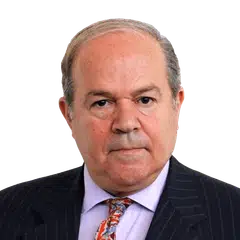
Jonathan Eyal is based in London and Brussels and writes on global political and security matters.