
News analysis
Sunak’s surprise move to bring in ex-UK PM David Cameron as foreign minister a double-edged sword
Sign up now: Get ST's newsletters delivered to your inbox

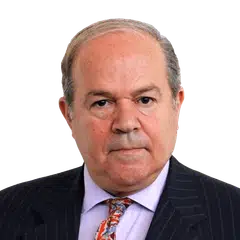
The return of Britain's former prime minister David Cameron to active politics comes with considerable risks.
PHOTO: REUTERS
LONDON – A brilliant political coup or an act of desperation?
A bit of both, as British Prime Minister Rishi Sunak surprised even his country’s most seasoned political observers by bringing former prime minister David Cameron back into the Cabinet as the new Foreign Secretary on Monday.
The move achieved Mr Sunak’s immediate objective, which was to divert media attention away from the significant rifts inside the ruling Conservative Party.
But the return of Mr Cameron to active politics threatens to rekindle old disputes over Britain’s policies towards Europe and China and, therefore, comes with considerable risks.
A major Cabinet reshuffle became inevitable after Prime Minister Sunak decided to fire his controversial Home Secretary Suella Braverman.
Ms Braverman, who belongs to the Conservatives’ hard-right wing, offended the government’s backbench Members of Parliament with her increasingly aggressive rhetoric.
Responsible for border controls, she spoke of an “invasion” of migrants, language which further inflamed the already toxic British debate about immigration.
Her more recent statement claiming that Britain’s homeless chose their “lifestyle” voluntarily attracted even bigger controversy.
But it was Ms Braverman’s decision to brand all pro-Palestinian demonstrations in Britain as “hate marches” and accuse the police of being more lenient towards left-wing groups than right-wing nationalists that sealed her fate.
She stood accused of dividing British society and failing to offer proper political guidance and support to Britain’s police forces, a primary responsibility for a home secretary.
Mr Sunak’s problems as he decided on Ms Braverman’s dismissal were that it would guarantee a backlash within the ruling party, with its right-wing MPs demanding that her replacement in the reshuffled Cabinet should be another hard-right politician.
The Prime Minister pre-empted both challenges by moving Mr James Cleverly – who has served as Foreign Secretary since 2022 – to Ms Braverman’s post and by putting Mr Cameron in charge of the country’s diplomatic machinery.
The resurrection of an old political heavyweight silenced the government’s parliamentary backbenches.
And although the move is highly unusual, it is not unprecedented. Alec Douglas-Home, Britain’s prime minister in the early 1960s, returned as foreign secretary during the first half of the 1970s.
Still, Mr Cameron’s appointment comes with difficulties.
Since he is no longer an MP and constitutional rules demand that all Cabinet ministers should be one, King Charles III hurriedly made him a Lord on Monday, a title that automatically gives him a seat in the House of Lords, the unelected Upper parliamentary chamber.
But while this satisfies constitutional requirements, the main political decisions are taken in the elected Lower House of Commons where, awkwardly, Mr Cameron will now have to be represented by an MP.
And although nobody doubts Mr Cameron’s experience – he served as prime minister for six years from 2010 to 2016 – foreign policy was never his strongest asset.
A fervent supporter of Britain’s membership in the European Union, he decided to call a snap referendum on the subject in 2016, believing that this would reinforce his country’s European tilt.
The electorate thought otherwise, and Britain had to withdraw from the EU, an episode regarded as one of the country’s most spectacular own goals.
Mr Cameron was also a strong proponent of closer links with China.
Chinese President Xi Jinping undertook no fewer than two state visits to Britain during Mr Cameron’s tenure as prime minister, and a photograph of the two drinking beer in a British countryside pub in 2015 remains one of the most iconic images of Sino-British relations.
The period – then dubbed a “Golden Age” – also spawned various mega Chinese investment projects in Britain in sectors such as telecommunications, nuclear energy and financial services.
But all these deals subsequently unravelled, and as Britain’s relations with China nosedived, the “Golden Age” label is now derided in London as a byword for a naive, failed diplomacy.
Britain came under US pressure to remove equipment produced by Huawei from its telecommunications infrastructure by the end of 2023, and the British security services warned earlier in 2023 about alleged Chinese spying activities.
In 2022, financial uncertainties scuppered an accord to build a Chinese nuclear reactor, a deal that was another first for any Western country.
And China’s 2021 decision to set aside Hong Kong’s autonomy – a key provision of a 50-year treaty between Beijing and London – brought about a serious deterioration in bilateral relations.
Mr Cameron’s personal business dealings with China after he left office also generated controversy. His involvement in a US$1 billion (S$1.35 billion) UK-China investment fund was criticised in a report by the British Parliament’s Intelligence and Security Committee released in June 2023 as “in some part engineered by the Chinese state to lend credibility to Chinese investment, as well as to the broader China brand”.
Mr Cameron has denied any allegations of impropriety and has terminated all personal business engagements.
Nonetheless, officials in London hope that his passion for improved relations with China and his political seniority will mean that Britain’s new top diplomat will get a better hearing in Beijing.
Still, if he wants to make a difference, he should rather be quick because his government has less than a year before it faces the electorate, and it is trailing the opposition Labour Party in the latest opinion polls by a whopping 20 percentage points.