For subscribers
News analysis
Greenland might break China’s rare earth grip – but not on the West’s timeline
Sign up now: Get ST's newsletters delivered to your inbox
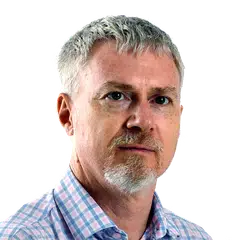
Mr Tony Sage, CEO of Critical Metals Corp, is developing the Tanbreez rare earths deposit in southern Greenland.
ST PHOTO: NG SOR LUAN
- Greenland possesses vast rare earth deposits, attracting US and European interest to counter China's dominance in critical mineral production.
- Critical Metals Corp aims to begin Tanbreez mine production by 2029, having secured funding and agreements, focusing on heavy rare earths.
- Challenges remain, including infrastructure, environmental concerns and geopolitical pressures, despite Greenland's efforts to encourage investment.
AI generated
SINGAPORE – Much of Greenland is covered by one of the world’s largest ice sheets, up to 3km thick.
Yet along its ice-free edges lie some of the planet’s largest deposits of rare earth minerals, a prize that the US and Europe want to secure to reduce their dependence on China.
US President Donald Trump’s push for American control of the self-governing territory within Denmark, coupled with China’s weaponisation of its rare earth dominance, has made Greenland’s mineral wealth a strategic priority for the West.
China’s grip on global rare earth production and processing is formidable.
It accounts for more than 90 per cent of refined output and about 60 per cent of mining, making it a critical supplier for military equipment such as fighter jets and radar, as well as electric vehicles and semiconductors.
Beijing has used this leverage to block or severely limit exports of a number of critical minerals in response to US tariffs and other penalties, prompting the Trump administration to seek alternative supplies from other nations, including Australia.
China’s dominance has also sparked a push for the US and Europe to beef up processing of rare earths – a group of 17 metals indispensable to modern technology.
In the US and Europe’s search for reliable alternatives, Greenland fits the bill: Situated between North America and Europe, it is geographically convenient for both.
Yet unlocking the island’s mineral riches will not be easy or quick, and it will be costly – partly because of Greenland’s remoteness, lack of infrastructure, harsh climate and tiny labour force.
Still, the potential rewards and the desire to reduce reliance on China are proving a powerful draw for investors.
Test case
On the southern tip of Greenland, near the small town of Qaqortoq, is the Tanbreez deposit, one of three large rare earth deposits in the area.
Tanbreez is owned by Nasdaq-listed Critical Metals Corp, which hopes to begin production by 2029.
If the timeline holds, it will be the first of possibly several large mines to eventually supply critical minerals, including rare earths, to the world.
The firm has already raised more than US$100 million (S$128 million) in funding from investors, mainly US funds. It has an offer of a low-interest US$120 million loan from the US government’s EXIM Bank and hopes to get an additional grant from the government, chief executive Tony Sage told The Straits Times.
An extensive drilling programme has confirmed the presence of highly sought-after minerals, including gallium and hafnium. Gallium is widely used in semiconductors, while hafnium is essential for nuclear power plant control rods, superalloys for aerospace applications, and advanced microchip manufacturing.
Critical Metals Corp has already raised more than US$100 million (S$128 million) in funding from investors, mainly US funds.
ST PHOTO: NG SOR LUAN
The deposit is also rich in heavy rare earths – minerals such as dysprosium, terbium and yttrium, which are critical for making powerful magnets used in wind turbines, electric vehicle motors, and missile guidance and targeting systems.
Analysis of drilling samples showed 27 per cent of the deposit consisted of these elements.
Heavy rare earths are scarce, with China producing about 98 per cent of the global supply.
At full production, the Tanbreez mine could produce about 50 per cent of the world’s heavy rare earths, Mr Sage told ST during a recent visit to Singapore to attend a mining conference.
Ms Meredith Schwartz, associate fellow for the Critical Minerals Security Programme at the Center for Strategic and International Studies (CSIS) in Washington, said: “What makes Tanbreez more attractive is its large volume of heavy rare earths, which is where the US is most lacking in its own domestic production right now, and where China has its strongest chokehold.”
Long road to production
Investor interest in Greenland’s mining industry has increased since Mr Trump’s threat to annex the island, Greenland’s minister for business and mineral resources, Ms Naaja Nathanielsen, told Reuters on March 2.
The interest has come mainly from Britain, Canada and the European Union.
The past two months have been “hectic”, she said, adding that the government was easing the permitting process for exploration and mining, as well as tax laws to encourage mining investment.
But the surge in interest has created a bottleneck between early-stage exploration and actual exploitation, or mining.
Tanbreez remains the only rare earths project that has been granted an exploitation licence, which allows mining, Mr Sage said.
Getting that took years of work by the project’s previous owner, he added.
A rock sample from the Tanbreez rare earth concession in southern Greenland. The red-coloured heavy rare earth elements fluoresce under UV light.
ST PHOTO: NG SOR LUAN
Over the past two decades or so, the government has granted exploitation licences to only 10 companies, including a recent approval for a graphite mine.
At present, there are only two operating mines in Greenland, one producing gold and the other anorthosite, which is used in ceramics and other building products.
The other two large rare earths deposits, Kvanefjeld and Motzfeldt, also hold significant potential as major suppliers of critical minerals, but they could be years away from production.
Kvanefjeld, majority-owned by Australian-listed firm Energy Transition Minerals, has been tied up in litigation with the authorities after being refused an exploitation licence. The authorities say the deposit, despite being one of the largest in the world, contains uranium levels well above what Greenlandic law allows.
Motzfeldt, which is being majority-acquired by Britain’s Alba Resources, is still some way from applying for a licence.
‘Frontier area’
But with rare earth supplies already under pressure, time is short – and industry experts point to substantial challenges to overcome.
Global energy and resources consultancy Wood Mackenzie noted that Greenland is estimated to rank eighth in the world for rare earth resources. However, maximising this potential involves three challenges: its geography and harsh weather; the need to meet high environmental and social standards to overcome local opposition; and geopolitics.
“While the Greenland government has made clear it favours Western partnerships, it has warned that hesitation could force the territory to seek development support from China,” Wood Mackenzie said in a January note. That would likely trigger objections from Washington and Copenhagen.
China has shown interest in developing infrastructure in Greenland in the past, including airports, but not always with success.
A Chinese firm was originally shortlisted to build an airport near Qaqortoq and the Tanbreez concession. But under US pressure, the Danish government rejected the Chinese bid and opted to fund the project instead. The airport will open in April.
In 2024, US and Danish officials lobbied the previous owner of the Tanbreez deposit not to sell the project to Chinese interests, opening the way for Critical Metals Corp to acquire it in stages.
Yet, Greenland lacks large ports, and has less than 200km of roads and limited power supplies. Farther north, the brutal winter and sea ice block access.
“It’s going to take long-term infrastructure investment, and with the rare earth supply crunch we’re looking at, we need short-term solutions,” said CSIS’ Ms Schwartz.
“Approving mining projects in Greenland has (also) been slow-going, and there’s more mapping that needs to be done as well to really know where these deposits are,” she noted, adding that a study needs to be conducted on the economic viability of the deposits.
Dr Diogo Rosa, senior researcher in economic geology at the Geological Survey of Denmark and Greenland (GEUS), said: “It’s a frontier area and underexplored.”
He noted that Greenland’s full resource potential for rare earths and other materials, including gold, iron ore and gemstones, remains unknown. “Most places need more research and more exploration,” he told ST.
GEUS estimates that the island contains 36.1 million tonnes of rare earth resources. However, the US Geological Survey estimates that only about 1.5 million tonnes are considered proven, commercially mineable reserves.
Further prospecting and testing could narrow that gap, and Greenland might become more attractive as easier to mine areas in other nations are exhausted, Dr Rosa said.
The island has other natural advantages.
“There are these very long fjords, so you can easily bring a ship very close to your deposit,” he said.
And the island is located between North America and Europe, which need its resources.
Next steps
For now, much depends on Greenland itself.
The government needs to deliver on its promises – such as prioritising critical mineral mining development, improving data on the island’s resources and streamlining the permitting process – while respecting stringent environmental standards and consulting the local communities.
Attracting more investment for infrastructure is also vital. Without roads, ports and power, mineral deposits will be more costly to reach and to mine.
Yet Critical Metals Corp’s Mr Sage is undeterred by the obstacles. “We’re looking at between US$300 million and US$500 million to get up and running,” he said.
The initial phase will develop an ore body adjacent to a deep fjord, which will allow the easy loading of mineral concentrates.
Concentrates, extracted from the rock, need further specialised processing to separate the individual rare earth and non-rare earth metals.
Mr Sage said the next phase is to complete a pilot processing plant in Perth around June. The aim is to test the firm’s processing technology. He also plans to send some of the ore to processing partners for testing.
His company has signed preliminary offtake agreements for 100 per cent of the concentrate production from the mine – a quarter will go to two US firms, half will go to a partner in Romania, and the remaining quarter to a Saudi company.
Once the concentrates are processed, the finished products will include high-purity rare earth oxides, metals and powerful magnets.
Half of the final production will go to the US and half to the EU, he said. None will go to China.
The fjord adjacent to the Tanbreez rare earths concession in Southern Greenland. Ships would load critical mineral concentrates for export to processing partners overseas.
PHOTO: COURTESY OF CRITICAL METALS CORPORATION.
By mid-2029, the aim is to begin mining 500,000 tonnes of raw ore annually, producing up to 180,000 tonnes of heavy rare earth element concentrates. This will be shipped to the firm’s four offtake partners for processing.
Asked if he sees Greenland breaking China’s rare earth monopoly, Mr Sage said: “100 per cent.”
While Greenland certainly holds promise as an alternative rare earths supplier, the harsh reality is that developing a mine takes longer than Mr Trump and his team seem to believe, Mr Sage said.
Dr Rosa of GEUS added: “Mining is a high-risk, high-reward sort of business, and that takes time, especially in a remote place like Greenland.”


