
Europe must boost competitiveness and ‘adapt to new realities’: Germany’s top diplomat
Sign up now: Get ST's newsletters delivered to your inbox

Europe has to rebuild its competitiveness to safeguard its interests and values, says German Federal Minister for Foreign Affairs Johann Wadephul.
ST PHOTO: LIM YAOHUI
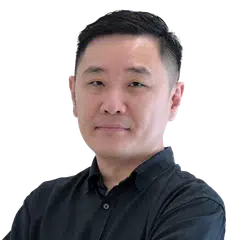
- Germany urges the EU to enhance economic competitiveness to protect its interests amid a shifting global order where "might is right" is increasing.
- The EU is considering a "Made in Europe" strategy to protect industries, addressing imbalances like Chinese EV subsidies and market access restrictions.
- Germany seeks partnership with China but recognises it as a "systemic rival," while reaffirming the US as Europe's most important partner.
AI generated
SINGAPORE – The European Union must boost its economic competitiveness to defend its interests and values at a time when “the law of the strongest seems to be increasingly replacing the strength of the law”, said Germany’s top diplomat.
“The international order itself – as we have known it since after the Second World War – is under pressure,” noted Dr Johann Wadephul on Feb 2, as he addressed the 5th IISS Raffles Lecture, organised by the International Institute for Strategic Studies think-tank.
Middle powers and small states are looking to diversify their dependence on Washington by banding together to counter US President Donald Trump’s “might is right” brand of governance.
Mr Trump’s tempestuous first year in office has seen the US slap punitive tariffs on allies and turn conciliatory towards old foes.
“To safeguard our security, our freedom and our prosperity in the future, we must adapt to these new realities,” said the German Federal Minister for Foreign Affairs.
A big part of that would involve boosting Europe’s economic and technological competitiveness.
“The main focus of our economic policies in Europe has to be to rebuild our competitiveness on the world stage,” Dr Wadephul, a veteran lawyer, politician and policymaker, told The Straits Times in a separate interview on Feb 2.
European industrial policy?
European Commission vice-president and industry commissioner Stephane Sejourne urged the EU to protect its industries with a “Made in Europe” strategy in an editorial published in several European news outlets on Feb 2.
The European Commission and Europe’s business leaders “are doing everything we can to improve our industries’ access to energy, to raw materials, to investments, to skills and of course, to our market of 450 million consumers”, he said.
Whenever European public money is used, it must contribute to European production and quality jobs – and the same logic applies to foreign direct investments, he said in the opinion piece co-signed by more than a thousand European business leaders.
A Europe-wide industrial policy remains contentious among EU member states ahead of an informal gathering of European leaders in Belgium later in February aimed at generating ways to reinvigorate the bloc’s competitiveness.
Opponents argue protectionist policies could raise prices and paradoxically hurt competitiveness.

The main focus of economic policies in Europe has to be to rebuild its competitiveness on the world stage, said German Federal Minister for Foreign Affairs Johann Wadephul, who is seen here arriving for an interview with The Straits Times on Feb 2.
ST PHOTO: LIM YAOHUI
China reciprocity
The German economy is Europe’s largest and the world’s third-largest by nominal gross domestic product, but it is about a sixth of the size of the US economy, which remains the world’s largest.
China’s economy has surpassed Germany’s in the years since China embarked on its economic reforms in 1978, and is now the world’s second largest. Many Chinese companies are now also global leaders.
China’s BYD is now the world’s largest electric vehicle (EV) manufacturer, while Ningde-headquartered Contemporary Amperex Technology Limited (CATL) is the world’s largest EV battery producer, with more than a third of global market share. CATL has a factory in Germany’s Thuringia state, with others in Hungary and Spain in the pipeline.
Since late 2024, the EU has imposed tariffs of up to 35 per cent on Chinese EVs because Beijing continues to subsidise them as part of its broader “Made in China 2025” industrial strategy.
“If it comes to EVs, of course, we see an imbalance, which we also recognise in other sectors, because there are subsidies in China for these EVs, which European cars do not receive,” Dr Wadephul told ST.
“On the other hand, our companies are faced with some restrictions in the Chinese market. So what we are demanding is reciprocity when it comes to the access to the markets,” he said.
China’s record trade surplus in 2025 exceeded US$1 trillion (S$1.27 trillion) and is perceived to be an existential threat for local industries in Europe and elsewhere when Chinese companies flood markets with cheaper technology and climate solutions.
Still, a bevy of top world leaders, including heads of government from Canada, Finland, Britain, Ireland, South Korea and Uruguay, have descended on Beijing in January alone in their attempts to hedge their dependence on Washington. German Chancellor Friedrich Merz is expected to follow suit later in February.
“Under these circumstances, our position is still a very sober one,” Dr Wadephul told ST.
“We would like China to be our partner. We know that China is a competitor to the European Union, but in some sectors, we also have to recognise China as being a systemic rival.
“China will always be a very important trade partner for Germany and for Europe, but we have to take care of our interests.”
Enduring American partnership
On the other hand, the German Foreign Minister said the United States remains Europe’s “most important partner”.
President Trump’s obsession with acquiring Greenland has, however, recently shaken the faith of many European leaders in the reliability of their cross-Atlantic alliance with the Americans.
“I wouldn’t say that (the US is) not reliable,” Dr Wadephul told ST at the LAVO Italian restaurant at Marina Bay Sands.
“We are really working closely together, and the United States really knows that it is in their core interest to have a very coordinated security policy together with Europe,” he said, pointing to NATO’s Article 5, which obliges member states to consider an armed attack against one member in Europe or North America as an attack on all.
At the height of tensions in early January, Denmark’s Prime Minister Mette Frederiksen warned that any attack on a NATO ally would mean the end of the security alliance.
While Dr Wadephul was circumspect in his observations of the Great Powers rivalry that is dismantling the world order, his Singapore visit is part of a strategy diversifying reliance on the US and China. Singapore is his first stop on a whirlwind trip that includes New Zealand, Tonga, Australia and Brunei.
In Singapore, Dr Wadephul called on Prime Minister Lawrence Wong, and launched the Singapore-Germany Year of Innovation in 2026-27 with Foreign Minister Vivian Balakrishnan.
This initiative is born out of the strategic partnership that Germany and Singapore inked in late 2024 and will involve projects in areas including artificial intelligence, defence technology and quantum computing.
“At a strategic level, Germany and Singapore are natural partners. We both believe in the UN, in multilateralism, in free trade, in economic integration, in peaceful resolution of disputes,” Dr Balakrishnan told reporters after his meeting on Feb 2 with Dr Wadephul.
“Especially at a time like this, when these precepts and principles which we have almost taken for granted for 80 years are facing existential stress, it is even more important than ever for countries like Germany and Singapore to stand up and be counted,” he added.
