
News analysis
7th PM in a decade: Is Andy Burnham and Labour’s survival tactic a cure for UK’s woes?
Sign up now: Get ST's newsletters delivered to your inbox

Andy Burnham (right), leader of the Labour Party, with party members in central London on July 17.
PHOTO: BLOOMBERG
LONDON – Britain is getting its seventh prime minister in a decade with the 56-year-old Andrew Burnham walking through the historical black door of 10 Downing Street on July 20, after a brief audience with King Charles III, the country’s monarch.
Andy – as he likes to be called – arrives promising the most radical rupture in Britain’s economic governance in half a century: the rollback of what he dismisses as the “neoliberalist” market economy, and the dismantling of a centralised British administration he accuses of hoarding both political and economic power.
It is a bold prospectus from a politician who has carefully nurtured his image of a rebel outsider, despite the fact that he has been in politics for over a quarter of a century.
And as the new Prime Minister knows only too well, he does not have much time to prove himself; electoral honeymoons for British leaders are notoriously brief.
Burnham came to power in what is by now a traditional British pattern – not after winning general elections, but as the beneficiary of a parliamentary revolt that overthrew his predecessor.
Keir Starmer, who led Labour to a landslide victory in July 2024, quickly lost support and bungled his premiership. After Labour suffered historic defeats in the May 2026 local elections, attention turned to Burnham as the only politician able to revive the party’s fortunes.
Burnham, who chose to withdraw from national politics and spent the past nine years as mayor in Manchester, one of Britain’s biggest urban conurbations, re-entered Parliament through a by-election in June. Less than three weeks later, he stormed to Labour’s leadership.
His authority is not in doubt. No Labour MP stood against Burnham for the party’s leadership elections, so his rise to power was dubbed a “coronation”.
But the lesson of the past decade is that this mechanism of overthrowing prime ministers in midterm is a survival tactic for the ruling party, not a cure for Britain’s difficulties. Unpopular figures are replaced; the underlying problems are not.
And Britain’s problems are acute. The nation never truly recovered from the 2008 global financial crisis. Productivity growth has been dismal, real average incomes have barely moved in 18 years, and the national debt stands at 95 per cent of gross domestic product.
And the long waiting lists for treatment in the country’s National Health Service have become a metaphor for the entire country – the decay in public healthcare is a reflection of the nation’s systemic stagnation.
Burnham vows to break this morass by presiding over what appears to be the most left-wing tilt in British politics in recent memory.
In all his latest speeches, Britain’s new Prime Minister did not mention even once the legacy of Tony Blair, the most successful Labour leader ever, who ruled Britain between 1997 and 2007, and in whose Cabinet Burnham served as a minister.
Instead, the new British leader invoked the ideology of Neil Kinnock, a man who led Labour during the 1980s, but was repeatedly trounced at the ballot boxes by Lady Margaret Thatcher, the legendary right-wing Conservative leader.
It is Thatcher’s legacy that Burnham wants to dismantle by nationalising the utility providers that she privatised in the 1980s. Burnham is keen to reframe privatisation as a surrender of British sovereignty which he wishes to reverse: the British state, he promises, will take over water, energy and transport, so that they are run by accountable ministers, rather than – allegedly – by well-paid businessmen or foreign financial institutions.
Thames Water, Britain’s largest supplier in the sector, is to be taken into public control within days, with other utilities also migrating towards public ownership in the months to come.
And in what is billed as another radical departure from the traditional governance, Burnham seems intent on moving branches of the central government from London to Manchester, supposedly to make government more accessible to people.
How all this is to be achieved with a national debt which is almost as big as the country’s economy, and with Britain already paying the highest interest rates among the big industrialised nations for servicing its debts, remains unexplained.
Still, it is telling that while forming his government, Burnham had already been warned that he must pick a finance minister who won’t scare the finance houses supporting Britain’s borrowing requirements.
Because many of the former government’s key luminaries – including Rachel Reeves, the current finance minister – are on their way out, the list of disappointed Labour politicians forced to return to the parliamentary backbenches will swell. They are unlikely to stay silent for long.
And even if Burnham succeeds in appointing a finance minister who reassures investors, markets won’t take kindly to his planned left-wing tilt, any more than they were benevolent to Liz Truss, a Conservative who became prime minister in 2022 and took the country on a radical right-wing agenda. She was overthrown by opposition from financial markets after 49 days in office.
Burnham’s biggest problem is that the British public wants European-style welfare standards financed with US-style low tax levels.
Burnham’s answer to what is already a crisis in welfare expectations is to boost such expectations even further. This will earn him popularity, but not for long.
Burnham’s second problem is international. A Britain that changes prime ministers every 18 months is hardly a reliable ally. In the United States and in European capitals, officials are getting tired of a Britain that contributes more to drama than to defence. Every British pound committed to renationalisation and social care is a pound that will prevent Britain from respecting its pledges to increase military spending.
And then, there is the rise of the far-right in British politics to contend with. Burnham’s electoral theory is that left-wing populism of the kind he now espouses can beat the right-wing populism of the anti-immigrant Reform Party, currently riding high in the polls.
But an equally good argument can be made that Burnham’s own populist pledges – many of which have little chance of bearing fruit – may generate the sort of disappointment and disenchantment which will fuel even further the rise of the Reform Party.
For the moment, Burnham’s biggest advantages are that he is new and that nobody knows what he may do. He is the most gifted British political communicator to hold office since Blair, and he is clearly determined to succeed.
Yet most of these advantages will disappear within weeks. And then, the Burnham agenda will make contact with reality.
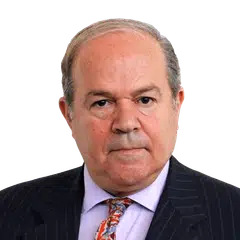
Jonathan Eyal is based in London and Brussels and writes on global political and security matters.
