
More AI chatbots for NTU, NUS to answer questions, boost efficiency and cut errors
Sign up now: Get ST's newsletters delivered to your inbox

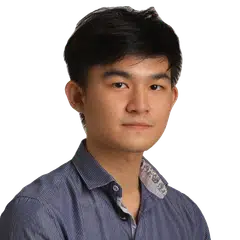
NTU’s artificial intelligence chatbot Leodar was developed by a team led by (from left) Assistant Professor Leonard Ng, Dr Jose Recatala Gomez and Dr Maung Thway.
ST PHOTO: NG SOR LUAN
SINGAPORE – There may be no such thing as a stupid question in schools, but there are questions with obvious answers. These questions, from students, make Assistant Professor Leonard Ng shake his head.
Every day, educators at Nanyang Technological University (NTU) like Prof Ng receive a slew of e-mails from students seeking feedback on assignments or asking about upcoming tests.
“We get questions like, ‘When’s the exam?’ or ‘Should we turn up next week?’ The answers are usually available online or in e-mails, but sometimes, students just don’t check,” he said.
These inquiries tend to surge right before a test – often late at night as students cram for it during last-minute revision sessions.
This is a problem for artificial intelligence (AI), Prof Ng thought, prompting him and a team of lecturers from NTU’s School of Materials Science and Engineering (MSE) to develop Leodar, an AI chatbot that doubles as a teaching and administrative assistant. Leodar is among the earliest custom generative AI chatbots rolled out to students at NTU.
Since its launch in January, e-mails from students have dwindled to just a handful per week for each tutor, down from several a day. Most queries are now handled directly by Leodar, which has answered over 12,000 questions from more than 150 users in 2024.
This has freed up teaching staff to handle more complex queries, Prof Ng told The Straits Times.
NTU is drawing inspiration from Leodar’s success and will apply its approach to AI to future chatbots used across the rest of the university, through the NTU AI Learning Assistants Project. The project standardises chatbot development within faculties to minimise duplication.
Leodar is managed by a team of tutors, who update the AI model’s database with the latest course information, lesson notes and curriculum. The system is built in collaboration with Amazon Web Services, based on Claude, a large language model built by AI start-up Anthropic.
The school is taking notes from the team’s approach to building chatbots. This includes a coding technique called retrieval augmented generation, which confines the AI’s responses to a pre-defined knowledge base, reducing the likelihood of AI making up its own facts. Prof Ng, who teaches data sciences and AI, said faculty members need to be familiar with programming and know how to update the assistant’s knowledge database in order for a chatbot like Leodar to work reliably.
The three tutors managing Leodar are able to view questions from students and can reply to them individually if they feel the AI has not provided good answers.
MSE student You Yan Yan, 21, said Leodar has been the go-to chatbot for many students over the past year because its answers are specifically aligned with students’ learning materials, including lessons on coding and mathematics.
“Other AI models like ChatGPT will give information from other sources, unlike Leodar, which uses materials taught in class,” she said.
As a best practice, MSE undergraduate Wang Tzu Wei verifies answers, especially for assignments, by checking answers or running the AI-generated code to spot any errors.
Besides helping undergraduates with their studies, the AI assistant saves users the trouble of accessing the school website and opening multiple folders to find the details they need, said Mr Wang, 21.
“Now I just type a question and get the answers I want,” he said, adding that the service allows students to ask last-minute queries, as tutors take time to reply.
AI assistants are also being introduced in other educational institutions. The National University of Singapore rolled out a suite of AI tools in July called AI-Know, which can retrieve information on courses, research papers and school policies for staff.
It plans to launch AI-Know for students in 2025 for college matters and as a study aid.
The Institute of Technical Education (ITE) is testing an AI assistant that recommends topics for course curricula based on the latest job and market trends, and plans to extend its use to more teaching staff by early 2025, said ITE senior director of curriculum and educational development Eric Cheung.
The assistant aims to speed up reviews of course curricula to ensure learning materials are relevant, he said. For instance, it analysed online sources on Singapore’s ageing population and recommended incorporating skills in geriatric care into the curriculum for healthcare-related courses and suggested specific points within the teaching agenda for these topics.
Dr Cheung said the technology is also being tested in a quiz generator for students, drawing data from existing course materials to create self-assessment modules for them.
Osmond Chia is a technology reporter at The Straits Times, covering topics from cyber security and artificial intelligence to the latest consumer gadgets.