
In the Hot Seat
The pursuit of greatness never stops: Golfer Jon Rahm
In this series, The Straits Times talks to key personalities in the sporting fraternity. Today, the spotlight is on Jon Rahm, the great and thoughtful Spanish golfer who plays on the LIV Golf tour and is winner of the 2021 US Open and 2023 Masters. He talks about perfectionism, winning, Tiger Woods and learning from his friend Michael Phelps.
Sign up now: Get the biggest sports news in your inbox

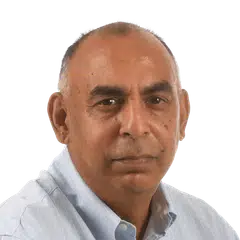
Jon Rahm of Spain, who plays on the LIV Golf tour, says that he learns from many athletes including Michael Phelps.
ST PHOTO: KEVIN LIM
Q: Are you a perfectionist?
Jon Rahm: I don’t think I’m a perfectionist. Actually, I don’t think being a perfectionist is a good thing for golf because I don’t think you can ever be perfect... I think you can be an extremist in how you approach a game and what you demand of yourself. And I think that’s what a lot of us are.
Q: Extremist in what sense?
Rahm: You can be extreme in preparation, attention to detail, things you do, and extreme in what you really expect of yourself. The way Tiger (Woods) prepared was extreme, the way a lot of people prepare and do things is extreme... To demand of yourself, to push yourself harder, to keep getting better. Let’s take Scottie Scheffler, for example, what he’s done in the last three years... very few people practise more than he does. It’s an extreme mindset to accomplish what he’s done and keep doing it.
Q: What’s extreme about you?
Rahm: If I had to say one thing I could say from a very young age I’ve always had an absolute blind belief in myself. No matter what. That’s what I think helped me through the amateur ranks, would help me in college and was helping me as a pro. There was never a doubt in my ability to compete.
Q: When you’re playing really well and you don’t win (he didn’t win for 539 days before victory in Hong Kong in March), there can be these little voices in the head. How do you quieten them?
Rahm: The voice in your head is always there. Play good or bad. Have you ever heard of endurance athletes or CrossFit athletes or people that physically demand of themselves a lot? When they get to a point of exhaustion, they talk about their mind and how your mind starts playing tricks on you to try to quit. Like, ‘oh, stop, stop’. And they train their body to push through that and after that there’s this reserve they didn’t know existed.
David Goggins (former Navy Seal and ultra-athlete) calls it the 40 per cent rule. When you think you’re done, you’re only 40 per cent in (or have tapped only 40 per cent of your potential)... I think that’s the same when you’re playing golf... I heard Rafa Nadal talk about this in the 2008 final in Wimbledon in his book. When he got close, in that tiebreaker... in the fourth set, he had a one-point lead and it was basically match point. He let himself think about the win. Your mind goes to what’s comfortable. And then he lost the next three points and goes into a fifth set and he had to come back and collect himself.
It’s very easy in golf, too, when you have so much time to think, to have your mind going to possible scenarios. Of what may happen in the future... It’s part of the training to let all those thoughts flow through and focus on what you have to focus.
Q: This reserve, how do golfers find it?
Rahm: It’s a little different because you’re not physically so tired. But mentally it could be the same mental blocks... I think it was 2019 in Dubai. I had a four- or five-shot lead on the ninth tee. Got comfortable, made two bogeys. Somebody made a birdie. Those five shots are gone immediately, right?
So while your brain keeps trying to go forward in time, (about) what may happen and predict the future, it’s a lot of work to try to let that go and focus on what you’re doing at the moment. That’s where I think it applies to golf.
Q: This may seem a strange question, but what does winning accomplish?
Rahm: There’s different ways to look at this. One is (as) a competitor: You won. It’s just the fulfilment of winning, period. And then you can look at it as a whole year... how do I feel about this win, how much have I accomplished, how much am I going to do?
I think the happiness of winning a tournament, I think Scottie spoke on it a little bit last year at the (British) Open, it lasts a lot shorter than people think. In my case I can tell you this, last week I was very relieved for a very long time and it wasn’t till I was in the shower, three hours later, getting ready to go to dinner that it hit me that I won and it was a very exciting five minutes. I was very happy in the shower... but then once it’s done, we have another tournament this week.
But it’s funny how quickly that euphoria of winning goes away. And how, in essence, the pursuit of greatness and the pursuit to be a champion never stops. It’s almost like you climb Mount Everest, and you instantly respond to base camp, and you have to do it all over again. It’s very interesting how it is.
You think this (feeling of euphoria) will last forever. If you were a kid and you were playing at recess and you won a game of football, how long did that last? An hour later you want to win again. So it essentially is the same thing.
Q: The word “great” is handed out cheaply these days. You are a great athlete who’s won Majors, but how do you see yourself? And how far are you from the golfer you want to be?
Rahm: Well, based on what I said earlier, as an extremist, I’ll say very far (laughs). But the earlier question is tricky because it’s almost like you’re talking about your self-worth. And I’m never gonna put golf in that equation. Golf is just my job (and) it’s never going to impact the worth I feel that I have as a human being, as a dad, as a son, as a husband.
I think that’s what maybe helped in my career a lot. I am much more interested in being respected as a husband by my wife, as a dad by my kids and as a son by my family, than for whatever I do on the golf course. That, to me, has more weight and that perspective helps me a lot. It helps me not let whatever I do on the golf course get to my head.
Q: How do you drive yourself? Do you write things down? Is it private?
Rahm: I write it down (in a journal). It is private, too.
Q: Do you write down in your journal what you want to win, and what you want to be? Is it scores? Is it winning?
Rahm: Yes... all of it. So I write down... what tournaments I want to win, what things I want to improve in my game, and even things that I want to improve personally outside of golf.
Q: Which athletes will you always stop to watch?
Rahm: As many as possible. You can learn from anybody.
Q: Tell me someone you learnt from.
Rahm: I spent a lot of time with Pat Perez (former PGA Tour and LIV Tour golfer) working on flighted shots with the shorter clubs. Somebody that can do it instinctively, very easily. And I just get mad at him till I finally said, ‘how do you do this?’ And worked with him to hopefully do it myself and that actually worked out very well last week.
I love going on YouTube and watching what other athletes have done. I’m always going to say I’m a Kobe (Bryant) fan. His mentality on how to approach his improvement, it’s always been something that captivates me. Same with Cristiano (Ronaldo). Any athlete that can push themselves to do what they’ve done for so long. Tom Brady, many others, it’s special.
The main ones would be Michael Phelps and Kobe. Now, they’re extremes because of different sports, but there’s something about their mindset and their process that helps.
Now, Michael Phelps, I can talk to personally, he’s actually a very good friend of mine. And he’s somebody I can text and he’ll give me an answer, but obviously swimming and golf are different things. There’s always something to learn. And he plays golf so he can apply it to me.
Q: What is specific about Phelps that you might have learnt from?
Rahm: One of the things is his attention to detail. I think it was the 200 fly (at the 2008 Beijing Olympics) when he jumped in the pool and his goggles were full of water and he couldn’t see. But the fact that he had trained for that, the fact that he thought ‘oh, I’m gonna just be blind for this race and see what happens’. And still ended up winning the gold is one of those mind-blowing things. So his attention to detail when it comes to that, to prepare for all contingencies, and be ready to win on his worst day.
I’ve talked to him about a lot of this. Some things can be applied to golf and some things cannot. But somebody that for six years, from 2002 to 2008, did not take a single day off – he was in the pool every single day and practised and trained for the goal, and ended up winning the eight golds. Says something, right? So, I don’t think that’s applicable to all sports, because they have a four-year cycle, maybe two years with the world championships, and he also retired at 31. I’m 31 right now and I don’t feel like I want to retire yet.
Q: Tiger Woods influenced the game in various ways. Did he influence you in any way?
Rahm: When he was doing what he was doing, my family had just started playing golf and he was the reference. As much as I was a fan of Seve (Ballesteros), Sergio (Garcia), Phil (Mickelson), many others, Tiger was Tiger. You can be a fan of Kawhi Leonard nowadays, but LeBron (James) is LeBron. You could be a fan of somebody else back in the 90s, but (Michael) Jordan is Jordan.
Tiger was somebody that changed the culture of the game... He was an athlete playing golf. He looked like an athlete. I know I may not (laughs), but he normalised things that weren’t normal. He normalised working out, getting stronger, getting bigger, and treating it in a very different way. And that’s what he did. That was the big shift.