
RHT’s Tan Chong Huat gets his highs on the Singapore Swing
Football-loving former president of SGA reflects on how the golf scene has evolved
Sign up now: Get the biggest sports news in your inbox

Tan Chong Huat, former president of the Singapore Golf Association (SGA), at his office in Collyer Quay. Tan, who is senior partner and chairman of RHTLaw Asia LLP, recently stepped down as president of the SGA after serving four years in the role.
PHOTO: SPH MEDIA LIMITED
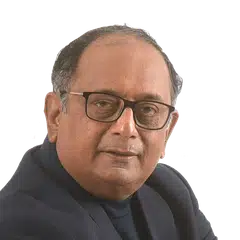
Tan Chong Huat, prominent law figure and golf administrator, has never been short of self-belief – conviction there was little he could not achieve if he set his mind to it. But shortly after the Covid-19 pandemic practically shut down Singapore, he got into religion or, you could say, a superior force that guides your actions.
“A few of my friends died during the pandemic and I was hit by this notion that life is so transient,” says Tan, who is chairman of RHTLaw Asia and recently stepped down as president of the Singapore Golf Association (SGA).
“It struck me that it is important to study His word carefully and when I leave, I would have done His bidding. The legal mind is trained to challenge and question, the spiritual mind to accept.”
Never a man to do things in half measures, Tan, who was educated at Queensway Secondary School and the National University of Singapore, marked his epiphany by pursuing a degree in theology during the Covid-19 disruption. Unsurprisingly, he finished that course from Westminster Theological Seminary in the minimum time stipulated – 18 months.
What exactly is that bidding he talks about is work in progress. Soon, Tan, who in August finished a four-year term as president of the SGA, is joining the board of Focus on the Family Singapore, a Christian charity that helps individuals and couples build strong family relationships. That’s in addition to his work at the National Council Against Drug Abuse.
Meanwhile, as his legal career progressed towards its denouement, he has been throttling back on his speciality field of corporate finance, mergers and project finance, and pioneering a digital asset exchange in Singapore. The 63-year-old lawyer is now transitioning into arbitration, digital assets and private wealth.
When it comes to missionary zeal, though, it has always been golf.
It is that attitude he seems to have taken to golf management. Those who worked with him during his eight years at the SGA – board member, vice-president and president – say he brought an unusual vigour to administering a sport which many had thought of as a dying one on the island.
“Chong Huat elevated golf’s profile in Singapore,” says Lee Fui Howe, who served in the SGA finance and investment sub-committee under Tan.
“We are seeing an increasing number of exciting tournaments being brought in. For the first time, we are seeing Singaporeans winning in major worldwide events. When Chong Huat speaks of golf’s ecosystem, you can almost see the fire in his eyes.”
The numbers tell the story. Even as the sport faces a squeeze from shrinking land space, Singaporeans are taking to golf in ever-larger numbers – and scoring big as well. The country now has 250,000 active golfers, which is about twice as many as those who played the game eight years ago.
Local talent such as Shannon Tan and Hiroshi Tai are making headlines in global sports pages. Shannon became the first Singaporean to win on the Ladies European Tour, make the cut in a major, and compete in the Olympics.
Tai, the first Singaporean to play in the Masters and the US Open, meanwhile, graduated from the Georgia Institute of Technology in June and will compete in various qualifying schools before representing Singapore at the Aichi-Nagoya Asian Games, which take place from Sept 19 to Oct 4.
Tai became the first Singaporean to win an NCAA individual title in 2024. Now, he begins his quest to be a successful professional golfer, and has his sights on earning a spot on the PGA Tour in 2027.
Meanwhile, casting a lengthening shadow is 17-year-old Troy Storm. Born to a Norwegian father and Singaporean mother, Storm recently won the 2026 Singapore Junior Golf Championship, finishing a stunning 17 strokes under par, including a stellar final round 63. Storm is an integral figure in SGA’s national squad.
Tan Chong Huat has clearly been a boon for golf, but where did his passion for the game come from? It is not that Tan, whose club memberships include the Singapore Island Country Club and Keppel Club, was born into golf.
The football-loving lawyer picked up the game only in his 30s when his then principals at global law firm White & Case encouraged him to do so as a means to build closer relationships with clients. His initial games were at the National Service Resort & Country Club’s par-3 course and he isn’t ashamed to admit that the real reason he took its membership was so he could holiday with his wife and three children at the chalets owned by the club.
He is quick to acknowledge that he is by no means a natural – two weeks away to witness The Open Championship and he feels the rust upon return.
As his golfing skills improved over the years, so did his practice. Moving through Shook Lin & Bok and Colin Ng & Partners – “I learnt from the best” – he eventually surfaced at KhattarWong, where he got to work with reputed legal minds such as Rajan Menon and the late L.P. Thean, At 43, a relatively young age for the time, Tan was made managing partner.
In 2011, he co-founded RHTLaw with Menon, Hee Theng Fong, Anne Chua, Azman Jaafar and the late Subhas Anandan. Alongside the legal practice, the founders initiated corporate finance and fund management businesses – RHT Capital and RHT DigiCapital.
RHT Capital, he says, has turned into a “mini investment bank” and the only licence it does not possess is to do underwriting. RHT’s sale of its corporate secretarial arm also proved profitable when EQT bought out the founders.
How did he come to be a sports administrator with so much going on in his professional career? Tan draws a link between career and passion; his decision to go into corporate law, he said, was motivated by his preference to do constructive work, while in litigation, you had to occasionally perform “destructively” as a prosecutor or in the service of a client.
Still, his entry into SGA, he says, was a matter of chance. One Saturday afternoon in 2018, he was having a siesta when the phone rang and the caller brought news that a certain group was trying to corner SGA.
Resistance to the idea led him to put up his hand for a two-year term as a board member, and steadily get more involved. Looking back, he speaks with pride about leading a delegation to South Korea to learn how that nation produced such fine golfers, particularly women. It helped that he was friendly with the chairman of Hana Bank, for whom he had done some corporate work. Hana Bank is one of South Korea’s major golf and title sponsors.
It was also the title sponsor for the Hana Financial Group Singapore Women’s Open in 2023 and 2024, held at Tanah Merah Country Club.
The fruits of these labours are getting to be evident in Singapore. He’s proud that SGA had a role in promoting rising star Shannon Tan’s career, coming in at a crucial time when the young golfer was getting into a groove.
Shannon was part of SGA’s High Performance team as a junior and elite amateur, where she had access to technical and financial support, including coaching, overseas training and international competition exposure. She is now part of the SGA Professionals programme and a Sport Singapore spexScholarship athlete, with individualised support for her training, coaching, travel and competition needs administered by SGA.
SGA looked for money to help her get to tournament venues early, which would give her more time to train. The money was also to help fund her coach’s travel arrangements.
“To be tied sixth at the British Open (Aug 2026) was simply fantastic for Shannon,” Tan says.
“She is coming along nicely, and we are all cheering for her.”
Hearteningly, a pipeline of golfers is in view. One hot prospect he names is 17-year-old Chen Xing Tong, who is making her presence felt on the junior circuit.
Golfers need more than practice areas; they need tournament experience. SGA organises some 30 events annually – for golfers in the eight-14 age group, the 14-21 bracket, and over 21 years of age. The best also get to participate in 15 international tournaments.
While some funding, such as for high performers, is supported by SportSG, SGA is otherwise self-sustaining, charging clubs a fixed rate for every nine holes on their properties and via fund-raisers, corporate sponsorships and partnerships. The association, he says, now has more than $5 million in reserves – a source of pride for him, given that expenses doubled between 2022 and 2026. Funds were far more meagre when he joined SGA.
More importantly, he says, there is a camaraderie and sense of purpose around SGA, as well as interest in its activities. This is evidenced by the four-cornered fight that took place when SGA was looking for his successor as president. That’s a far cry from when he was elected unopposed.
“The current team led by Lee Lung Nien will take SGA to greater heights,” says Tan.
I had half-expected Tan to be critical of the Government’s move to close multiple golf courses on the island, but he appears to be more understanding than indignant.
“The fact is, our courses are generally under-utilised,” he explains, advocating that clubs open up tee times to non-members – as the new Keppel Club has done.
That way, golf will never become too elitist. “Can you imagine if a golf club membership were to reach a million dollars? That would not be good for golf.”
Tan is also not against changing the format of play from two nine-holes to three six-hole rounds, as the Royal & Ancient, the body that guides the sport in its birthplace in Britain, has experimented with. That format works because those who wish to linger can play the last six holes. Those pressed for time can leave after 12 holes.
The other end of the age spectrum, which he is himself approaching, isn’t forgotten either in SGA’s plans. One programme for elderly golfers is called Silver Swingers Showdown. He lauds the Singapore Senior Golfers’ Society for their work in promoting golf among seniors, and aiding in the active ageing movement.
While he has more time now for playing golf, he remains interested in business. Tan’s latest entrepreneurial foray is the Singapore Digital Asset Exchange (SDAX), a firm that provides international access to private markets and alternative investments.
SDAX is currently looking at equities tokenisation and tokenising gold financial instruments, in addition to gold-backed loan notes.
Perhaps it is no surprise that with enough wealth, excellent health and an expanding family – two grandchildren included – Tan should still be interested in the business. After all, to work diligently within a calling and saving money are part of the Calvinist ethic in Christianity.
“This is where theology comes in,” he says. “I feel God has blessed me a lot, so better understand the Scriptures a bit more before He catches up with me.”