
Project for coastal cleanups among winners at Singapore sustainability hackathon
Sign up now: Get ST's newsletters delivered to your inbox

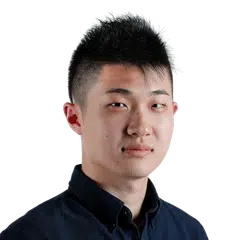
Coastal Clear, one of five winning teams at the hackathon. They have been working on an app to better coordinate the cleanup of beaches.
ST PHOTO: JASON QUAH
SINGAPORE - A team participating in the Build For Good Environment hackathon had been working on an app for the past month to better coordinate the cleanup of beaches.
But as they were doing so, news of an oil spill from a damaged cargo tank at Pasir Panjang Terminal broke.
So when the hackathon’s finale was held on June 22 at the Singapore Management University, judges for the event and other participants repeatedly asked the five-member Coastal Clear team questions on how they could help in the cleanup.
Senior Parliamentary Secretary for Sustainability and the Environment Baey Yam Keng, who was the guest of honour at the event, also asked the team about the app in relation to the oil spill.
He said he hopes for the team to make the app viable during the accelerator phase, which will be from June 29 to Aug 17.
“I did ask the team, is your app going to tell us where the oil is going to, which beach it’s going to, so that we can deploy resources in a targeted manner so that we can clean up our beaches faster,” he said.
“So hopefully, during the accelerator phase, they can do so.”
The incident involving a dredging boat and bunker vessel on June 14 resulted in Singapore’s biggest oil spill in over a decade, affecting the coastlines of East Coast Park, Labrador Nature Reserve, Keppel Bay, the Southern Islands and Sentosa, and the waters off Changi.
Two beaches in Johor were also left with blackened shorelines.
Coastal Clear was one of five winning teams out of 19 at the sustainability hackathon, an initiative by Open Government Products held in partnership with the SG Eco Fund administered by the Ministry of Sustainability and the Environment.
Open Government Products is a division of the Government Technology Agency that builds technology for the public good.
Eighty participants, ranging from 18 to 46 years old, had been selected from a pool of 400 members of the public who signed up for the hackathon, held from May 18 to June 22. They formed teams of three to five to address issues related to waste, nature and biodiversity, energy and climate change, and public hygiene.
The Coastal Clear app aims to help coordinate cleanups of the coastline by giving each area a score derived from data points from the environment agencies and input from volunteers about when the area was last cleaned.
The team behind the project said that currently, beach cleanups are often poorly coordinated, even among the volunteer groups.
This has led to situations when a cleanup is organised right after one has already been done, resulting in wasted efforts that would have been channelled to other beaches that need cleaning.
Ms Krithika Prasad, 28, an account manager and member of the Coastal Clear team, said that when the oil spill happened, the team discussed how they could help. They hope to run a pilot in the coming weeks during the accelerator phase.
The team will receive funding of up to $100,000 during this phase to develop and scale the project.
Ms Krithika said: “Now we’re focusing on volunteer organisations, but we also want to be community-facing later, for people to use the app to join the cleanups. We also want to partner with organisations like the National Environment Agency.”
Another winning project was RemediSG, a web app that aims to reduce the disposal of medication.
Dr Elton Tay, 45, a member of the four-person team, said they found that on average, more than $40,000 worth of medication is thrown away by each hospital every year.
He said that the project wants to serve as a redistribution platform for expiring medication, matching donors to recipients, and reducing waste.
He said the focus is not on individual donors but on public healthcare facilities and registered providers, avoiding the storage and safety implications.
“There is a potentially large volume of medication that we can cut waste on, by redistributing medication with a one- or two-month expiration to places that will need it, like free clinics and clinics for migrant workers,” he said.
“But because this is a not-for-profit project, we will need external funding to cover middlemen costs like logistics.”

RemediSG, a web app that aims to reduce the disposal of medication, was another winning project at the hackathon.
The other three winning projects were Koel, an app that uses sound recordings to identify animals in an area; Sus Feed, which upcycles food waste as fish food; and Report Lah!, a toilet cleanliness reporting platform.
Open Government Products director Li Hongyi said the winning projects will get help to take their ideas further.
“We don’t want this (hackathon) to just be kind of like a nice demo, and we clap, and then we finish,” he said.
“We’re going to put them through an accelerator programme and try to find a way of rolling these solutions out.
“(The hackathon) is to really try to find concrete ideas and concrete ways (to) take these concepts, prototypes, demos and pilots and make them part of our life in Singapore.”