
President Tharman warns of ‘long storm of global political instability’ as he approves Budget 2026
Sign up now: Get ST's newsletters delivered to your inbox

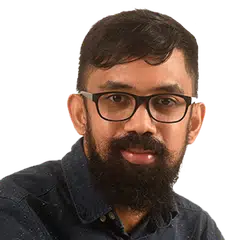
President Tharman Shanmugaratnam said Singapore has strategic buffers as it navigates the turbulence as a small nation.
PHOTO: THARMAN SHANMUGARATNAM/FACEBOOK

- Prolonged Middle East conflict and Strait of Hormuz closure risk a major global economic downturn and rising cost of living, impacting fuel, food, and commodity supplies.
- Political instability and disregard for international laws pose significant challenges for Singapore and the world, said President Tharman.
- Singapore's strategic buffers include its reserves, reputation, and investment in the future, enabling it to navigate turbulence and contribute globally.
AI generated
SINGAPORE - For every week that the war in the Middle East continues and the Strait of Hormuz remains closed, the risk rises of a major downturn in the global economy and of cost-of-living problems everywhere, said President Tharman Shanmugaratnam.
Prolonged fighting will not just result in fuel prices going up and staying high for longer, but also impact food supply and prices, as well as supplies of many other critical commodities that the world depends on, Mr Tharman said as he formally approved the Government’s spending plans for the coming financial year.
In social media posts on March 18, the President said the conflict represented “a major new stress point” for the global economy and financial markets, which were already under strain.
The war between the US, Israel and Iran, which is in its third week, has largely halted shipping through the Strait of Hormuz. The waterway between Oman and Iran has been critical to the transportation of about one-fifth of the world’s oil and gas.
This resulted in the international oil benchmark Brent crude hitting US$119.50 a barrel on March 9 – its highest since July 2022. Oil prices continue to hover above US$100 a barrel.
Yet, these economic problems are not the gravest challenge facing the world, said Mr Tharman, who called on Singaporeans to brace themselves for “a long storm of global political instability”.
The last few years saw countries increasingly turn to wars and destruction as ways to settle rivalries and differences, with an open disregard for the United Nations Charter, he noted. The UN Charter bans the use of force against the territorial integrity or political independence of any state.
International humanitarian law, established to protect ordinary people in conflicts, has likewise been ignored, added Mr Tharman.
“One way or another, we are looking at a more fragile world,” he said.
But Singapore has some strategic buffers as it navigates the turbulence as a small nation, said Mr Tharman.
Reserves that the Republic has built up will help it deal with major crises, as it has done before. Singapore’s Budgets also enable the country to invest boldly in skills and capabilities, while preserving some finances for future needs, he added.
Singapore is also trusted by countries around the world, and this opens up new opportunities to cooperate for mutual benefit, while diversifying its trade and sources of energy, said Mr Tharman.
“That must remain the Singapore way – always prepared for a world where things may not go as we hope, investing in the future for every Singaporean, contributing our part to the global good, and standing up for what we believe in – a fair, open and humane world order,” he said.
On March 6, Parliament unanimously passed a record $154.7 billion spending plan that includes more support for firms to stay competitive, and a national push to tap the potential of artificial intelligence.
In his Budget speech on Feb 12, Prime Minister Lawrence Wong said the Government has a full agenda in this term to refresh Singapore’s strategies to meet the challenges ahead, and that Budget 2026 is the first step in this effort.
