
From jobs to healthcare, range of issues to be raised by new batch of NMPs
Sign up now: Get ST's newsletters delivered to your inbox

Nine NMPs – consisting of eight new faces and one returning member – were announced by the Office of the Clerk of Parliament on Jan 2.
ST PHOTO: CHONG JUN LIANG

- New NMPs aim to address workforce issues, healthcare costs, and special needs support, offering non-partisan perspectives in Parliament.
- Their focuses include inclusive development, business competitiveness, workforce resilience, and regulatory agility.
- President Tharman Shanmugaratnam will present the instruments of appointment to the NMPs on Jan 8, before they take their oaths and affirmations when Parliament sits on Jan 12.
AI generated
SINGAPORE – Nominated MPs (NMPs) from the latest cohort want to use their upcoming term in Parliament to speak on a range of issues, ranging from labour force resilience to healthcare costs to better support for those with special needs.
Those The Straits Times spoke to on Jan 5 also emphasised that their role will differ from that of elected MPs. This includes being able to examine Singapore’s longer-term challenges without being subjected to the pressures of electoral politics.
Nine NMPs – consisting of eight new faces and one returning member – were announced by the Office of the Clerk of Parliament on Jan 2. This came after a Special Select Committee had deliberated on a list of 57 proposed names, the second-largest pool since the scheme was introduced in 1990.
President Tharman Shanmugaratnam will present the instruments of appointment to the NMPs on Jan 8, before they take their oaths and affirmations at the next sitting of Parliament on Jan 12.
The incoming NMPs are:
Mr Azhar Othman, executive chairman of Enercon Asia
Associate Professor Kenneth Goh Toh Chuan, Singapore Aquatics president
Dr Haresh Singaraju, family physician at National University Polyclinics
Associate Professor Terence Ho Wai Luen, academic and university administrator
Ms Kuah Boon Theng, managing director of Legal Clinic LLC
Mr Mark Lee Kean Phi, chief executive of Sing Lun Holdings
Dr Neo Kok Beng, founder and chief executive of NEO Aeronautics
Professor Kenneth Poon Kin Loong of the National Institute of Education
Mr Sanjeev Kumar Tiwari, general secretary of the Amalgamated Union of Public Employees and National Trades Union Congress central committee member

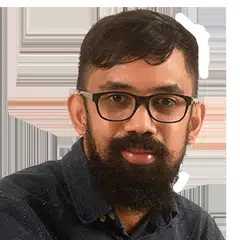
(Top row, from left) Mr Azhar Othman, Associate Professor Kenneth Goh Toh Chuan and Dr Haresh Singaraju. (Middle row, from left) Associate Professor Terence Ho Wai Luen, Ms Kuah Boon Theng and Mr Mark Lee Kean Phi. (Bottom row, from left) Dr Neo Kok Beng, Professor Kenneth Poon Kin Loong and Mr Sanjeev Kumar Tiwari.
PHOTOS: SP JAIN SCHOOL OF GLOBAL MANAGEMENT/FACEBOOK, SHINTARO TAY, LINKEDIN, LIANHE ZAOBAO, ST FILE, CHIN SOO FANG
Jobs and economic development are a major theme for the incoming batch of NMPs, with an eye towards how Singapore should adjust its strategies and policies in the face of technological disruption.
Prof Ho told ST he would like to focus on inclusive development, including how companies and workers can prepare for the future through human-centred work redesign, reskilling and lifelong learning.
Prof Ho, who is deputy executive director at the Institute for Adult Learning at the Singapore University of Social Sciences, said he hopes to draw on research insights from the academic community, including that of his colleagues from the institute.
The economist said his maiden speech is likely to touch on the importance of learning agility, adaptation and innovation – both for individuals and the larger society.
Ms Kuah, the sole female NMP in this cohort, said she intends to focus on issues such as technology transformation, the need to enhance workplace protections for healthcare workers, and attrition in the legal profession.
The medical lawyer said she also wants to push for more adult daycare facilities to support the care of young adults with special needs after they complete their formal education, and for the fine-tuning of support schemes for the elderly and those with large medical bills.
A director on the board of Assisi Hospice and honorary legal advisor to the Singapore Medical Association, Ms Kuah said her work made clear to her the cost of chronic illness and the burden on caregivers here.
“There is a need to always fine-tune the measures available to support those among us who are the most vulnerable and are facing the most challenges,” she said.
Dr Haresh said he will focus on supporting public healthcare workers by ensuring professional responsibility, workload and risks are better aligned, and on strengthening support for young families so parents feel more confident about starting and raising families.
He said: “As a family physician, healthcare leader and father of two young children, I see these pressures first-hand. I will bring these ground perspectives into Parliament in a constructive way.”
Mr Lee, the only second-term NMP this time around, said he intends to focus on business competitiveness, workforce resilience and regulatory agility, particularly as Singapore now operates in a more fragmented and volatile global economy.
With decades of experience building and operating businesses across manufacturing and services, Mr Lee said he has seen how external shocks like tariffs, supply-chain disruptions, labour constraints and rising compliance costs translate into concrete pressures on companies’ cash flow, hiring decisions and long-term investment.
“These are not abstract issues; they shape whether firms expand, automate, or pull back,” he said, adding that he will advocate for practical refinements such as upskilling that leads to job redesign and productivity – not just course attendance.
Prof Goh, an academic researching and developing entrepreneurial talent, said he has seen first-hand how policy choices shape Singaporeans’ developmental pathways, career transitions, and outcomes.
The former national swimmer said his maiden speech in Parliament will likely focus on how a broad, inclusive base of participation in sports can strengthen high performance, while articulating the wider societal outcomes of elite sport beyond medal tallies.
“At the heart of it, I hope to contribute to building a Singapore where people with diverse talents and passions can find their place, flourish, and contribute to our shared future,” he added.
Mr Tiwari said he hopes to focus on issues relating to workers’ well-being, fair employment practices, lifelong learning, and workplace relevancy, particularly for rank-and-file workers, professional, managerial, executive or technical workers, and mature workers navigating economic transitions.
Having spent many years working closely with workers and employers, he said he has seen first-hand how national policies translate into real-life outcomes on the ground and intends to draw on this practical experience.
Mr Azhar said he will contribute in the field of clean energy, sustainability, and local and international business concerns and growth, while Prof Poon said he plans to give a voice to those less heard, especially persons with disabilities.
Dr Neo said the major themes of his NMP term will include economic vibrancy, national resilience, and developing a gracious and caring society.
As a foster parent, he said he grieved over the tragic death of four-year-old Megan Khung, who died in 2020 after more than a year of suffering physical and emotional abuse at the hands of her mother and the woman’s boyfriend.
While there were discussions on and measures implemented for physical abuse of children and youth in the aftermath of the case, Dr Neo also stressed the importance of looking at situations of mental abuse where physical signs are not detectable.
He said: “Our society should evolve from being considerate and kind, to ‘active caring’. We have to actively care for one another, looking out for one another and helping one another.”
On the role of NMPs, Ms Kuah said the members bring their own professional and life experiences to speak out on issues that they feel are important, unconstrained by party politics.
Mr Tiwari said not representing a constituency allows NMPs to focus more deeply on specific policy areas and raise issues that may otherwise receive less attention by offering constructive feedback, highlighting ground realities and contributing thoughtfully to national discussions.
Mr Lee said he sees the role of NMPs as complementing elected MPs and because they do not represent constituencies, they are empowered to focus on longer-term structural challenges, raise uncomfortable questions where necessary, and examine policy trade-offs without electoral pressures.
“The role (of NMPs) is not to oppose the Government, nor to replicate constituency work,” he said. “It is to stress-test policies, challenge assumptions, and improve outcomes through constructive engagement.”
