
Passion, patience, persistence: 3Ps of research success for membrane tech pioneer Wang Rong
Research is a journey, often without a defined end. Yet with every project, more questions get uncovered and that can open up new fields and new methods and lead to potentially great rewards. Judith Tan speaks to three award-winning scientists and a five-star research team about what keeps them going.
Sign up now: Get ST's newsletters delivered to your inbox

Professor Wang Rong (right) and Dr Chen Yunfeng of NTU with their specially developed hollow-fibre membranes.
PHOTO: A*STAR
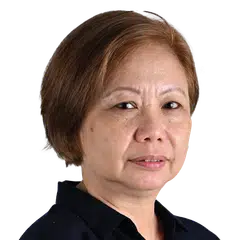

SINGAPORE – She dedicated the past 15 years to perfecting the filter membrane she pioneered for use in water reclamation projects in Singapore and adapting it for commercialisation.
Today, Professor Wang Rong, 61, is reaping the spoils of her dedication, as her “baby” is used not only in water reclamation but also in the pharmaceutical and food and beverage industries.
She first developed a protein-based membrane in 2012 that could be used for desalination, water reclamation and wastewater treatment, as well as liquid purification and gas separation.
This membrane’s water permeability was about 40 per cent better than that of conventional membranes, and plants that use it benefit from about 25 per cent in energy savings.
She went on to produce an improved bio-programmable hollow-fibre reverse osmosis membrane in 2018 that is now used at Newater’s four plants, where used water is reclaimed as ultra-clean water to improve the Republic’s water sustainability.
This membrane is made of fibres with microscopic pores that allow water to pass through while blocking contaminants, and enzymes were used to make it more permeable to water.
Using it helps lower operating pressures and can even halve the energy needed for pumping.
“I knew the industry needed to pick this technology up,” she said.
The membrane took Prof Wang and her team six years to develop, and put them at the forefront of novel hybrid membrane system development.
This technology has been licensed to her spin-off company, H2MO Technology, since 2020.
For her outstanding contributions to the field of membrane science and technology, Prof Wang was given the President’s Technology Award in 2022.
The road to success was paved with years of passion, patience and persistence on her part.
Her team spent over 10 years on just one technology, she noted.
“I know the younger generations want to succeed, and they want to do it quickly.”
But there is no such thing as “instant noodles” in research, said the renowned scientist and academic, who is also the director of the Singapore Membrane Technology Centre.
The centre is under NTU’s Nanyang Environment and Water Research Institute (Newri), which collaborates with industries and governments to create solutions for water treatment, waste management and resource recovery.
“We need to always remind our researchers to be patient and be persistent.
“They must understand that it is almost impossible to get big results for research overnight,” Prof Wang said.
A scientist who jumps from one hot topic to another would not be able to do research “deep enough to push the real stuff out”.
Stressing the importance of having a passion for research, she added: “I tell my students and the staff that if they chose research as a career, they should ask themselves whether they did it for themselves or for their parents.
“If they are doing it for themselves, then they would be able to go through many of its challenging issues.”
The team later discovered that this membrane can also be tailored for other types of water purification processes applicable to food and pharmaceutical manufacturing, to better preserve flavours and nutrients.
There was also interest from China in the new membrane, so the team developed new applications for it, such as to concentrate amino acids at scale for pharmaceuticals.
What Prof Wang was extremely proud of was the fact that her researchers from NTU joined H2MO when it scaled up and moved its production of membranes to China in 2021.
One even became the firm’s chief technology officer.
Today, H2MO has offices and research centres in both Singapore and China focusing on the commercialisation of the hollow-fibre bio-programmable membrane technology.
The firm has started mass production of the membrane, and also has clients in the Middle East.
“As a technology inventor, I hope my inventions in the lab can be used in the real world.
“That has always been my sense of achievement,” Prof Wang said.
“Singapore is the best place to do this technology innovation and then take it to the marketplace, because there is lots of funding support from the Government, agencies, the university.
“I feel very lucky, as not everyone has the opportunity to do a small part in the laboratory and finally make it workable for the community, for the world.”
He ditched marine biology and is now a leading expert on Asian genetics

Professor Liu Jianjun is former acting executive director and distinguished principal scientist of the Laboratory of Human Genomics at the Genome Institute of Singapore.
PHOTO: A*STAR
At 61, Professor Liu Jianjun is a leading human geneticist who has advanced the understanding of diseases prevalent in Asians, as well as the treatment outcomes.
But Prof Liu, former acting executive director and distinguished principal scientist of the Laboratory of Human Genomics at the Genome Institute of Singapore (GIS), did not start out studying genetics.
His academic roots are in marine biology.
Defence scientist Quek Gim Pew’s recipe for success: Dare to dream, dare to fail

Mr Quek Gim Pew made significant impact in the development of advanced defence technologies and systems.
PHOTO: DSO NATIONAL LABORATORIES
With the analytical mind of an engineer and the curiosity of a scientist, Mr Quek Gim Pew has the best of both worlds when it comes to research.
The 67-year-old graduated from NUS in 1981 in electrical engineering before earning his Master of Science degree from the Naval Postgraduate School in the US in 1986.
When he joined the Ministry of Defence (Mindef) more than 40 years ago, he became immersed in the world of defence research and development (R&D).
Long-range view of vision correction brightens the world for myopic children

The award-winning team that put Singapore on the myopia map (from left) the late Professor Roger Beuerman, Professor Saw Seang Mei, Associate Professor Audrey Chia and Professor Donald Tan.
PHOTO: SNEC
With four in five young adults in Singapore living with myopia – a condition of the eye that makes faraway objects appear blurred – it was little wonder researchers at the Singapore Eye Research Institute (Seri) made myopia its key study focus.
“It was chosen because it was such a big problem as we now know,” said Professor Donald Tan, a former director of Seri.
In 1997, the newly set up institute carried out the first clinical trials on national servicemen when they came in for enlistment.
Nominations are now open for the President’s Science and Technology Awards 2025. Send your nominations to
psta.gov.sg/nominate
Brought to you by The Straits Times in partnership with the National Research Foundation, Singapore
