
Saving gentle giants: 7 species of marine mammals spotted in Singapore
Sign up now: Get ST's newsletters delivered to your inbox

In 1994, a false killer whale strayed into Singapore waters and died after a week.
PHOTO: LIANHE ZAOBAO FILE

SINGAPORE – Spanning records from 1820 to 2024, a new study has revealed the clearest history yet of Singapore’s marine mammals.
The Straits Times highlights seven species that have surfaced in the Republic’s waters and how scientists say they should be protected.
Indo-Pacific humpback dolphin (Sousa chinensis)
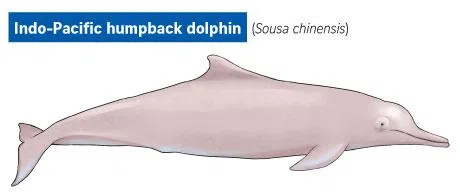
The most common marine mammal spotted here.
The species is seen primarily near the Southern Islands.
Local records indicate that the carnivore travels in an average group size of less than three in Singapore’s waters.
It appears to have adapted to human activity here. Its numbers have declined over the past two or three decades.
Dugong (Dugong dugon)
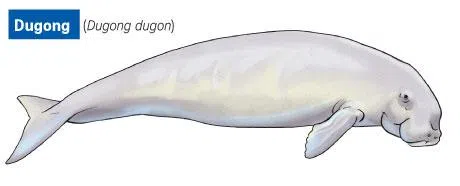
The sea cow, so named for its diet of seagrass, is the second-most commonly recorded marine mammal here, where it is typically found as carcasses.
It is rarely seen alive, most likely because of its shy nature and greyish-brown colouration, which blends into Singapore’s murky coastal waters.
It routinely returns to historical refuges in Sungei Johor Estuary, leaving trails in seagrass meadows as it feeds. It is often found alone.
The only recorded occurrence of a pair was a mother and its calf off Pulau Ubin in 1998.

Gracie the dugong with a participant from Underwater World Singapore’s Dive with the Dugong programme.
PHOTO: UNDERWATER WORLD SINGAPORE
As the mother had drowned from being entangled in a fishing net, the calf, named Gracie, was rescued and rehabilitated at Underwater World Singapore.
Indo-Pacific bottlenose dolphin (Tursiops aduncus)
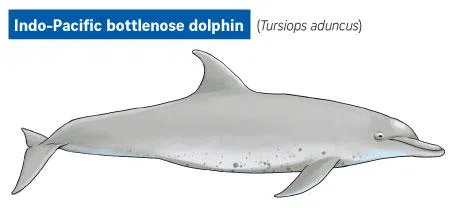
The third-most commonly seen marine mammal here is typically found in cleaner waters of the Singapore Strait near the Southern Islands.
Among the most common species, it has the highest average group size, at more than seven dolphins.
Its numbers have dropped significantly over the past two or three decades.
Sperm whale (Physeter macrocephalus)
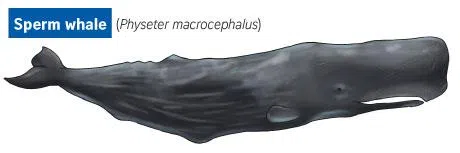
There are only two records here of the deep-diving species, which is rarely found in shallow waters.
Its nutrient-rich waste feeds phytoplankton, which absorb planet-warming carbon dioxide.
The species can grow up to 18m long.
It does not have an established population here. A female adult whale was found dead off Jurong Island in 2015.
False killer whale (Pseudorca crassidens)
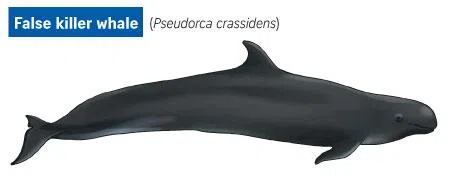
The dolphin has been spotted twice in Singapore’s waters. It is highly sociable and can form pods of up to 500, incorporating other dolphin species.
The carnivore has been known to eat other dolphins, although it usually eats squid and fish.
In 1994, a 3.75m-long female died off Tuas, after it failed to find its way out of a bay there after a week.
Indo-Pacific finless porpoise (Neophocaena phocaenoides)
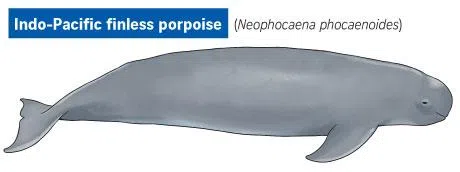
This porpoise first surfaced here in 1996, when a carcass was found in Pasir Ris Park.
The carnivore does not leap out of water like dolphins do, making it difficult to spot in the wild. It frequents shallow water along mangrove-lined shores.
Irrawaddy dolphin (Orcaella brevirostris)
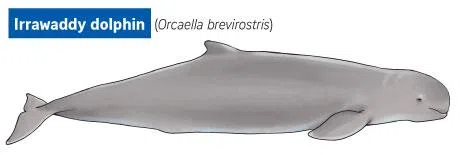
The dolphin has been found here only once, in 2014, when its skeletal remains were found partially buried in the sand on a beach at East Coast Park.
The dolphin eats predominantly fish, spitting water while feeding to help capture them.
It tends to swim in small groups of up to six.
Threats to Singapore’s marine mammals
Habitat degradation and loss due to coastal development
Noise pollution
Vessel strikes due to busy territorial waters
Highly variable water quality and harmful algae blooms, which most likely result in unstable food supply
Entanglement in fishing gear
Hot spots
Sungei Johor area (Changi, Pulau Ubin and Pasir Ris)
Southern Islands (Kusu Island, Sisters’ Islands and St John’s Island Complex)
Western Islands (Pulau Hantu, Pulau Semakau and reefs in the vicinity)

Recommendations for conservation
Protection of marine mammal hot spots as nature reserves or marine parks
Speed limit of 10 knots at hot spots
Understanding foraging and reproduction activities (for example, mating, birthing and caring for young) at hot spots and their seasonality
Local marine mammal observer networks. In conjunction with International Marine Mammal Protection Day, the National University of Singapore launched the Mega Marine Life in Singapore platform for residents to submit observations of marine mammals at this website.
Sources: Ng et al, Thai National Parks, National Parks Board, National University of Singapore, International Whaling Commission
