
‘Come back to help rebuild Singapore’: 5 things to know about pioneer master planner Liu Thai Ker
Sign up now: Get ST's newsletters delivered to your inbox

During his tenure at HDB, Dr Liu Thai Ker oversaw the development of 20 of the 24 HDB towns in Singapore.
ST PHOTO: DESMOND FOO
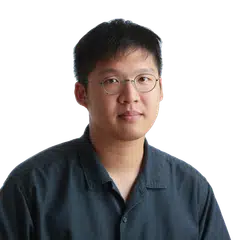
SINGAPORE – Dr Liu Thai Ker, widely regarded as the “architect of modern Singapore”, has died at 87.
His death was confirmed on Jan 18 by his son Daniel Liu, who told The Straits Times that his father had developed complications from a fall about a week earlier.
Here are five details about the late Dr Liu.
Artistic ambitions
The eldest of five siblings, the Malaysian-born Dr Liu wanted to follow in the footsteps of his father, renowned artist Liu Kang, who was key to establishing a local style in Singapore’s visual arts.
Skilled in calligraphy and drawing, he held exhibitions in the 1950s and 1960s, according to the National Library Board’s profile on him, but eventually studied architecture instead due to his mother’s objections.
An alumnus of the University of New South Wales in Sydney and Yale University, he topped his cohort for both his graduate degrees and once worked in the New York office of Chinese-American architect I.M. Pei, who was one of the best-known and most prolific architects of the 20th century.
‘Rebuild Singapore’
Dr Liu spent decades in public service after graduation, motivated by his desire to improve Singapore’s physical environment.
In an earlier interview with The Business Times, Dr Liu referenced the poor living conditions in Singapore after World War II, and said: “I told myself even before I went overseas, that I wanted to upgrade myself.
“First of all, to speak English as well as anyone else. Second, I wanted to become one of the top students at the university. And third, to come back to help rebuild Singapore.”
Dr Liu joined HDB as the head of design and research in 1969. He became its chief architect six years later and eventually chief executive in 1979.
During his tenure at HDB, he oversaw the development of 20 of the 24 HDB towns, as well as about half of the more than one million public flats across the country.
In 1989, Dr Liu moved to the Urban Redevelopment Authority, where he became its first chief planner and chief executive.
While heading URA in the 1990s, Dr Liu contributed to the revisions to the Concept Plan – which arose from the British master plan for Singapore – and was key in firming up policies for conservation projects here.
In 1992, Dr Liu said he left public service to join RSP Architects Planners & Engineers (RSP) as a director to pursue his “youthful ambition of being an architect”, as quoted in a 2017 ST report.
Homage to father
Dr Liu left RSP after 25 years and set up his own architecture firm when he was 79.
Morrow Architects and Planners is an homage to his father, who had set up a small business named Morrow Studios during the Japanese Occupation in Singapore, offering commercial sign painting.
In a 2017 interview with ST, Dr Liu said he wanted to create “an environment that operates like a smaller studio, as opposed to a large corporation”.
“Starting something on my own allowed for that,” he added.
Notable projects
Dr Liu oversaw several major projects here and abroad during his long career.
In Singapore, he was behind projects such as Marina Bay Cruise Centre Singapore, the Yong Siew Toh Conservatory at NUS and the Nanyang Academy of Fine Arts campuses.
Many of his major overseas projects were in China, with his involvement in its urban development starting in the 1980s, according to a 2020 interview with ThinkChina.
These include the Weifang Arts and Cultural Centre in China, which was completed in 2013 and spans 294,000 sq m.
Dr Liu was also invited to design the Changle International Airport by then Fuzhou Party Secretary Xi Jinping, who is now the Chinese President. The airport was opened in 1997.
Dr Liu helped to plan close to 50 cities in China, according to a 2018 China Daily report.
For his contributions to urban planning in the coastal Chinese city of Fuzhou, which is also his mother’s hometown, he was made an honorary citizen there in 1994.
A patron of the arts
In addition to his work in urban planning and architecture, Dr Liu was a devoted supporter of the arts.
He served as chairman of the National Arts Council from 1996 to 2005, during which he oversaw Singapore’s entry into the Venice Biennale, among other accomplishments.
He was the founding chairman of the Singapore Tyler Print Institute, a workshop and art gallery space that promotes experimentation in the medium of print and paper.
According to an article on Esplanade Offstage, Dr Liu was a fan of Western opera and regularly attended English-language theatre performances and concerts by the Singapore Symphony Orchestra.