
Now you see it, now you don’t: Why data can’t capture the AI revolution
Nobel laureate Michael Spence says the biggest economic transformation in history may barely show up in statistics but could widen wealth inequality.
Sign up now: Get ST's newsletters delivered to your inbox

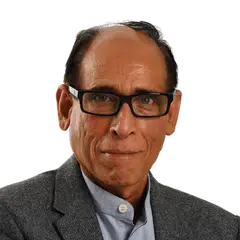
Nobel prize winner Michael Spence says that when something revolutionary like AI arrives, people tend to overestimate its impact in the short run and underestimate it in the long run.
PHOTO: ST FILE
Suppose a technology arrives that makes doctors more effective, accelerates scientific discovery, upends labour markets, shifts trillions in wealth, and destabilises tax systems — all while barely registering in official economic statistics.
That is precisely what Michael Spence told me is coming, in a recent interview.