In Good Company
‘If someone needs a million drones, we must be able to deliver’: Weapons maker Saab’s CEO
Sign up now: Get ST's newsletters delivered to your inbox
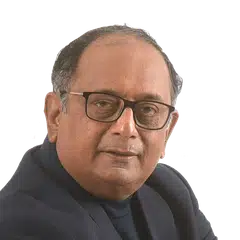
Ukraine has underscored the need to adapt tactically and technologically at speed, with decentralised decision-making and close partnership between end users and the industry, says Saab CEO Micael Johansson.
PHOTO: REUTERS
SINGAPORE – These are boom times for Europe’s defence companies. The long war in Europe, the five-month-old conflict over Iran, and US President Donald Trump’s push to get European and other defence partners to carry more of the military financial burden have boosted orders, as have geopolitical rivalries extending to new areas such as the Arctic.
Meanwhile, a wave of technological advances in software, quantum and robotics makes constant upgrades an imperative for every military.
For Saab – a Swedish defence firm known for its Gripen fighter jets, GlobalEye reconnaissance planes and Carl-Gustaf anti-tank rockets – Sweden’s entry into NATO, along with neighbouring Finland’s, has opened additional opportunities to participate in the transatlantic grouping’s defence plans.
It’s showing in the company’s performance. On July 17, when Saab announced its second-quarter results, operating profits came in at 2.79 billion Swedish kronor (S$374 million), up 41 per cent from the year-ago quarter. New order bookings of 68.39 billion kronor were boosted by a 47 billion kronor submarine contract with Poland.
“Ukraine has taught us how quickly we need to tactically and technologically adapt every night, every week, and to do that in a very decentralised way with close partnership between the end user and the industry,” Saab chief executive officer Micael Johansson told me in a recent interview.
“The other lesson is that scale is absolutely important. You have to have mass capability, and I don’t think many defence forces ever thought about scale that way.”
As in Ukraine, the war in West Asia has put the finger on scale and magazine depth, as the notion that the most powerful militaries can finish a war in a week or two – against a much less powerful force – has been demolished as fanciful.
“We have to create a model where we have preparedness when it comes to supply chains, and if someone needs a million drones, we must be able to fulfil that. No one keeps so much in stock, but if the demand comes, the industry has to be prepared.”
Stockholm-headquartered Saab announced on June 30 that it had formally signed a 24.6 billion kronor order to supply 16 front-line Gripen E aircraft to Ukraine – a deal agreed on when President Volodymyr Zelensky visited Stockholm five weeks earlier.
Johansson was on hand to receive the Ukrainian leader in Kyiv at the time, having just flown in from Canada, which separately had just announced it was buying Saab’s GlobalEye early warning and command and control planes, choosing it over Boeing’s E-7s.
Canada is an Arctic state, and geopolitical contest has been growing in the region, widening Ottawa’s – and NATO’s – need for monitoring systems.
Arctic Finland and Sweden were admitted as NATO members in 2023 and 2024, respectively – an event that formally extended the security group’s land borders with Russia by some 1,300km – and I was curious to know how this development has changed things for Europe and Saab.
Johansson said that with Finland and Sweden located to the north of most European NATO member states, strategic thinking has taken on a South-North perspective, where in the past it was assumed that any threats from Russia would flow westwards. It also brings new capability targets and introduces a Nordic perspective to NATO.
A Saab JAS-39E Gripen participating in the Royal International Air Tattoo at RAF Fairford in Gloucestershire, England, on July 19, 2025.
PHOTO: REUTERS
“All of a sudden, we get access to what NSPA is acquiring,” he said, referring to the NATO Support and Procurement Agency. “They always bought short-range air defence missiles and such from us, but now we can get contracts that we did not see before. We have much more insight into NATO’s capability, doctrine and development (plans). I don’t think we have seen all the effects yet but I am happy the political step has been taken.”
Earlier in July, at NATO’s Ankara summit, secretary-general Mark Rutte announced that the grouping and Saab had initiated negotiations for the purchase of 10 Saab GlobalEye airborne early warning and control systems, to eventually replace the Boeing-made E-3 Sentrys currently in use.
Although Johansson will not say it explicitly, Europe’s political difficulties with the Trump administration are clearly impacting NATO decisions. That extends to perspectives and planning on the Arctic – a region whose principal shipping route along the West-to-East axis, increasingly navigable in summers due to ice melt, is dominated by Russia.
“We have a good relationship with the US but we cannot rely only on US-based capabilities and intelligence going forward,” Johansson told me. “We (eventually) have to have our own space capabilities, which is not going to happen in a week. I have been pushing to set up our internal space capabilities. We need to start sending satellites up in space to have some situational awareness.”
Johansson, 65, has been president and chairman of the Aerospace, Security and Defence Industries Association of Europe (ASD) for more than a year, a body representing some 4,000 companies spread over 21 European nations. From his perspective, which Europeans are moving fastest from talk to action on the defence front?
Poland, he said, is the European Union member state leading the way to accumulating tangible assets. Germany, too.
“The Germans are creating dominant capabilities that they have not had for a while, and they are spending a lot of money on it,” he said.
“Sometimes, we had forgotten that we have a threat environment and unpredictable neighbourhoods and that we need deterrence,” he added. “That’s why I like to think of defence as ‘investment’, not spending. Aside from the (impact on creating jobs), this has other spin-offs, which can be good for society.”
That said, Europe could collaborate more and bring better alignment of capabilities rather than each power adopting go-it-alone strategies. At the same time, getting all 27 EU member states to agree on a project or plan isn’t easy.
“It must be a coalition of the willing. A few countries joining up to say ‘we need to build an integrated surveillance system, a layered one’. And then three or four countries do different parts of it, and you add a couple more along the way. We do discuss all this within ASD.”
Sweden is a huge contributor to the European effort to arm Ukraine as it battles Russia.
Saab’s Gripen sales to Ukraine alone give it plenty to do over the next five years. After the initial 16 Gripen versions C and D donated by Sweden, Kyiv will buy another 20 of the front-line version E, a next-generation, single-seat model featuring a more powerful engine, advanced active electronically scanned array radar, upgraded electronic warfare suites, and increased payload capacity.
Ultimately, the plan is for Ukraine to buy some 150 of the planes, which could be manufactured across Sweden, Brazil and Canada.
Around the Indo-Pacific, Thailand, a rare Asian military that operates Gripens, is also in the market to buy version Es, Johansson revealed. Likewise, Saab is pitching for orders from the Philippines, though he acknowledges the challenge of competing against its American rivals, given Manila’s close strategic ties with the US.
In Australia, Saab provides combat management systems for all naval assets, while the firm is setting up a factory outside New Delhi to manufacture the shoulder-fired Carl-Gustaf M4s for the Indian army. This will be the company’s first full-scale production plant outside Sweden.
Although New Delhi, having embarked on a significant effort to diversify its sourcing away from its dependence on Russian arms, is largely committed to the French-built Rafale for its air force, Johansson believes he might be able to sell Gripens there as well. In a recent meeting with Prime Minister Narendra Modi, he sweetened the offer with promises of technology transfer – which always goes down well with the Indian leader, who stresses national self-reliance.
Modern warfare has demonstrated how software and artificial intelligence are shaping the battlefield. Which areas hold the most promise, and where should the world be careful about involving AI?
“Not to have a capable AI agent to make sense of all the information gathered through equipment and connectivity – multi-domain operations, as they are called – would be a huge mistake,” Johansson said. “We are already there – our GlobalEyes use AI for command and control.”
Militaries have a better chance of winning if they can process information and react faster. “Ukraine has been incredibly successful in creating this situational awareness.”
At the striking end, Saab recently trained an algorithm to perform a beyond-visual-range sort of mission in a Gripen in production, helping the pilot position the missile in the most optimised way.
“It was amazing. After a few weeks of training, the AI agent was beating the best pilots – it acted like a flier who had been doing BVR missions round the clock for 30 years. It was fascinating to see AI come up with different ways of doing things that the pilot would not have thought of!”
In BVR, or beyond visual range, combat pilots attack targets using radar and long-range missiles from large distances, even beyond 50km, before they can see the enemy.
Saab has a policy that the lethal act of launching any weapon must have a human in the loop. The worry, though, is that the adversary may not have similar restraint.
I had a final question. How has the business of selling arms itself changed?
Until not too long ago, arms manufacturers would ask militaries what specifications they were looking for, and then seek to fill that demand, Johansson said. However, in these days of software-defined systems, it is often the other way around.
This means heavy investments in research and development, and anticipating what end users might want so that when they start discussions, you can fill orders much more quickly.
I remarked that it reminds me of the fashion industry, where designers need to anticipate the coming season’s trends and have stock ready in time to grab the market.
“I am not in that industry,” Johansson responded. “This is not a beauty contest.”

