
He took a 90% pay cut to become an ‘afterlife agent’: Why young Singaporeans are talking about death
Sign up now: Get tips on how to grow your career and money

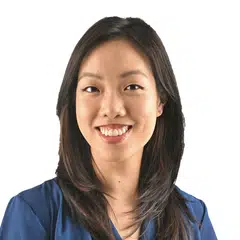
(Clockwise from left) Author Alicia Ng, "afterlife agent" Kenneth Yeow and writer-illustrator YY Liak.
PHOTOS: COURTESY OF ALICIA NG, GIN TAY, COURTESY OF Y.Y. LIAK
SINGAPORE – Death is often perceived as silent and solemn, a thing draped in shades of grey and tiptoed around.
But on the pages of Curious Coffins And Riveting Rituals – a book on death practices by a 28-year-old Singaporean writer-illustrator – it bursts with bold colour. It is confronted with a firm yet gentle hand in conversations facilitated by a 31-year-old death doula. It is a career, apparently one worth a massive pay cut, in the case of one 33-year-old tech-bro-turned-afterlife-agent.
In the prime of life, these young Singaporeans have embraced the end in a big way. They are driving a conversation typically banished to the periphery of social convention and dredged up only when necessary.
“I don’t think there’s a minimum age limit to come to grips with your own mortality or that of your loved ones,” says Ms Y.Y. Liak, the 28-year-old author of Curious Coffins, published by Chronicle Books in 2025. “I don’t think my fixation on death is particularly noteworthy. I’m more confused by people who don’t think about death at all.”
Hers is an opinion gradually becoming less uncommon. In recent years, an increasing number of initiatives have sprung up, encouraging Singaporeans to grapple with their own mortality and to plan for the end.

Singaporean writer-illustrator Y.Y. Liak is the author of Curious Coffins And Riveting Rituals, a book on death practices around the world.
PHOTO: CHRONICLE BOOKS
There have been death cafes and dinners to offer safe spaces for people to process their grief and fear of death. Death Kopitiam, a local Facebook page run by anonymous volunteers, acts as a digital memorial of sorts, where everyday Singaporeans can pen and post tributes to their late loved ones.
This shift towards greater openness is buttressed by institutional change too. In 2023, the Government launched a multi-agency effort to encourage Singaporeans to formalise their preferences should they die or lose mental capacity.
And in August, a new Master of Science in Psychology programme offering Asia’s first master’s specialisation in thanatology – the study of dying, death and bereavement – will commence at the Nanyang Technological University (NTU).
Professor Andy Ho, provost’s chair in psychology at NTU, says: “Our goal is to be able to train competent, compassionate and capable mental health professionals who can work in the community, hospices, hospitals and even the homes of people to provide mental health, psychological and grief support to those who are facing death and bereavement,”
The programme, which has an expected intake of around 40 students, has received close to a hundred applications from applicants as far away as the United States. Applicants need to have an undergraduate degree in psychology or social science-related fields.
This, coupled with the ground-up initiatives led by several young Singaporeans, is why Prof Ho is optimistic about society’s ability to shrug off old taboos. “To really effect cultural change, it needs to be a concerted effort from all facets of society, including young people who have the creativity and drive to convey those messages,” he says.
“They bring with them a new energy, a new perspective. And because it comes from a young person, hopefully these initiatives will attract other young ones who will say: ‘Hey, this is cool, I’d like to learn more about it.’”
Selling death

Mr Kenneth Yeow quit his job in tech sales to become an “afterlife agent” for Woodlands Memorial.
ST PHOTO: GIN TAY
Like most people on LinkedIn, afterlife agent Kenneth Yeow is in the business of dispensing wisdom. He does not, however, have any advice on how to make money nor many inspiring career milestones to humble-brag about.
What he is selling is a good death. His posts break down topics related to the end-of-life, from funerary terminology to hidden fees. And if it means co-opting some LinkedIn-isms along the way – “A columbarium niche isn’t just a ‘space for the dead’. It’s the physical anchor of your legacy” – well, it is part and parcel of raising awareness.
“I’m trying to help people understand that death isn’t this big thing to be avoided. If you talk about it, you can ensure that it won’t catch you off guard,” says the 33-year-old director of sales at WM Group, an agency that handles afterlife sales and services at Woodlands Memorial.
LinkedIn is his platform of choice because it is a “blue ocean” of untapped potential. Perhaps, by sprinkling reminders of mortality on a platform obsessed with optimising life, he might help normalise talk of death.
Which often means he needs to speak the language of his audience. “I try to weave in sales and life lessons along the way to make my posts more relatable to the corporate professionals on LinkedIn. At least then, it gives them some insight into what the industry is really like.”

Mr Yeow says he tries to go above and beyond his job of connecting clients with Woodlands Memorial and selling columbarium niche lots.
ST PHOTO: GIN TAY
While it would be nice if followers remembered to call on him in their time of need, he maintains that his goal is to be known “as a person who can help bring peace of mind to families”. After all, that is why he quit his job as as partnerships director at artificial intelligence accounting software company Jaz in March 2025 to join the funeral industry.
When his aunt died in late 2024, he was struck by the amount of chaos and confusion at her funeral. “Everyone was just like, what do we do now? They were so lost and had to depend on the funeral director. It got me thinking, what if another family member passed away and there was no one there to help?”
So in November 2024, he started an apprenticeship under the funeral director who had helped send his late aunt off. On his last official day of work at his old firm, his grandmother died at age 88.
“It’s bittersweet that she was my first customer,” he says. “I had to immediately apply everything I had been taught – how to be there for the family instead of just setting up the funeral and then disappearing until the last day to hand over the invoice.”
On paper, his job is to connect grieving families with Woodlands Memorial and sell columbarium niche lots. But he tries to be more than that – “a bit like the family’s adopted son” is how he sees himself.
“Most agents, they just collect and pass on their referrals, and don’t turn up at the wake. But I try to be there every day for one to two hours, in case the families have any questions and to make sure everything goes well.”
Going from tech bro to “Afterlife Bro”, as he now styles himself, has meant taking a 90 per cent pay cut, but he does not regret his decision.
“There are times I wonder if I did the right thing, but I appreciate the flexibility and freedom of the job,” says the Singapore Management University (SMU) business graduate. The satisfaction of easing the troubles of the bereaved makes the work worthwhile too.

Mr Yeow currently serves seven to eight clients a month.
ST PHOTO: GIN TAY
He hopes that as he shores up his position in the industry, his job – which is commission-based – will become more financially viable. He now averages seven to eight clients a month, an increase from one to two when he first started out in April 2025.
But it has not been easy. Towards the end of 2025, Mr Yeow went door to door, distributing 6,000 fliers across various HDB blocks in Singapore. “Nothing worked. I had zero responses, but at least I learnt that the traditional method of outreach doesn’t really work.”
And then there is the hurdle of earning the trust of various family members. “Some clients see me as this young person and assume I couldn’t possibly know more than them about a particular rite or practice.” The challenge for him, then, is to help them figure out which rituals, though stipulated by tradition, are necessary and meaningful.
“Staying in this industry is my long-term plan,” he says. “I think my generation understands that death isn’t a taboo topic to be avoided, but a final milestone that everybody should prepare for, so they can celebrate the life that they lived.”
Discussing death

Singaporean author Alicia Ng has written an end-of-life workbook called The Final Gift.
PHOTO: COURTESY OF ALICIA NG
Ms Alicia Ng, a marketing consultant and author who has a “crippling phobia of death”, has spent the last year trying to get people to talk about dying.
“Unlike a normal person who runs away from his or her fears, I wanted to run straight to death. Over the last few years, I’ve been to therapy, I’ve consumed death literature, but nothing really clicked,” says the 31-year-old based in Melbourne.
She even got an End-of-Life Doula Certificate from Canadian-based private online institution IAP Career College in 2023, but found that she could not work in palliative care as it triggered her end-of-life anxiety. So she began casting around for another way to help people like her process death.
Her answer came in the form of a workbook, which she wrote and self-published in February 2025. The Final Gift is inspired by her love for journalling and intended to help readers come to terms with the end. It invites them to reflect on the values, relationships and achievements that defined their lives, and to jot down their care and funeral preferences.
She caveats that this book is not meant to replace Advance Care Plans and other official forms of recording one’s care preferences. “Mine is more of a reflective thing. It’s really about the essence of you, it’s more emotional and less logistical,” she says.

Ms Ng is also launching a card game consisting of reflection questions.
PHOTO: COURTESY OF ALICIA NG
It will be accompanied by a card game that she plans to release in June. Described as “We’re Not Really Strangers but for death”, it contains questions like “What does a life well lived actually look like to me?” and “How do I want my loved ones to describe me when I’m gone?”.
“I don’t pretend to have the most knowledge, because learning about death is insanely hard. There are so many things to consider,” says Ms Ng. “But I can be the person who starts the conversation and makes it accessible.”
The card game ($50) and book ($16.50) will be available on Amazon and her website (thefinalgift.myshopify.com). She would like to share the book with a larger audience, but finding a publisher has proven challenging. “A few publishers told me that it’s too niche for the market and it’s not going to sell because people are not into this subject, which is fair.”

Ms Ng at the Melbourne launch of her book. It will officially launch in Singapore in June.
PHOTO: ALICIA NG
Thus far, the book has sold about 200 copies. But Ms Ng is not too fixated on sales figures. “I’m more interested in whether I get to change someone’s mind about planning their death, and provide them with more instructions about how to plan their funeral. This is not a side hustle, it’s more of a passion project,” says the SMU graduate, who has a bachelor’s degree in business management.
So, has writing the book assuaged her fear of death?
“No,” she admits. “I went through this journey thinking I’d come out healed, but not really. I think the book helps people who are afraid of dying, but I’m not afraid of dying, I’m afraid of death – the complete non-existence of everything.”
Drawing death

Writer-illustrator Y.Y. Liak with her book, Curious Coffins And Riveting Rituals: Death Practices Around The World.
PHOTO: COURTESY OF Y.Y. LIAK
As the daughter of two healthcare professionals – a hospital administrator and a pharmacist – Singaporean writer-illustrator Ms Liak has been cognisant of death her whole life. As a teenager, her father would chat about things like the lasting power of attorney and his ideal death, while fetching her from friends’ homes. And when the Covid-19 pandemic hit and the death toll climbed exponentially higher day by day, it became inescapable.
It was then that Ms Liak, an illustration and art history undergraduate at the Maryland Institute College of Art in the United States at the time, got the idea to write a book about death as part of her thesis.
The plan was to illustrate a non-fiction children’s picture book that one of her professors, who was working on a book of her own around the same time, suggested she pitch to her editor. Four years, six manuscript passes, a dozen cover iterations and countless hours of research, writing, sketching and fact-checking later, her book, Curious Coffins And Riveting Rituals: Death Practices Around The World, was born.
The 181 page hardcover was released in September 2025 by San Francisco-based publisher Chronicle Books, and is now available from Amazon ($43.55) and Kinokuniya Singapore ($45.32). Spanning millennia and continents, it traces how human beings have responded to death through time.

Curious Coffins And Riveting Rituals: Death Practices Around The World examines post-death rituals such as burial, cremation and preservation.
PHOTO: CHRONICLE BOOKS
It examines post-death rituals like burial, cremation, preservation and even cannibalism. A shorter section delves into the idea of remembrance: how the dead live on in monuments, customs and folklore.
Along the way, it throws up anecdotes both magnificent – the elaborate tombs of Chinese emperors, for instance – and morbid – the Llullaillaco Maiden, a mummified Incan child sacrifice left to die atop a volcano, makes an appearance here too.
These instances are rendered in richly coloured illustrations. “I never wanted to treat death as something horrifying or overly depressing because, one, I don’t aspire to traumatise children, and two, the thing that first hooked me about the topic of death was not dread, but curiosity and empathy,” she says, describing her debut as a picture book for adults.
With a seemingly endless swathe of examples to draw on, discipline was paramount. She had to include well-known and commonly practised rituals while ensuring no one culture was over-represented.

Ms Liak says she was drawn to rituals that seemed “fun to draw”, like the natitas of Bolivia.
PHOTO: CHRONICLE BOOKS
As an illustrator, she was especially drawn to rituals that seemed fun to draw. “One of the first chapters I decided on when I first pitched the book was the natitas of Bolivia. I remember finding the image of all these skulls dressed up in their shrines and cabinets so arresting that I knew I had to include it,” she recalls.
In the process, she developed a closer connection, not just with distant cultures – she found instances of funerary cannibalism practised by indigenous Amazonian tribes surprisingly resonant and touching – but also her own. On one of her trips back home, Ms Liak, who is based in New York as a book cover designer, followed her father to the columbarium at Kong Meng San Phor Kark See Monastery in Bright Hill Road to pay respects to her late grandfather.
Her family is neither religious nor particularly traditional, so this ritual was a new experience for her. “We burned a few sticks of incense afterwards, and I found the experience so natural and comforting in a way that I just wasn’t expecting. It felt like I was reconnecting with something I had lost,” she says.
For her, growing up in an agnostic household has proven a mixed blessing. On the one hand, she credits to her upbringing her curiosity and openness to learning about different belief systems. But on the other hand, it means having “no God, no higher spiritual plane, no divine teaching to fall back on when something as earth-shattering as death happens”.

Ms Liak tried to include a range of different cultures in her book.
PHOTO: CHRONICLE BOOKS
She thought this project would help her conquer her fear of death. “But I’m thankful for what happened instead. Instead of erasing my dread, I was able to accept its inevitability. I’m still working on coming to terms with my mortality, but I suspect that will be a lifelong quest. And that’s okay too.”
She hopes this book inspires honest, open conversations about death, and brings comfort to the fearful and clarity to the indifferent.
“But more than anything, I hope it pushes people to show up for their communities when they are needed. Participate in death rituals when the opportunity arrives; take care of the people you love; and, hopefully, when the time comes, they will do the same for you.”