
Singapore Art Week
World’s most influential artist Ibrahim Mahama holds solo show at Singapore Art Week
Sign up now: Get ST's newsletters delivered to your inbox

Ghanaian artist Ibrahim Mahama topped ArtReview magazine’s annual power list in 2025.
PHOTO: COURTESY OF IBRAHIM MAHAMA
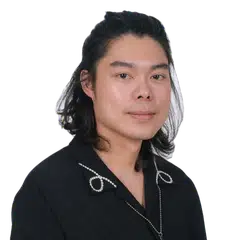

- Ibrahim Mahama, named the most influential figure in art, views recognition as part of the "paradox of the art world," needing Western shows to fund community work.
- He is presenting his solo show Digging Stars at Gillman Barracks and a performance lecture, focusing on material excavation.
- Mahama uses jute sacks and rubber residues in his art, referencing global trade and colonial history, while investing his earnings into cultural centres in Ghana.
AI generated
SINGAPORE – The world’s most influential figure in the art world, Ibrahim Mahama, is sitting on the floor of his studio in his home town of Tamale, Ghana. He harbours no airs, and maybe even looks a little sleepy as he chats with The Straits Times over Zoom.
To anyone who asks about his topping of ArtReview magazine’s annual power list in 2025, his go-to reply has been that it was humbling. Gesturing to his surroundings, he says: “Where I live is a village. We’re surrounded by farms and children whose parents can barely pay for them to go to school.”
Ibrahim calls such external validation part of the “paradox of the art world” where, to make the kind of socially conscious, community-oriented work he is known for, he has had to hold shows in the Western Hemisphere to generate capital.
“Now that I’ve been named No. 1, people have to pay me my money,” he jokes.
One of the first events Ibrahim is attending after receiving his accolade in December is Singapore Art Week, which kicks off on Jan 22. Under the auspices of non-profit Art Outreach and The Pierre Lorinet Collection, he has made new works for a solo show titled Digging Stars, on at Gillman Barracks from Jan 16 to Feb 8.

Works by Ibrahim Mahama on show at Gillman Barracks.
PHOTO: ART OUTREACH
The 39-year-old will also conduct a performance lecture at Art Outreach’s symposium on Jan 24 at Marina Bay Sands. This will be centred on his obsession with excavating materials and making meaning of their residues.
He says: “It’s not a difficult thing at all, but it requires effort. It doesn’t make any sense to do it every day, but we artists constantly dwell in the realm of stupidity and senselessness.
“It’s not like medicine, where it can save a human body. Art starts from failure, but somehow the body is renewed in a way that it becomes a lot more sensitive to the world.”
Though Ibrahim confesses he has not had much contact with South-east Asia, the material that made his name – the jute fibre sack – is largely manufactured in the region.
He first used it to engulf a corridor artery at the Venice Biennale in 2015 and his ambitions have only expanded. Since then, he and his collaborators have stitched tens of thousands of fragments of the coarse and tattered material into giant structures enveloping buildings, monuments and gallery spaces like the National Theatre of Ghana and the Porta Venezia, or Venice Gate, in Milan, Italy.
Recalling his undergraduate years, Ibrahim cites a professor who drew comparisons between Ghana and Singapore and Malaysia as aspiring nations of a class gaining independence in the 1950s and 1960s.
That is a now forgotten history.
“Ghana was sending engineers to Singapore and Malaysia, and certain intellectuals from there came to Ghana,” he says. “It was all about expanding our economic capabilities and reinforcing our sovereignty. There’s a sharp contrast now in terms of how developed Singapore is.”
When he first paid attention to the ubiquitous jute sacks transporting vegetables, cocoa and rice while visiting a friend in Burkina Faso in 2011, it was not the bags’ enmeshing in systems of labour and production but their aesthetics that first enticed him.
“I was very curious about the forms they took,” he says. “I started collecting specifically the ones that charcoal centres used – with the scars, the patina and the dark stains. I realised there was something that the material did when you laid it against a building.”

Ibrahim Mahama is known for working with the ubiquitous jute sack.
PHOTO: NII ODZENMA
Meaning came after and easily. The scale of his projects meant he needed collaborators, and who better than the women most familiar with them in Ghanian markets? He also got audiences to sew the material, like in Syntagma Square in Athens, Greece, in 2017, inverting global systems of extraction.
The same idea can take on severely different meanings depending on time and place, in the way the works of fellow wrappers Christo and Jeanne-Claude, whom he is frequently compared with, might not.
He says of his project in Milan’s Porta Venezia: “Those two towers were the gates into the city of Milan back in the mediaeval period, and you paid your taxes when you entered. 2019 was during the height of the refugee crisis, and a lot of people didn’t want to accept them.
“But the material speaks of global transactions, the commodities we consume and the relationships those create. The bag doesn’t forget and records what humanity neglects.”

Highlife (2024) by by Ibrahim Mahama.
PHOTO: COURTESY OF IBRAHIM MAHAMA
There are unexpected parallels between his new works for Singapore and South-east Asia’s history.
There will still be some jute, but he has also explored rubber residues taken from Ghana’s defunct factories, which were built during the country’s drive for self-reliance in the 1960s but later neglected.
Pressures under colonialism made Malaysia and Singapore the major rubber exporters in the 20th century, at one point producing half the world’s supply.
“A lot of the works are quite beautiful,” he promises of his Brutalist creations.
Ibrahim frowns at the idea of artists from the Global South moving to Western metropoles after gaining global recognition. In Tamale, he has plugged his earnings into building cultural centres such as the Savannah Centre for Contemporary Art, the Red Clay Studio and Nkrumah Volini, attracting ordinary families, sometimes from faraway villages.
Twenty kids pack themselves onto a single tricycle, precariously wobbling to see the “fantasy ground” where they will get their first exposure to art.
“We produce cocoa in Ghana, but a lot of farmers have never eaten chocolate,” he says. “We cannot forget what art represents. Art has always been about the quest for new freedoms.
“I’m making work in museums all around the world, but everything I have intellectually and materially came from here. What about these people’s encounter with the work, not just at the point of making?”
Book It/ Digging Stars
Where: Gillman Barracks, 6 Lock Road
When: Jan 16 to Feb 8, 11am to 7pm
Admission: Free
Info: artweek.sg/event-detail/digging-stars
