
BookTalk
The Lunch Break Investor author Thomas Chua seeks out books that disagree with him
Sign up now: Get ST's newsletters delivered to your inbox

The Lunch Break Investor author Thomas Chua recommends three books to ST readers.
PHOTO: COURTESY OF THOMAS CHUA
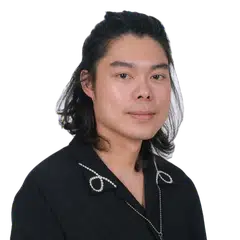
- Thomas Chua, author of The Lunch Break Investor, says not reading costs him money.
- He recommends three books to ST readers.
- .He says: "Read to think, not just to learn."
AI generated
Who: Thomas Chua, 36, is the author of the best-selling The Lunch Break Investor (2026), which claims to help people make informed decisions about what stocks to buy and sell, all accomplished in an hour a day without Bloomberg terminals.
Growing up poor in Singapore, Chua read books on investing every chance he got in libraries. He has been financially independent since he was 31 and is a full-time investor. He also writes about long-term investing at SteadyCompounding.com.
His debut book is published by Harriman House, and he says it contains everything he wishes he had known when he started.
“I am now reading The Things You Can See Only When You Slow Down (2017) by Haemin Sunim. A friend gave it to me and said it was a beautiful read.
I finished it in three days, and it left me with a lot to think about. Sunim writes about how to be calm in a busy world, and his point is that how the world looks to us has a lot to do with the state we’re in when we look at it.
I am always productivity maxxing, and I am guessing many people are too. Now, with everything changing with artificial intelligence, it sometimes feels like there is no room left to breathe. The book made me stop and ask what speed I am actually running at on the inside.
I have a rule for myself about reading. I am not allowed to say ‘I am too busy’ or ‘I don’t have time’. I banned them because each time I’ve caught myself about to say one of these, the truth was usually, ‘I don’t want to.’ If something matters to me, the time shows up.
Another book I have enjoyed is The Second Curve: Thoughts On Reinventing Society (2015) by Charles Handy. His idea is that most things – a career, a company, a life – follow the same shape: a slow start, a climb, a peak, then down.
When I was in the public sector, I had a lot of colleagues close to retirement, and a surprising number of them told me that they wished they had taken more risks when they were younger, chased something or reinvented themselves.
I think about that a lot. I have completed the jump once, out of the public sector and into investing full-time, and it was terrifying.
With our lifespans and productive years getting longer, I suspect most of us will have to start a second curve two or three times in our lives. I keep the book around to ask myself where I am on the curve.
I also recommend The Essays Of Warren Buffett: Lessons For Corporate America (1998) put together by Lawrence Cunningham. Yes, Buffett’s letters are free online, but I still wanted the paper version, sorted by topic, so I can highlight and scribble, and fold the corners.
One odd habit I have is that I sometimes go looking for the book that disagrees with me.
There is a thing called confirmation bias, where we naturally look for whatever agrees with what we already think and skip past anything that doesn’t. Left alone, I’d happily do that all day, and social media makes it worse.
But that can be dangerous, especially for an investor. I invest for a living, and being wrong costs actual money, so I want to have looked at the other side properly before I decide.
As for how to get people reading, I’d say: Put your phone in another room, and I mean another room. The first week is uncomfortable, and then it stops.
I quit books too, around the 10% to 15% mark, if they are not what I hoped they would be. There is always another one.
And I’d say read to think, not just to learn. A lot of what I get out of a book has nothing to do with what the author was saying. It is the thing on the page that made me stop and notice something about my own life, and I sit there with it for a bit.”