
Tanjong Pagar Distripark early adopter Gajah Gallery turns 30, doubles down on South-east Asia vision
Sign up now: Get ST's newsletters delivered to your inbox

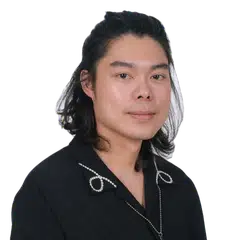
Gajah Gallery founder and director Jasdeep Sandhu with a sculpture by Lasalle College of the Arts founder Joseph McNally.
ST PHOTO: GAVIN FOO
SINGAPORE – In 30 years, home-grown art gallery Gajah Gallery has moved to four locations in Singapore – from Monk’s Hill Terrace in Newton in 1997 to the current Tanjong Pagar Distripark, the bustling hub during Singapore Art Week 2026.
It took 10 years to represent its first artist – Indonesia’s Yunizar in 2006. Now, outposts in Yogyakarta, Indonesia, and Manila, the Philippines, have made it the rare gallery that can claim a real regional presence, employing more than 60 staff.
To think it all started with “ignorance” in 1996, recalls Singaporean founder-director and law graduate Jasdeep Sandhu, still makes him smile.
“Had I known the difficulties, but I didn’t. It was a very easy choice for me to do what I loved. For the first six months, I was earning about $700 a month after expenses.”
The 60-year-old is a smooth operator, poised in a jacket and looking every bit the veteran art world steward. It was an internship at a Singapore gallery, which he declines to name, that put him on this strange path, a moment of dumb luck he describes as “like scales falling away from my eyes”.
His realisation then remains what has sustained him. Surrounded by the works of 27 South-east Asian artists at Gajah Gallery, he says: “The histories of South-east Asian artists are only now being realised. We are perhaps just scratching the surface.”

Among the works on show at Gajah Gallery now is this chiffon and organza work by Singaporean artist Charlotte Lim. She interned at the gallery as a student and died when she was 22.
PHOTO: GAJAH GALLERY
Mr Sandhu never paid just lip service to the rhetoric of the region; his wife is Filipina. In the 1990s, he directed the gallery to take on the unappreciated role of bringing South-east Asia to Singapore, giving many Vietnamese and Indonesian artists their first exposure here.
The art world’s recognition of Balinese pioneer painter of female sexuality I Gusti Ayu Kadek Murniasih and Myanmar painter Bagyi Aung Soe have the gallery’s advocacy to thank.
Murniasih, who became the first Balinese artist to be collected by London gallery Tate Modern, received her first institutional solo at the Nottingham Contemporary in Britain in 2025. Bagyi’s venue was grander: the solo at the Centre Pompidou in Paris in 2021 was the first major exhibition dedicated to his graphic iconography.
Mr Sandhu emphasises that Gajah Gallery’s focus on the longer-term work of excavating artists with historical significance is not limited to artists whose works are political. Many South-east Asian artists have found the pressures on them to centre their work on socio-political issues burdensome.

Gajah Gallery founder Jasdeep Sandhu with then-president S R Nathan at the gallery in Hill Street in 2000.
PHOTO: GAJAH GALLERY
He raises the example of Singapore artist Suzann Victor’s pioneering installations in the 1990s, which were overshadowed by the political fallout of her initiative 5th Passage – due to artist Josef Ng’s controversial performance in 1994 – and the de facto performance art ban that followed. Victor had a solo with Gajah Gallery in 2025 and has seen her works acclaimed in biennales globally.
“We want to show her for what she did and not to politicise the whole thing, which was a tragedy for everyone,” Mr Sandhu says.
“She was pushing the frontiers not just in Singapore or the region, but also worldwide. It broadens the horizons for all of us.”
Mr Tony Sugiarta, the Indonesia-born founder of aNERDgallery, says Gajah Gallery has impressed him with how it always showcases contemporary works that are built upon sustained and deep relationships in the region. The relatively young local gallery, founded in 2017, also aims to present traditional Indonesian craft such as batik and tenun as contemporary art.
Mr Sugiarta adds of Gajah, which frequently consults scholars like Singaporean art critic T.K. Sabapathy in its research: “It always offers new insight and critical discussion on South-east Asian arts and society that is often overlooked in mainstream art discourse.”
Another way in which Gajah Gallery is breaking out of the commercial art gallery mould is through its Yogya Art Lab, founded in 2012 as an experimental space and for the production of paper, that has since evolved into a valuable resource enabling artists to create more ambitious work.
Victor’s monumental lantern commission comprising more than 3,700 fresnel lenses was put together there in 2025, as was Singapore artist Jane Lee’s steel wall sculpture for her Singapore Art Museum (SAM) solo in 2023.

Australia-based Singapore artist Suzann Victor in Gajah Gallery, in front of one of her monumental lantern works.
ST PHOTO: GAVIN FOO
Mr Sandhu promises: “It is a facility that is very unique and in the next few years, you could see us contributing in a greater way. We never expected institutions to be interested in what we’re doing.”
On Gajah Gallery’s prescient move from Hill Street to Tanjong Pagar Distripark in 2015, before the SAM relocated there, Mr Sandhu jokes that he often tells the museum it is they who should count themselves fortunate.
The increased footfall has had benefits, such as landlord Mapletree sprucing up the amenities, but has not translated to a corresponding increase in sales. “Buyers and visitors are two different crowds,” Mr Sandhu says. “It would be delusional for us to think otherwise.”
Still, he remembers the wonder when he first encountered the 6,000 sq ft space with a high ceiling, like something out of contemporary art hub Chelsea in New York, and the sense that with it, the gallery was positioned to be a “game-changer”.
Artists and collectors appreciate a good show, and the space remains integral to a gallery’s work – though this must be matched by better marketing.
He adds of the seaside blocks at Tanjong Pagar Distripark whose fate is uncertain after the next two to three years. “I remember one of the most senior curators walked in and muttered: ‘Why doesn’t the Government give us a space like this?’ If you work with a gazetted building, it costs a lot, and you are confined to its design.”
From nascent beginnings, the last 30 years have already seen South-east Asian art prices rapidly going up. Nanyang artists are breaking auction records and younger artists, who might have sold work for $2,000, can now aim for $7,000 to $15,000, allowing them to double down on their art practice.

Works by Balinese artist I Gusti Ayu Kadek Murniasih (left) and Indian artist Jaya Ganguly (right) at Gajah Gallery.
PHOTO: GAJAH GALLERY
Mr Sandhu credits the Government’s efforts to build up an ecosystem – “maybe still a bit too slow, but it’s going in the right direction”, he says.
The next step is to increase art history education, so there are sufficient backroom researchers and gallery managers who can continue to perform the less glamorous but significant work of programming, writing, knowledge acquisition, artist management and client and public relations – private galleries’ bread and butter.
Mr Sandhu says of Singapore’s pertinent role and the futility of turning inwards: “Singapore is probably the second market for every South-east Asian artist, apart from that country’s market.
“South-east Asia’s art industry will flourish only if we get our collectors and our artists closer together. That’s imperative. If not, we are looking at only a very short-term view of survival.”