
Singapore Writers Festival 2024: Director Yong Shu Hoong delivers quieter affair with greater depth
Sign up now: Get ST's newsletters delivered to your inbox

Running from Nov 8 to 17, the annual literary get-together attracted a markedly smaller but more engaged audience.
PHOTO: MOONRISE STUDIO
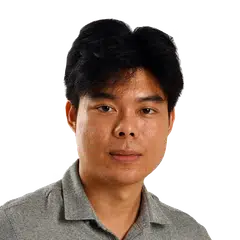

SINGAPORE – A steady, low-key tenor was the order of the day at the Singapore Writers Festival (SWF) 2024, which traded the festive extravaganza of yesteryears for higher-quality panels pitched more directly at the local literati.
Running from Nov 8 to 17, the annual literary get-together attracted a markedly smaller but more engaged audience.
Gone was the sense of crowd rush at venues The Arts House, Asian Civilisations Museum and the National Library.
Instead, a more leisurely vibe prevailed – reflective of the understated personality of debut festival director Yong Shu Hoong, who wore an otherwise ordinary shirt with floral cuffs to his own Garden Glam-themed opening party.
Yong, who wanted to also reach out to those working in the Central Business District, said more analysis is required to see if his strategy worked, though he is generally happy with the turnout.
“Expanding our relevance to different communities remains a priority,” he told The Straits Times.
“We will continue to be inclusive in our programming to direct attention on marginalised segments of society, such as persons with disabilities and ex-offenders.”
SWF 2025 will take place from Nov 7 to 16 with the theme of Shape Of Things To Come, in line with Singapore’s celebrations of its 60th birthday.
Dubbed the “Kofi Annan of Singapore Literature”, Yong’s chosen focus in 2024 was In Our Nature – a superficially unsexy topic that elicited some quiet groans when it was first announced.
It was an interest spawned on his walks during the Covid-19 pandemic, he said, but can also be expanded to encourage participants to meditate on who they are as human beings.
Whatever the naysayers’ gripes, this proved a fertile plot. Solid programmes ran the gamut from indigenous writing to Singapore’s own overlooked relationship with its island peoples to an insect-inspired poetry jam, topped off with a scintillating talk by academic Cat Bohannon on the importance of scientific research into the female body.
There has also been much praise for Yong’s Chinese-language focus that attracted an international audience. Industry-focused events were immensely popular – more of Yong’s Tech Talks, exploring artificial intelligence’s impact on literature, would not have been remiss.

Debut festival director Yong Shu Hoong’s chosen focus in 2024 was In Our Nature.
The elephant in the room, translating very obviously to less buzz, was Yong’s turn away from celebrity figures. Bohannon, Booker Prize winner Shehan Karunatilaka and Canadian author Esi Edugyan are relatively unknown headliners here, with ticket sales for the latter two especially not helped by lacklustre social media promotion.
Instead, Yong cast his lot with South Korean author of I Want To Die But I Want To Eat Tteokbokki Baek Se-hee and her translator Anton Hur.
This Hallyu wave paid moderate dividends on the second weekend. Baek’s session was over two-thirds full at the Victoria Theatre, and she was one of the few authors with long book signing queues to rival the round-the-block lines for recent festivals.
But a literary event cannot be held hostage to an overly quantitative mindset. Regardless of attendance, the speakers were brilliant, engaging, even entertaining.
This, too, was the case once people looked past the shiny veneer to The Arts House, where home-grown authors were thoughtfully paired in panels that allowed for greater depth.
Sometimes, they were in dialogue with headliners. It was one such event on writing about visual arts – with Singapore artists Shubigi Rao and Robert Zhao, together with Edugyan – that several veteran festivalgoers cited as their favourite of the line-up.
All of these speak to the two biggest dilemmas of curating a literary festival, especially in a reading climate where book culture is increasingly widespread but also more shallow.
Rely on celebrity authors to pull in the crowd or stick to more spontaneous encounters for avid readers? Provide international exposure or prioritise promoting good writing that is already available here? Each decision fundamentally shifts a festival’s character. To expect a single edition to be everything to everyone is too tall an order.
As corporate sponsors pull out of literary festivals worldwide, the SWF’s unique top-down funding model has given it a rare advantage, where a steady financial stream allows for more experimentation or even failure.

Tech Talks explored artificial intelligence’s impact on literature.
Yong’s scaled-down, more fulfilling model has its merits and, after this edition, definitely fans – though how far it can go without making the festival too exclusive will require some attention.
Perhaps it could be a case of two editions for the literary crowd, followed by one more obviously targeted at the mainstream public. Or should one keep faith that sheer quality will always allow it to reach the audience it needs – not too big or small, but just right?
Either way, there remains the more granular and fixable problem of how to better encourage interactions among participants in-between panels – which, with a concentration of so many authors, publishers and agents, could turn out to have the most lasting effects.
For those who have been to Bali’s Ubud Writers & Readers Festival, including Karunatilaka, it is this open ambience in interstitial places that make such events more than a conglomeration of talks.
In 2023, then-festival director Pooja Nansi experimented with a huge tentage and live music in the forecourt of The Arts House – a masterstroke for gatherings that had the unfortunate side effect of some noise pollution seeping into nearby rooms.
Yong’s solution was to hive off some of these music performances, as well as spoken word and stand-up comedy, into the Arts House Annex building, effectively relegating these to the periphery. Most obviously, the removal of the tentage from the forecourt was a missed opportunity in facilitating casual yet productive chats.

Missing from the front lawn of The Arts House were the well-loved tents and beanbags that made for refuge during the rain and comfortable places to rest or read.
For Yong, there must be congratulations for pulling off such a sure-footed endeavour in his first year, and for resiliently blocking out external pressures to make his own imprint on such a high-profile event.
Most participants took away something from the festival. Many had fun.
With the directorial transition smoothly accomplished, might Singapore’s literary scene be finally in danger of that long-elusive double-edged sword – a confidence in its own relevance?
