
Cultural Medallion 2025
Painter Nai Swee Leng believes ink as abstract and vital as Western art
Sign up now: Get ST's newsletters delivered to your inbox

(From left) Chairman of the National Arts Council Ms Goh Swee Chen, President Tharman Shanmugaratnam conferring the Cultural Medallion to 2025 recipient Mr Nai Swee Leng.
PHOTO: NATIONAL ARTS COUNCIL
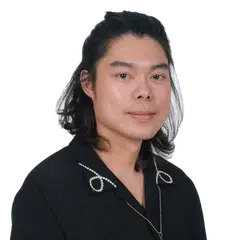
- Nai Swee Leng, a Singaporean ink painter, will receive the Cultural Medallion for his 60-year dedication to the art form.
- Nai's artistic journey included mentorship from bamboo-master Fan Chang Tien and Lingnan School master Chao Shan-an.
- Nai aims to archive his works. He notes rising interest in Chinese ink among young Singaporeans and highlights the enduring, contemporary nature of the art form, quoting Picasso on its inherent abstraction.
AI generated
SINGAPORE – Ink painter Nai Swee Leng, 79, has been a keen observer of the chirping bird and swaying branch for nearly 60 years. Though he has taught hundreds of students, he still says: “I’m still in search of the essence of ink.”
One of Singapore’s more neglected second-generation artists – as has been the fate of many working in the traditional medium – Nai is one of two honorees conferred the Cultural Medallion at the Istana on Nov 27.
The soft-spoken Nai was still coming to terms with the award when speaking to The Straits Times. He was at a loss for words after receiving the call a few weeks earlier at home, informing him he was receiving the nation’s highest honour for artists: “It’s a difficult prize because so many people are competing for it.”
Nai has nursed a lifelong tendresse for Chinese ink, ever since he caught a glimpse of an art exhibition at a clan association frequented by his father. In secondary school, he came under the tutelage of bamboo-master Fan Chang Tien – who, like many Chinese teachers then, took it upon himself to coach promising students free of charge on weekends.
This altruism would be inextricably linked with art in the young mind of Nai, who still believes Chinese ink cannot be discussed separately from personal comport.
He says: “Learning art relates to how to be a human being. How teachers treated people, how they encouraged the younger generation, was a role model for us.”
A second formative experience came after he graduated from the Nanyang Academy of Fine Arts, when an art critic showed a work of his to Hong Kong-painter Chao Shan-an, synonymous with the Lingnan School of painting that borrowed from Western and Japanese methods.
Chao was impressed enough to accept Nai as his disciple, kicking off a period of fruitful cross-fertilisation between Nai and other Hong Kong artists.
Nai recalls Chao’s paintings were one of the first works he saw in a magazine and copied.
There was yet another reason for his making the long voyage. “I liked the way he drew birds’ feet,” he says. “The simpler a thing is, the more difficult it is to draw. There was a revelatory energy in his strokes.”
But if Fan painted bamboo again and again in search of perfection, and Chao specialised in birds’ feet, Nai did not confine himself to a particular subject. Asked what he is best at, he retorts: “Everything.”
And he means it, for he has also poured ink onto paper to emulate the abstraction of modern and contemporary art. It is no belated experiment, and he refuses to vindicate the assumption that his figurative works are better.
“That’s on future generations to decide. A person cannot make these judgments on his own works. He must always hold the highest standard.”

Cultural Medallion recipient Nai Swee Leng, who has been painting for nearly 60 years, has seen a surge in younger Singaporeans interested in Chinese ink.
ST PHOTO: BRIAN TEO
By the standards of the day, it is his figurative xieyi-style (writing the meaning) paintings with their expressive brushstrokes that have secured the most attention. In 1974, then Prime Minister Lee Kuan Yew paid $3,000 for Nai’s work to gift it to visiting Japanese Prime Minister Kakuei Tanaka.
During a work visit to Japan to study the shinkansen for Singapore’s MRT system, officials also took along a trio of artists for cultural exchange. They were Nai, watercolourist Ong Kim Seng – also a Cultural Medallion recipient – and the late Teng Nee Cheong.
More than the prestige, it was the money that helped Nai’s then-budding full-time artist career, after nearly 10 years working in graphic design. “Some people want their name up in lights, in the newspaper, but money was what allowed me to make a living.”
He now teaches nearly 50 students at the Japanese Association and the Chui Huay Lim Club, where he has seen a surge in younger Singaporeans interested in Chinese ink.
Continuing the generous spirit of his teachers, he also waives fees for poorer students or those above 90 years old. Earlier in his career, he charged foreign students introduced to him by gallerist Della Butcher, but not local ones at community clubs.
In his older age, he has slowed down on painting and is devoting more time to archiving older works so they can be published as catalogues or art books, a record of his works that have disappeared into private hands.
Some of his instinct to pay attention to his surroundings and capture what one sees on paper has been passed down to his two daughters and a son. The latter once submitted an illustration to the newspaper without telling him until it was accepted and published.
None of these was at his prodding. He does not hide his discouragement of his children from pursuing a career in art – “It is a very hard life” – but remains proud as ever of his vocation.
To those prejudiced against Chinese ink as outmoded, he points to the Banpo archaeological site near Xi’an in China.
“The ruins there are as contemporary as anything you’ve seen,” he says. “(Cubist master) Pablo Picasso once told (China artist) Zhang Daqian: ‘Your ink works are already so abstract, there is no need for you to learn from the West.’”