
For subscribers
‘I really hated my job’: Author Jade Song talks advertising and burnt offerings to the dead
Sign up now: Get ST's newsletters delivered to your inbox

Author Jade Song says her new novel, I Love You Don't Die, is a mix of personal experiences and fiction.
PHOTOS: HUI CHENG, WILLIAM MORROW
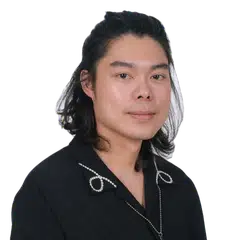

SINGAPORE – New York-based author Jade Song’s sophomore novel, I Love You Don’t Die, draws from her seven years in advertising for its depressed advertising copywriter protagonist Vicky.
But asked how accurate it was with regard to her stint as art director, the 29-year-old demurs, saying she departed the industry quite a few years back.
“I would say it is a mix of personal experiences and fiction. Every writer is going to write what they know, but I wouldn’t say it is very personal.”
There are not-so-hidden clues. After all, there is no place like the box seat of advertising to expose a person to the manipulations of late-stage capitalism. Later in the Zoom interview, Song lets on that hate was one of her primary drivers for writing.
“I really hated my job. I wanted to explore how absurd a lot of the experiences in advertising can be, and how that filters out to this greater cultural conversation. A lot of things that we talk about are actually advertising campaigns to sell something.”
In I Love You Don’t Die, morbid protagonist Vicky toils for Onwards, an urn company with a penchant for virality and finding new target audiences in the Asian-American and queer communities.
The nature of advertising, as well as the conditions surrounding it, leaves Vicky crushed under its weight and a first line surrenders all agency: “She doesn’t care how or where she will settle down, because to settle down implies a belief in free will and she knows she has none.”
But office projects and politics are just part of Vicky’s sad story. Song also focuses on a polyamorous relationship Vicky half-heartedly enters into; as well as Vicky’s friendship with bestie Jen. If Vicky is the purveyor of death, Jen sells life as a member of the big wellness machine.
The book was not planned this way. It was only after Song began writing that her attentions shifted to prioritise Vicky’s platonic and romantic relationships – again out of detestation for the workplace. “I was getting quite bored writing about workplace characters,” Song says, deadpan. “And I really love my friends.”
Song’s debut novel, Chlorine (2025), was a body horror about a Chinese-American competitive swimmer that struck a chord with young women. It drew on a prior phase of her life as a 12-year competitive swimmer.
There are other similarities between her and Vicky too, including an endearingly weird tenderness for zhizha, Taoist paper art that is burnt as offerings to the dead for their use in the afterlife.
Unlike Vicky’s extensive collection of zhizha, however, Song has been tempted to but not bought any.
“I didn’t realise how ridiculous and absurd some of the objects that it could depict were until I was volunteering in Chinatown,” she says. “Prada bags, mansions. I was very surprised that these are just blatantly displayed.
“That’s what we think we want in the afterlife, when in reality, what we probably want is love and to be remembered.”
Vicky has a tendency to romanticise death as the only release from pain and ennui, and Song subtly diagnoses that this also comes from a general sense of helplessness, an inability to improve the station of oneself and society.
The young characters are worked so hard, they have little energy to keep up with social affairs or organise. And in any case, so many causes were based on some dead man’s ideas, Vicky thinks. “The dead man was likely a terrible father and a terrible husband, so why should she listen to him?”
Here, Song cracks a smile and signals her divergence from Vicky.
For Song, “there is absolutely hope”, the answer lying in small, community-driven projects. She surprisingly cites Singapore’s Casual Poet Library, a space in Bukit Merah that allows paying members to curate individual bookshelves for the community that opened in 2024.
“These are not driven by a political system, but there are a lot of small, mutual aid organisations that provide a lot of support and joy. That is where I and a lot of my friends can feel a lot more impact.”
Coming up next for her is a short-story collection, Ox Ghost Snake Demon, of 12 Chinese zodiac-inspired tales that will be out in early 2027. A third novel still being written is intriguingly about a breast lump, which speaks to a woman in the spirit of her grandmother.
Song knows that as a writer in the digital age, her books are also victims to marketing lingo and sub-categorisation. To get attention, they ironically have to be pigeonholed into terms understandable for the reader.
“It’s to their detriment,” she says. “Because books are a lot more expansive than genre categories. I have a lot of faith in readers.”
Her quiet resistance now is expressed through pole dancing, a hobby she started because she needed something that was just hers and would never be monetised. She will never perform, but leaves a little wiggle room: “You never know what in your life will make it into a book.”
I Love You Don’t Die by Jade Song (William Morrow, 2026, $35.92) is available in major bookstores.
