
Arts Picks
Chinese artist Ai Weiwei shows his Lego brick works at Tang Contemporary in first solo here
Sign up now: Get ST's newsletters delivered to your inbox

The crows in Ai Weiwei's Wheat Field With Crows have been supplanted by the drones of war.
PHOTO: TANG CONTEMPORARY ART
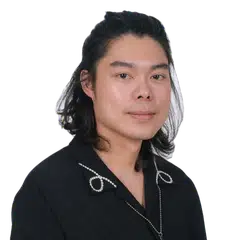
Ai Weiwei
The world’s favourite Chinese dissident artist Ai Weiwei gathers an impressive number of signature Lego and toy brick works at Tang Contemporary Art in Delfi Orchard, taking classically famous Western paintings down a peg.
It looks better than it sounds. The building blocks Ai and his studio use are tiny one-stud units. What looks like monochromatic patches from afar are, in fact, composed of many colours implausibly juxtaposed against one another.
Painting is reduced to its basic element of colour and, up close, the result is abstraction. No painter worth his salt is exempt: Vincent van Gogh, Paul Gauguin and Andrew Wyeth all pay their dues.
Ai tells The Straits Times over e-mail that his method problematises questions of unique authorship well suited for the pixelation of the internet age. “These artworks do not necessarily require my personal assembly. Some are constructed in my studio, while others are assembled on-site by volunteers, as the works can be done anywhere.”
The Portugal-based artist, who has never been to Singapore, would have been here but for the disruption to flights caused by the United States and Israel’s bombardment of Iran, and the drumbeat – or rather droning – of war permeates the show.
In the final of three rooms, 16 helmets made from porcelain satirise the “international joke” of Germany offering to contribute helmets instead of weapons to Ukraine upon Russia’s invasion in 2022. They sit in silent protest in front of a reproduction of van Gogh’s Wheat Field With Crows (1890), except the black harbingers of death are now supplanted by drones.
The quietly glorious pieces in the show are the porcelain works Ai made in China’s Jingdezhen, which has a reputation as the porcelain capital of the world. A closed and perfectly round green watermelon is a bravura display of technique; Ai nonchalantly one-ups antiques as if to say he can do it better.

Watermelon by Ai Weiwei is a bravura of porcelain technique.
PHOTO: TANG CONTEMPORARY ART
The 70-year-old has just concluded a surprise three-week visit to China, his first in 10 years, to see his 93-year-old mother.
He says his homecoming was motivated by guilt at his unfilial absence and adds: “From the moment I crossed the border, I felt that China remained very much the same. There were no fundamental changes.”
Where: Level 6 Delfi Orchard, 402 Orchard Road
When: Till May 2, 11am to 7pm (Tuesdays to Sundays), closed on Mondays
Admission: Free
Info: tangcontemporary.com
He Xiangning: Ink And Intent

He Xiangning painted lions and tigers.
PHOTO: NATIONAL GALLERY SINGAPORE
Chinese ink artist He Xiangning was not just the first woman to chair the China Artists Association in 1960, but also a feminist central to the Kuomintang cause in revolutionary China. This is her first systematic show in South-east Asia.
More than 50 of her ink paintings are being exhibited at the National Gallery Singapore (NGS), courtesy of the He Xiangning Art Museum. The Shenzhen space had partnered NGS to show Singapore artist Georgette Chen’s works there in 2025.
Now, those in Singapore get a chance to examine up close the details of the lion and tiger drawings for which He was known, as well as her fusion of classical Chinese ink paintings and Japanese Nihonga style.
He, who died in 1972 at the age of 94, had studied art in Japan at the behest of Kuomintang leader Sun Yat-sen in the belief that art had more than a cosmetic role to play in Chinese politics.
Beyond their appealing ferocity, the lions and tigers became symbols of individual awakening and national revival, and her husband Liao Zhongkai – later assassinated – circulated her drawings to fellow revolutionaries to steel their spines.
In 1929, He took some 300 paintings with her to Singapore to raise funds and roused girls at Nanyang Girls’ High School with speeches on feminism. Curators have included a telling photo of her painting while male Chinese painters Fu Baoshi and Pan Tianshou stood to her side.

A photo of artist He Xiangning painting while male painters Fu Baoshi and Pan Tianshou stood to her side.
PHOTO: NATIONAL GALLERY SINGAPORE
Look out also for a collaboration between He, horse painter Xu Beihong and He’s son Liao Chengzhi, titled Leaning Against A Pine To Read. He was most senior and went first, dominating the scroll with her tree and forcing her partners to find creative ways to contribute to the final work.
She and her son did not see each other much and used art as a way to negotiate their relationship, often leaving fragments of painting for each other to riff off.
Where: Wu Guanzhong Gallery, City Hall Wing, Level 4 National Gallery Singapore, 1 St Andrew’s Road
MRT: City Hall
When: Till Aug 23, 10am to 7pm daily
Admission: Free
Info: str.sg/HKMD
The AGEncy Fund

T:>Works artistic director Ong Keng Sen launched the AGEncy fund in 2025.
PHOTO: TAWFIQ ISMAIL
In 2025, theatre company T:>Works started its AGEncy fund, raising over $40,000 meant to restore some of the imbalance of the industry with its focus on the young, emerging artist.
That money was pooled for creatives aged 60 and above, who are often told to wind down and hand over the baton. It is now up for the taking, with applications closing on April 15. The company has already received a range of applications from community advocates, artists and performers, though T:>Works artistic director Ong Keng Sen says literary projects by far form the majority.
T:>Works says projects can be pitched individually or in a group that also includes younger practitioners, as long as they prioritise the agency of mature artists.
Projects can also involve the community and be media-agnostic, from performance and literature to digital projects and “any form of public expression”.
Ideas that privilege process over the final product will have an advantage in the selection.
The maximum for each project is a sum of $10,000 and should culminate in a public sharing session at T:>Works’ space at 72-13 in January 2027.
When: Till April 15
Info: tworksasia.org/agencyfund/