
Artist Chia Wai Hon wanted the public to enjoy art
Sign up now: Get ST's newsletters delivered to your inbox

An undated photo of artist, educator, writer and art critic Chia Wai Hon.
PHOTO: ESPLANADE
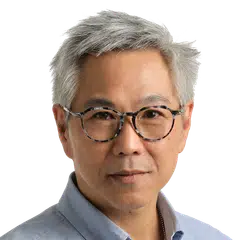

Artist, educator, art critic and writer Chia Wai Hon died aged 95 on Monday.
His efforts in encouraging the wider public to appreciate art was well known by those who knew him. Former director of Singapore Art Museum (SAM) and National Gallery Singapore Kwok Kian Chow says: “He was a pioneer in audience development.”
Both had served on the acquisitions board at SAM during the late 1990s. Mr Kwok, 67, remembers Chia as having an eye for art that would have a wider appeal. “He had a more encompassing perspective,” says Mr Kwok.
National Gallery Singapore senior curator and deputy director (curatorial research) Seng Yu Jin, 43, says: “His reviews of exhibitions both on Radio Singapore and in our local newspapers were critical in educating the public on art and raising awareness of our artists.”
Chia attended Teachers’ Training College, Singapore (TTC) between 1951 and 1953. After a short stint teaching at a primary school, he left for London in 1955, first to attend the then Chelsea School of Art and then University of London Institute of Education, where he graduated with an Art Teacher’s Certificate in 1961.
On his return to Singapore, he went back to TCC as an art lecturer. He later became head of the department of art education.
In 1975, after getting a Master of Arts from the University of Michigan, in the United States, he headed the National Institute of Education’s art education department from 1980 to 1987.
Master potter Iskandar Jalil, who studied at TTC around 1960, remembers Chia as an art lecturer with an eye for detail. “If my drawing was wrong, he would use my charcoal stick to make the corrections himself,” he says.
Another local artist, Ong Kim Seng, first met Chia around 1970 when he used to trail after the more senior artists, including Lim Cheng Hoe, trying to get tips as they painted scenes around the Singapore River. Now one of Singapore’s most famous watercolour artists, he recalls that Chia could be quite direct with his critiques.
“If it’s not good, he will tell you,” Ong says.
Chia, he adds, also wrote about art in a simple way. “He never used bombastic words. He wrote in a way that people could understand,” says Ong.
Dr Bridget Tracy Tan, director of the Institute of Southeast Asian Arts & Art Galleries, says Chia had a unique command of the language pertaining to art history and art criticism.
Dr Tan, who is also Academic Advisor (Southeast Asian Arts) at Nanyang Academy of Fine Arts, adds: “Because he was both an artist himself and friend of many seminal artists of his era, he was able to, through his writing, illuminate the story of Singapore art with grace and passion.”
Chia also contributed to the Singapore art ecosystem in other ways, notably as a curator. Ms Lindy Poh, a former curator at SAM, remembers working with him in 1997 on the exhibition titled Liu Kang At 87.
Ms Poh regards Chia as a mentor and describes him as “unfailingly good-natured and unflappable. He had a scrutinising eye and a strong grasp of history”.
As an artist, Chia was often associated with Group 90, which he co-founded with other artists, including Brother Joseph McNally, also founder of Lasalle College of the Arts, S. Namasivayam and Sim Tong Khern. Milenko Prvacki, senior fellow at Lasalle, remembers they would have life drawing sessions on Saturdays.
More recently in 2021, Chia’s painting, Reclining Nude, was included in a National Gallery Singapore initiative called The People’s Gallery, to bring art closer to the public.

In 2021, Chia Wai Hon’s painting, called Reclining Nude, was included in a National Gallery Singapore initiative called The People’s Gallery, to bring art closer to the public.
PHOTO: NATIONAL HERITAGE BOARD
Art historian, curator and critic T.K. Sabapathy edited and wrote the introduction to Chia’s book Bits And Pieces: Writings On Art (2002).
It is a shame, he says, if younger art practitioners today have not read the book. “Mr Chia is an eloquent critic of art,” he adds.
