
Art dynasties: Meet the Singaporeans with art running through their veins
Sign up now: Get ST's newsletters delivered to your inbox

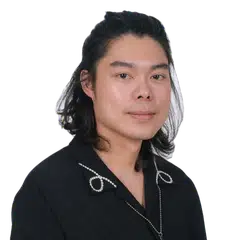
(Clockwise from top left) Artist Karen Hoisington, Batik artist Ika Zahri Sarkasi, photographer Chua Yang and artist Lim Hock Ann.
PHOTOS: ONG WEE JIN, AZMI ATHNI, CHONG JUN LIANG, COURTESY OF LIM HOCK ANN
SINGAPORE – Like father, like son. The apple does not fall far from the tree. A chip off the old block.
No matter the scientific basis, people have come up with all manners of phrases to describe the ways behavioural traits have been passed down through generations.
In art, where the unique genius has been celebrated, this is a pattern that still can be observed with surprising regularity.
The Northern Renaissance in the 16th century gave the world the frequently confused Pieter Bruegel the Elder and Younger. Pablo Picasso’s father was a painter. Foundational impressionist Camille Pissarro effectively flipped off the three-generation rule, birthing five generations of creatives in one of the longest dynasties in Western art.
In pragmatic Singapore, there is an unexpectedly rich vein of artistic lineages: Nanyang pioneer artist Cheong Soo Pieng and his daughter Cheong Leng Guat; Nanyang Academy of Fine Arts co-founder Lim Hak Tai and son Lim Yew Kuan; artist and sculptor Michael Ong and his daughter Donna Ong; and Milenko and Delia Prvacki and their daughter Ana Prvacki are just some of the many examples.
The Straits Times speaks to four practising artists who are the children of foundational Singapore artists Vincent Hoisington, Sarkasi Said, Chua Mia Tee and Lim Cheng Hoe.
Metal relief pioneer Vincent Hoisington’s daughter Karen returns to art after 30 years

Artist Karen Hoisington is the daughter of Vincent Hoisington.
ST PHOTO: ONG WEE JIN
Even among parent-child artist duos, Karen Hoisington can be said to be especially close to her late father.
Photos show her and her three brothers dabbing indiscriminately on aluminium art pioneer Vincent Hoisington’s canvases in their Margoliouth Road bungalow in the 1960s, preparing the imprimatura, the translucent base layer of his paintings.
“When I woke up, a picture would have emerged and he would be quietly playing his Chopin,” Karen recalls of a typical morning with her musician-artist father from her new Commonwealth flat.
Baron of batik Sarkasi Said’s son Ika Zahri prefers to hide connection to late father

Batik artist Ika Zahri Sarkasi, son of the late Sarkasi Said, with his father’s works.
ST PHOTO: AZMI ATHNI
Ika Zahri Sarkasi poses easily on a 4m by 3.5m batik work, a wash of colours crashing into one another like the waves of a buoyant sea.
Excitedly, he relates how his father, the late Sarkasi Said, put the material through multiple cycles of soaking and colouring to create its glinting depth. The overlapping, impossible-to-delineate lines hand-drawn from molten wax are clearly still a source of wonder. “Look at how even these are – thin when thin, thick when thick.”
Asked if he has reached a comparable level of skill after practising for 40 years, he musters only a wan smile.
Social realist master Chua Mia Tee’s daughter Chua Yang traces influences to her mother

Dr Chua Yang, daughter of artist Chua Mia Tee, is a photographer.
ST PHOTO: CHONG JUN LIANG
Walking through the halls of the National Gallery Singapore, where her father’s paintings have cemented their place as cornerstones in the Singapore canon, Dr Chua Yang says conspiratorially: “Actually, my artistic career has mirrored mum’s more than dad’s.”
One would think that the gynaecologist-photographer would reach easily for associations with her more famous father, social realist painter Chua Mia Tee, whose iconic paintings include the muscular National Language Class (1959) and the portrait of Singapore’s first president Yusof Ishak on currency notes.
But a lifelong interest in women, together with a parallel late pursuit of art, put her sympathies firmly in her mother Lee Boon Ngan’s camp.
Watercolourist Lim Cheng Hoe’s son Lim Hock Ann finds a regional market

Lim Hock Ann with his abstract painting. The artist is the son of Lim Cheng Hoe, a founding member of the Singapore Watercolour Society.
PHOTO: COURTESY OF LIM HOCK ANN
Taking the call from the Philippines where he is promoting his art, Lim Hock Ann begins the interview boldly: “My father was Singapore’s sixth-biggest artist.”
Lim Cheng Hoe, who died in 1979 aged 67, was a founding member of the Singapore Watercolour Society in 1969. His peers were the four titans of Nanyang art: Cheong Soo Pieng, Chen Wen Hsi, Chen Chong Swee and Liu Kang.
Indeed, the elder Lim, encouraged by Cheong, had been invited on the famous 1952 Bali art trip that cemented the quartet’s name, but was forced to pull out after his superior at the Public Utilities Board rejected his leave application.