
StarHub on the acquisition trail as corporate revamp bears fruit: CEO
Sign up now: Get ST's newsletters delivered to your inbox

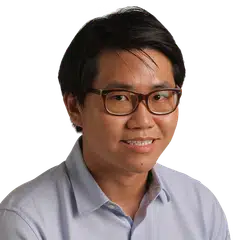
StarHub chief executive Nikhil Eapen is upbeat about the company's prospects in digital infrastructure and managed services.
PHOTO: STARHUB
SINGAPORE – Telco StarHub is ready to explore acquiring both local and regional players to further improve its services, as it wraps up a multi-year major corporate transformation exercise.
Its chief executive Nikhil Eapen, asked if a consolidation in the local market could give the firm more pricing power over customers, advocated a win-win scenario as such a move could spell better value for money for both the firm and its customers.
He said: “Consolidation, generally speaking, is a win-win situation because you have better economic value created for the market participants and that’s generally funnelled into better technology, better innovation, better societal value.
“Then, you typically have generally a good degree of retained discipline, because you still retain a competitive marketplace.”
In a half-hour-long interview with The Straits Times on Feb 24, Mr Eapen outlined how StarHub is riding on market shifts to grow earnings, especially from its digital infrastructure, cyber-security and managed services businesses.
Although consolidation appears to be the way forward, when it happens remains something StarHub cannot control, he said, counselling patience.
Still, he noted: “I daresay in other markets, where it has happened, it always happens, perhaps later than people think it will.
“In our neighbouring markets in Asia, consolidation, I think, happened at the right time, but it was probably a couple of years after everyone thought it would.”
His words come amid market chatter of a takeover by StarHub of M1 after both operators deferred to June 2025 hefty payments for the rights to use parts of the frequency spectrum to carry mobile broadband signals.
M1 saw a year-on-year decline in earnings, according to its parent company Keppel’s 2024 results.
Previously, M1, the third-ranked network operator here, and StarHub, which ranks second, had jointly bid for a 5G network licence as well as set up a joint venture to build 5G infrastructure.
Mr Eapen, 53, who came to be StarHub chief executive in 2021 by way of investor ST Telemedia after an 18-year career in investment banking with Citigroup, declined to comment on what he said was market speculation.
However, he said any candidate for a takeover would need to provide tangible cost and capital efficiency gains that outweigh the risk of customer attrition speeding up post-takeover, all while the market structure becomes more sustainable with less “price erosion” by smaller players.
Singapore has four network operators: Singtel, StarHub, M1 and Simba Telecom, with the latter two generally regarded as smaller budget players.
There are also about 10 virtual telcos that do not have their own physical mobile networks but lease them wholesale from an existing telco, including MyRepublic and Circles.Life.
According to 2024 full-year results released on Feb 21, StarHub’s 2024 total revenue is up 1.4 per cent over 2023, reaching almost $2.36 billion.
Net profit grew 7.7 per cent year on year to $161.7 million in 2024.
A dividend of 6.2 cents per share was announced, a touch above what the company had forecast.
Beyond Singapore, StarHub also has its sights on expanding its digital infrastructure and managed services business through both organic growth and acquisition, in Malaysia further for a start and then elsewhere in Asean.
“We want to do modern digital infrastructure in Malaysia because it’s large-scale, higher margin, it brings tremendous value to smart city environments,” Mr Eapen said.
Revenue from StarHub’s enterprise business jumped over 14 per cent year on year to nearly $981 million, with managed services under its network solutions business surging by 16.5 per cent to $169.6 million, and its cyber-security services business, by 26.2 per cent to $383.7 million.
In contrast, for its consumer business, mobile revenue was down 5.3 per cent from the previous year, and entertainment was down 6.8 per cent, while the broadband business saw a modest uptick of 0.6 per cent in revenue.
Still, when asked if StarHub would consider shifting away from the consumer market, Mr Eapen said the telco remains committed to the consumer business, which includes mobile, broadband and entertainment offerings.
The company intends to grow its market share by revenue in all its consumer segments and products, he said.
“For the mobile business, we believe, in a stabilised market structure, (it) would be an attractive cash-flow-generating, value-creating business.”
He added: “Yes, the local consumer market is declining in Arpu (average revenue per user) terms, faster in mobile than in other segments. But the key is, you have to be in every segment. You can’t only be in value segments.”
This entails providing a wide range of premium services, such as cloud gaming, for customers to take up as they like.
Mr Eapen also said cost reductions from automation and improved customer experience could help StarHub in the consumer segment over the longer term.
Touching on StarHub’s transformation, Mr Eapen said 90 per cent of funds set aside under its latest multi-year exercise dubbed Dare+ has already been used for various initiatives including a major shift to become a hybrid multi-cloud provider, driving up enterprise revenues with a growing order book.
The changes also helped to drive down operating expenditure and replace capital expenditure with more operating expenditure.
Mainboard-listed StarHub’s shares closed flat on Feb 28 at $1.20 per share.
Asked for his take on the recently unveiled moves by the Equities Market Review Group to increase the attractiveness of Singapore bourses, Mr Eapen welcomed the measures to create greater appreciation for firms like StarHub with greater liquidity and trading interest.
While the firm currently enjoys, at 1.29 times, a low ratio of debt to earnings before interest, taxes, depreciation and amortisation, with little immediate need for equity financing, a healthier capital markets environment opens up broader opportunities, he added.
Tay Hong Yi is a correspondent who covers manpower and career issues, with occasional forays into fintech, trade and corporates.