
Policy initiatives can unleash blended finance needed for green transition: Tharman
Sign up now: Get ST's newsletters delivered to your inbox

Senior Minister Tharman Shanmugaratnam speaking at the Financing Asia's Transition Conference on June 8, 2023.
ST PHOTO: JASON QUAH
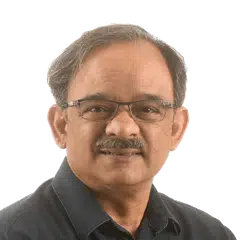
SINGAPORE - Policymakers should take credible steps to lower the risks and improve the returns for those investing in decarbonisation, Senior Minister Tharman Shanmugaratnam said on Thursday.
He said Government-backed transition pathways to net-zero and better usage of blended finance, or public funds incentivising private sector participation, can help expedite investments into green projects.
Financial regulation, he added, can help direct fund flows into sustainable development projects that are now seen as only marginally bankable by private investors.
“We need financial regulation as a major public policy tool and we have to use it, otherwise the markets are going to be too slow,” he said.
“We have to create a virtuous cycle between credible transition pathways and the unleashing of blended finance,” he said at the Ecosperity Week 2023.
“That is how we give incentive for investors, financiers and also policymakers to stay the course,” said Mr Tharman, who is also the Coordinating Minister for Social Policies and chairman of the Monetary Authority of Singapore (MAS).
He also underscored the need for financial supervisors to incentivise financial institutions and their customers to accelerate plans to support longer-term climate-positive outcomes.
Soon after Mr Tharman’s speech at the Sands Expo and Convention Centre, the MAS announced that it will set supervisory expectations to steer financial institutions’ transition planning processes, ensuring that they facilitate credible decarbonisation efforts by their clients.
“The guidance on transition planning will cover financial institutions’ governance frameworks and client engagement processes to manage climate-related financial risks and enable transition in the real economy towards net-zero,” said the central bank.
Mr Tharman also announced in his speech that the MAS together with the financial industry will establish the Singapore Sustainable Finance Association (SSFA) to build a vibrant ecosystem for green and transition finance.
MAS said: “The SSFA will initially focus on initiatives to scale voluntary carbon markets, transition finance and blended finance.”
The SSFA will include representatives from financial institutions, financial industry associations, relevant corporations and service providers such as environment, social and governance rating agencies.
The Association of Banks in Singapore is leading the coordination and setting up of the SSFA.
Mr Tharman said Asia must accelerate decarbonisation as the region contributes about half of global greenhouse gas emissions, while its energy consumption is growing along with its economic growth.
“I believe we have the opportunity in Asia of getting that new virtuous cycle going,” he said, referring to the combination of credible transition pathways and blended finance leading to incremental economic growth.
Mr Philipp Hildebrand, vice-chairman of BlackRock, a New York-based global investment manager, said Asia is at the forefront of the low-carbon transition, and this is driven by technological advances, investor and societal preferences.
“Most Asian countries have set new net-zero targets and many of them have further demonstrated their commitment to energy transition by doubling or even tripling their renewable energy capacity from recent years to 2030,” he added.
Mr Hildebrand said technology advances in the last 10 to 20 years have made low-carbon energy significantly more affordable.
“As a result, 65 per cent of newly installed electricity capacity across Asia now uses low-carbon sources, from solar, wind, hydro and nuclear.”
He said data for 2021 showed that Asia-Pacific was the largest and fastest-growing region when it comes to transition investing.
“Looking at Asia, there are immense opportunities for transformational investments. The region is expected to account for half of global renewable power additions, and it already leads in investments in electrified transport,” added Mr Hildebrand.
