
Me and My Money: Third-generation jeweller helped revive family business
Sign up now: Get tips on how to grow your career and money

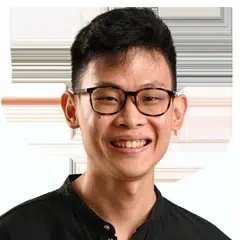
Mr Gabriel Tan is the co-founder and director of Mark Gabriel Fine Jewellers.
ST PHOTO: AZMI ATHNI

SINGAPORE – Mr Gabriel Tan still remembers how hard the 1997 Asian financial crisis hit his family’s jewellery business, Jumbo Gold and Diamonds.
The wholesale supplier of precious metals and gemstones was founded in the 1970s by Mr Tan’s grandfather.
“The losses were heavy, and the sudden change was a shock. The crisis hit when I was in my teens, and I realised we had to turn things around quickly or risk falling behind,” said the now 36-year-old.
Years later, Mr Tan co-founded and became director of Mark Gabriel Fine Jewellers, a company that functions as the retail arm of the business his grandfather started. He runs it with his brother Mark.
After he graduated in 2016 from the Gemmological Association of Great Britain with a diamond diploma, Mr Tan went about modernising the business.
“We started working more with gemstones and diamonds, and began using professional grading techniques to help us source better stones for our clients and plan the cuts we need,” he said.
Much of the family business operated in a more “traditional” way before he joined, Mr Tan said.
“In the past, many dealers didn’t see certain gemstones as valuable,” he added.
“But I decided to source these gems anyway, and as supply dwindled and tastes changed, demand and prices have risen.”
Mr Tan now focuses on crafting bespoke jewellery at Mark Gabriel Fine Jewellers, combining traditional craftsmanship with modern methods such as computer-aided design and 3D printing.
The company also uses recycled gold refined from industrial by-products, computer parts and old jewellery to ensure its materials are ethically sourced.
Mr Tan also holds a bachelor’s in economics and human geography from the University of Alberta in Canada.
He is married and does not have children.
Q: Do you invest in anything? If so, why?
A: I keep a mix of stocks and a growing collection of precious metals, gemstones and diamonds.
Q: What’s your biggest or most valuable asset right now?
A: My skills and my business.
Q: What’s your approach when it comes to growing your money?
A: I take a very hands-on and aggressive approach to making money.
Most of what I do involves active trading, business ventures and deliberate, calculated decisions. For example, I design, cut and trade high-value diamonds and other gemstones, where craftsmanship, timing and market knowledge all play a part.
Q: Do you invest in any tangible assets?
A: I had a rare 6.5-carat D-colour diamond – the top grade on the diamond colour scale used by the Gemological Institute of America – worth around $300,000.
A few years after I sold it, I came across the same stone in New York – it was priced at about $500,000 and has since been sold to someone else.
I currently have a 10-plus-carat hot pink Mahenge spinel, a gemstone found only in the Mahenge region of Tanzania. I bought it there and paid a high price for it.
I like it not only for its vivid colour but also because of the effort it took to acquire it. It was not a straightforward buy – we had to withdraw cash from a village bank under the watch of armed guards before purchasing it and having it cut. It should be worth about $80,000.
Q: Did you collect anything when you were younger?
A: When I was younger, I liked collecting old coins and currencies. I was fascinated with old things that have been passed down.
Q: What has been your biggest financial mistake?
A: I should have invested in index funds earlier, or in cryptocurrency during the 2010s. Some of my peers made seven- to eight-figure gains from those opportunities.
Q: What has been your best financial decision?
A: I think the best financial decision I’ve made so far is investing in things that add value to my business. For example, studying gemology has helped me spot opportunities that others might overlook, especially undervalued stones or those whose potential is not immediately obvious.
Once, I bought a stone at an auction that nobody wanted. It needed some work, but I could see that it had the makings of a top piece. I barely slept thinking about the risks, but I went ahead and placed the bid. I bought it for about $10,000 and later sold it for more than $35,000.
Q: What was your childhood dream?
A: I wanted to be a musician as I play drums and guitar.
Q: Did you do any part-time jobs?
A: I was a part-time chauffeur while I was doing my undergraduate studies in Canada.
Q: As a child, what did you save up for? What were your saving habits like, and how have they changed or stayed the same in your adult life?
A: I didn’t lack anything growing up, but I still saved most of my money and spent mainly on travel, as I was always curious about other countries. It is much the same now as an adult – I set money aside, reinvest in the business and prioritise family and other commitments.
Q: What was your most memorable encounter with money? When did you realise money was important?
A: I think you learn the most about money when you lose it all.
For me, that moment came during the 1997 Asian financial crisis when our extended family’s assets were wiped out and we were left with very little.
It made me realise how much financial stability shapes one’s choices – from education and self-development to business opportunities and even social standing.
Q: Where’s home for you?
A: I live in a terraced house in the Dairy Farm area.
Q: What do you drive?
A: I drive a Mercedes-Benz E Class.
Q: What was your most “frivolous” or “guilty pleasure” purchase?
A: This is an ongoing challenge. I’m always buying rare gemstones and diamonds, and creating jewellery pieces that may not sell immediately.
In our industry, cash flow is a constant concern because the materials are high in value and maintaining a sizeable inventory is costly. Still, I can’t help adding to my collection whenever I come across something truly exceptional.
Q: What does work-life balance mean to you?
A: At the moment, I don’t have children, so I spend most of my waking hours working. I used to work seven days a week, all year round, but these days I allow myself Sundays off.
It is not a lifestyle that suits everyone, but I genuinely enjoy what I do. Running a strong business takes focus and discipline – I don’t know how to do it any other way.
Q: How have your spending habits changed from when you first started working to now?
A: I used to spend mainly on travel, but these days my money goes into both travel and my growing collection of diamonds and gemstones.
Q: What would your perfect day look like?
A: It would be playing the drums in a big band, performing everything from pop and funk numbers to instrumental pieces featuring the piano, trumpet, saxophone or guitar.
Q: What would you do if you suddenly had a windfall of millions?
I would probably just put that in a passive investment instrument to add to my retirement fund. I would also work on acquiring more stones and buying up anything rare, interesting and beautiful. I don’t think I will ever truly retire.
Q: If you suddenly had only $100 to your name, what would you do with it?
I’d call up my network of gemstone and diamond contacts to loan me some cash and consign me stones to sell, so I could get right back in the game.
