
Me and My Money
Attending a programme in secondary school turned him into a serial entrepreneur at 28
Sign up now: Get tips on how to grow your career and money

Xavier Tan was inspired by an entrepreneur programme run by Halogen Singapore and is now setting up businesses in London.
PHOTO: COURTESY OF XAVIER TAN
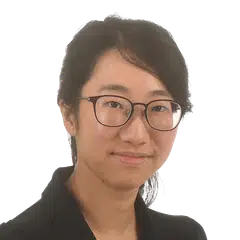
SINGAPORE – Xavier Tan was 16 and had no clear idea of what his future would look like.
But everything changed when his secondary school signed him up for the Network for Teaching Entrepreneurship programme.
Tan, now 28, has started four companies, including a private members’ club he co-founded in London, the Rive Gauche Club London.
“For a 16-year-old, that exposure was life-changing. It showed me that the world was much bigger than what I knew at the time, and more importantly, that I could build something of my own.
“It gave me confidence, hunger and direction,” he recalled.
The programme was run by Halogen Singapore, a non-profit organisation created to inspire youth and empower them to make a change in their community.
Tan said: “Through the programme, I learnt how to put together a business proposal and present to industry partners, and visited corporate offices such as LinkedIn and Google.
“I was later given the opportunity to represent Singapore in New York, where I presented in front of industry professionals from organisations such as Citi and EY.”
When Tan returned from New York, he found himself bitten by the entrepreneurial bug.
He started his first business – in shirt-printing – at age 17. A year later, he founded a fashion platform for young people to express themselves through art and design.
In 2020, he moved to London to intern with a fashion public relations company.
“That experience gave me my first real exposure to the pace, scale and possibilities of the London market,” he said. He has been based in the English capital since.
In 2022, he started Enchante Communication, a London-based marketing and communications agency focused on supporting emerging brands with public relations, media visibility and brand positioning.
Just a year later, he co-founded Rive Gauche Club London, which brought together his experience across marketing, events, hospitality and community-building.
“Looking back, many of the opportunities I’ve pursued since then can be traced back to that first experience with the programme,” said Tan, an only child whose mother is a waitress and father works as a masseur.
“It was where I first realised that entrepreneurship was not just about building businesses, but also about creating opportunities and shaping your own path.”
In a full-circle moment, Tan has returned to Halogen as a speaker and mentor to pay it forward by helping other students develop themselves professionally.
Tan also said that living and working abroad has taught him many life lessons.
“One of the biggest lessons I have learnt is that you have to show up, regardless of whether the opportunity seems big or small. You have to show up with sincerity, consistency and a genuine interest in people,” he said.
Tan is single and holds a diploma in product design and innovation from Ngee Ann Polytechnic.
Q: Do you invest?
For me, growing money starts with investing in myself first. I believe you make better financial and business decisions when you are in the right state of mind.
Beyond that, I invest in my businesses where I see potential for growth. That could mean improving the quality of our club events, increasing member engagement, hiring the right people, or building better systems so the company can operate more efficiently.
When there is disposable income, I believe in taking a long-term and researched approach to financial investments, such as broad market funds like the S&P 500. I am quite cautious by nature.
Q: What has been your biggest financial mistake?
One of my biggest financial mistakes was not hiring quickly enough when I needed help.
At the time, I was stubborn and thought I could do everything myself. In reality, it consumed a lot of my time, energy and creativity. It eventually led to burnout and limited how much I could grow the business.
As a founder, your job is not to do everything yourself. Your job is to build the vision, lead the team and make sure the business is moving towards the next milestone.
Q: What has been your best financial decision?
My best financial decision was investing in skills and tools early, especially when I bought my first MacBook and taught myself design for my shirt-printing business. The investment was a stretch at the time, but it helped me secure client work and generate many times that amount over the years.
Q: What were your growing-up years like?
Growing up with limited resources shaped the way I look at money. It also taught me not to take opportunities for granted. I am ambitious, but I am also aware of the importance of financial discipline.
I think when you grow up understanding what it feels like not to have much, you become very conscious of how money can create security, but also how it should be used with purpose.
Q: What was your childhood dream?
My childhood dream was to own a home – not necessarily a very grand one, but a place that felt safe. A place where I could write my own rules, create memories, host friends and feel a sense of belonging.
I think that dream still stays with me. A lot of what I do now – building communities, hosting events and bringing people together – probably comes from that same desire to create spaces where people feel welcome.
Q: What was your most memorable encounter with money?
One was when my grandmother was hospitalised in Malaysia. Because she did not have the same access to insurance coverage as we do in Singapore, cash was needed for a minor operation.
She played a big role in raising me when I was younger, so being able to help her and my family during that moment meant a lot to me.
That was when I understood that money is not only about lifestyle or ambition. Sometimes, money is also about being able to show up for the people you love when they need you.
Q: Where’s home for you?
I rent a two-bedroom flat in Chelsea, London.
Q: Do you drive?
I do not drive at the moment. To be honest, I failed my driving test six times, so I think London’s public transport and walking culture suit me quite well for now.
Q: What would your perfect day look like?
My perfect day would be a summer Saturday in London. I would wake up early and go for a jog around Kensington or Hyde Park while the city is still quiet. After that, I would stop by Hjem for a cinnamon bun, then head home to clean the flat with music playing in the background and sunlight coming through the windows.
Lunch would be at Martinos, somewhere relaxed but special, with seafood pasta, a martini and good conversation. In the afternoon, I would spend time in the park, read a book, enjoy the sun and let the day move slowly.
In a more practical sense, a perfect day is one where I exercise, complete my to-do list, have good meetings, make progress in the business and somehow still finish before 5pm. To me, that is the real luxury – having enough time left in the day to sit down at a nearby pub for a pint of Stella, enjoy London while it is still bright outside and not feel like I am rushing anywhere.
Money Matters
What would you do if you suddenly had a windfall of $1 million?
A portion would go into my business, especially in areas that can create sustainable growth, such as team, systems and brand development. I would also set aside something for my family.
I would also donate to Halogen Foundation Singapore. I believe you should never forget the people and organisations that were there for you when you were still finding your way.
If there is more after that, I would use part of it to support education or mentorship initiatives for young people. I know how much one opportunity can change the way a young person sees their future, because that happened to me.
Q: If you suddenly had only $100 to your name, what would you do with it?
I would first make sure my basic needs were covered for the day – food, transport and communication.
Then I would use whatever is left very practically. I would reach out to people, look for immediate work opportunities and try to create value with the skills I already have, be it design, marketing, events or sales.
I have started from very little before, so I know that in those moments, you cannot panic. You have to stay calm, be resourceful and move quickly.