
News analysis
Tarique Rahman won big in Bangladesh. Far bigger tests await him
Sign up now: Get insights on Asia's fast-moving developments

Bangladesh President Mohammed Shahabuddin (left) administering the oath‑taking ceremony for Prime Minister Tarique Rahman on Feb 17.
PHOTO: REUTERS
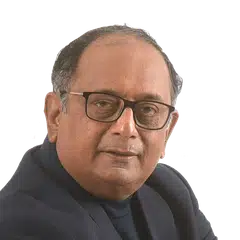
As a mediocre student in his Dhaka schooldays, Prime Minister Tarique Rahman was often ribbed about not being the sharpest knife in the drawer. Now the nation’s leader, Bangladeshis will pray that their untested leader, a college dropout who recently returned to his country after a 17-year exile, will prove a quicker study.
Mr Rahman, 60, faces no shortage of issues domestically and in the near abroad that need urgent tending and deft handling.
It does help that he starts out not just with a pedigree but with a strong mandate.
He is the son and political heir of the late Begum Khaleda Zia, who served two terms as prime minister, and her husband Ziaur Rahman, a former military leader and president of Bangladesh who was assassinated.
His Bangladesh Nationalist Party (BNP), which he led from London as acting chairman following his mother’s imprisonment in 2018 by former prime minister Sheikh Hasina Wajed’s Awami League regime, won 209 of the 299 contested seats for the national legislature.
The Islamist Bangladesh Jamaat-e-Islami placed second, with 68 seats. A few more seats went to allied parties of the two big formations, and the rest to small parties and independents.
While the two-thirds sweep is impressive by any standards and has been hailed as a landslide by global media enthused about a broadly secular outfit running the world’s fourth most populous nation of Muslims, it understates several factors that, unrelated to Mr Rahman’s charisma or competence, were key to the margin of victory.
Chief among them was that the once-entrenched Awami League, the party that won Bangladesh’s independence in 1971, was barred from contesting by the interim government of chief adviser Muhammad Yunus, the Nobel laureate pitchforked into the job of running a caretaker administration after Hasina fled to India in August 2024, following a public revolt.
Under Professor Yunus’ watch, the Awami League was suspended under anti-terrorism laws, and the Election Commission removed it from the official list of registered political parties eligible to contest polls. Hasina was also handed a death sentence in absentia for “crimes against humanity”.
Prof Yunus and Hasina have a history of mutual unease. He pipped her to the Nobel (she had hoped to win it herself after settling the restive Chittagong Hill Tracts) and later briefly toyed with the idea of launching a political party.
Less recognised but also vital to the BNP’s success was that the resurgent Jamaat, long reviled for having supported Pakistan when the former East Pakistan broke away to form the new state of Bangladesh, failed to field a single woman candidate in the February polls.
Bangladesh is a rare nation in South Asia where the gender balance favours women.
Alongside students, women were also a strong force in the “Monsoon Revolution” that toppled Hasina. Jamaat’s patriarchal attitudes, including comments by some key figures linking women in the workplace to “moral degradation”, caused many to shift their votes to the BNP.
Mr Rahman, who addressed 64 rallies, benefited from frequently bringing his wife and daughter onstage.
An element of public sympathy over the loss of his mother Khaleda Zia, who died on Dec 30, 2025, in a Dhaka hospital, also undoubtedly contributed to the BNP wave.
Political pressure cooker
Major challenges now confront Mr Rahman.
Politically, it starts with keeping the Jamaat and its well-oiled machinery at bay. Once operating at the fringes, Jamaat is now fully mainstream in Bangladesh. Not only did it win almost a third of the national vote, but it is also now the principal opposition with 68 seats in the legislature, whereas its previous best was 18 seats.
The resounding “Yes” vote in a referendum seeking endorsement of the so-called July Charter, held along with the legislative election, will result in considerable influence for the Jamaat – if it is implemented. That is because a new 100-seat Upper House is to be created within 270 days, with seats allocated based on the national vote share.
While not a mirror image of India’s thriving Hindu-nationalist Rashtriya Swayamsevak Sangh (RSS) or its political arm, the Bharatiya Janata Party, functional similarities to the RSS, such as organisational discipline and a proclivity to steer towards a specific religious identity, make Jamaat a durable force in a nation that may be susceptible to shedding its predominantly “Bengali” identity for a more Islamic one.
What is more, the Charter strengthens the president’s powers to reduce power concentration in the prime minister’s office.
Aside from the questions that will inevitably resurface about a controversial past that needed him to leave Bangladesh, Mr Rahman also will soon need to deal with pressure – from within Bangladesh and from key neighbour India – to allow the Awami League to resurface, despite the odium the party is currently under for its violence-soaked final years in power.
Word in Dhaka salons is that, despite their bitter rivalry, the Awami League, in order to deny Jamaat, helped fill the election coffers of the BNP – coffers that had been depleted by a long stint away from power. Mr Rahman will need to repay the favour.
The economy is showing significant distress. Once an impressive growth story, Bangladesh’s economy has slowed sharply, beset by inflation and structural weaknesses. While the Yunus administration did much to clean up the banking system, investors have complained about an uncertain political environment, and foreign investors are leery.
Resetting ties with allies
Geopolitically, Mr Rahman needs to urgently rebalance after Prof Yunus, who seemed to have been greatly in the Jamaat’s thrall on several decisions, including key personnel appointments, took a series of decisions seen as meant to bait New Delhi.
This ranged from inviting China to participate in infrastructure projects near the narrow and strategic Siliguri Corridor that links India’s heartland to its seven north-eastern states, to reports that a World War II-era airbase near this “Chicken’s Neck” might be revived with Chinese help. India has reportedly responded by moving missile squadrons close to the corridor.
The interim government also hosted a series of visits by Pakistani ministers and defence and intelligence officials, highlighted by a meeting in October 2025 between Prof Yunus and the chairman of the Pakistan Joint Chiefs of Staff Committee. Pakistan is reportedly in advanced negotiations to sell JF-17 Thunder aircraft to Bangladesh.
Separately, there is the US to contend with. Hasina has repeatedly said the US had sought to unseat her because of her unwillingness to lease St Martin’s Island, close to Myanmar, to the US military. This worries not just China, which has deep interests in Myanmar, but also India, which is undergoing a bout of testy bilateral ties with the US.
Mr Rahman has no shortage of geopolitical pressures to contend with. While he can be expected to maintain stable relations with China – Premier Li Qiang sent congratulatory messages – an outreach by Indian Prime Minister Narendra Modi suggests that New Delhi is willing to overlook its past suspicions of the BNP, if nothing else, to correct its excessive reliance on the Awami League to fulfil its geopolitical ends.
Mr Rahman’s reciprocal gestures and promises to seek constructive engagement with India, even as he pushes a “Bangladesh-first” line, suggest a maturity and appreciation of geopolitical realities that seemed to have eluded Prof Yunus.
That should work to Bangladesh’s benefit. Sri Lanka’s nightmare decades of insurgency began when it ignored this reality, and it paid a heavy price for it economically. As it strives for middle-income status, Bangladesh – surrounded by India on three sides – can afford to ignore New Delhi’s sensitivities even less.