
The pulse of Changi: How one of the world’s busiest airports keeps on running
Changi Airport, the fourth-busiest international airport in the world, handled 69.98 million passengers in 2025.
During that year, it facilitated 374,000 aircraft movements. This works out to one landing or take-off every 84 seconds.
In this place that never stops running, never sleeps – and is renowned also for being one of the best and most efficient in the world – its workers have to work against the clock to keep its operations well-oiled.
Runway workers toil from 1.30am to 5.30am over four days each week.
Up to 150 of them work on the airport’s two 4km-long runways, one at a time, aided by narrow light beams from their headlamps as they operate machines that hum softly in the darkness.

Workers queueing to collect personal tracking devices before the start of runway maintenance works. The devices enable supervisors to monitor the location of personnel working on the airfield, helping to ensure all workers are accounted for before the runway is reopened.

Workers replacing a faulty stop bar light on a taxiway. These lights signal to pilots and airside vehicle drivers that they must not proceed onto the runway unless authorised.

A mechanical runway sweeper (left) and a rubber removal machine (right) carrying out maintenance on the runway. The sweeper removes loose foreign object debris from the runway surface, while the rubber removal machine scrubs away tyre deposits left behind by aircraft.
The four hours they have are crucial – they have to carry out inspections and works to keep the runways clear of rubber deposits from plane tyres, as well as resurface and repaint the runways to ensure that aircraft can land safely.

A worker using a total station, a surveying instrument, to measure and verify the precise position and elevation of runway features. This helps engineers ensure that the runway surface and markings meet operational and safety requirements.

A worker using a machine to repaint touchdown zone markings on the runway. The white bars help pilots identify the touchdown zone and gauge their distance from the runway threshold during landing.

Trapezoidal grooves on the runway surface help channel rainwater away, improving drainage and reducing the risk of hydroplaning during aircraft take-offs and landings.

A cold milling machine removing a section of asphalt from a taxiway. As part of planned works to resurface the pavement, the machine grinds away the worn surface layer and conveys the milled asphalt into a tipper truck for removal. The high-precision maintenance exercise helps keep taxiways, runways and aircraft stands safe, smooth and durable for aircraft operations.
When one of the runways is closed for their works, a 6.2m-tall elevated cross set up at each end of the runway signals the closure to incoming pilots.

Illuminated cross markers are placed at both ends of the runway, indicating that it is closed. The elevated 6.2m-tall crosses serve as visual sign for pilots to note that the runway is not in operation.

An airside inspection vehicle driving along the illuminated runway during the final inspection phase of maintenance works. Inspectors check for foreign debris, verify that airfield lighting is functioning normally, and ensure that temporary marker boards and runway closure crosses have been removed before the runway reopens.
Above the runways, others perform a different kind of work to keep planes moving – air traffic control.

Air traffic controllers working inside the iconic Changi Airport control tower. At 80m tall, it is the tallest building in the area. It gives the controllers an unblocked view of all terminal buildings and, more importantly, the two runways.
ST FILE PHOTO: DESMOND LIM

A line of aircraft approaching Changi Airport’s runway for landing. The aircraft’s landing lights and navigation lights are visible as they descend towards the runway.
Although this function is iconically represented by the Changi Control Tower located between the runways, some air traffic controllers are actually based at the Singapore Air Traffic Control Centre, near Changi Village, to manage airborne aircraft during the phases of climb, cruise and descent.
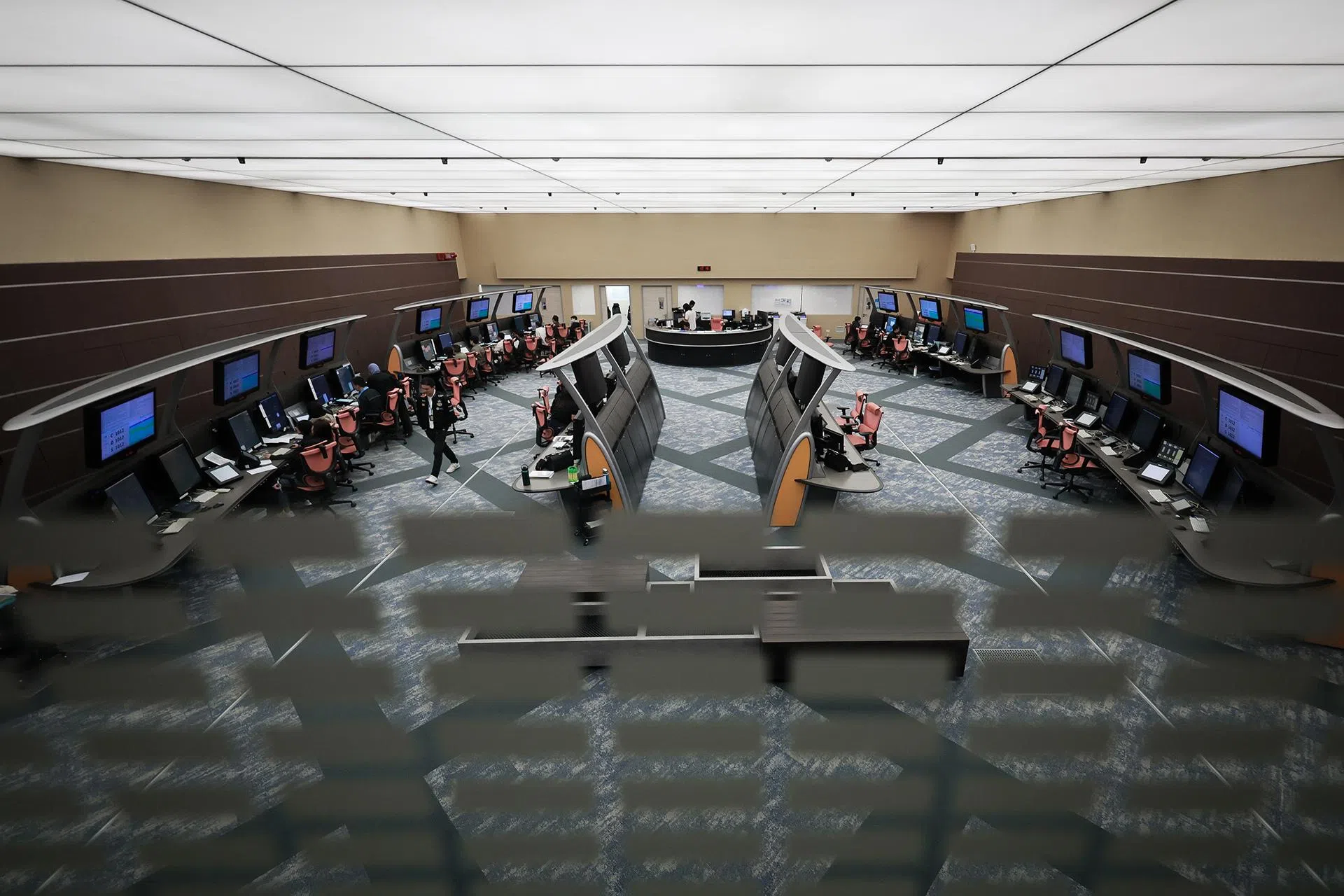
Air traffic controllers using a computer system integrated with surveillance and communications technologies, as well as conflict detection tools, at the Singapore Air Traffic Control Centre, located near Changi Village.
Some of Changi’s 500 air traffic controllers sometimes have to manage up to 80 aircraft at any one time.

Air traffic controllers making use of a computer system that manages flight information and is integrated with surveillance systems, communications systems and conflict detection tools.
As the work to keep planes moving is carried out, others labour to keep passengers moving within the airport.

A Skytrain moving passengers within Changi Airport Terminal 3’s transit hall.
At one of the Skytrain depots tucked away in a corner of Terminal 3, over 30 technicians service the airport’s people-mover system every night from 2am to 5am.

A mechanic working on a Skytrain at a maintenance depot. The carriage is raised on hydraulic stands, allowing access to the underside of the vehicle for inspection, servicing and repair.

Mechanics lifting a bogie axle with a manual chain hoist at a Skytrain maintenance depot.

A bogie is removed from the undercarriage of a Skytrain for maintenance at a depot.
Notwithstanding the rigorous daily maintenance regimen, a major overhaul of the 22 Skytrains is conducted every three years – to repair or replace critical train parts.

A mechanic working on a Skytrain at a maintenance depot. The Skytrain maintenance depots are located at the end of the Skytrain lines. Changi has a fleet of 22 trains all in active service.
Like aircraft and passengers, baggage and cargo have to be kept moving at the airport too, especially when a plane is getting ready for its next flight – a turnaround.

A ground worker removing chocks – blocks that keep wheels in place – from a Singapore Airlines Airbus A350-900 parked at Changi Airport Terminal 3 ahead of a turnaround flight to Johannesburg.
This 24/7 process requires the close coordination of ground handlers, cleaners, inflight catering staff and aircraft engineers.
In just under two hours, the plane has its baggage and cargo offloaded, and goes through refuelling – all while removing sewage and pumping in fresh water.
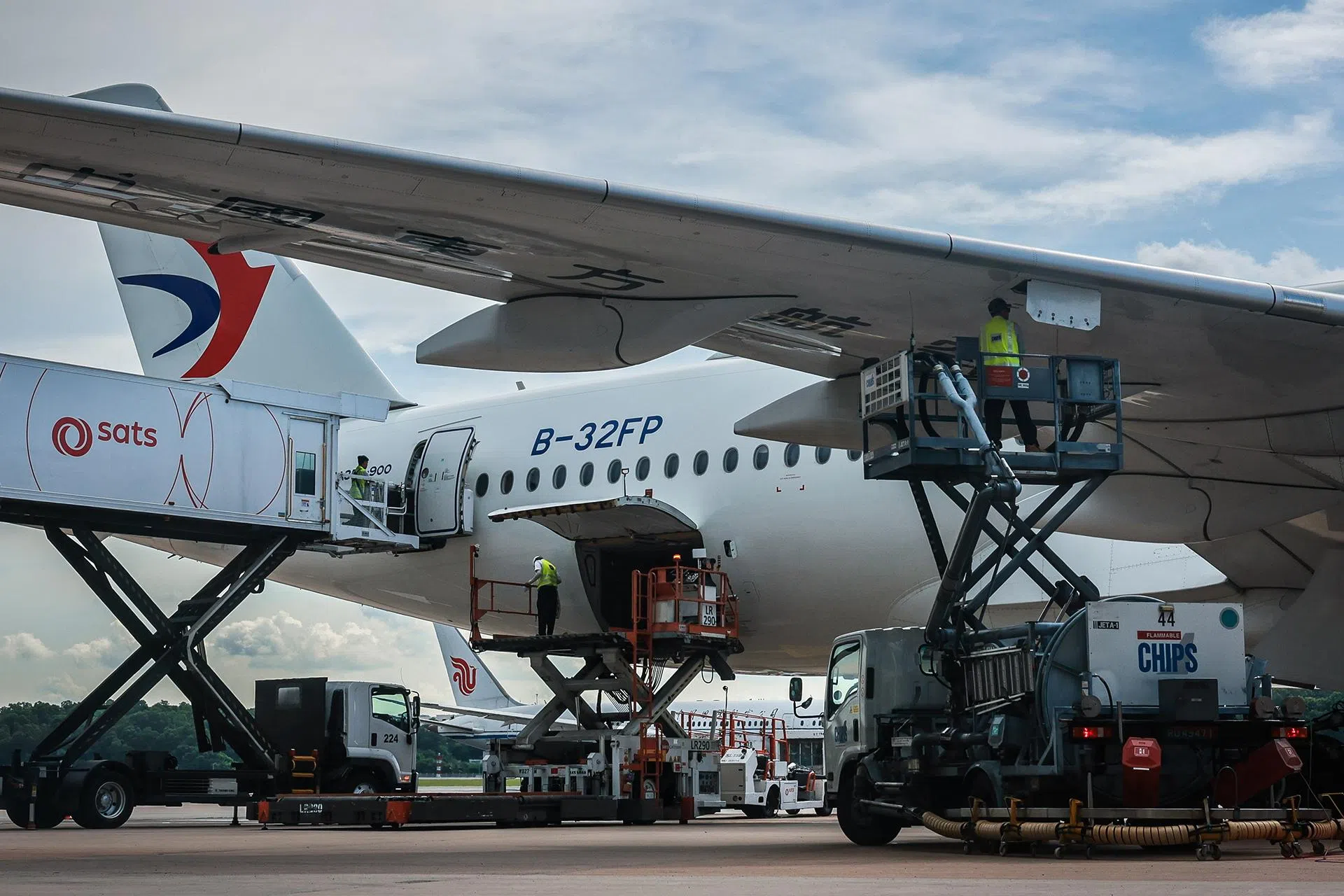
A China Eastern Airlines Airbus A350-900 parked at Changi Airport Terminal 3 during a turnaround for a flight to Shanghai. As passengers disembark and board, the aircraft is refuelled (right), baggage unit load devices and cargo are offloaded and loaded (centre), and catering is loaded from food service trucks (left). The aircraft also undergoes lavatory and potable water servicing.
Some of these bags and cargo are towed by autonomous baggage tractors. By 2027, there will be 24 such driverless tractors, up from eight to be deployed by end-2026.

A baggage tractor driven by a ground handler transporting cargo across the airside of Changi Airport. Baggage tractors are used to tow baggage carts and cargo dollies between aircraft and airport handling facilities.

An autonomous tractor with a baggage trolley moving across the airside at Changi Airport. Autonomous airside vehicles are painted in an eggshell blue livery to distinguish them from conventionally operated vehicles.
Cleaners remove waste from the aircraft cabin, vacuum the floor, clean the toilets, and replace used blankets, pillowcases and headrest covers.
After them comes the in-flight catering team, wheeling in trolleys of meals and drinks for the next flight, in addition to disposing of food waste from the previous flight.
Concurrently, technicians rectify mechanical and electronic issues that were flagged from the previous flight. Ground crew then conduct safety checks on equipment.
The entire process ends when passengers taking the next flight board the aircraft – as luggage and cargo are transported on board.

Passengers boarding a Singapore Airlines Airbus A350-900 parked at Changi Airport Terminal 3 for a turnaround flight to Johannesburg.
Terminal 2 is home to a 5,120 sq m early baggage storage system, which can store up to 2,400 bags at any one time.

Automated systems at the early baggage storage system at Changi Airport Terminal 2 sort and store bags that are checked in early, allocating luggage into designated slots.
This system is designed with an extra function of storing bags, and only retrieves them when the aircraft is ready for loading around three hours before its departure.

Baggage is stored in the fully automated early baggage storage system in Terminal 2 before being loaded onto flights.
Pharmaceuticals, fresh produce, seafood and meat products, dairy products, chilled food items, and fresh flowers require special care.

A pallet of pharmaceuticals is transferred into the SATS Coolport after being weighed. The temperature-controlled air cargo facility handles temperature-sensitive shipments, helping to maintain an unbroken cold chain between aircraft and storage areas.
These need to be continuously monitored and transported seamlessly in climate-controlled settings from SATS Coolport, a cold-chain facility, to the aircraft, via the use of cool dollies, thermal protection and temperature-controlled truck docks.

An automated stacker crane at the SATS Coolport moving pallets of temperature-sensitive shipments onto high-density storage racks.

A pallet of pharmaceuticals being transferred into a cool dolly for transport to a Singapore Airlines plane.
SATS Coolport can support temperature-sensitive cargo at minus 18 deg C and below, from 2 to 8 deg C, and from 15 to 25 deg C.

Workers transferring a shipment of pharmaceuticals from a cool dolly onto a flight headed for Los Angeles. Cool dollies are used to transport temperature-sensitive cargoes.
For incidents at the other end of the thermometer, Changi Airport’s own firefighting force, Airport Emergency Service (AES), is always ready to respond to fires and emergencies in the aerodrome.
These firefighters are trained specially to put out aircraft fires. Around four times a month, they carry out a drill outside the airport in an aircraft simulator affectionately dubbed “Red Bird”.
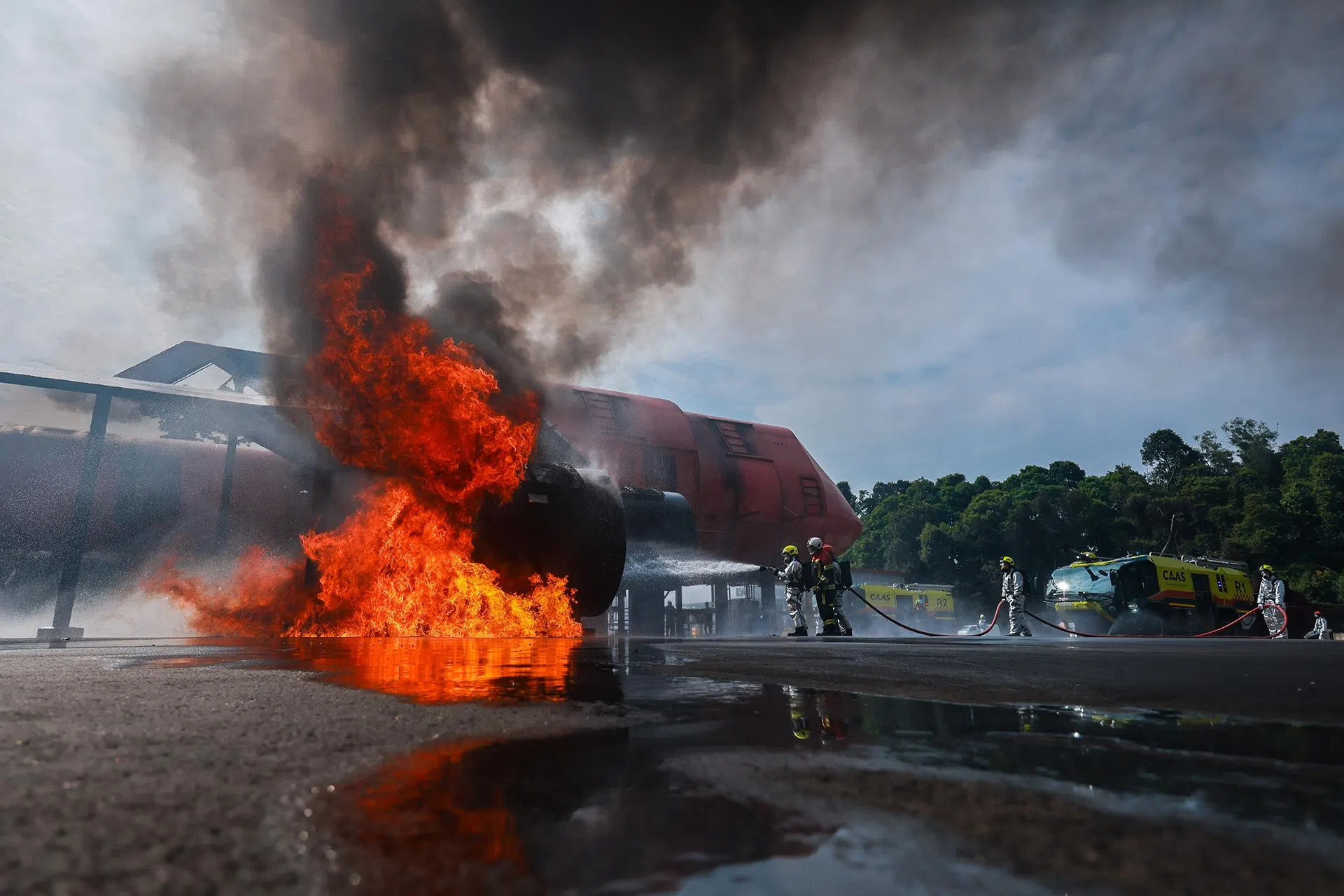
The airport’s firefighting force, Airport Emergency Service, putting out a simulated engine fire during a training exercise. The steel aircraft simulator, dubbed “Red Bird”, can recreate realistic fire scenarios for the practice of firefighting and rescue techniques.
Real fire is set to parts of the 45m-long Red Bird during the exercise, including the undercarriage, engine and the pad surrounding the simulator to simulate spill fires.

This training is critical in enabling firefighters to acclimatise to working in a hot, smoke-filled environment. It also builds their confidence to handle such scenarios and helps them work more effectively in the event of an actual emergency.
The firefighters, donning 27kg of protective gear, have to extinguish the flames safely and quickly – all while practising how to manage casualties, open doors, pitch ladders and deploy airstairs.

The firefighters are tasked to extinguish fires and extricate “casualties” in a safe and timely manner, while battling high temperatures and acrid smoke.
Besides firefighting, the airport also conducts an annual crisis simulation exercise once every year. Staff had also responded to a simulated aircraft “crashing” in the waters and on land.

Changi Airport Group (CAG) leads a Disabled Aircraft Recovery (DAR) exercise, which CAG’s Airside Operations Control team has been conducting annually since 2020. The 2026 exercise simulated an aircraft which became “disabled” on a taxiway after it veered off the runway, and its nose landing gear collapsed.
On May 21, more than 80 staff from various teams in Changi Airport Group such as the Airside Operations and AES, as well as SIA Engineering Company, were involved in an exercise to move a “disabled” aircraft off the runway.

Airport staff lowering the front of a wide-body training aircraft to its simulated “disabled” position at the start of the annual DAR exercise.

A “disabled” aircraft has to be lifted using special airbags and slings, before being placed onto a purpose-built trailer to be towed away.
They worked together to lift the nose of the 70-tonne stripped-down plane using a multisling, before supporting it on a transition trailer and raising it up using lifting bags.
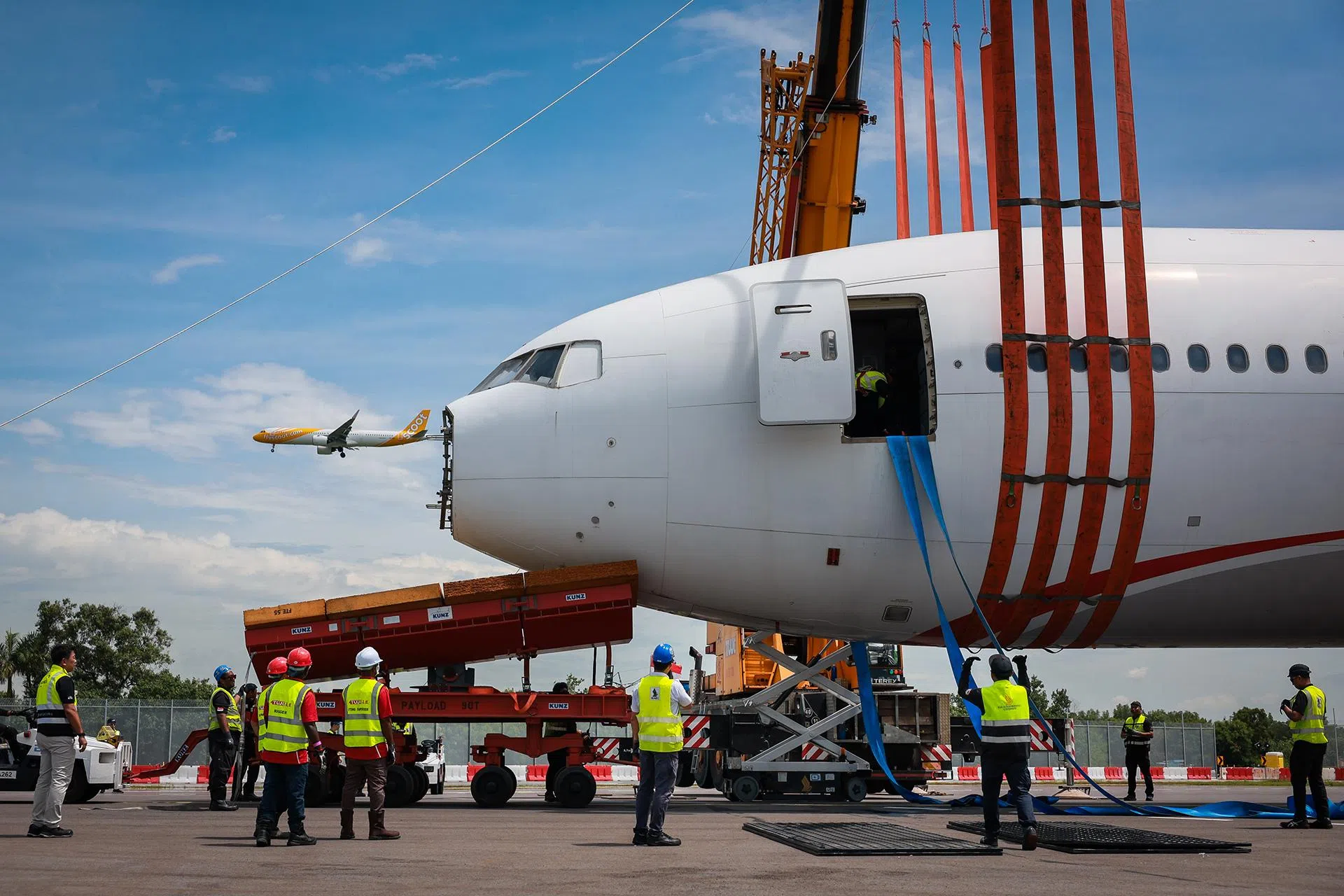
Airport staff taking part in an exercise to move a “disabled” Boeing 777-200 training aircraft with a collapsed nose landing gear on May 21. A mobile crane and lifting bags (not pictured) were used to raise the front of the 70-tonne aircraft.
If an aircraft is “disabled” in Changi, a multi-agency team kicks into action. Every team member needs to know exactly what to do, including where and how to deploy the Disabled Aircraft Recovery (DAR) kit, which consists of debogging equipment, multislings, as well as high and low-pressure bags.
Such preparations for contingencies mostly go unseen.
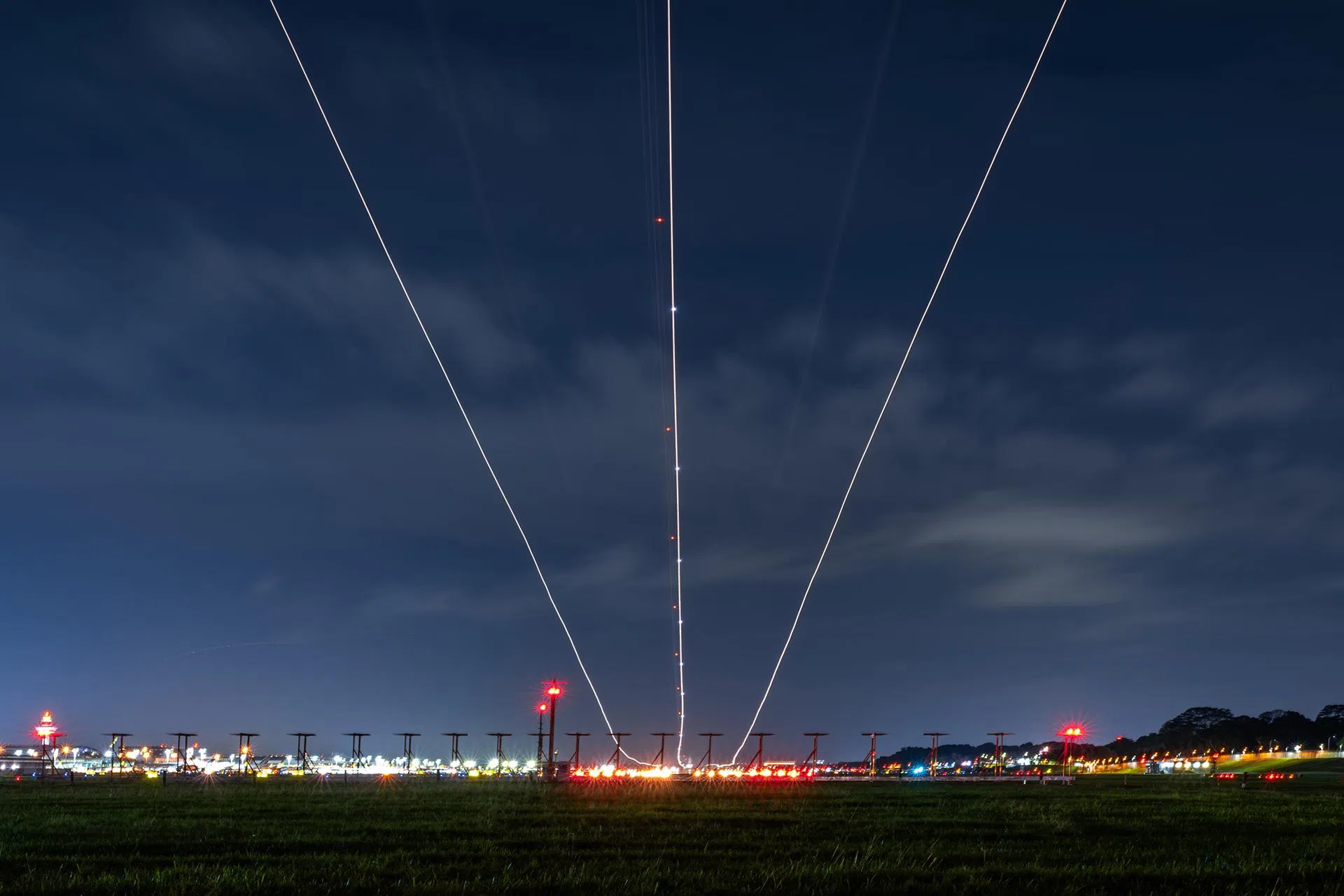
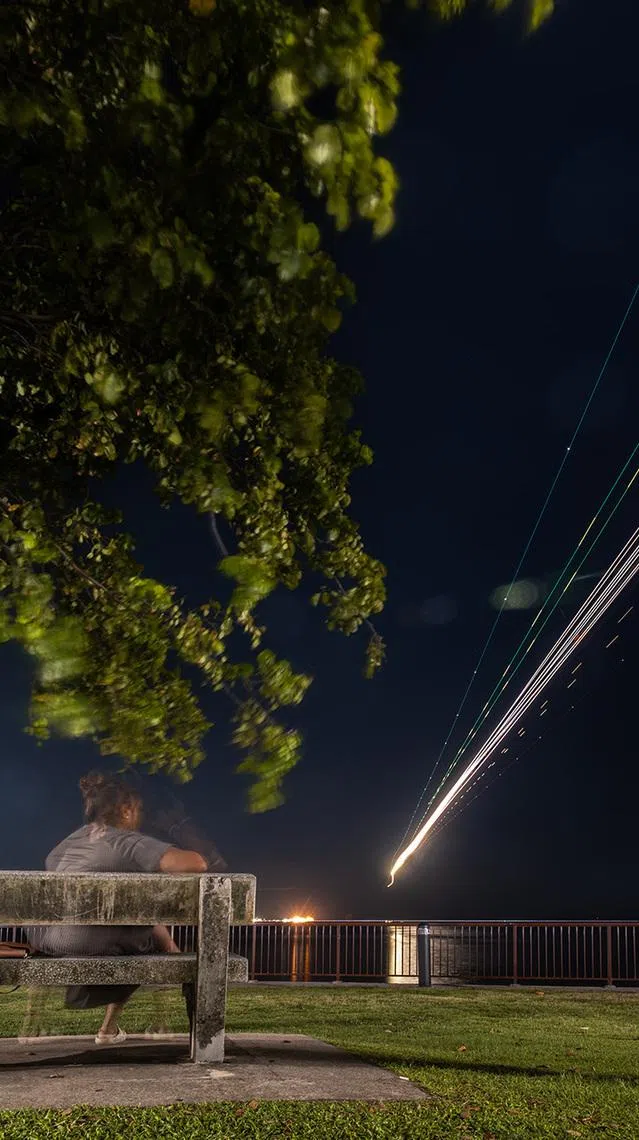
Light streaks from an aircraft landing on one of Changi Airport’s two runways captured in a long-exposure shot.
To passengers, Changi Airport presents its best and greenest.

Goh Wei Long, a duty terminal manager with Changi Airport Group, distributing a Changi Care Pack containing a blanket, hot eye mask and toiletries to transit passengers resting in the terminal. The care packs are provided to help travellers freshen up and rest more comfortably.

Operations manager Mohammed Jailani Mohd Usuf briefing incoming duty terminal managers at Changi Airport Terminal 3. These managers monitor passenger-facing operations, helping to resolve issues on the ground and ensuring travellers receive assistance when needed.
Its lush greenery, including vertical gardens that line the walkways guiding passengers to the renowned waterfall at Jewel Changi Airport, is often given credit in travel publications.
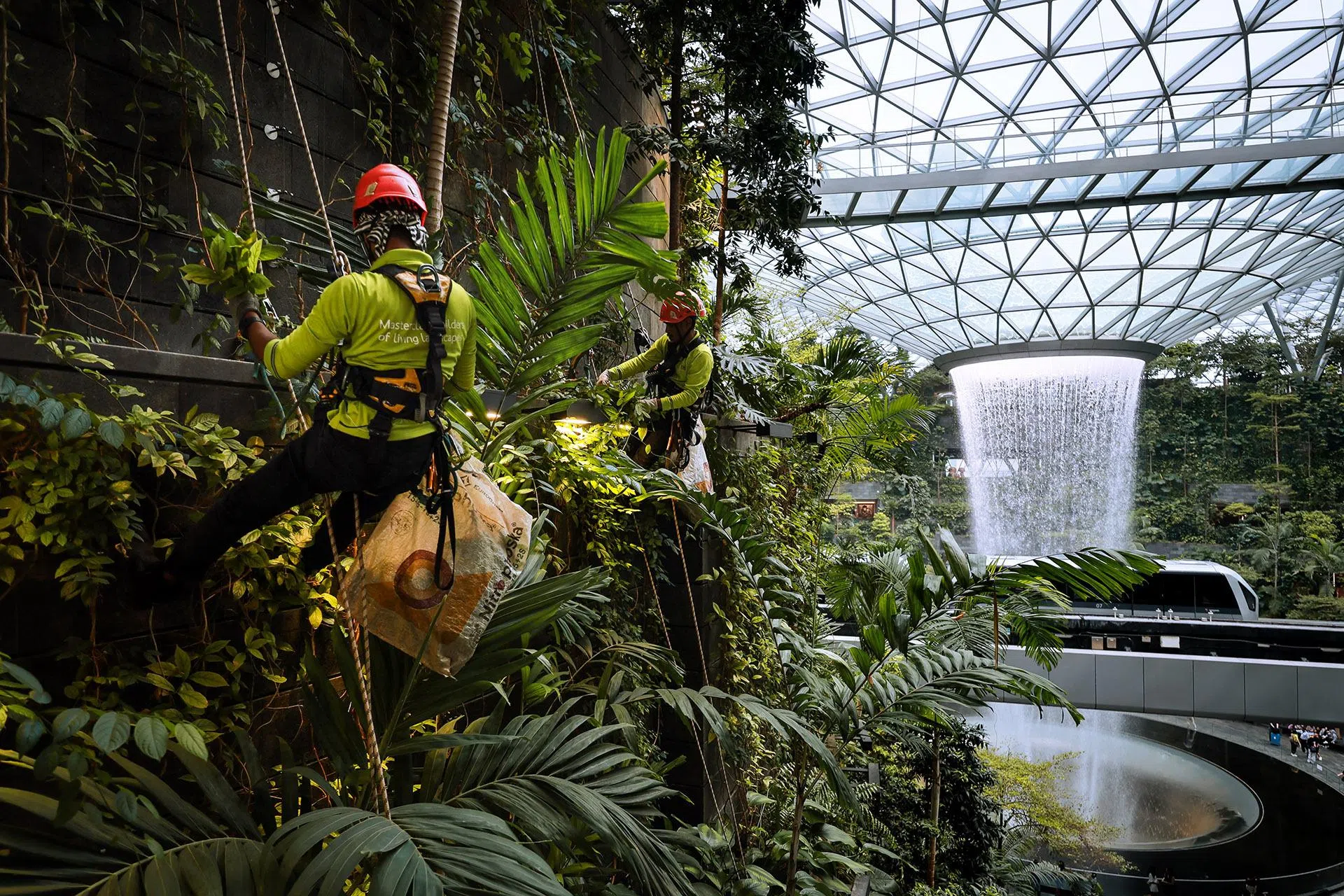
Landscape technicians abseiling down the North Canyon in the Forest Valley at Jewel Changi Airport to prune plants. Jewel’s vast plant collection comprises more than 2,000 trees and palms, and over 100,000 shrubs.
Over 2,000 plants form part of six 25m-tall walls, and require at least two gardeners to abseil across the walls to tend to them.

Workers abseiling down the exterior of Jewel Changi Airport, cleaning the glass panels. Rope-access teams are used to clean and maintain sections of Jewel’s vast glass facade that are difficult to reach using conventional access equipment.
In Terminal 2’s transit area, 250 sunflowers in a rooftop garden look upon the runways.

Erinna Pak (right), a manager at Changi Airport Group's Airport Management, briefing a worker on the replacement of weathered sunflowers at the Sunflower Garden in Terminal 2.

A bee buzzing among sunflowers at the Sunflower Garden at Changi Airport Terminal 2. The rooftop garden’s sunflowers are regularly replaced to keep the display in bloom for visitors.
Such beauty is paired with brawn – Changi Airport is continually upgrading its infrastructure and technologies.

Taken a year before Changi Airport’s official opening in 1981, this picture shows the iconic 20-storey airport control tower taking shape.
ST FILE PHOTO: TAN WEE HIM

A driver plugging in an electric baggage tractor at an airside charging station at Changi Airport.

Passengers using the self-service check-in kiosks at Changi Airport Terminal 2 to print boarding passes and process travel details.
Koh Ming Sue, who has worked on the airport’s engineering infrastructure since 1994, feels that watching Changi Airport turn 45 in 2026 signals a time to “fortify” its infrastructure and assets, many of which are “reaching middle age”.
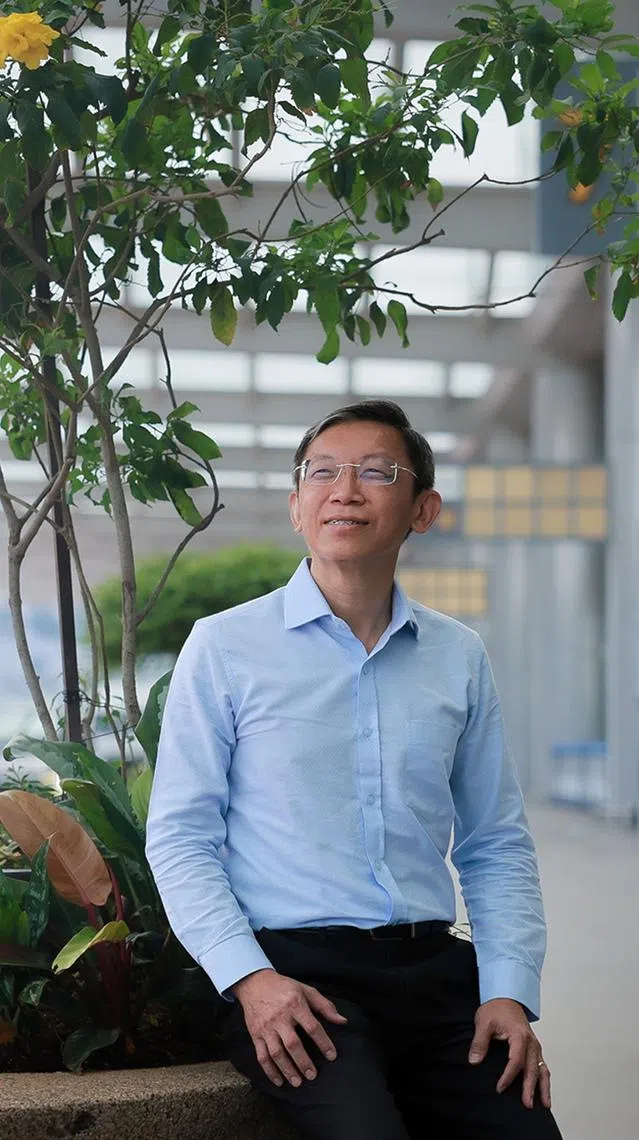
The executive vice-president of engineering and development at Changi Airport Group said: “The sky’s the limit in our pursuit of world-class excellence.”
With just a decade or so till the opening of the new Terminal 5, the airport is on the right track to ride the wave of growth in the Asia-Pacific air passenger market – which is expected to more than double from 1.7 billion in 2024 to 4.1 billion in 2044.

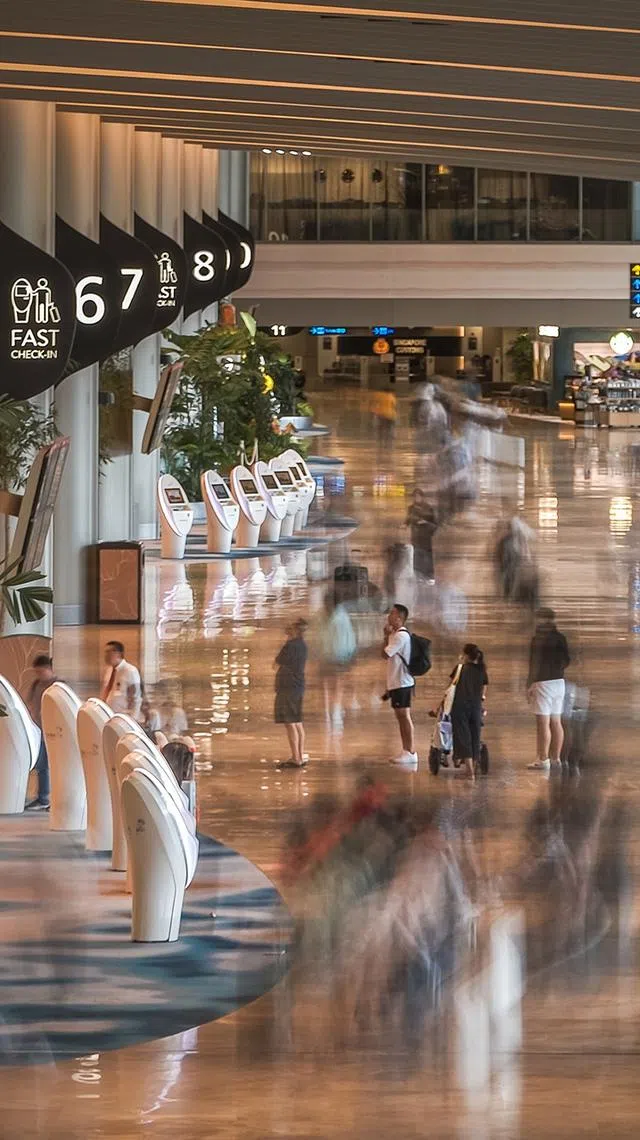
A long-exposure photograph shows a passenger regaining his bearings as others move through the transit hall at Changi Airport Terminal 1.

Passengers collecting their luggage at the baggage carousel at Changi Airport Terminal 1.

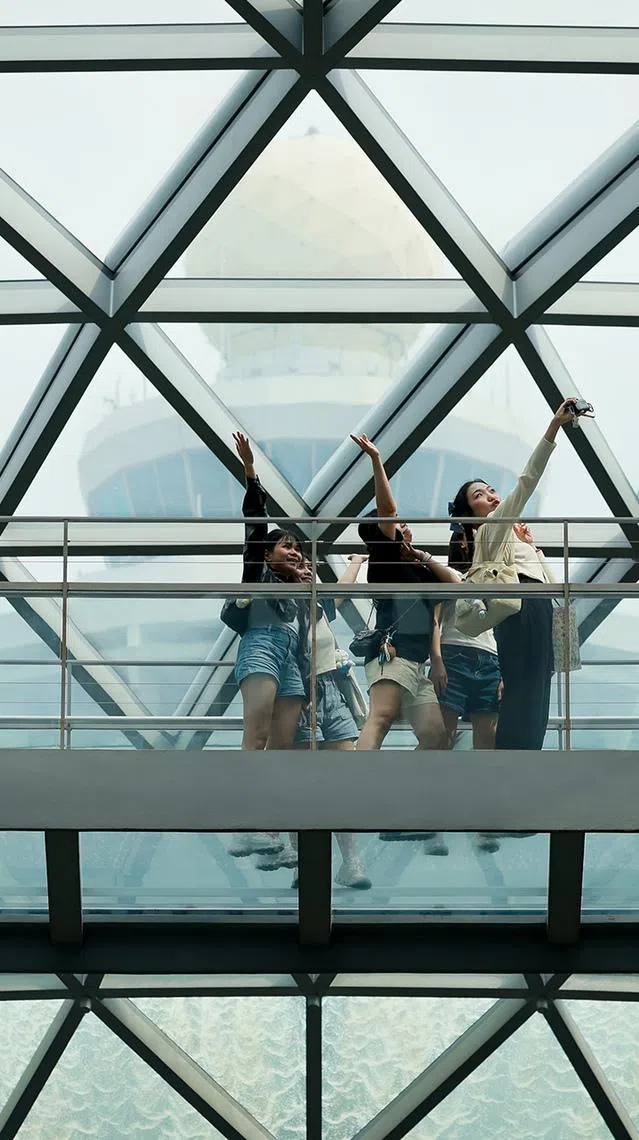
Pre-school children on an excursion looking at passengers walking through the transit hall at Changi Airport Terminal 1 from an elevated public walkway. Changi Airport is a popular destination for school learning journeys, offering students a chance to learn about aviation, air travel and the operations behind one of the world’s busiest international airports.
The new mega terminal, together with the wider Changi East development, will effectively double the size of Changi Airport, allowing it to handle 140 million passengers every year.

Murals by artist Yip Yew Chong at the basement level of Changi Airport Terminal 4. His 37m-long work, Reminiscing Old Changi Days, recalls life in Changi before the 1970s.

A Peranakan-inspired animated wall installation at the Changi Airport Terminal 4 transit hall, featuring visual storytelling based on Peranakan motifs and cultural scenes.

Six Petalcloud sculptures, each made up of 16 petals, in Terminal 4. The kinetic installation shifts in choreographed formations inspired by the motion of clouds and flowers.

Staff unpacking and stocking goods at The Shilla Duty Free shop in the transit hall at Changi Airport Terminal 1.

The TWG Tea outlet at the Changi Airport Terminal 4 transit hall features a decorative interior with high ceilings and neatly arranged stacks of signature tea tins.

Children playing at a bird-themed playground in the transit hall at Terminal 1. Changi Airport offers a wide range of dining options across its terminals.
For Singapore residents among the millions of passengers, what is perhaps best of all is that they clear immigration within 10 seconds, using just facial and iris biometrics – just as another aircraft is about to land or take off.

Singapore Airlines cabin crew members passing through automated immigration gates at Changi Airport Terminal 2.
Produced by: Andy Chen, Esther Loi, Gavin Foo, Irene Ang and Neo Xiaobin
Main photographs and videos by: Gavin Foo