

‘Stricter than the airport’: Halfway house uses tough love, support to help addicts in S’pore
For someone who has been in and out of prison since he was 18, Alvin Chew is in no hurry to leave the prison rehabilitation ecosystem.
The 50-year-old completed halfway house Teen Challenge (Singapore)’s faith-based programme in January 2025 and chose to stay on as a full-time staff member at its premises in Old Choa Chu Kang Road.
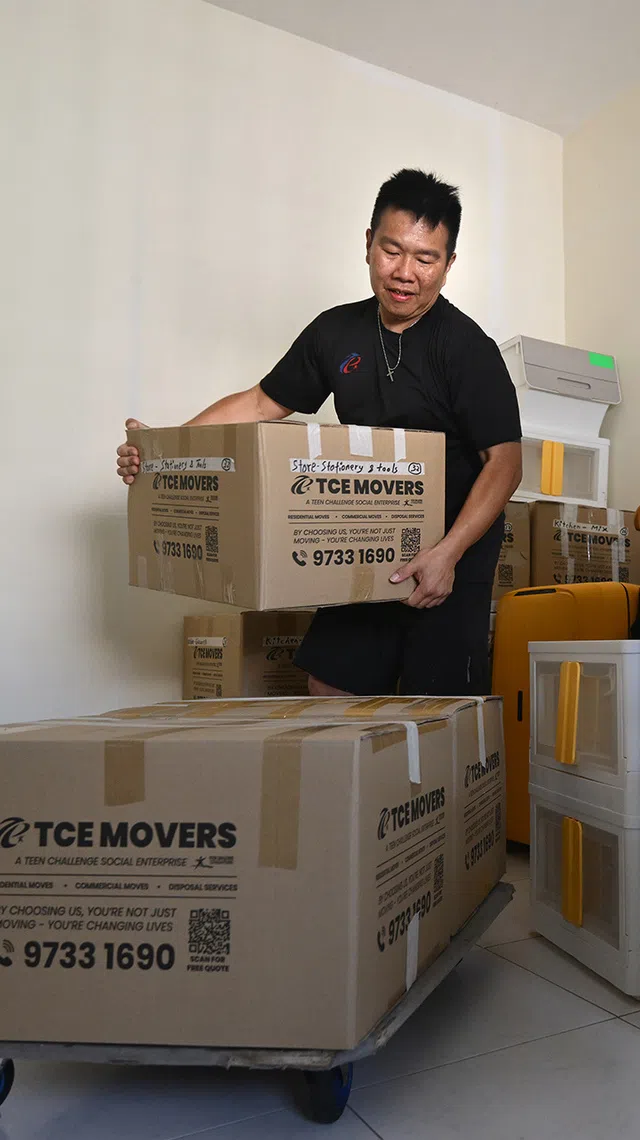
The former drug offender now moves furniture as the team leader of Teen Challenge’s moving service.
Freedom is “the most challenging” thing, he said, when asked why he chose to stay as an employee at a place where he was once confined.
“My life was very messy and it was like a circle. I kept getting caught, going to jail and serving my sentence. I stay here because I’m very scared of doing drugs again,” said Chew.

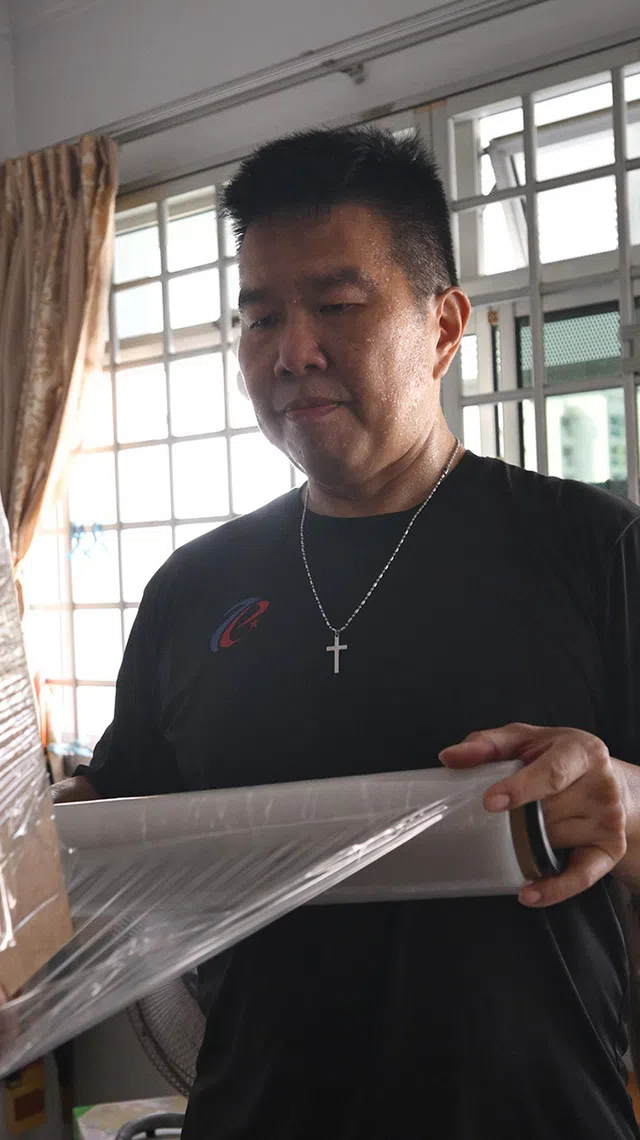
Alvin Chew helping a client in Choa Chu Kang relocate on Nov 12 as part of TC Movers.

TC Movers is operated by Teen Challenge (Singapore) under its social enterprise arm, Teen Challenge Enterprise.
He is among thousands of residents who have gone through the Teen Challenge programme since the charity first opened its doors in Singapore half a century ago on Oct 17, 1976.

A sign with references from the Bible inside the Teen Challenge compound.
It is one of 1,400 locations that the faith-based addiction recovery and outreach organisation has set up globally to combat drug and alcohol addiction.
Eleven halfway houses in Singapore are supported by the Singapore Prison Service (SPS), with a total capacity of about 800 residents at any one time.

Residents working out as a way to manage stress, stay active, build confidence and maintain a healthy routine. The gym also doubles as a space for residents to encourage one another.
Teen Challenge is one of the oldest halfway houses here, housing up to 60 men in 15 rooms named after biblical characters whose initials spell out “grace”: Gideon, Reuben, Asher, Caleb and Elijah.
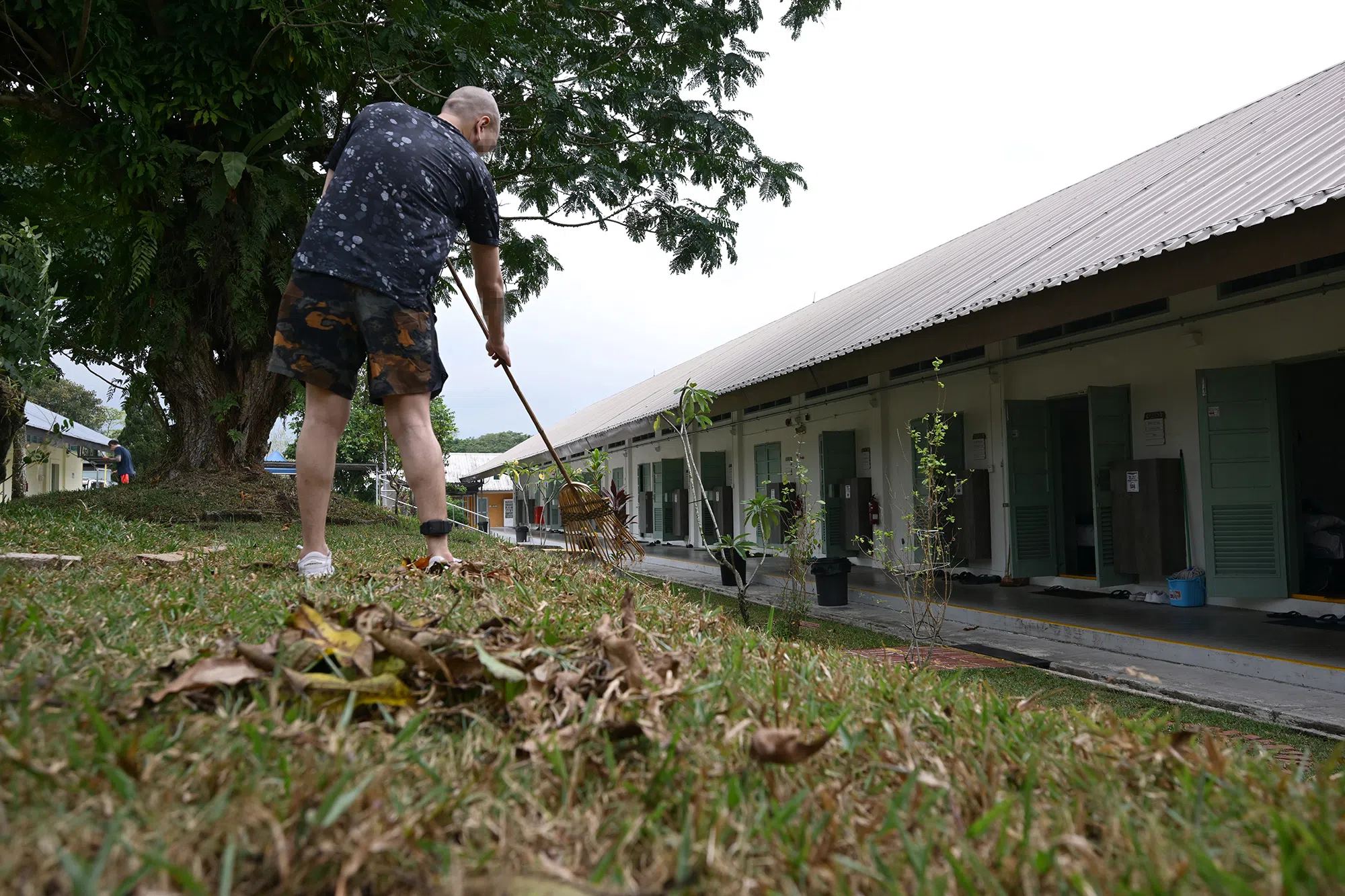
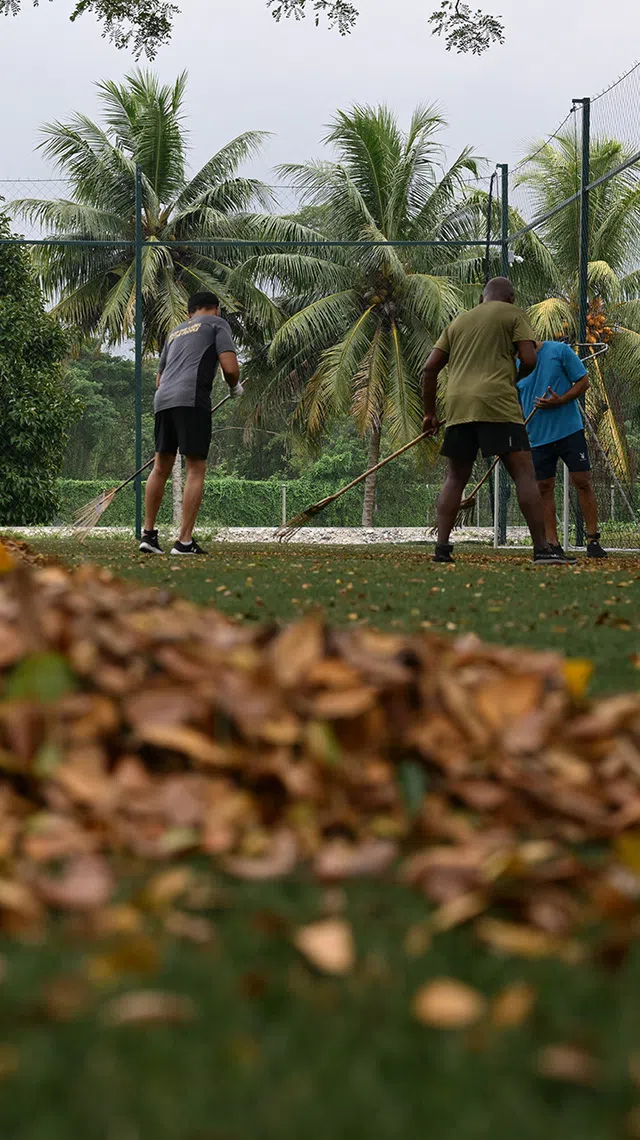
A resident with an ankle tag doing yard work at Teen Challenge in Old Choa Chu Kang Road on Sept 22.
The programme typically lasts between six and 12 months.
It is for inmates to serve out the tail end of their sentence in a structured residential rehabilitation environment, where they take part in sports, personal development activities such as computer literacy classes, and psychological counselling.

Social worker Raymond Lee (left) and a resident during a SOUL (Seeking Opportunities to Upgrade My Life) programme on Oct 8. The compulsory programme by Singapore Prison Service requires residents to cover 10 topics over five weeks. These include lessons in identifying values, goals and triggers, employment, finance, making a recovery plan and more.
Drugs are the main reason many end up there. More than 90% of its residents, both former and current, were jailed for drug offences.
Drug use remains a concern in Singapore, with 1,165 new drug abusers arrested here in 2025 for drug-related offences, an increase of 17% from 2024. Half of them were below the age of 30.
Centre director Steven Kaliaperumal said Teen Challenge works with the SPS and other agencies by supporting the prison service’s correctional and community supervision framework while adding another layer of support within the community.
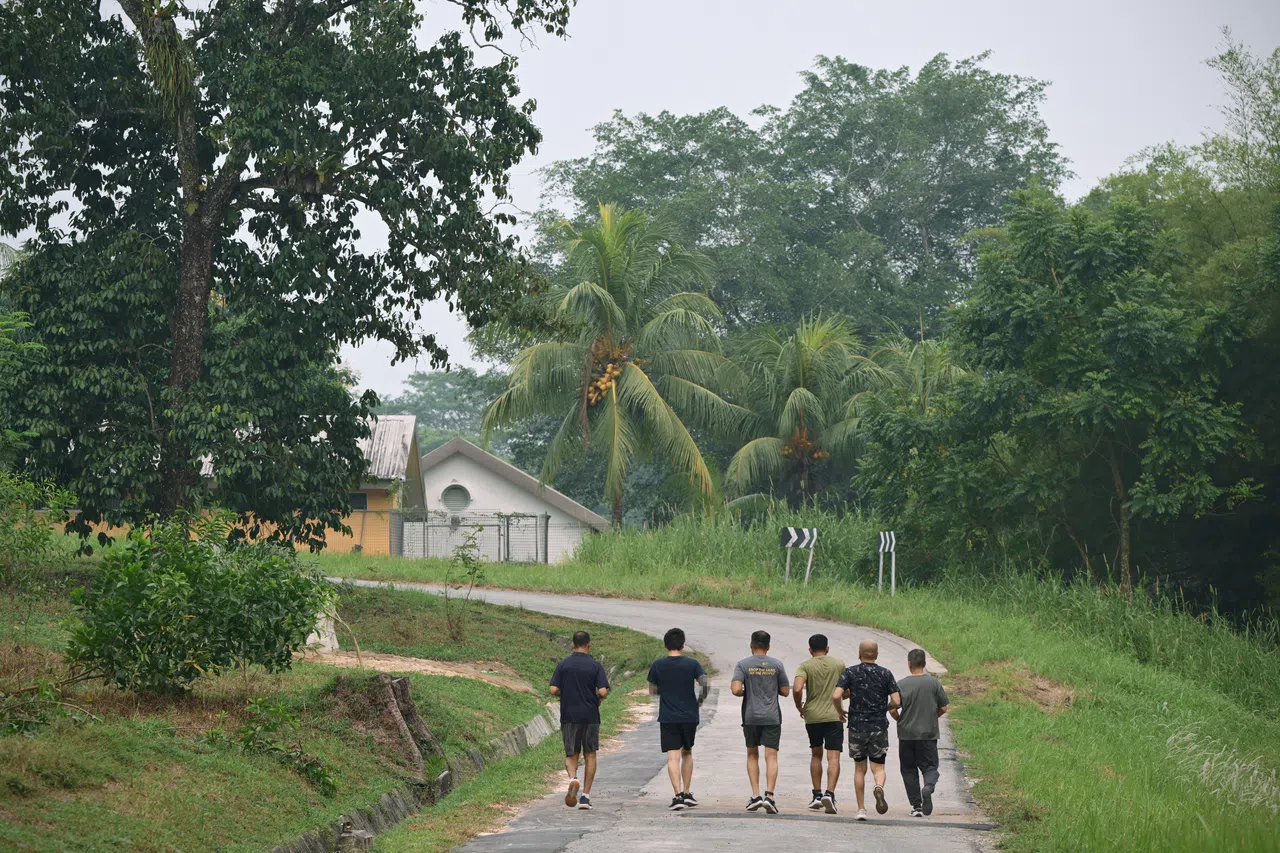
Teen Challenge centre director Steven Kaliaperumal (left) leading a group of residents during his daily jog near the halfway house on Oct 8. Residents join on an ad hoc basis as jogging is not compulsory.
One former resident is 50-year-old Sherman Soh. At 16, he and his older sister were left to fend for themselves after their mother died. Their father had died when he was six.
He occasionally earned $20 to $30 each time he played in a band at funeral processions, with the money going to heroin, cigarettes, and food for himself instead of his family.

Sherman Soh preparing lunch for residents at Teen Challenge’s kitchen on Nov 19.
Soh – who was taking drugs between 14 and 36 – had started sniffing glue with his friends at the void deck before trying marijuana, heroin and Ice, or methamphetamine.
His drug addiction, along with other criminal activities such as snatch theft and misappropriation of company funds, landed him in prison several times between 16 and 38. His sister kicked him out of the house in 2022.
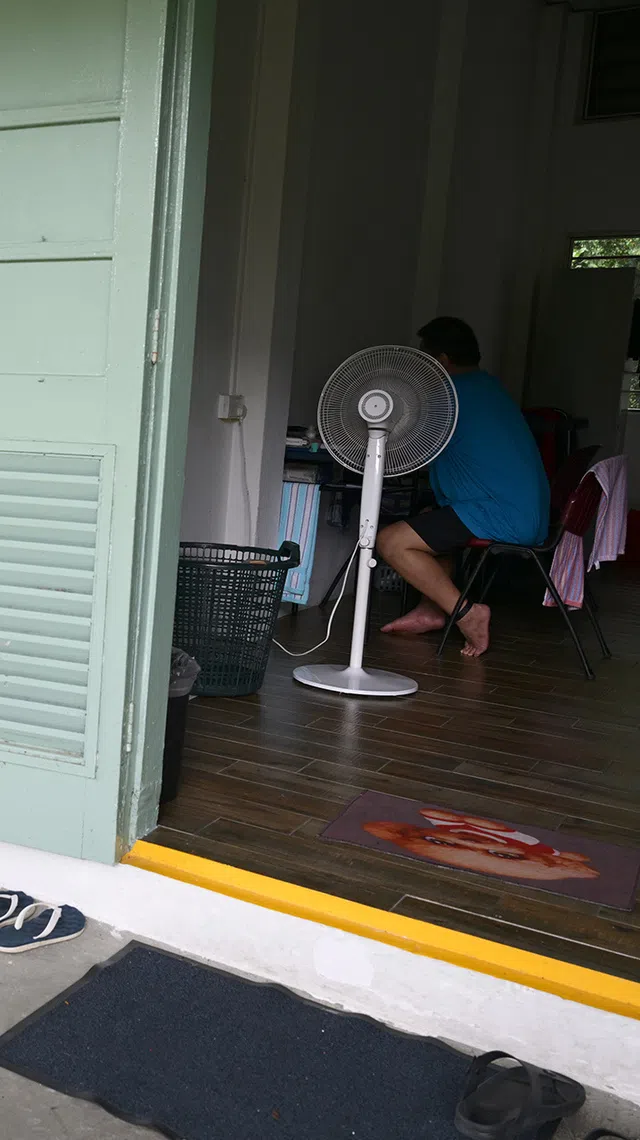
With no other options, he went to Teen Challenge – where he had stayed for a few weeks in 2013 – as a walk-in resident.
“All doors were closed, but Teen Challenge opened theirs for me,” said Soh, who now works as a cook there.

Soh cooking lunch for residents at Teen Challenge on Nov 19.

Soh in the midst of preparing dinner for residents on Oct 8.
Teen Challenge provides residents with individual counselling and casework, group therapy and support sessions, employment and vocational preparation, and personal development activities, among others.
The residents may work as furniture movers, dishwashers or cleaners, among other jobs.
Activities include computer lessons and football or futsal games – which take place every Wednesday night.

Residents playing football with an outside team in a weekly game on Oct 7. Teen Challenge also intends to add pickleball sessions and English lessons to its roster of activities.

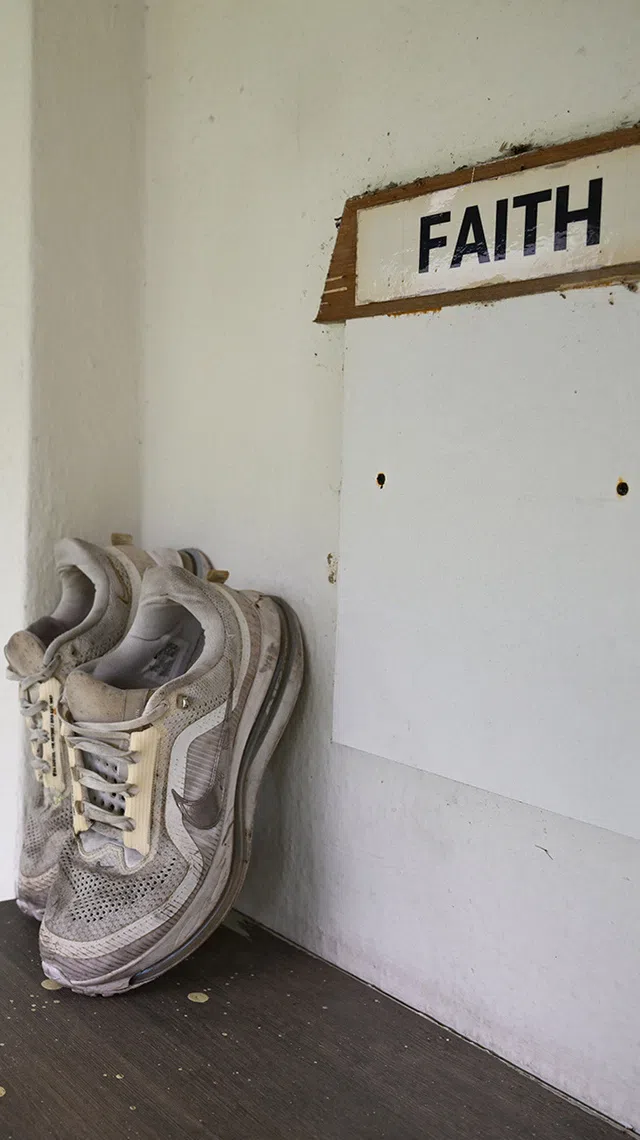
Residents are free to join the weekly matches. Some of the shoes are bought by the halfway house while the rest are donated.
Kaliaperumal said the centre also intends to start pickleball sessions and English lessons.
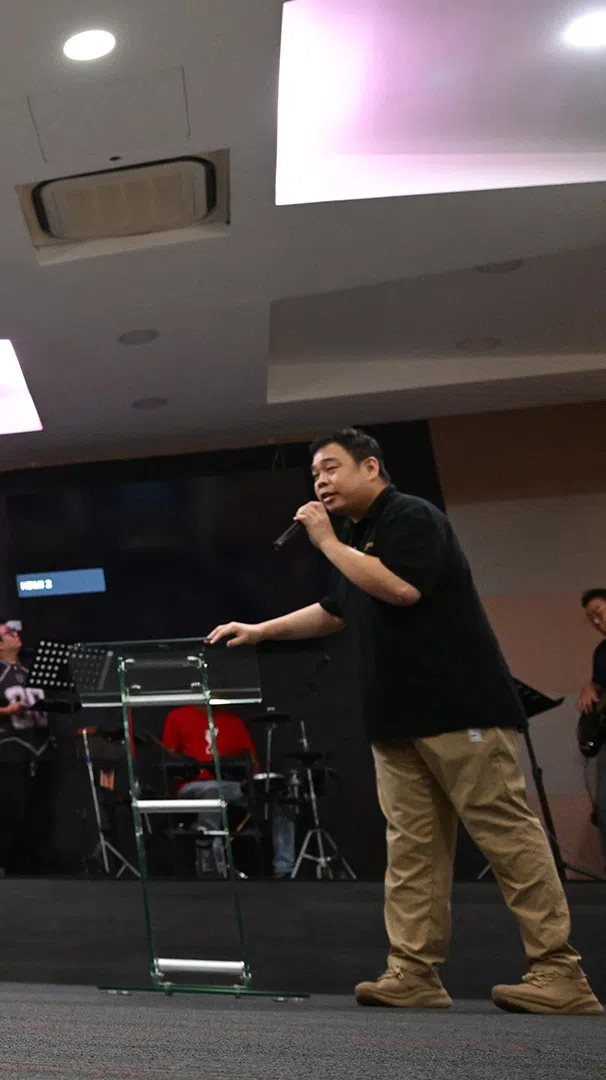
Residents also participate in faith-based activities such as prayer, chapel services and Bible lessons.
“We believe that lasting recovery involves more than simply changing behaviour; it also involves addressing a person’s values, identity, relationships and sense of purpose,” said Kaliaperumal.
He added that residents do not need to become Christians.

Benjamin Mah, 44, is working as a cook at Teen Challenge after graduating from the rehabilitation programme in early 2026.

Residents at a worship session during their weekly chapel service on Oct 8.
“There is a distinction between participating respectfully in a faith-based programme and being required to make a personal religious conversion,” he said.

Religious murals at Teen Challenge reflecting the Christian values of the halfway house.
For Chew, morning devotions were the most memorable part of the programme.
He said staff would share how to overcome addiction and even invite “overcomers” – former residents who finished the programme – to share their experience.

Soh (left) and Chew, both 50, at the halfway house’s weekly chapel service on Oct 8.
“It’s very helpful to get all the advice that drugs are not good. You have to avoid all these things,” he said.
The former drug trafficker’s network of runners and suppliers was replaced by counsellors and mentors who care for him.

Chew sharing drinks with a former resident after a house-moving job in Choa Chu Kang on Nov 12. He often has a small team, sometimes comprising both former and current residents, for his house-moving work and takes the chance to engage them while imparting skills and a sense of discipline.
“Now, I still have friends who call me about drugs. The next thing I do is to block them. I wouldn’t import my past into this lifestyle now,” said Chew, adding that his friends now consist of pastors and supportive mentors.
He returns straight to the Teen Challenge compound on Sundays after leaving to go to church and visit his family.
Murals and signages inspired by the Bible adorn the walls of the halfway house.

Religious murals at Teen Challenge reflecting the Christian values of the halfway house, photographed on Oct 8.
Sometimes, residents who break rules have to copy Bible verses, said Teen Challenge’s head of operations John Emmanuel.
Soh, the former resident turned cook, said his mentor in the programme used to ask him to copy entire chapters of the Bible.
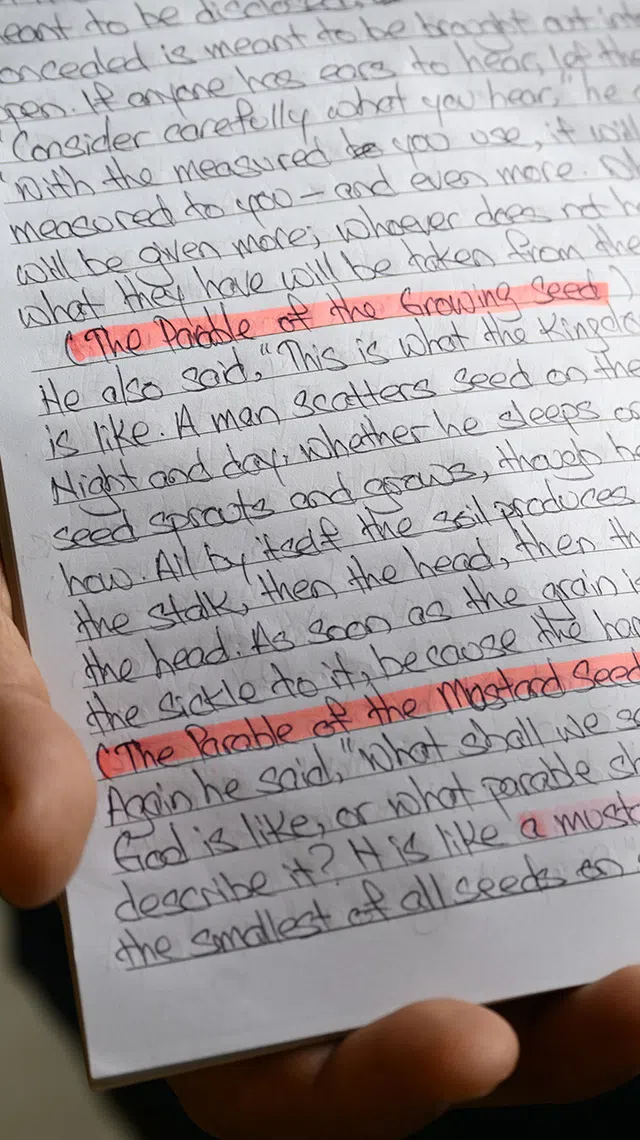
While he cannot remember the text he was told to copy, the exercise improved his handwriting and inspired a practice of journalling which he continues to this day.
“Writing is a place where I can ponder every night. We have negative thoughts sometimes. I write down my thoughts and how I’m feeling so I can keep growing,” said Soh.
He dropped out of school at 14 and used to write only in capital letters.
John said the halfway house is “stricter than the airport”, and residents are not allowed to take drugs, smoke, drink or carry weapons.
Tools such as breathalysers, smokerlysers, urine test kits and metal detectors can find out if they have flouted certain rules when outside the compound for work or home leave on Sundays.

Choo Yong Hua (in red), a 43-year-old former resident who assists Soh in the kitchen, helping with deliveries made to Teen Challenge.
Disciplinary measures include reducing the number of hours residents can visit their families on Sundays or referring them back to the SPS.

Residents have their phones locked away during their stay and most of them can use the phones only between 4pm and 7pm daily.
Chew said the tightened security measures did not matter to him because he wanted to change.
He completed the rehabilitation programme in 2018 when there were fewer spot checks and no CCTV cameras in his room, but soon went back to drugs.
Re-entering the halfway house in 2024, he was set on changing.
As team leader of Teen Challenge’s moving service, Chew keeps a close eye on the residents under him to ensure they do not break the rules when they are outside for work.
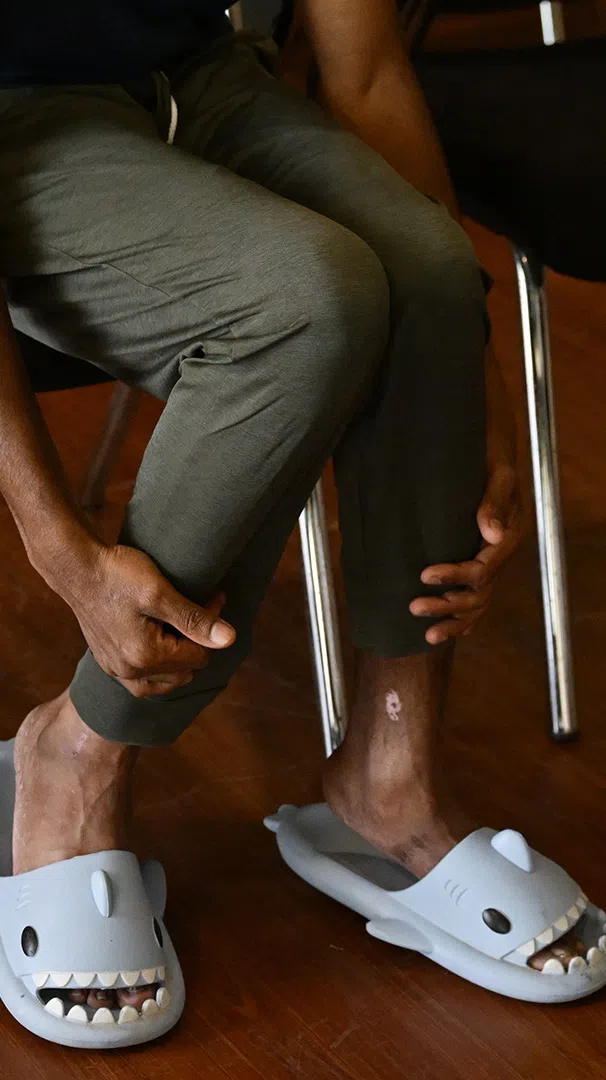
“When you go out, it is not totally safe because you have your own time and own targets. When you stay (in the halfway house), we can look after you and guide you. The most important thing is that you want to change your lifestyle,” said Chew.
He intends to work in Teen Challenge for the rest of his life, perhaps even in its overseas branches.
Despite the nurturing environment and security and disciplinary measures, some residents still leave the halfway house unchanged.
Kaliaperumal said: “Rehabilitation does not guarantee that every person will change immediately or permanently. Ultimately, the individual has to make the decision to change.”

A resident plucking chiku fruit on Oct 8 as part of his work therapy. Teen Challenge also gives residents employment and vocational preparation.
John, the head of operations, said staff members do not feel sad when they see a resident who graduated reoffending and returning to the halfway house.
“I think sometimes it’s better for them to be here because we would know that person if they were here in the past, so we can help take better care of them. We can deter them from a lot of things here, but once they are out, it’s difficult.
“Recovery is a journey,” said John.
The programme has given many residents, including Soh, the tools they need to move on from their former lives as drug addicts.

A resident drawing a pig as part of a “fun” personality test during the SOUL (Seeking Opportunities to Upgrade My Life) programme on Nov 19.
From spending all his money on drugs and feeling uncertain about his future when he dropped out of school at 14, Soh now wants to head his own logistics company.
He said: “I’m hoping to create something of my own. I don’t know my future. Will it be a success or not? But at least I’ll give it a shot.”
Produced by: Chang Ai-Lien, Dexter Lee, Jason Quah, Neo Xiaobin, Ng Sor Luan, Riana Zakir, Wong Man Shun and Yu Sheng Sin
Main photographs and videos by: Ng Sor Luan