
SGH neurosurgery head did not report patient’s death to coroner; cops alerted a year later
Sign up now: Get ST's newsletters delivered to your inbox

Clinical Assistant Professor Jai Prashanth Rao testified he had initially told the patient’s family members that he had to report the case to the coroner, as required by law.
ST PHOTO: KELVIN CHNG
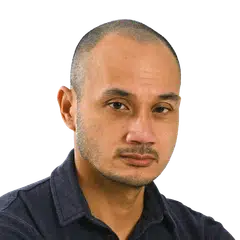
- Dr Jai Prashanth Rao, SGH neurosurgery head and NNI senior consultant, did not report Tan Suan Lin’s death to the coroner in 2024.
- He said he wrongly thought only deaths within 24 hours of surgery had to be reported, and acted out of compassion because the family did not want an autopsy.
- The case was only sent to the coroner in February 2025, and police were alerted in March; no autopsy was done.
AI generated
SINGAPORE – The head of Singapore General Hospital’s neurosurgery department did not report a patient’s death to the coroner in 2024.
Jai Prashanth Rao, who is also a senior consultant neurosurgeon at the National Neuroscience Institute (NNI), acknowledged this in court on Oct 14.
It was the first day of a coroner’s inquiry into the death of Rao’s patient, Tan Suan Lin, 75.
CNA reported she had a large brain tumour, and that he had operated on her.
Rao testified he had initially told her family members he had to report the case to the coroner, as required by law.
However, the court heard they did not want the woman’s body to undergo an autopsy and sustain further cuts.
Rao said that out of compassion, he decided to give the family closure and issued a death certificate instead.
He said: “Probably my heart overruled my brain.”
CNA reported that Rao said he had been under the mistaken impression that only deaths occurring within 24 hours of surgery required mandatory reporting to the coroner.
He assumed he had discretion over whether to report the death.
CNA reported that the death certificate stated the cause of death as “malignant neoplasm – brain, unspecified”, which Rao said was intended to indicate that Tan had died of a brain tumour.
However, a forensic pathologist from the Health Sciences Authority indicated that a possible cause of death was instead bleeding complications during surgical intervention for the tumour.
NNI informed the coroner about the case in February 2025, and the police were alerted the following month.
No autopsy was performed due to the delay.
On Oct 14, investigation officer Benedict Lim testified that Tan had a brain tumour.
Rao attended to her, and she agreed to undergo brain surgery on Jan 3, 2024.
However, the medical team later faced difficulties in stopping the bleeding during the operation.
Tan lost about three litres of blood.
Rao stopped the operation, and told Tan’s family about her poor prognosis.
She died six days later.
CNA reported that an independent expert witness, who was called by the state, told the court it was obvious to him that the case should have been reported to the coroner, but said he empathised with Rao.
The expert said: “Yes, the death should have been reported because that is in our training and experience from the time we started this speciality; that has been one of the things that is highlighted.
“However, the academic knowledge of it sometimes can be marred by emotions.”
State Coroner Adam Nakhoda will give his findings at a later date.