
Peranakan culture has gained popularity, but does more visibility also mean its continuity?
Sign up now: Get ST's newsletters delivered to your inbox

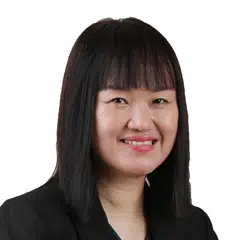
The Peranakan Association Singapore president Genevieve Peggy Jeffs (left) and honorary treasurer Ronney Tan.
ST PHOTO: GAVIN FOO
- Peranakan culture is now more visible in Singapore, driven by TV dramas, heritage efforts and events.
- Some fear the culture may become shallow or misrepresented. Complaints rose after TikTok videos showed sarong kebaya dancers in Chinatown, and others worry about cultural appropriation.
- Many say the culture must be actively passed on through language, food, dress and rituals. Younger Peranakans are learning Baba Malay, kebaya skills and family traditions to prevent loss.
AI generated
SINGAPORE - “Eleven thirty.”
Chinese Peranakan Alvin Yapp often heard this Hokkien taunt as a child. It meant he was just shy of 12 o’clock – or “not quite Chinese enough”.
“I grew up in a time when I felt being Peranakan was looked down on,” he said. “People said I was orang Cina bukan Cina, or Chinese but not Chinese.”
The embarrassment led to curiosity. Learning about his heritage gave him the confidence to share it with his classmates.
Today, the 56-year-old champions his culture through The Intan, his private home in Joo Chiat that doubles as a living home museum.
Peranakan culture in Singapore has stepped into the limelight, especially over the last decade, noted Yapp.
The Peranakan community includes a range of mixed-heritage groups from South-east Asia, such as Arab Peranakans, Chinese Peranakans, Indian Peranakans (or Chetti Melakans) and Jawi Peranakans.
The growing interest in Peranakan culture is driven by popular entertainment, heritage initiatives and greater efforts to showcase its traditions.
Social historian Seng Guo-Quan, who researches the history of Chinese Peranakans in South-east Asia, said that although they form a relatively small community in Singapore, core members are active in the museum, heritage, theatre and musical scenes.

Alvin Yapp, 56, owner and curator of The Intan, a living museum housing thousands of unique Peranakan treasures and antiques.
PHOTO: ALVIN YAPP
Some also have regional connections, said the assistant professor at the National University of Singapore. From Nov 20 to 22, hundreds of members from Peranakan associations will converge at the 37th Baba Nyonya International Convention in Penang, Malaysia.
Television dramas have helped bring the culture to a wider audience. Mediacorp Channel 8’s The Little Nyonya (2008-2009) and its spin-off Emerald Hill – The Little Nyonya Story in 2025 were popular in Singapore, Malaysia and China.
Recent recognition of heritage icons, such as the kebaya and the Katong-Joo Chiat precinct with its colourful Peranakan shophouses, has also raised the culture’s profile among Singaporeans.
Those offering services and experiences related to the culture have seen growing interest. Some are wary that becoming more “mainstream” may risk cultural appropriation, while others worry that gatekeeping the culture may also contribute to it being forgotten.
The Peranakan Association Singapore (TPAS) said membership has risen steadily, including among non-Peranakans and younger Singaporeans. It had 2,400 members as at June 2026.
The growth is partly due to its organising more activities, such as demystifying Peranakan cooking, learning basic Baba Malay and the card game Cherki.
Yapp said visitor numbers to The Intan increased by about 30% in the last three to five years. He hosts about 200 guests a month, including teachers and students.
The quality of his recent partnerships also signals the culture’s growing recognition, he said, citing a 2023 merchandise collaboration with Starbucks and a feature in a Singapore Airlines’ in-flight safety video.
Russell Seah, the second-generation owner of the Peranakan Inn in East Coast, said there has been broader awareness and appreciation beyond the region, including among younger people.
This has changed the profile of his diners, although it has not translated into a significant increase in customers, he said.
Peranakan beadwork artist Angeline Kong, founder of Nyonya Needlework And Crafts, has also seen growing interest in her culture and craft workshops across ages and backgrounds.
The 58-year-old recently collaborated with artist Carolyn Law and a team of beaders on a hand-beaded helmet for McLaren Formula 1 driver Oscar Piastri at the 2026 Singapore Grand Prix.

Beading students gather at the Peranakan Mansion in June 2026 for a workshop by Angeline Kong.
PHOTO: ANGELINE KONG
Veteran kebaya-maker Raymond Wong, who embroidered costumes for Emerald Hill – The Little Nyonya Story, has seen more interest at his Rumah Kim Choo shop in East Coast.
Since the SG Culture Pass was introduced in 2025, he has had more participants in his kebaya styling sessions, beadwork workshops and heritage-sharing sessions.
Greater visibility has sparked questions over how Peranakan culture is represented, who gets to tell its stories and how they are told.
Several members of the community were upset when TikTok videos surfaced in August showing dancers in sarong kebayas shouting and staging a martial arts sequence in Chinatown. Others felt this was unsurprising, given the culture’s popularity.
Philanthropist Genevieve Peggy Jeffs, TPAS’ first female president in its more than 120-year history, said the group received complaints, which it conveyed to the National Heritage Board.
“When one wears a kebaya, you have to be demure. The performance misrepresents our culture and is inappropriate and insensitive,” she said.
Others worry that public understanding of Peranakan heritage remains incomplete.
Arunaa Devan, 36, felt that public attention here does not focus on the full breadth of Peranakan heritage. The Chetti Melaka group, for example, is unfamiliar to many in the broader Indian community.
The fourth-generation Singaporean Tamil is not Peranakan. But visiting Kampung Chetti in Melaka at age seven, where she first tasted the community’s glutinous rice dessert wajek and encountered its creole and customs, sparked a lasting fascination.
“A more balanced picture would present the Peranakan identity as the culturally diverse phenomenon it actually is.”
Beyond mainstream popularity
Despite their pride in the culture’s newfound mainstream popularity, some are concerned that the interest is superficial. Some feel a responsibility to encourage deeper engagement.
Businessman Laurence Tan, 71, is proud when elements of his heritage are celebrated worldwide. It creates entry points for people to engage with his culture, he said.
But he worries that the culture could be reduced to mere aesthetics or passing trends.
“When people visit Joo Chiat, especially the stretch of Koon Seng Road, for Instagram photos against the backdrop of Peranakan houses, or order Peranakan dishes without understanding the labour, history and family bonds behind them, the culture loses its depth.”
Frederick Soh, artistic director and playwright of Gunong Sayang Association, agreed that interest must spark somewhere.
But the community has a responsibility to welcome that curiosity and nurture it into a deeper appreciation, he said.

Frederick Soh (second from right), his wife Christina (in orange), daughter Kristel (right) and his son Dominic and daughter-in-law Kimberly on his son's wedding day in June 2025.
PHOTO: FREDERICK SOH
Merlin Pillay, a member of the Peranakan Indian (Chitty Melaka) Association, keeps her traditions alive through workshops on making kopiah (traditional caps) and bunga rampai (potpourri).
“Peranakan cooking and crafts can take a lot of time and effort,” said the 73-year-old retired school discipline assistant. “No pain, no gain.”

Merlin Pillay, a member of the Peranakan Indian (Chitty Melaka) Association of Singapore, makes an effort to pass down her traditions.
ST PHOTO: GIN TAY
Without intentionality, parts of the culture will fade away, as it can be difficult to withstand the broader societal shifts, as those interviewed told The Straits Times.
Some parts of the culture are already gone, noted Ida Chee and her sisters, Kelly and Jasmine, who are 11th-generation Peranakans from Melaka but live in Singapore.
Some relatives in Singapore have dropped some Peranakan practices, as the Republic has shifted towards secularism over the years, said Ida Chee.
Back in their Melaka home, smayang tikong – a prayer ritual honouring the Jade Emperor (Tien Kong) held during the Chinese New Year period – was laborious and elaborate, often grander than the festival itself.
“I remember my kong kong wearing a jacket and tie to pray on Tien Kong day,” said Kelly Chee, referring to her grandfather.
“We would all dress up for the evening, and it was a rare opportunity for the little kids to stay up past our bedtime till midnight when the prayer closes, and we burn joss paper and sugarcane stalks.”
If a relative dies, the practice is paused for three years. Many families never resume it, noted Kelly Chee. Time and space constraints in Singapore have also led to the ritual’s decline.
The sisters in their 40s feel that despite greater mainstream exposure, Peranakan culture has become “diluted” as gender norms have shifted.
Women in the past were central to passing down traditions at home, but most today work or have married outside the Peranakan community, said Jasmine Chee.
“It was the women or mothers who were at home passing the culture to the children. The children spoke the language, enjoyed their mum’s cooking and wore the clothes. The matriarch held the fort.”
Lim Beng Soon, who heads the Malay language and literature programme at Singapore University of Social Sciences, is concerned that few young Peranakans today can speak Baba Malay or wear a sarong neatly.
The fifth-generation Peranakan from Penang said cultural concepts conveyed through the language risk being lost, citing pantang larang, or taboos, as an example.
TPAS’ honorary treasurer Ronney Tan, 72, said Baba Malay has lost relevance as English and Mandarin have become the economic lingua francas.
Broader marriage trends in Singapore also show that more people are marrying across races and countries, which means fewer family units have Baba Malay as the predominant language.
Tan, who is also president of Keng Teck Whay – a mutual-aid society founded in 1831 by 36 wealthy Hokkien-Peranakan businessmen from Melaka – added that the growing inter-marriages has also made it difficult to estimate the size of the community.
Evolving the culture
What some see as dilution could be perceived by others as cultural evolution.
Said Soh: “Our language, food, clothing, music and customs reflect a history of different influences coming together to form something distinctive.”
Being Peranakan today does not mean living exactly as one’s grandparents did, he added.
Fashion, as reflected in the interpretations of the kebaya today, perhaps shows the clearest change.
Kebaya designer Wong said customers inspired him to explore different cuts and fabrics, including tweed for clients who found traditional cotton voile too light for colder climates.
He wants to adapt the kebaya to contemporary life, while preserving its distinctive embroidery and craftsmanship, so more people will wear it.
Young Matthias Teo, 10, is part of the younger generation learning what it means to be Peranakan today.
His grandmother – TPAS president Jeffs – is training him to develop a Peranakan palate for chilli by introducing him to dishes, such as ayam korma or chicken curry.
Teo, a Primary 4 pupil, joins her at the association’s events and now loves kueh pie tee and what he calls “green ball” – ondeh ondeh.

The Peranakan Association Singapore president Genevieve Peggy Jeffs with her grandson Matthias.
ST PHOTO: GAVIN FOO
Ryan Joshua Mahindapala, a 34-year-old education and publishing entrepreneur, learnt Peranakan recipes such as lauk ikan pindang – a fish dish – from his mother.
The Indian Peranakan also reads up on his Peranakan roots and is trying to learn Chetti Malay from his family.
Businessman Tan, who speaks Baba Malay, said he ensures the younger members of his extended family follow Peranakan traditions.
They continue to wear traditional attire, beaded slippers and Peranakan jewellery for CNY, family weddings and elders’ milestone birthdays.
Customs such as kneeling to pay obeisance while offering auspicious wishes for a long life and acknowledging elders before eating are still observed.
Tan is working on his grandmother’s memoirs to document not just her life, but her Peranakan traditions and customs.
The Chee sisters, who speak fluent Baba Malay, return to their ancestral house in Melaka several times a year to practise Peranakan rituals for occasions such as CNY, Qing Ming Festival and the death anniversaries of ancestors.
Their Chee Swee Cheng Foundation also donates to The Peranakan Museum and TPAS.

(From left) Ida, Kelly and Jasmine Chee return to their ancestral house in Malacca several times a year to practise Peranakan rituals for special occasions.
PHOTO: LENSOFMIRA (BRANDON & CLARENCE)
Those representing the community in public-facing spheres said they feel duty-bound to pass on traditions.
Soh hopes to share more than performances through Wayang Peranakan, Baba Malay, traditional songs, dance, pantuns and dondang sayang (love ballads).
“We can pass on the stories, values and ways of seeing the world that give our culture its distinctive character.”
Jeffs is organising an event at the Singapore Chinese Cultural Centre on Dec 14 and 15 featuring members in kebayas and a talk by kebaya-maker Wong.
“Our duty is to keep introducing interesting programmes to attract younger generations,” said Jeffs, who has over 100 kebayas and wears them to events and Peranakan restaurants.
“Or else we will have young Peranakans who will say, ‘I am a Peranakan, but I don’t practise it.’”