
Price of parenthood: ‘No choice’ but to do what everyone else is doing in Taiwan’s rat race
TAICHUNG, Taiwan – Every weeknight, the earliest that nine-year-old Li Yueh-kai gets home is 9pm, even though school ended hours ago.
His evenings at a local learning centre in Taichung are filled with homework, English lessons and so many practice worksheets that he often spends weekends finishing them.
“He is the busiest one in the whole family,” his mother Sung Hsin-chieh told The Straits Times.
Sung concedes that the intense educational pressure her son faces is “too much”, but believes that there are few alternatives.
She said she pushes him to excel academically so he can have a “fair chance” of enjoying a comfortable life.
“When you’re living here, and you’re part of this system, you have no choice but to do what everyone else is doing, or else you may fall behind,” said the 40-year-old interior designer.
I don’t need him to be the top student; I just don’t want him to be at the bottom.
Sung Hsin-chieh
Interior designer and mother of one

Interior designer Sung Hsin-chieh sends her nine-year-old son Li Yueh-kai to a learning centre after school hours to give him an academic edge.
ST PHOTO: YIP WAI YEE
Another reason she and her husband, Li Ting-cheng, a 41-year-old business manager at a paper company, send Yueh-kai to a learning centre after school is their long working hours.
“Neither of us can get off work in time to pick him up from school and watch over him,” she said. “Everything is so expensive now, so both of us have to work.”
The couple had tried unsuccessfully for a second child. Meanwhile, the costs of raising their only son are already taking a heavy toll.
Every month, they fork out at least NT$15,000 (S$610) to cover the learning centre fees. That is on top of NT$2,500 a month for Yueh-kai’s school lunches and about NT$10,000 a year for textbooks, among other things.

“In fact, there are many more learning centres in Taichung that cost much more, and you’re not necessarily guaranteed to get a place there even if you are willing to pay,” Sung said. “Every parent here wants to try to give their children the best path to success.”

Yueh-kai often spends weekends completing practice worksheets from the learning centre in Taichung.
PHOTO: COURTESY OF SUNG HSIN-CHIEH
The couple own their apartment in Taichung, and while the financial burden has been heavy, Sung said they felt it was important that the family have a home of their own. To save money for child-related expenses, the couple rarely dine out, unlike many Taiwanese.
We dine out only once or twice a month; I usually cook at home, which is healthier for my son, too.
Sung Hsin-chieh
Interior designer and mother of one
For many young adults in Taiwan, the hyper-competitive environment underpins a psychological and economic calculus: whether the financial and emotional costs of raising even one child are worth it.
Taiwan’s total fertility rate in 2025 dropped sharply from 0.88 to 0.69, making it one of the world’s lowest.
While earlier projections suggested Taiwan’s population of 23.3 million would drop to roughly 14.37 million by 2070, new calculations based on the latest figures indicate that the population may fall below 12 million by 2065.
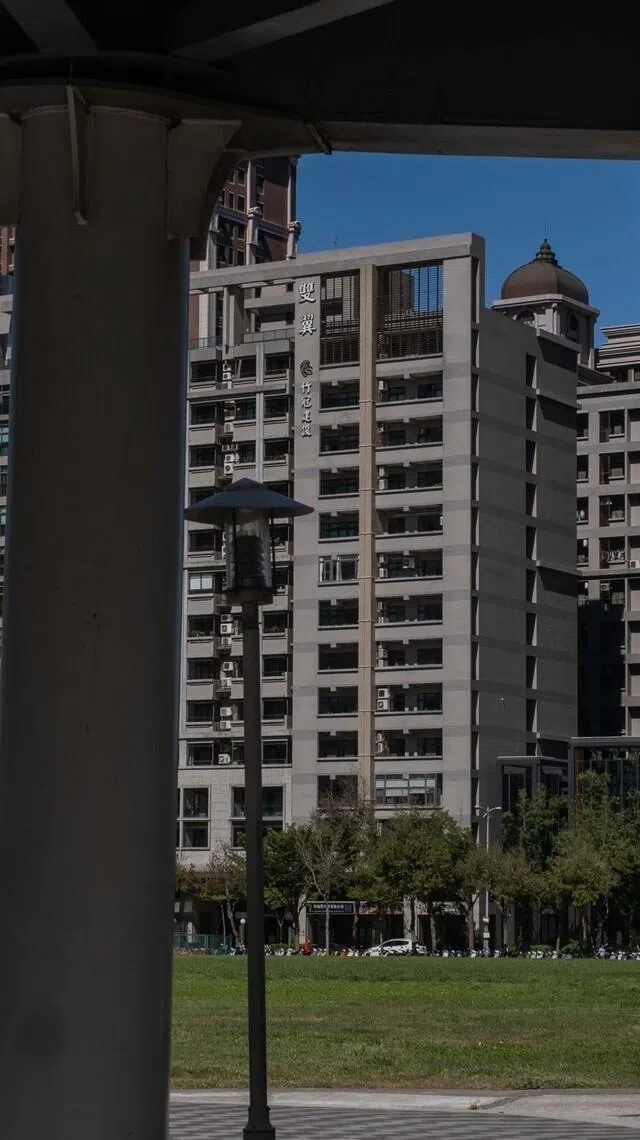
In Taiwan, marriage, children and home ownership expectations are closely linked.
The inability to afford an apartment in a market where housing prices have skyrocketed forces young people to delay or forgo marriage altogether, which in turn suppresses birth rates.
Chang Chen-chen, a Taipei-based beauty technician, is adamant that she will never have children.
“I love my lifestyle too much – if I had children, I wouldn’t be able to hop on a plane whenever I want to watch my favourite K-pop concerts overseas,” said the 33-year-old, who is single.
“I can barely save enough to cover my own expenses, let alone to settle down, buy a house and raise a child.”

Beauty technician Chang Chen-chen during a trip to South Korea, where she flies to watch K-pop concerts.
PHOTO: COURTESY OF CHANG CHEN-CHEN
The Taiwanese government is highly aware of the financial burden of having and raising children.
On May 20, Taiwan President Lai Ching-te announced plans to extend a monthly NT$5,000 subsidy programme to cover children up to age 18. Previously, similar subsidies applied only to children aged six and below.
But Sung is not convinced this would persuade people to have children.
“Even large payouts will provide only temporary relief. They cannot alleviate the mental stress that some young couples face, like the fear of failing to provide a good future for a child,” she said.

Sung, her husband Li Ting-cheng and their son Yueh-kai enjoying a family vacation.
PHOTO: COURTESY OF SUNG HSIN-CHIEH
For now, she and her husband are focused on giving their son as many joyful childhood memories as possible, away from academic anxieties. The family takes short camping trips around Taiwan during term breaks.
“It’s a nice way for him to be in nature and have the chance to breathe – school life is really quite stressful,” Sung said.
This story is part of our Asian Insider feature on the price of parenthood in East Asia. Read more about the situation in Hong Kong and South Korea.