
Price of parenthood: Going rural in Hong Kong for a cheaper, better childhood
HONG KONG – They used to live in an upscale enclave in Hong Kong, a city notorious for having one of the world’s least affordable housing markets.
But in mid-2022, entrepreneur Barbie Ho and her husband decided to move from Tai Hang, near Causeway Bay, to the quaint coastal town of Mui Wo on cheaper but distant Lantau Island.
Getting there requires a 30-minute ferry ride from Central.
Giving up the easy convenience of living in the city centre was a sacrifice they made for their son, who is now six.

Barbie Ho, her husband Tim Parker and their six-year-old son on the tricycle they use to get around Mui Wo, where the family moved in 2022.
ST PHOTO: MAGDALENE FUNG
Trying to provide the best for their son meant consciously cutting back on other expenses, Ho, 42, told The Straits Times.
Our first priority was to bring down our rental costs, and moving to Mui Wo halved our monthly rent to around HK$15,000 (S$2,500) while expanding our living space significantly.
Barbie Ho
Entrepreneur and mother of one
Their Tai Hang apartment was about 400 sq ft, roughly the size of a two-room flexi Build-To-Order flat in Singapore, while their house in Mui Wo is 750 sq ft.
“Now we have a garden, plenty of nature in our backyard and the beach just behind our house,” said Ho, adding that they much prefer Mui Wo’s slower lifestyle, which allows their child to grow up around nature – one of their key parenting priorities.

Art installations line an alley near Ho’s rented house in the rural town of Mui Wo.
ST PHOTO: MAGDALENE FUNG

The beach is a three-minute walk from the family’s home.
ST PHOTO: MAGDALENE FUNG
Hong Kong’s sky-high property prices, especially in central city areas, have long been cited as a major reason discouraging couples from having more children.
A typical household would need to spend 14.1 years of its entire annual income to afford a home in the city, according to a global study released in June that ranked Hong Kong as the world’s least affordable housing market.
Many families are limited to renting long-term, which in turn pushes up rental prices.
The city’s total fertility rate – the average number of children a woman is expected to have in her lifetime – slid to 0.73 in 2025 from 1.21 a decade ago.
Housing affordability, the city’s pressure-cooker education system and its political environment have been cited as the key reasons couples decide against having children.

The family spending time together at a cafe near their home on a public holiday.
ST PHOTO: MAGDALENE FUNG
For Ho, the money saved by moving to the outskirts goes towards enrichment classes for their son and savings for his future.
Our son already goes for gym class, taekwondo, art and swimming. He wants to learn Spanish and French as well, so all these expenses are adding up.
Barbie Ho
Entrepreneur and mother of one
The couple spend about HK$7,000 to HK$9,000 a month on their child’s education, transport and extracurricular activities.
Hiring a part-time helper to handle household chores and occasionally to be a sitter for their son costs another HK$9,000 a month.
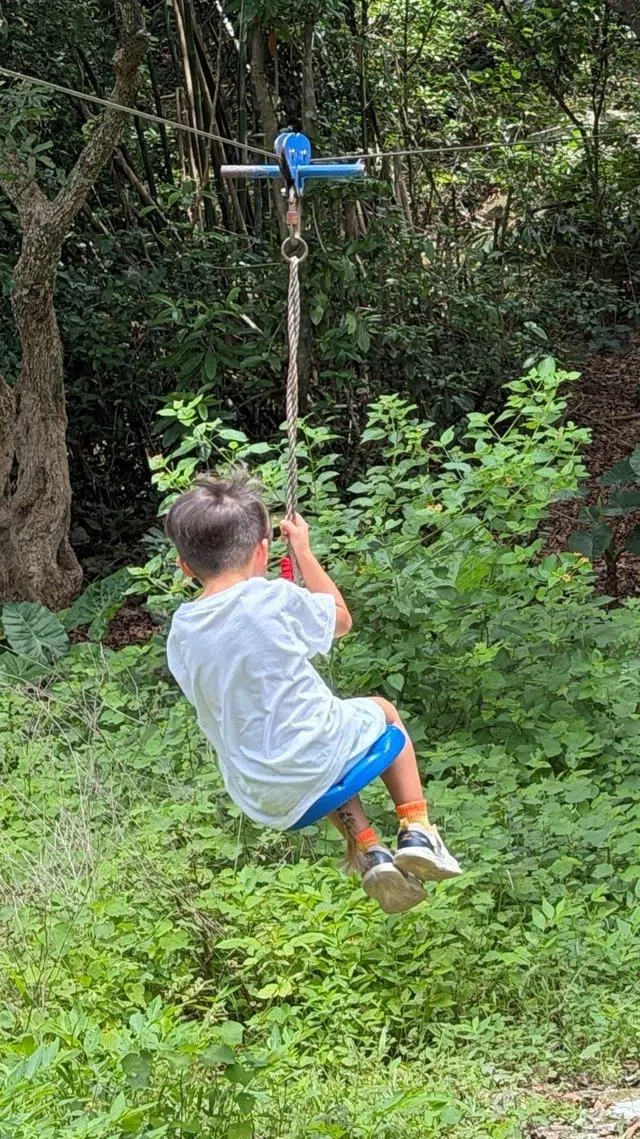
The Parkers’ move to Mui Wo on the outskirts of Hong Kong allows their son to grow up surrounded by nature while helping the family save on rent.
Ho quit her job as an assistant teacher at a pre-school in 2020, weeks after her son was born.
Pressured by her employer to resume her duties quickly and concerned about her newborn’s potential exposure to Covid-19, she decided to resign. She did not want to miss out on her son’s childhood and early milestones.
At the same time, her husband Tim Parker ran a social enterprise promoting sustainable practices through coffee-mug rentals.
“Switching to a single income required us to be more mindful in our spending and savings, not signing up for unnecessary baby classes, massage sessions and so on, cutting down on every area as much as we could,” Ho said.

Seeking a more stable income, Parker shut his business and returned to teaching at an international school in 2024.
The move came with perks – significant staff benefits for their son, who has been enrolled in the school and will start his formal education there come August.
Such a coveted, prestigious education is usually out of reach for children from middle-income households such as theirs. The couple declined to provide specific details about the staff benefits.
In Hong Kong, parents often have to fork out between HK$100,000 and HK$10 million to secure a place for their children in the city’s international schools. Separately, school fees can come to around HK$100,000 to HK$350,000 a year.
Ho has since started her own business, Little Nature Wanderlust, a children’s party and sensory play events company inspired by her experience organising playdates and activities for her son.
The five-year-old business, which has roughly 100 clients a year, supplements the family’s income as costs rise with their growing child.

Ho’s son at a playground near the family’s home. As he grows older, the costs of supporting his education and interests continue to rise.
ST PHOTO: MAGDALENE FUNG

Ho pushing her son on a swing near their home. She often has to choose between spending more time with her child and working more to contribute to the family’s finances.
ST PHOTO: MAGDALENE FUNG
Focusing on “intentional spending” helps keep their expenses manageable, said Parker, who relocated to Hong Kong from Northern Ireland in 2014.
“We don’t spend on unnecessary things like branded clothes and focus more on experiences, such as travelling about twice a year to visit our extended family,” he said.
While the couple would love to have another child, the financial barrier is “too high” for now.
“In Hong Kong, it’s a luxury if we even get to choose whether we want to prioritise providing financially for our children or simply being present to spend more time with them,” Ho said.
“There’s only so much you can give; it won’t be fair to the second child if you can’t afford to give them the life you want them to have.”
This story is part of our Asian Insider feature on the price of parenthood in East Asia. Read more about the situation in Taiwan and South Korea.
