



Asian Insider
How much it costs to raise a child in Hong Kong, Taiwan and South Korea
A mother out with just one child is a common sight in Hong Kong, where the total fertility rate (TFR) plunged to 0.73 in 2025 after a slight post-pandemic rebound.
Taiwan is facing a similar trend, where its TFR – the average number of children a woman is expected to have in her lifetime – stands at 0.69.
South Korea fares slightly better, with a TFR of 0.8. While this is up from a record low of 0.72 in 2023, it remains well below the replacement level of 2.1.
HONG KONG – East Asia is home to five out of the world’s 10 economies with the lowest TFRs – Macau, Hong Kong, South Korea, Taiwan and China, in ascending order – according to a 2024/2025 UN ranking.
Singapore – with a TFR of 0.87 in 2025 – ranks seventh on that list. Japan is the only East Asian economy that bucks the trend at No. 22, though its TFR of 1.14 in 2025 is a new historic low.
Governments that had pushed families to “stop at two” in the 1970s, out of fear that unchecked population growth would burden their developing economies, are now struggling to undo the damage caused by a dearth of babies.
Macau sits at the bottom, with what is believed to be the world’s lowest TFR, at just 0.47. The city of fewer than 700,000 people recorded a five-decade low of 2,871 babies born in 2025.
“It’s too expensive to have a baby” is a common refrain, with many parents in Asia’s most affluent economies citing financial pressures from high property, childcare and education costs, as well as rising inflation, as stumbling blocks.
As more parents opt for just one child, they also seek to give their sole offspring what they see as “the best”, pouring in as much money as they can afford to pave the way for their future.
Parents in Taiwan and South Korea tell The Straits Times about the pressure to cram costly tuition and enrichment classes into their children’s schedules to keep them ahead of their peers, even as they worry about the burden it puts on the young ones.
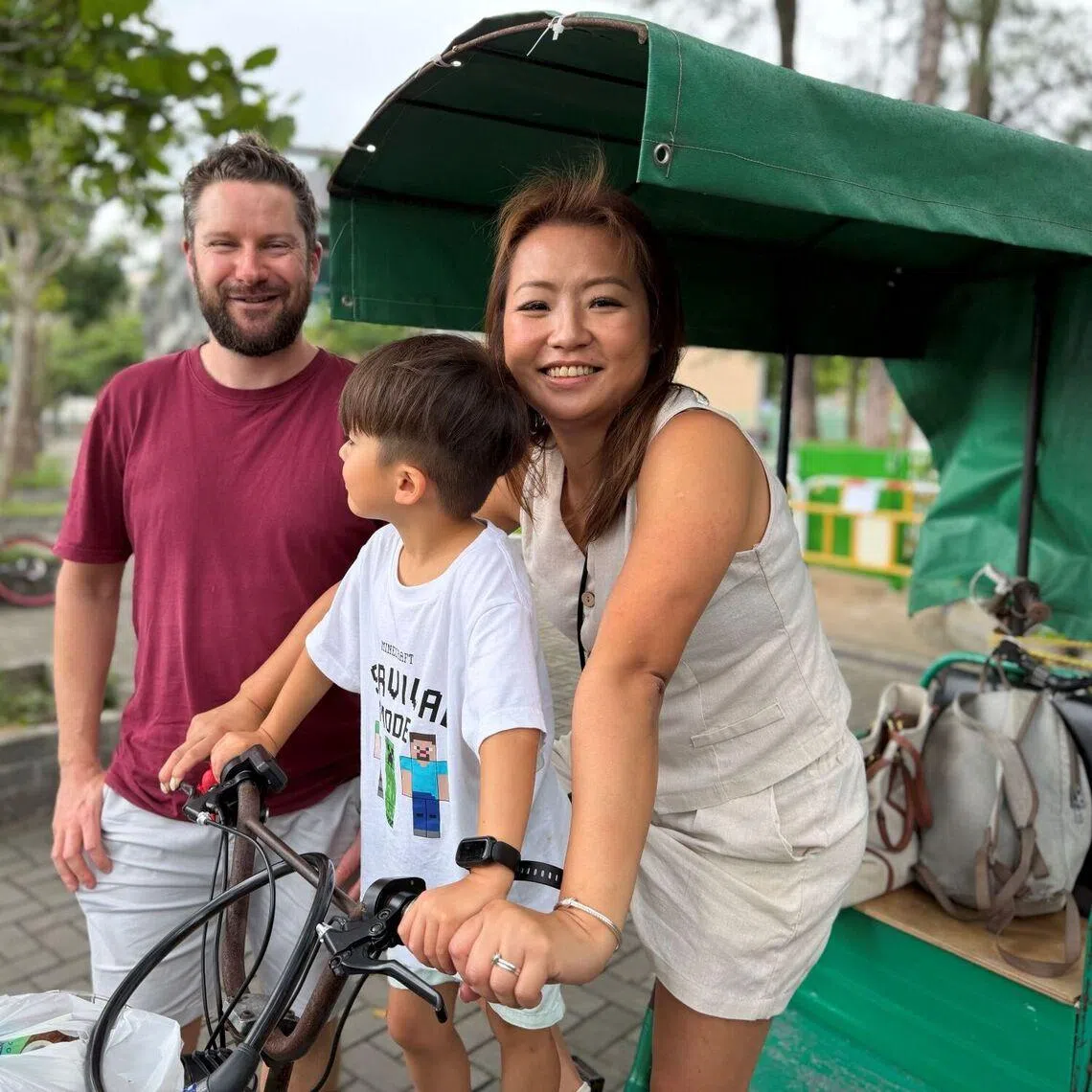
Then there are sacrifices. In Hong Kong, a couple moved from the bustling city to an out-of-the-way rural town to save on rent and afford to spend more on their child.

A young boy holding his parents’ hands in Singapore. The Republic’s TFR stood at 0.87 in 2025, among the lowest in the world.
ST PHOTO: CHONG JUN LIANG
The low fertility rates across East Asia are symptomatic of many different problems, according to prominent demographer Stuart Gietel-Basten, associate director of the Hong Kong University of Science and Technology’s Center for Aging Science.
“What people actually want is fairly basic – a combination of meaningful work, meaningful relationships and a meaningful life in terms of leisure and consumption,” Gietel-Basten tells ST.
“But there’s so much uncertainty and risk in today’s world that balancing these three wants is so difficult. Choosing to have a child means having to compromise or give up on a meaningful career, especially for women, or other aspects of one’s life.”
With fewer babies born each year and people living longer, populations are rapidly ageing, resulting in a shrinking local labour force. This, in turn, threatens economic productivity, tax revenues, healthcare systems and socio-economic stability as a whole.
Anxious about the deep implications, policymakers have introduced measures to encourage couples to have children, including incentives to help offset the high cost of parenthood.



In Hong Kong, incentives aimed at encouraging childbirth include a one-off HK$20,000 cash bonus, priority for public housing and additional tax deductions of HK$130,000 during the first two years after a child’s birth.
Taiwan’s incentives include a NT$100,000 baby bonus, up to 14 free prenatal checks and a monthly “child growth allowance” of NT$5,000 until the child reaches the age of 18.
South Korea offers a two-million-won cash voucher for the first child, a monthly parental allowance of up to one million won during a child’s first two years and a monthly child allowance of 100,000 won until the age of eight.
South Korea has seen positive results for two consecutive years, with its TFR rising from a record low of 0.72 in 2023 to 0.8 in 2025.
Analysts attributed the trend to “echo boomers” – people born in the early 1990s after the government ended family planning policies – reaching their prime childbearing years, Covid-19 pandemic-delayed childbirth, and sustained government incentives.
But it remains to be seen whether the numbers will dip again. In Hong Kong, the post-pandemic TFR rose from a historic low of 0.7 in 2022 to 0.84 in 2024 (Dragon Year boom), before falling to 0.73 in 2025.
A successful family policy improves health, reduces poverty, boosts gender equality, raises women’s labour-force participation, increases early childhood development and enhances work-life-leisure balance, Gietel-Basten says.
A lot more progress is still required, however, and governments need to look to people’s “lived experiences” to truly understand why they are not having more children, or any at all, the demographer says.
“Without shifting the structural and cultural drivers – long hours, fragile employment, the gendered division of care, the motherhood penalty – even generous benefits struggle to move the dial,” Gietel-Basten notes.
“Fertility rates are an outcome, not a target; they reflect the conditions in which people are deciding whether to have the families they want. Work-life balance, housing, childcare and the everyday social atmosphere around young families matter far more than headline pronatalist incentives.”
Parents ST spoke to echoed his views. Read more below:


Additional credits for photos: Wendy Teo, Yip Wai Yee, AFP, Bloomberg
Produced by Chang May Choon, Sharon Loh, Philip Cheong, Jananee Yegambaram, Mike Dizon
