
Oysters are their world: Seeding the future of Hong Kong’s oyster farming industry
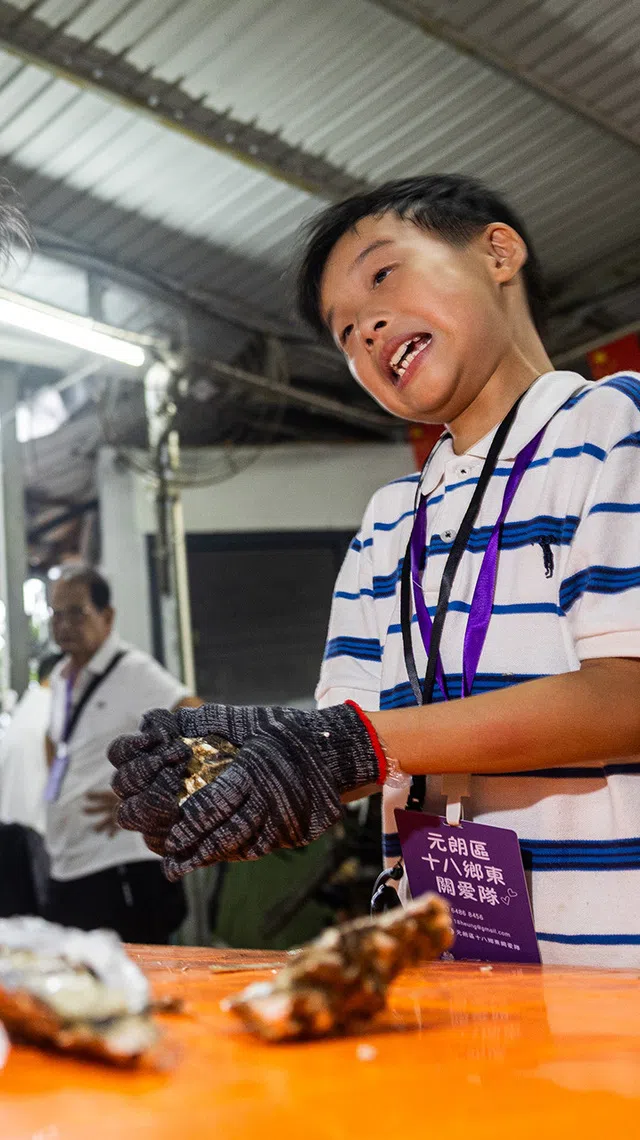
Nine-year-old Shine Wong gritted his teeth, his gloved hands gripping the jagged shell of an oyster as he attempted to prise it open.
Around him, some 120 other participants of all ages were hunched over tables in a vegetable farm courtyard in Lau Fau Shan, taking turns to similarly wrestle with the stubborn shells.
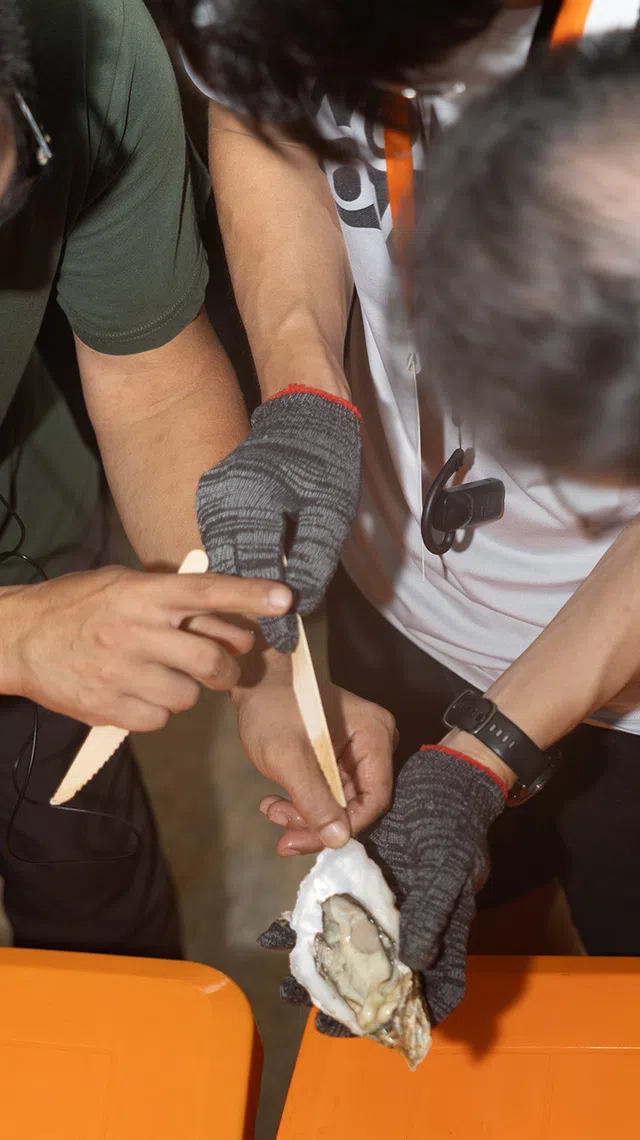
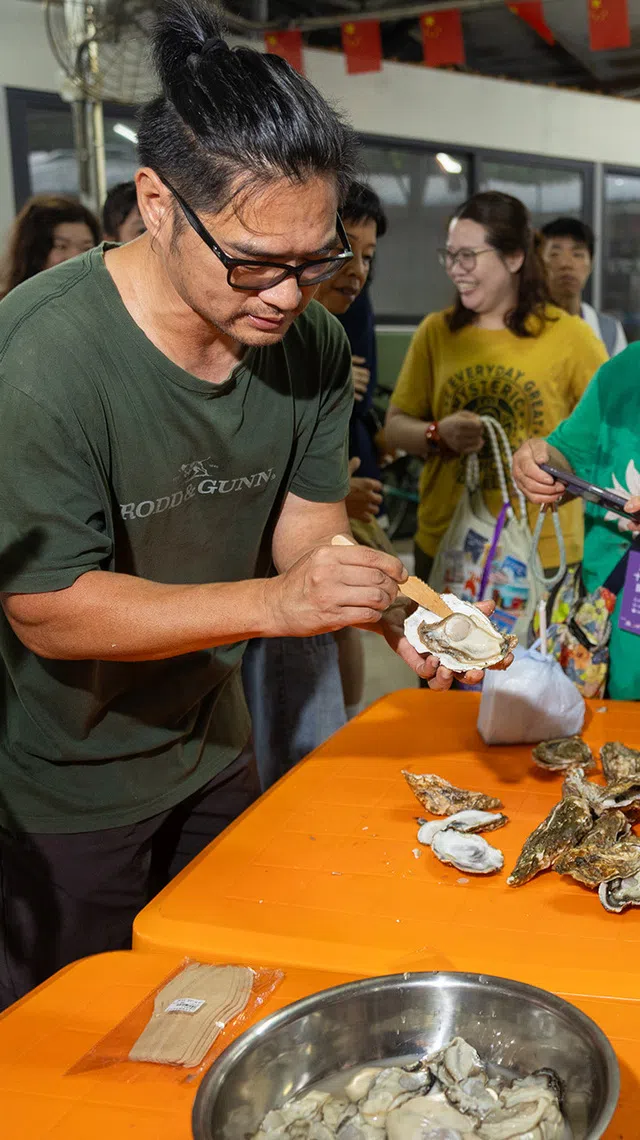
In the centre of the crowd stood oyster farmer Chan Shu Fung, 46, deftly shucking the oysters’ succulent flesh with a wooden knife.
Under his watchful eye, the participants spent the rest of a rainy morning in July rinsing the oyster flesh in cast nets and simmering them in a metal wok.

Chan Shu Fung (right) watching workshop team member Chan Liu On (in white) boiling oysters, with participants around them.

Around 120 participants took part in an oyster sauce-making workshop in Lau Fau Shan to learn how the sauce is traditionally made.
This was the fifth oyster sauce-making workshop Chan had run since starting the series in 2026 to promote Hong Kong’s oyster farming industry.
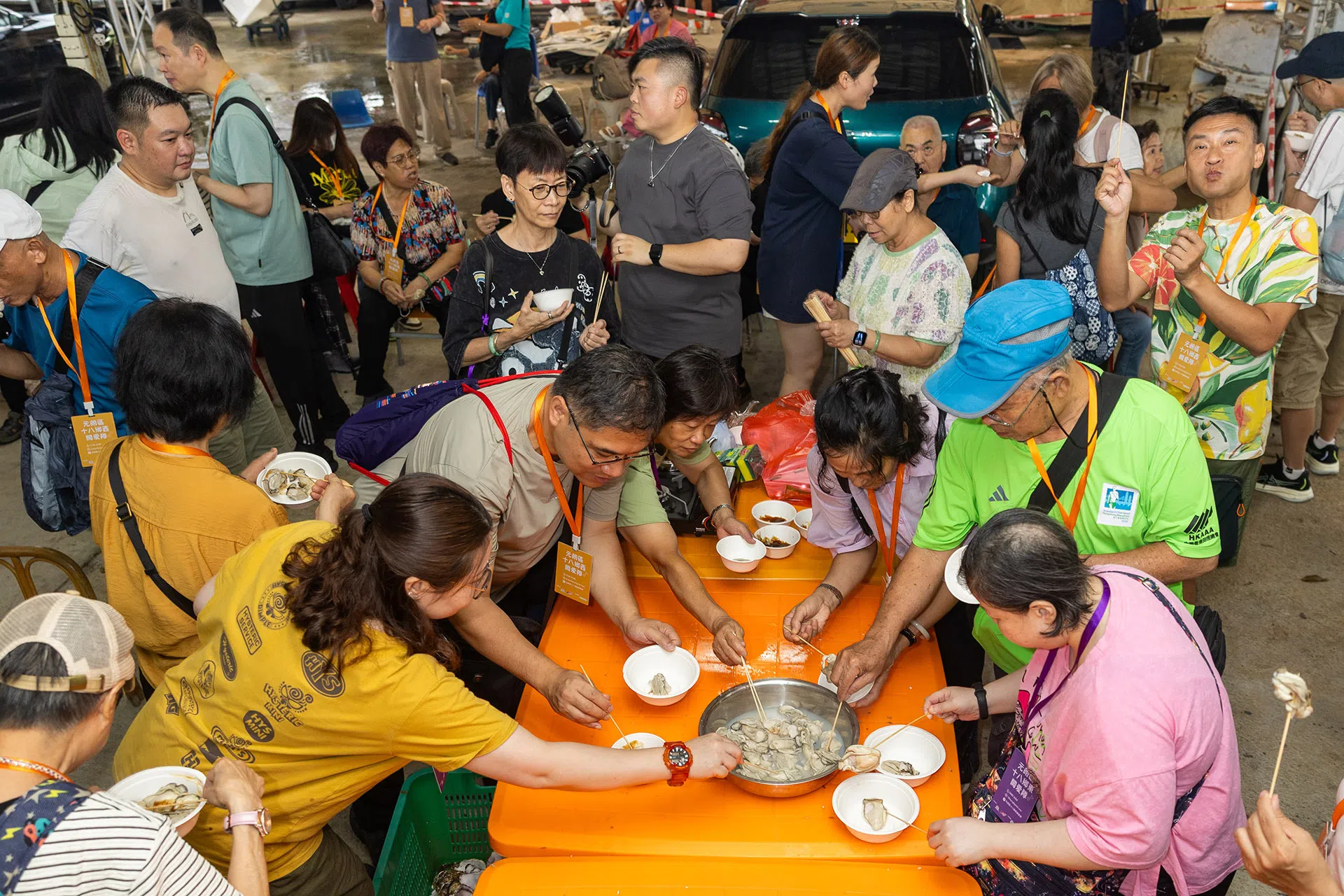
Participants eager to get a taste of a bowl of steaming oyster meat at the workshop. For Chan Shu Fung, sparking their interest and curiosity about the tradition is his goal.
Oysters have been cultivated in Deep Bay for almost 700 years. The traditional “bottom culture” method – placing solid surfaces such as tiles on the mudflats to collect oyster larvae – is on Hong Kong’s list of intangible cultural heritage.
But today, Chan is one of the few remaining oyster farmers in a trade struggling to attract young blood.

Shine Wong (left) washing shucked oysters in cast nets during the oyster sauce-making workshop.
Changing environmental conditions, such as warming waters and pollution, have also reduced harvests and undermined consumer confidence, squeezing farmers’ profits.
Nevertheless, farmers and scientists are attempting to preserve the industry’s legacy, hosting cultural activities to renew public interest and turning to technology to breed more resilient oysters.
Changing currents
Nestled between the fishing village of Lau Fau Shan and Shenzhen lies Deep Bay, which has served as the main location for oyster farming for centuries.
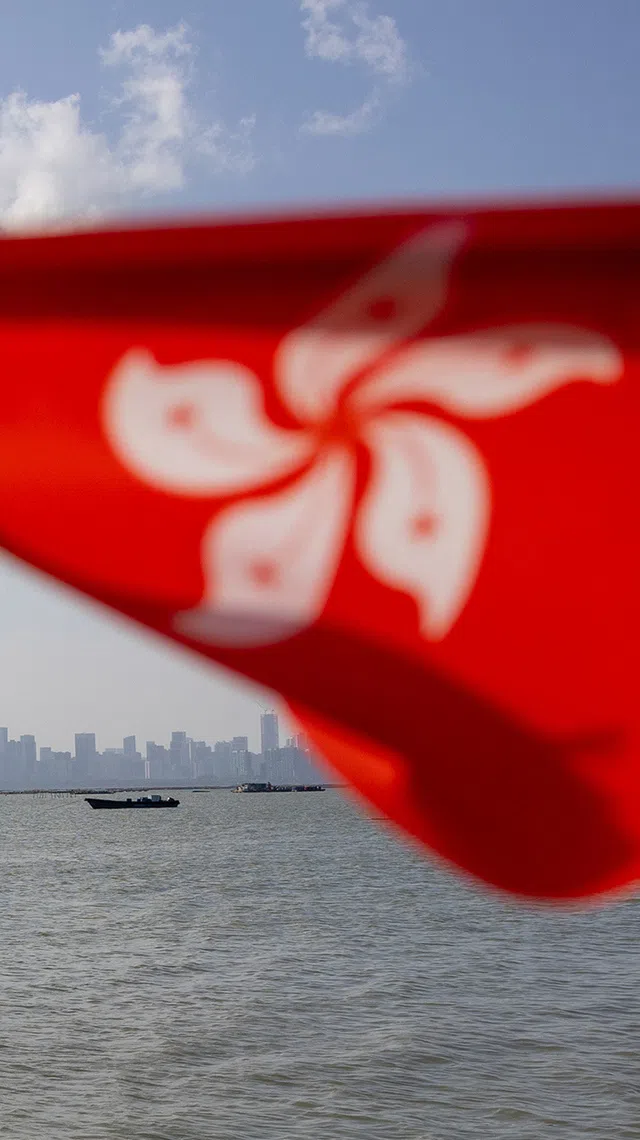
Today, 10,000 bamboo rafts float in its brackish waters.
Many of the oysters farmed there belong to a native species known as Hong Kong oysters (Magallana hongkongensis). Commonly harvested during winter, the mollusks are sold live, turned into oyster sauce, or sun-dried to be eaten as Cantonese delicacies.

Different types of dried oysters sold at a dried seafood stall in Lau Fau Shan Seafood Market.
Over the last six decades, the scale of oyster farming in Hong Kong has dwindled, falling from a peak of 300 families farming in the 1960s to an estimated 70 today, said Chan.
“In a few years I’ll be 50, yet in this industry I’m still considered part of the ‘younger’ group,” added Chan, who took over the family business from his father in 2014 and chairs the Deep Bay Oyster Cultivation Association.

Chan Shu Fung (right) pouring the oyster sauce into small bottles for the workshop participants to take home.
“What can we do? I’ve never heard anyone in their 20s say, ‘I really love this industry; I want to come back and develop our traditional oyster industry’,” he said.

Oyster farmer Tse Yu Hin, 70, arranging dried oysters at his stall in Lau Fau Shan. Despite the toil, he continues to farm oysters as it is the only trade he knows.

Wen Pan Xiao, 71, and her husband Chan Kin Ching, 72, at their dried seafood stall in Lau Fau Shan Seafood Market. A decade ago, they raked in HK$6,000 daily, a far cry from just HK$100 today.
It does not help that oyster farming had become an unreliable main source of income since 10 to 20 years ago, Chan added. Many farmers have taken up additional jobs such as construction work, while Chan himself mainly relies on the seafood wholesale business and the running of two wet market stalls.

Closed stalls at Lau Fau Shan Seafood Market. With Hong Kong’s increasing labour costs coupled with inflation, local producers are said to face “extreme” competition from lower-cost farming regions.
“The cost of cultivating oysters in Hong Kong has increased, while the cost of production in other regions has decreased, so our competitive edge has disappeared,” he said.
He estimates his annual income from oyster farming to be around HK$250,000 (S$41,000), with earnings coming solely from winter harvests.
By comparison, Hong Kong’s median wage was around HK$254,000 a year in 2025.
“In Hong Kong, that’s not enough to live on,” said Chan. “For a single person it might be manageable, but if you have a family, how do you raise your children?”
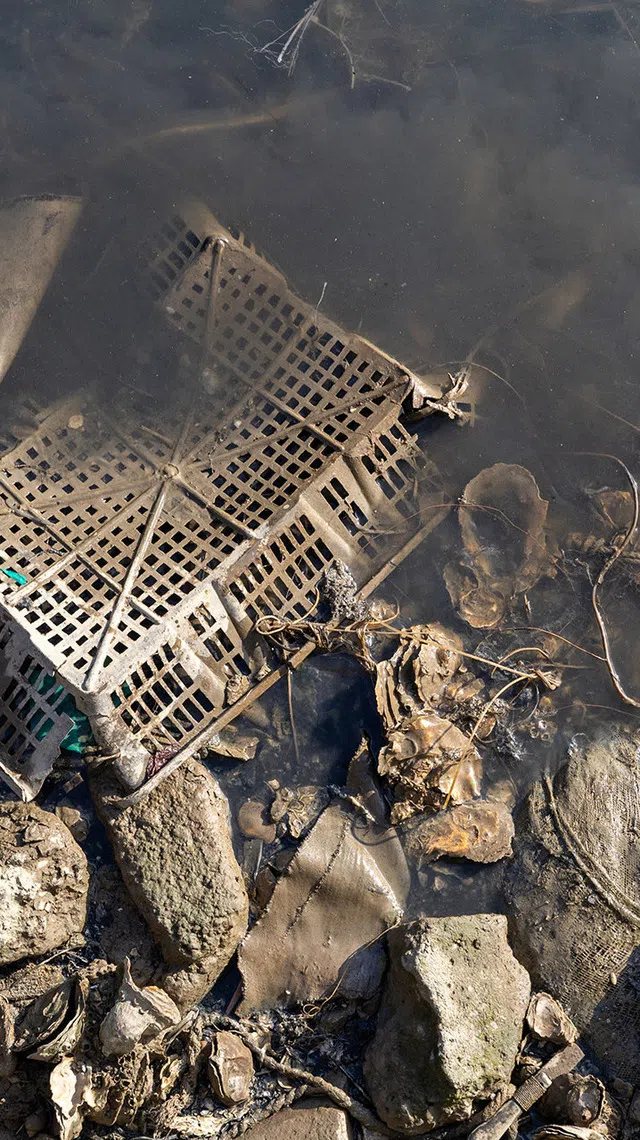
The industry has been hit hard since the 1970s, when industrial developments polluted Deep Bay and media reports raised safety concerns over oyster consumption, he added.
According to data from the Agriculture, Fisheries and Conservation Department, Hong Kong produced 117 tonnes of oyster meat worth HK$18 million in 2025, a 90% plunge from the 1,300 tonnes produced between 1959 and 1960.
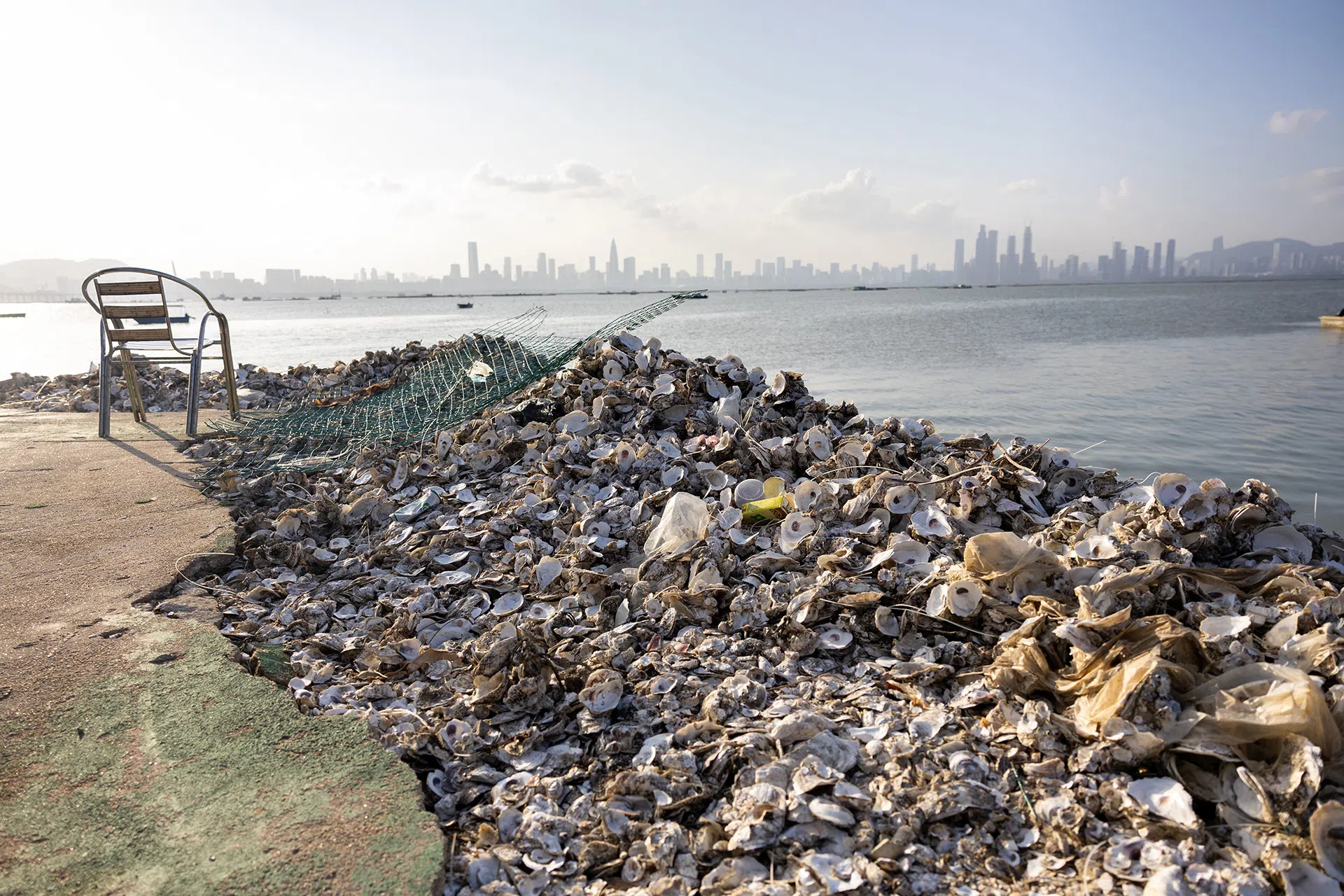
A mountain of discarded oyster shells on the shore of the fishing village of Lau Fau Shan. The scale of oyster farming in Hong Kong has dwindled, falling from a peak of 300 families farming in the 1960s to around 70 today.
Increasing salinity and warming waters in Deep Bay have also made oysters more vulnerable to diseases in recent years. Chan To Ngan, 77, who has been running Chan Cheung Kee oyster farm for more than 40 years, said the farm’s yields have been declining.
Her daughter, Linda Chan, said the annual mortality rate of oysters at their farm used to hover at about 10% to 20% decades ago. It has risen to about 50% over the last three to four years.
As oysters typically take three to five years to reach a marketable size, their high mortality rates can erase years of work.
Warmer waters have also delayed harvests and resulted in smaller yields, said Linda, who runs her own printing factory full time and helps out occasionally at the oyster farm.
Nevertheless, the farm holds sentimental value for the family, as the Chan family, young and old, help with the yearly harvests.
“We were always in this industry. Whether we can make money or not, we still want to continue to run it,” Linda said.
Reversing the tide
As changing climate conditions threaten the trade, researchers at the Hong Kong Oyster Hatchery and Innovation Research Unit are racing to provide oyster farmers with a lifeline.

(Clockwise from right) Hong Kong Oyster Hatchery and Innovation Research Unit’s hatchery manager Kenneth Ho with team members Chan Kwok Leung, Basanta Pravas Sahu and Mohamed Madhar Fazil.
Since its establishment in 2022, the hatchery has been working with farmers to breed oysters capable of withstanding environmental stressors such as warmer temperatures.

(From left) One-year-old and two-year-old oysters. The hatchery team is developing triploid Hong Kong oysters that have three sets of chromosomes instead of two.

Microalgae cultures are grown in small bottles at the University of Hong Kong’s oyster hatchery to feed oyster larvae during their early development.
In the hatchery’s laboratory at the University of Hong Kong, two water tanks house about a million oyster larvae each. Hatchery manager Kenneth Ho feeds a brown solution of lab-grown microalgae to each tank thrice a day as the larvae grow over the summer.
“During the spawning season, I have had no rest day for three months,” said the 36-year-old. “We have to take care of them every day.”

Ho checking on oysters at the University of Hong Kong’s hatchery.
The seven-person team completed the first phase of its project in June 2026. Over three years, the hatchery produced and distributed 30,000 strings of high-quality oyster seeds to farmers in Deep Bay for free. Each seed is an oyster larva attached to a solid surface.
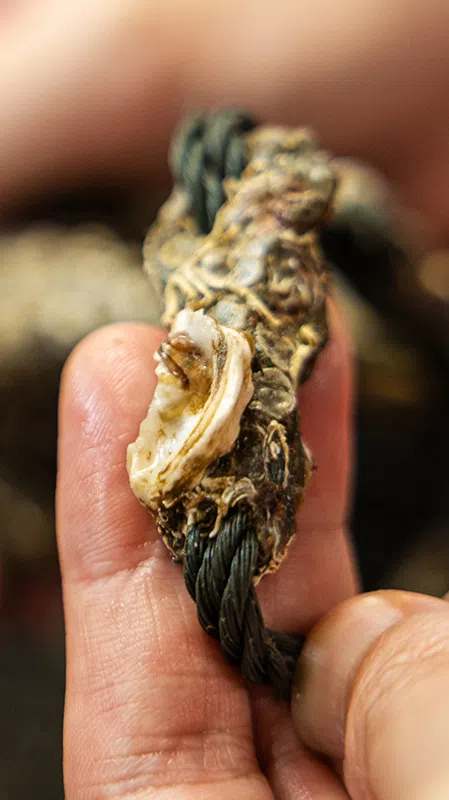
An oyster larva attached to a string.
Each farmer received several thousand strings, enough to fill only about five rafts, though each farmer operates hundreds or thousands of rafts. Nevertheless, Ho hoped the trial would build confidence in the hatchery’s oysters.
“Our major goal is to safeguard the growers’ income,” he added.
Looking ahead, the hatchery aims to scale up production of oyster seeds and develop sterile oysters that quickly reach a marketable size, Ho added.
“If the traditional way of farming continues, there will be no new blood coming into the industry,” he said. “That’s why we need technology to come in and help to improve this industry.”
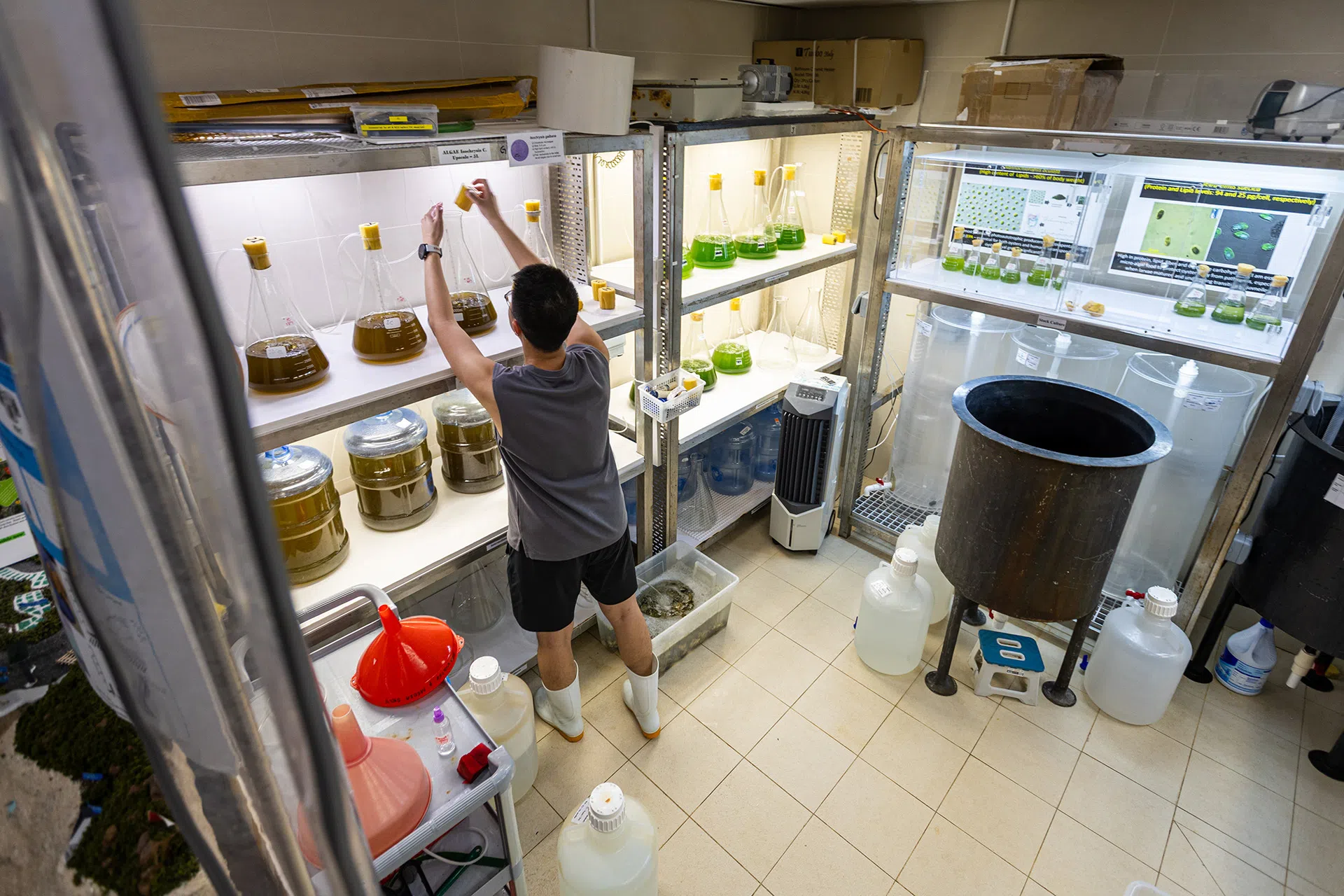
Ho monitoring the microalgae cultures in the hatchery’s laboratory at the University of Hong Kong, where two water tanks house about a million oyster larvae each.
Chan Shu Fung also hopes to preserve oyster farming traditions by turning them into cultural activities for the public, such as oyster sauce-making workshops.

Oyster farmer Chan Shu Fung (in green) explaining the history of oyster farming in Lau Fau Shan to the workshop participants, while his team members prepare bottles to be used for the oyster sauce.
Another of his goals is to create adjacent jobs with stable incomes that will attract youth to the industry. Examples include event planners or tour leaders.
“They might not be cultivating oysters themselves, but at least they’re still doing oyster-related work,” he added. “(And, after these) young people try working in this environment, maybe they might try farming some oysters themselves too.”
Sowing the seeds
As the workshop in July drew to a close, the participants clamoured for their own bottle of oyster sauce before filing into their tour buses.

Participants grabbing bottles of traditionally made oyster sauce at the end of the workshop.

A participant taking a selfie with her bottle of freshly made oyster sauce.
Chan Shu Fung then started cleaning the tables littered with oyster shells. He will be kept occupied for the rest of the year, with more of such workshops lined up in November.
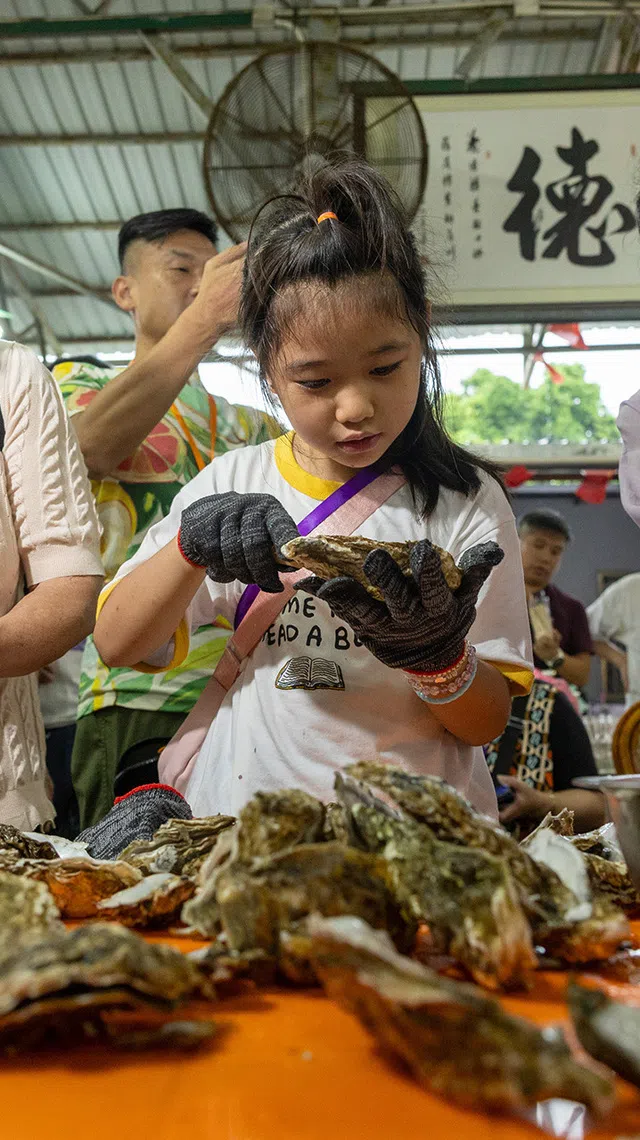
“It’s not about making them learn a skill, it’s about sparking their interest,” he said.
During the session, one visitor asked him if there were still people cultivating oysters in Hong Kong.
“That is the biggest goal I wanted to achieve, and I’ve achieved it,” said Chan Shu Fung. “I want to let people know that oyster farmers still exist, that we haven’t disappeared, and that we are still working hard.”
Letitia Chen and Jasel Poh are final-year communication studies students at Nanyang Technological University’s Wee Kim Wee School of Communication and Information. This report is part of the school’s Going Overseas For Advanced Reporting, or GO-FAR, module.
Produced by: Andy Chen, Irene Ang, Jasel Poh, Letitia Chen, Magdalene Phang and Neo Xiaobin
Main photographs and videos by: Jasel Poh