


The hidden, toxic narratives shaping teenage boys today
Once, my younger son tried to stand up for a classmate who was being bullied.
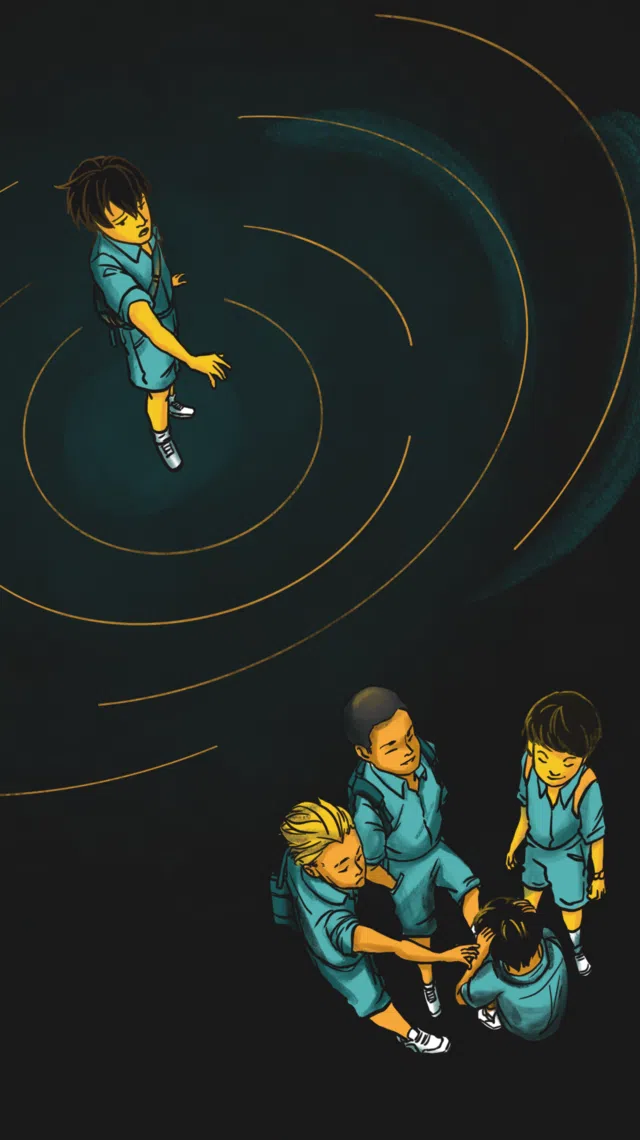
He told me he did it quietly and discreetly – not because he doubted this was the right thing to do, but because he was afraid of being labelled “weak” and a “loser” for helping someone.
Raising two boys, 13 and 15, and a girl, 17, taught me a lesson that has stayed with me.
For many boys, the version of masculinity they encounter today seems to demand the suppression of empathy and staying safely inside the group – even when something feels morally wrong.
I can say from experience that raising boys in the digital world we live in comes with a different set of challenges from raising girls. It is not that boys are innately more difficult, but that the narratives surrounding manhood have been coloured by the manosphere and are often absorbed by teenagers away from the inquisitive eyes of parents.
It is not that girls have it easier. Rather, their struggles are often more visible, and society has invested more effort in understanding them. We have a language for discussing body image, anxiety, online safety, self-worth and achievement pressures. Parents may not always know the right thing to do, but at least we know where to begin.
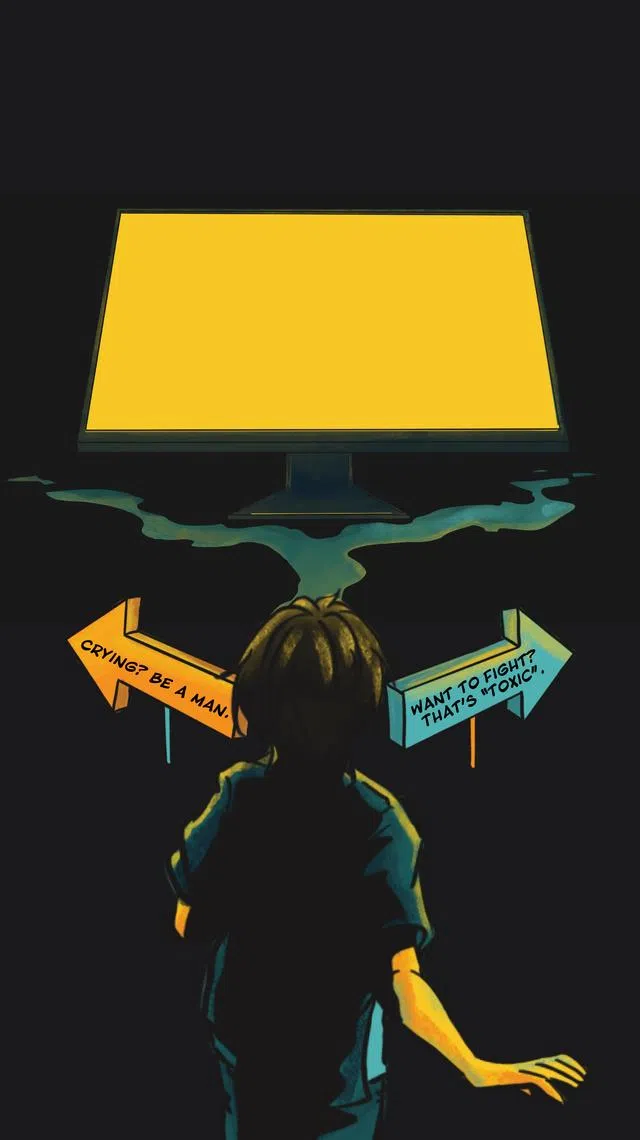
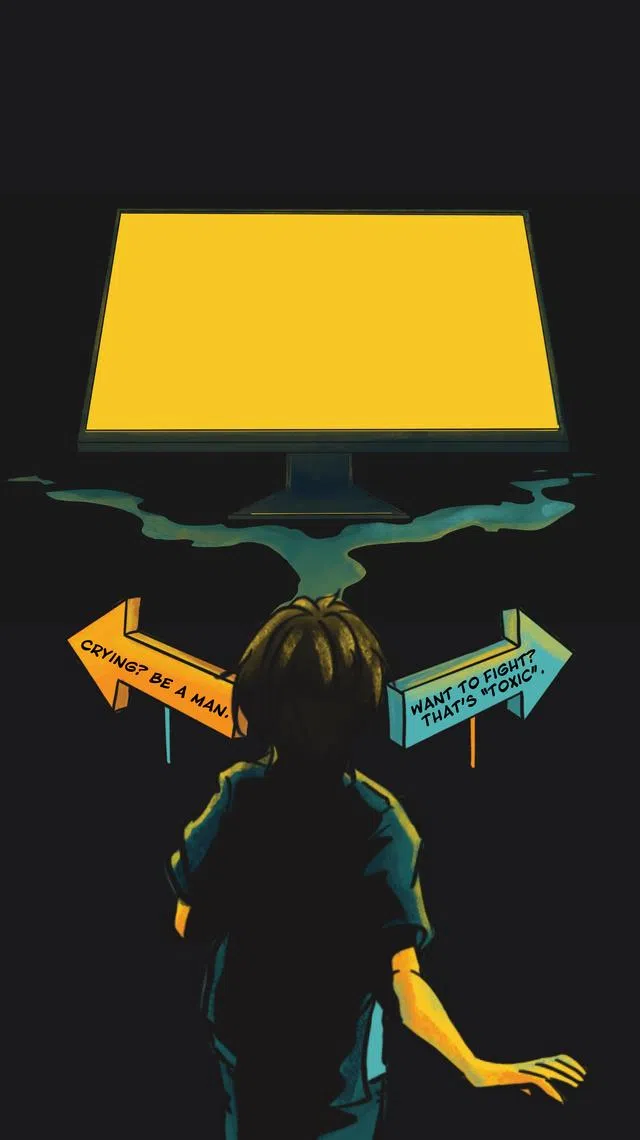
With my sons, however, the worries are murkier and harder to articulate. The narratives surrounding manhood are deeply contradictory; when one is too aggressive or overly competitive, one risks being labelled “toxic”, when one cries too easily, one is “weak”. There is bullying and the narrow, antisocial ideas of dominance and strength that accompany it.
Talking to other parents of boys, I hear a similar unease. Many parents describe their teenage sons getting lost in online activity, gaming and YouTube videos. Often, they enter a world where parents cannot follow. But there, trouble lurks.
The online world of your sons
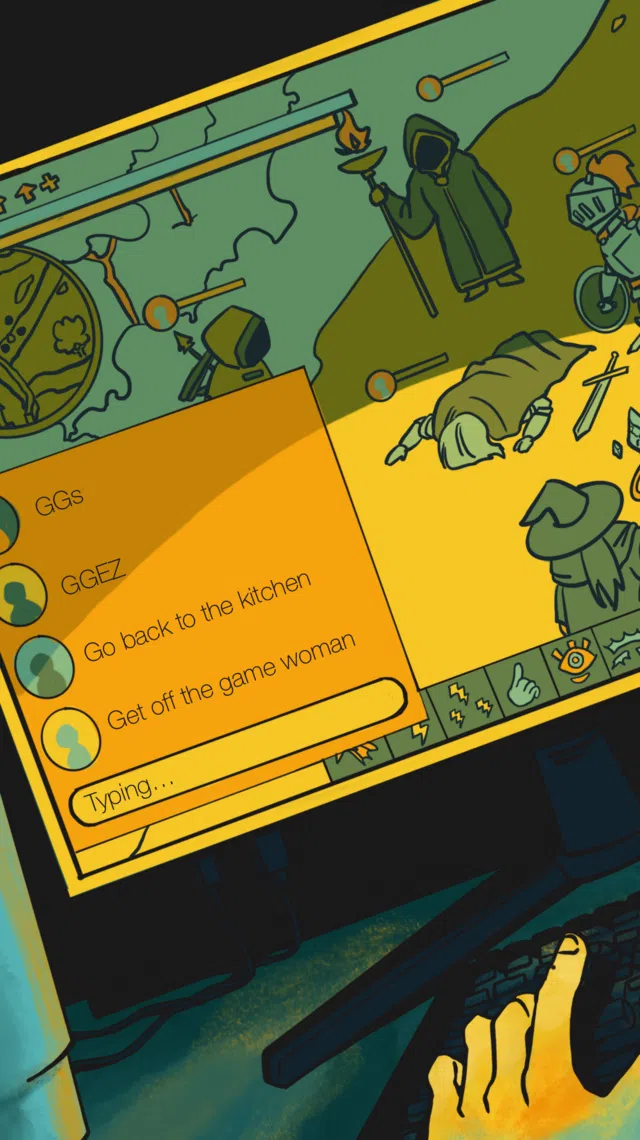
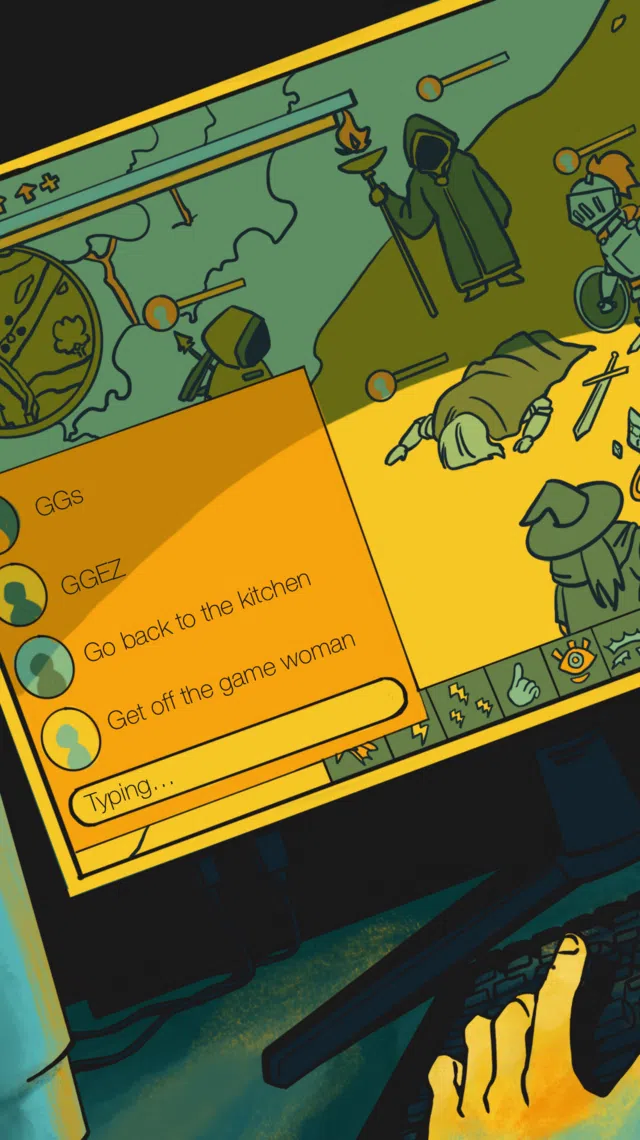
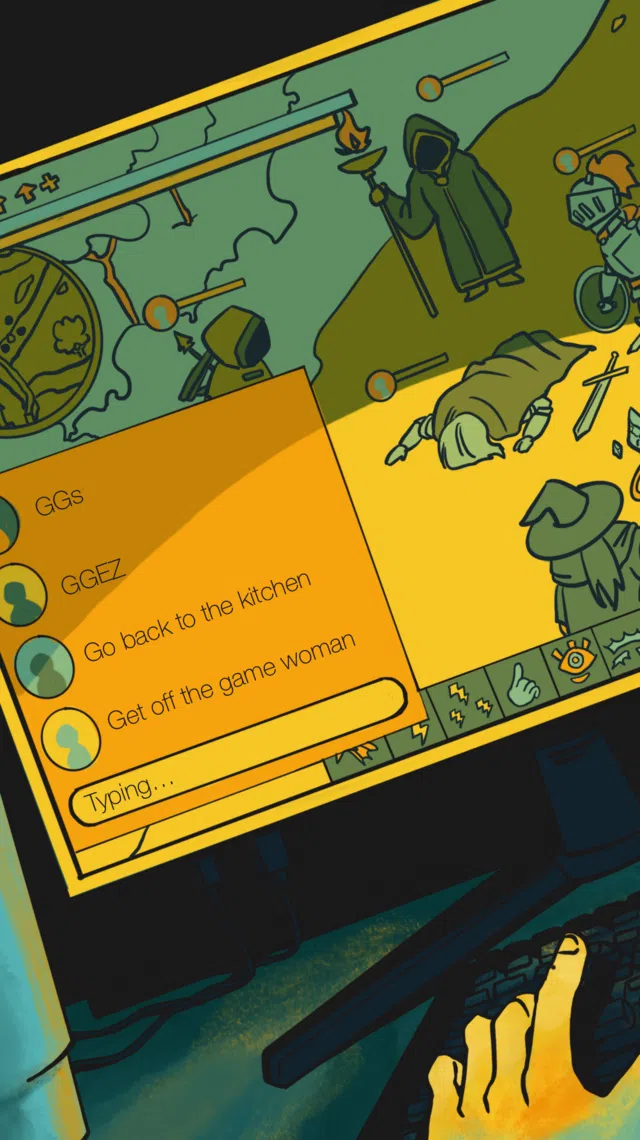
Boys often find themselves in male-dominated spaces online, where narrowly defined concepts of strength and dominance are normalised and vile language and attitudes towards girls go unchallenged.
A young man serving national service shared with me the kinds of comments he regularly hears online while gaming.
When female players underperform, they are told to “get off the game”, mocked for being women, or dismissed with remarks about going back to the kitchen.
He described feeling instinctively disgusted by such comments, and is convinced there is no relationship between gender and in‑game performance, yet he also admitted that he rarely speaks up.
What is striking is not just the presence of sexist language online, but also how easily our teen boys learn to live alongside it, perhaps disapproving inwardly, but without the language or strength to counter it. Over time, this teaches a subtle lesson: that “masculinity” is about not challenging the status quo, even when something instinctively feels wrong.
This dynamic is not confined to gaming. The Netflix series Adolescence (2025) dramatises what many parents already worry about: how online manosphere culture offers boys a seductive but dangerous script for manhood. At its core are ideas of dominance over empathy, sexual entitlement over mutual respect, and strength defined by control rather than responsibility. Women are framed as inferior, or as objects for sexual gratification, while boys who reject these ideas are derided as weak, naive or “blue-pilled”. The world is presented in binaries: winners and losers, alphas and betas, insiders and those to be mocked.
Some are drawn into these ideologies. Others may withdraw, doubting themselves, silencing their instincts or enduring ridicule for not belonging. Both paths may leave boys more insecure, not more grounded. Brought to the extreme, such ideas may even normalise hostility and violence towards others.
What Adolescence depicts, research now shows is widespread. A 2025 Common Sense Media report, Boys In The Digital Wild, surveyed more than 1,000 adolescent boys and found that three in four boys aged 11 to 17 regularly encounter masculinity-related content about building muscle, making money, fighting, dating or weapons. Crucially, two in three boys reported encountering such content without searching for it. The study also found that boys who are exposed more frequently to this kind of content tend to feel lonelier and are less open about their emotions. That is, until these feelings surface in ways that can catch both boys and adults off guard.
I once heard a teacher lament that since the Covid-19 pandemic, every batch of new secondary school boys includes at least a handful who break down during the orientation camp. Not that there is anything wrong with crying, but boys seem to have limited language for what they feel, and fewer visible pathways for who they might become.
How did we get here?
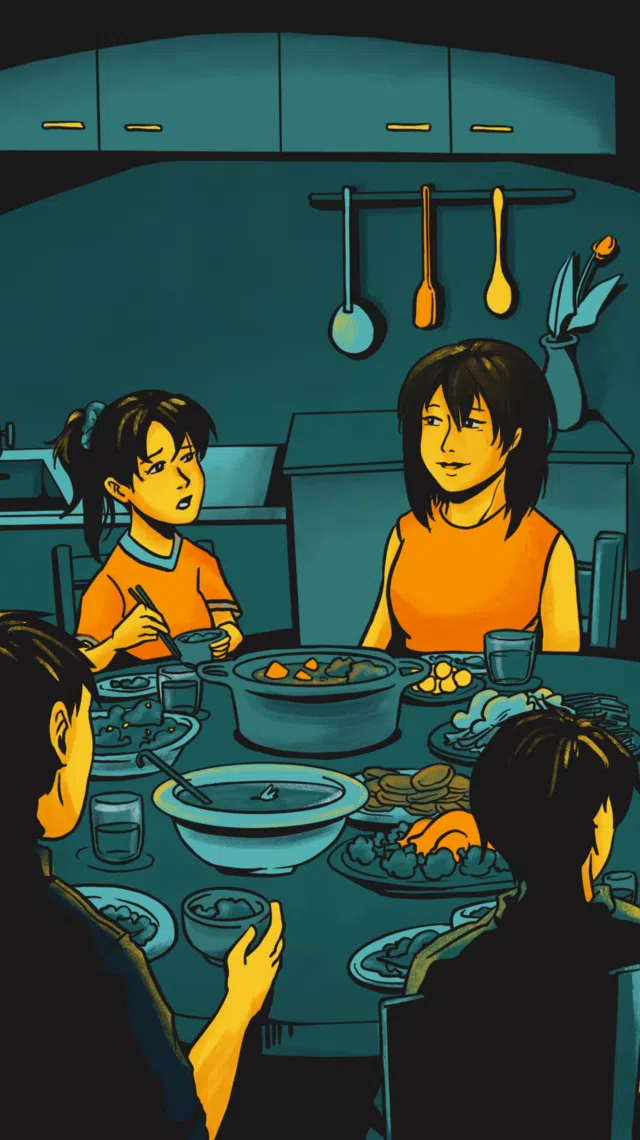
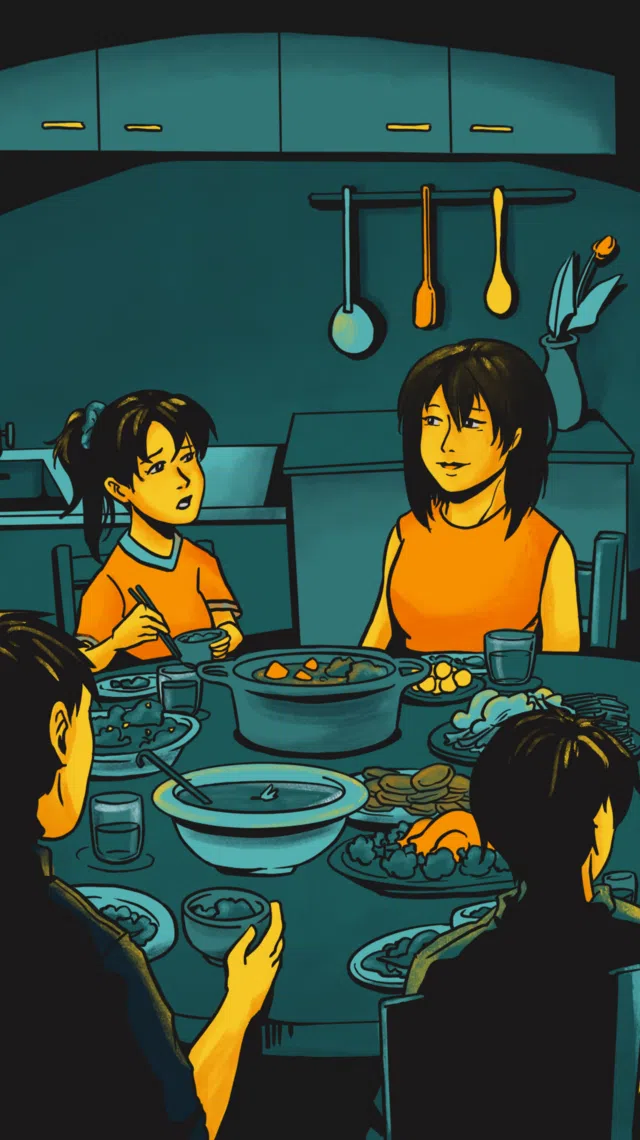

Conversations matter. But these conversations need time.
And work has whittled down the time parents used to be able to devote to their children.
Then the online world distanced them even further.
Dual-income households are the norm in Singapore today. This has brought many gains, especially for women, but it has also created a chronic time crunch for families. Where in earlier generations, dads played a larger role in disciplining their children, or imparting practical skills like how to change a blown bulb, longer working hours, work travel and marital breakdowns today mean many fathers may struggle to be consistently present.
Don’t get me wrong. Fathers today are more intentional than before, so it is not from a lack of desire. But the structures supporting parents and sons are weakening. And research suggests boys may be particularly sensitive to these shifts in family life and socialisation. Studies from the US’ National Bureau of Economic Research have found that reduced parental time during childhood affects boys more adversely than girls, even after accounting for income and parental education.
The truth is that consistent adult presence matters for boys – especially from fathers or trusted male figures. Much of how boys learn to manage anger, aggression and discouragement is not taught through instruction, but absorbed through observation: by watching how the men in their lives respond to frustration, handle conflict and regulate their emotions. In my home, my boys look to their dad for these cues. They also gravitate to him when trying to figure out how to progress in a game or sport. But with the online worlds that teens are largely raised in today, face time with dad now competes with screen time.
As Kelvin Seah, community lead of stay-home dad community The Ordinary Dad and a father of two teenage sons, muses: “Parenting teens is like a dance. Given how immersed they are in the online world today, we need to play by the new rules and not force our teens to let us in.”
But these glittery digital worlds carry the risk of addiction for young minds, and rarely foster the deep, embodied connections they really need. Unsurprisingly, as more of their lives shifts online, many young men report a growing sense of loneliness while being immersed in toxic narratives they struggle to make sense of. Sometimes, their distress is buried, and at other times, it surfaces in ways that are easily misread.
Boys learn early which feelings are acceptable or more “manly” to express, and which are better masked by stoicism, humour or bravado.
This may help us to understand why boys’ distress often lands differently from girls’. As journalist David Batty notes, drawing on the work of American psychologist Lisa Damour, we tend to focus on more familiar signs of suffering – anxiety, depression, self-harm or social withdrawal – while overlooking the ways boys are more likely to externalise distress. When boys struggle, it may surface as irritability, disengagement, risk-taking or rule-breaking, behaviours that are more likely to be met with discipline, rather than empathy.
Damour makes this point clearly in her essay, Boys Are Suffering Too. Here’s How We Miss That. She argues that adults are often quick to label behaviours such as compulsive gaming or exposure to pornography as behavioural problems, without pausing to ask what emotional needs they might be serving. These patterns, she suggests, can function as coping mechanisms to regulate or numb difficult feelings, or regain control in environments that otherwise feel hostile or confusing.
If we truly want to attend to boys’ struggles, the challenge is to look beyond problematic behaviour and understand the root causes.
The tragedy is not that boys are drawn to dark, online spaces, but that they are left to piece together ideas about strength, identity and belonging on their own. Our teens are captured by algorithm-driven content that sometimes lacks clear morals and accountability. Coupled with the reality of time-pressed families and fewer unhurried moments for guidance and mentorship at home, the picture slowly resembles a perfect storm.
What can parents do?
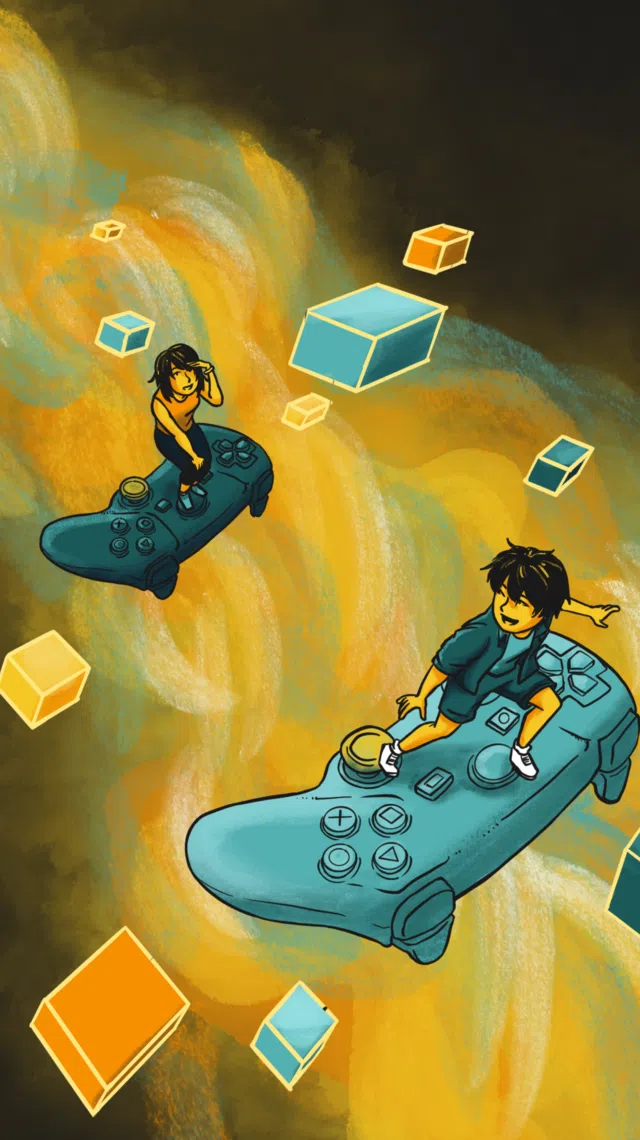
Against this backdrop, I have become acutely aware of how rare, and vital, real-world formative spaces have become for boys.
NS, which remains one of the last explicitly male-centred institutions in Singapore, still carries the transformation promise of “boys to men”. However, NS arrives after much of adolescence has passed. By the time our sons enter NS, many habits, beliefs and coping mechanisms are already deeply rooted. In that sense, NS can reinforce or correct at the margins, but it cannot substitute for the deeper work of formation that needs to take place earlier – through meaningful male guidance during a child’s formative years.
Sports is another arena that acts as a protective buffer, and I, for one, am thankful that it has played a central role in my boys’ growing-up years. Through roughing it out together with their mates on muddy fields, facing discipline and disappointment alike, they learnt how to take correction without humiliation, and work towards a collective goal. Sport also provides boys with a vocabulary for competence and self-worth that is grounded in reality.
Sporting experiences are not exclusive to boys, but perhaps for them, now, more than ever, these opportunities matter. In an age when many masculine cues come from disembodied digital spaces, experiences like these shape boys through belonging, responsibility and shared purpose – long before the online world gets to tell them who they should be.
As for parents, it is tempting to focus only on the “do nots” – telling our teens what not to do, what not to watch or which online spaces to avoid. Those boundaries matter, but they are not enough. Our sons also need help knowing what is right and good, otherwise how will they find the moral courage to defend these?
Perhaps the central problem is that we seem to lack a clear script about how to define a good man. Masculinity is often defined today by what it must not be, rather than by the qualities it should actively embody, such as responsibility, restraint, care and courage.
In this regard, parents and educators matter. Because even if our teens do not act like it, they crave for our presence. In Seah’s words: “The platforms have changed, but the underlying need for connection remains the same. Our boys need us to see them, believe in them and call out the good in them.”
“Our fears surrounding the screens and what our kids are exposed to are real, but they can lead us to react harshly or withdraw emotionally, when really we should stay present, look out for moments of connection and seize them when they appear,” he added.
My husband and I are aware that disengagement is not an option. When harmful stereotypes surface, whether the idea that women should be subordinate, or that men are entitled to coerce, we try not to let them pass in silence. This might mean pausing a show or unpacking a clip that is being passed around online. When their dad shows vulnerability or raw emotions like sadness or disappointment, I also try to hold space for it, instead of shutting down the moment.
We don’t always have neat answers, but we want our boys to practise moral reasoning and open discussion, not avoidance. It also helps that they are growing up with a sister they respect, someone whose feelings, opinions and boundaries they experience daily.
Screens may always beckon, but we adults need to do the work of modelling, naming and affirming what healthy identity and belonging look like. As Jared Tan, principal psychologist at Focus on the Family Singapore, asserts: “Focus on what is naturally compelling to our teens: Regular touch points of warmth, connection, empathy and the assurance that they have a safe space to be seen and understood. When teens are accepted for who they are – their strengths, struggles and personality – they become more open to conversations around what gives their lives meaning and direction.”
Of course, these conversations become possible only when we are willing to step into our teens’ world. As Tsao I Ting, clinical psychologist at Redwood Psychology, advises: “Be curious about your teens’ lives – play their favourite video games, watch a popular mini-series or explore the latest trending gadgets with them. Through these activities, you will find an inroad into their world and get to shape their identities and values.”
For much of the past few decades, our collective attention has focused on expanding opportunities and pathways for young women, and rightly so. But perhaps we now need to pay closer attention to the quiet struggles of boys. Guidance cannot be outsourced to algorithms; it is forged through relationship, presence and example.
The stakes are too high for us to respond in resignation or silence.
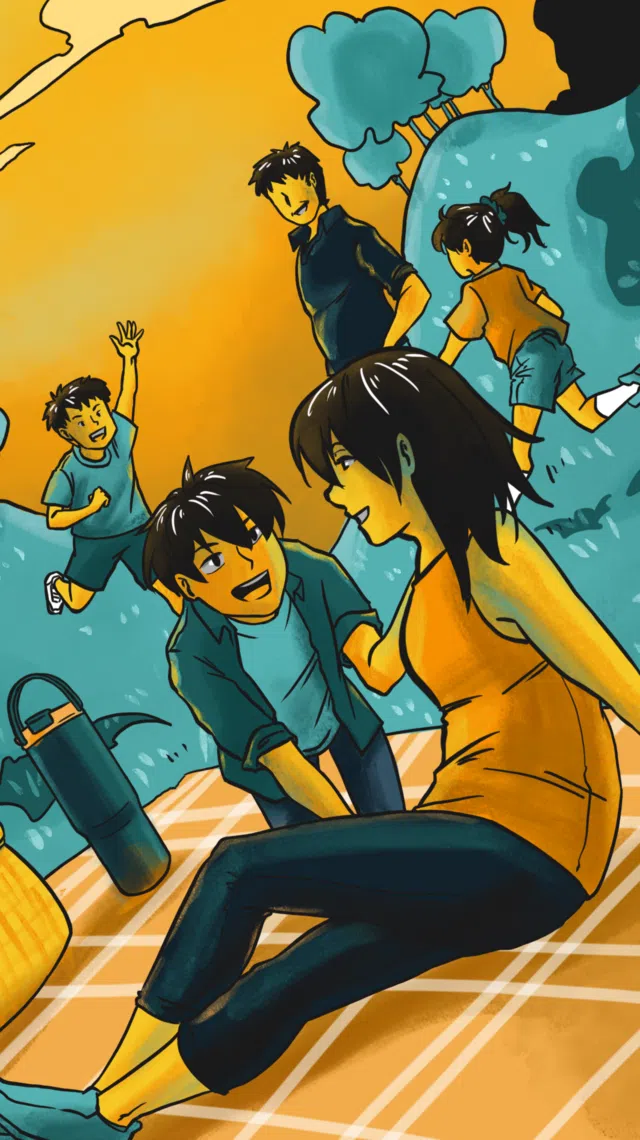
If we hope for a generation of men who can relate to others with strength and care, the work must begin now.
We must show the way by modelling to them what is worth becoming.
June Yong is a mother of three and lead of programmes at Focus on the Family Singapore. She is pursuing a master’s degree in counselling.
Illustrations by: Ng Weng Chi
Produced by: Lianne Chia, Ng Weng Chi, Jessica Yeo