Straitstimes.com header logo

In Pictures: Millions in Europe witness a total eclipse of the sun

By

Published: Aug 14, 2026, 05:02 AM

Scroll down

Day briefly turned to night in Spain on Aug 12, 2026, as the country witnessed its first total solar eclipse in more than a century, plunging it into eerie darkness in one of nature’s greatest spectacles. Millions across Europe watched as the eclipse – a first in mainland Europe since 2006 – cast its shadow through parts of Greenland, racing south to smother Keflavik, some 50km from Iceland’s capital, Reykjavik, before arcing across the Atlantic Ocean towards northern Spain.
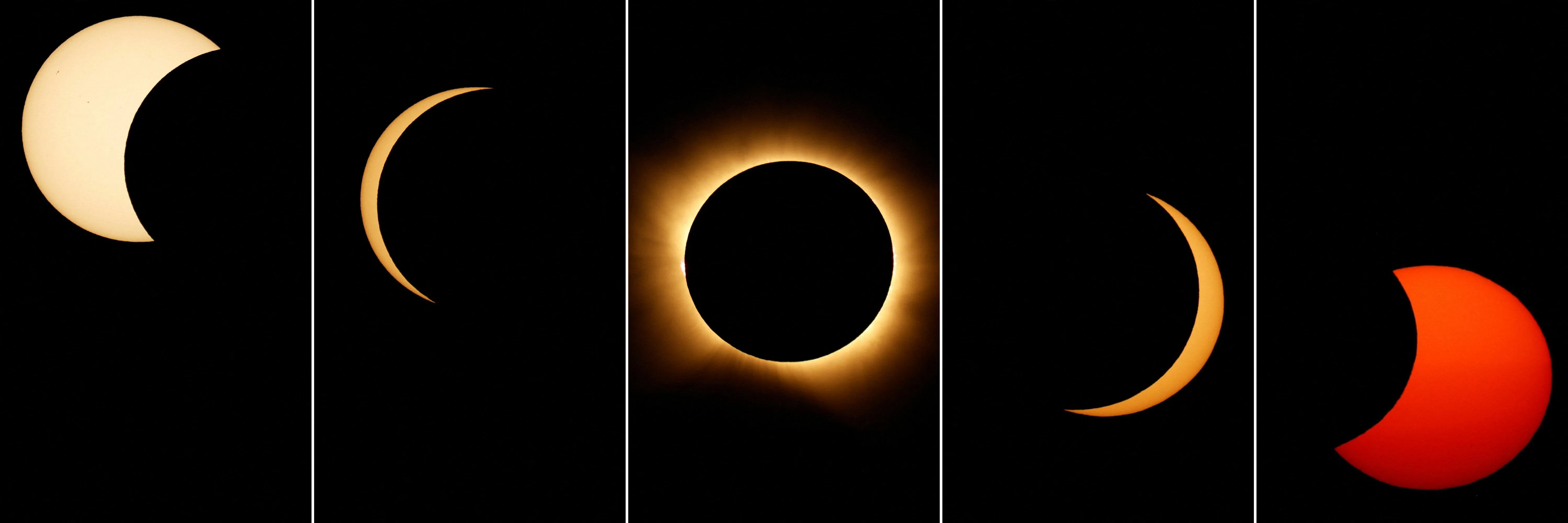
A combination of pictures taken on Aug 12, 2026, showing the different stages of the total solar eclipse as seen from Berlanga de Duero, 240 km north-east of Madrid.

PHOTO: AFP
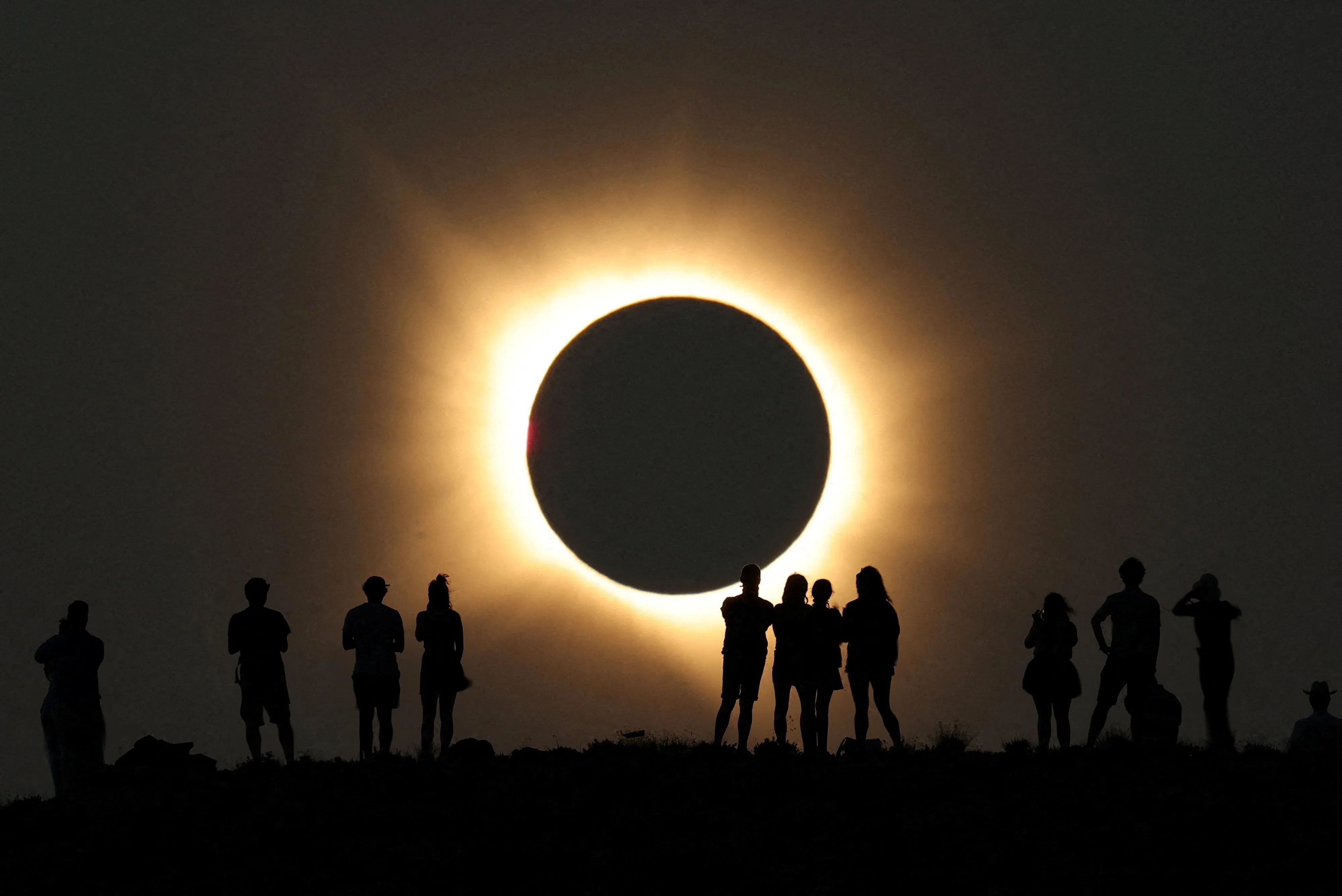
The moon completely covers the sun during a total solar eclipse as seen from the Galactica Centre, near the Javalambre Astrophysical Observatory in Arcos de las Salinas, near Teruel, Spain, August 12, 2026. REUTERS/Christian Hartmann REFILE - CORRECTING LOCATION FROM 'THE JAVALAMBRE ASTROPHYSICAL OBSERVATORY' TO 'THE GALACTICA CENTRE, NEAR THE JAVALAMBRE ASTROPHYSICAL OBSERVATORY'.

The moon completely covering the sun during a total solar eclipse seen from the Galactica Centre, near the Javalambre Astrophysical Observatory in Arcos de las Salinas, near Teruel, Spain, on Aug 12, 2026.

PHOTO: REUTERS
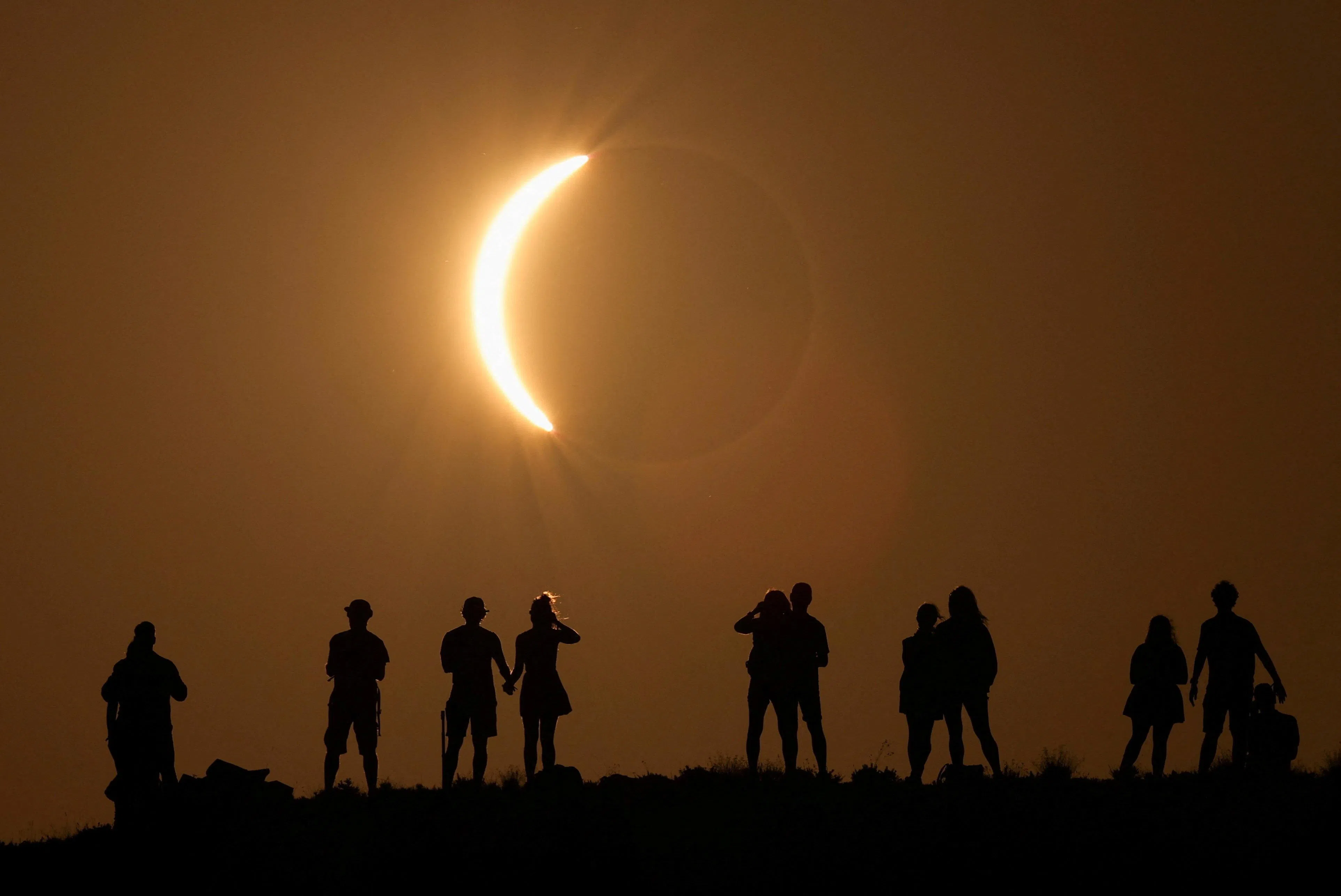
The moon partially covers the sun during a total solar eclipse as seen from the Galactica Centre, near the Javalambre Astrophysical Observatory in Arcos de las Salinas, near Teruel, Spain, August 12, 2026. REUTERS/Christian Hartmann REFILE - CORRECTING LOCATION FROM 'THE JAVALAMBRE ASTROPHYSICAL OBSERVATORY' TO 'THE GALACTICA CENTRE, NEAR THE JAVALAMBRE ASTROPHYSICAL OBSERVATORY'.

The moon partially covering the sun, forming a crescent shape spectacle.

PHOTO: REUTERS
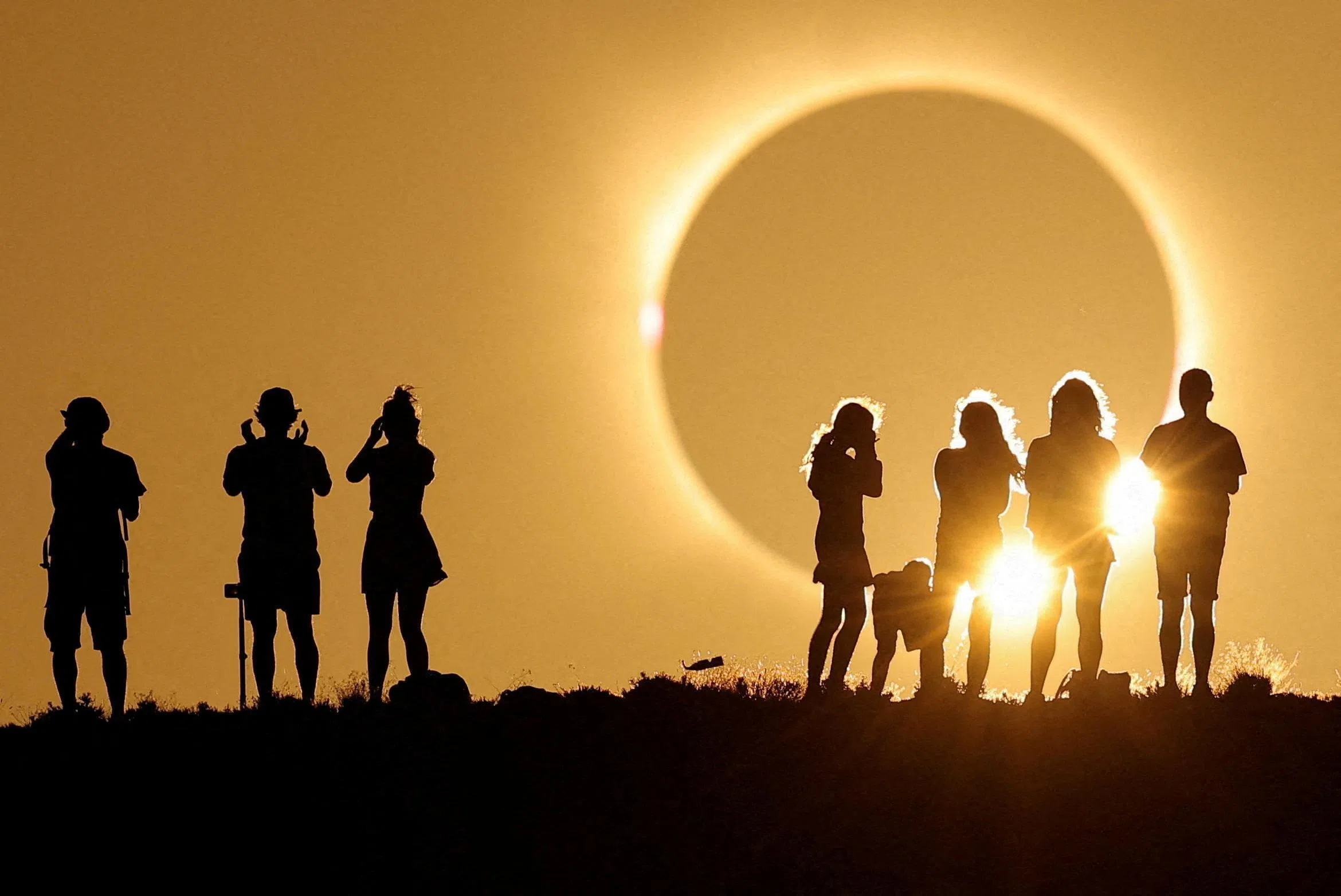
The moon partially covers the sun during a total solar eclipse as seen from the Galactica Centre, near the Javalambre Astrophysical Observatory in Arcos de las Salinas, near Teruel, Spain, August 12, 2026. REUTERS/Christian Hartmann REFILE - CORRECTING INFORMATION FROM 'COMPLETELY COVERS THE SUN' TO 'PARTIALLY COVERS THE SUN' AND LOCATION FROM 'THE JAVALAMBRE ASTROPHYSICAL OBSERVATORY' TO 'THE GALACTICA CENTRE, NEAR THE JAVALAMBRE ASTROPHYSICAL OBSERVATORY'     TPX IMAGES OF THE DAY

Those who witnessed a total eclipse experienced darkness for less than two minutes before the light began to return.

PHOTO: REUTERS
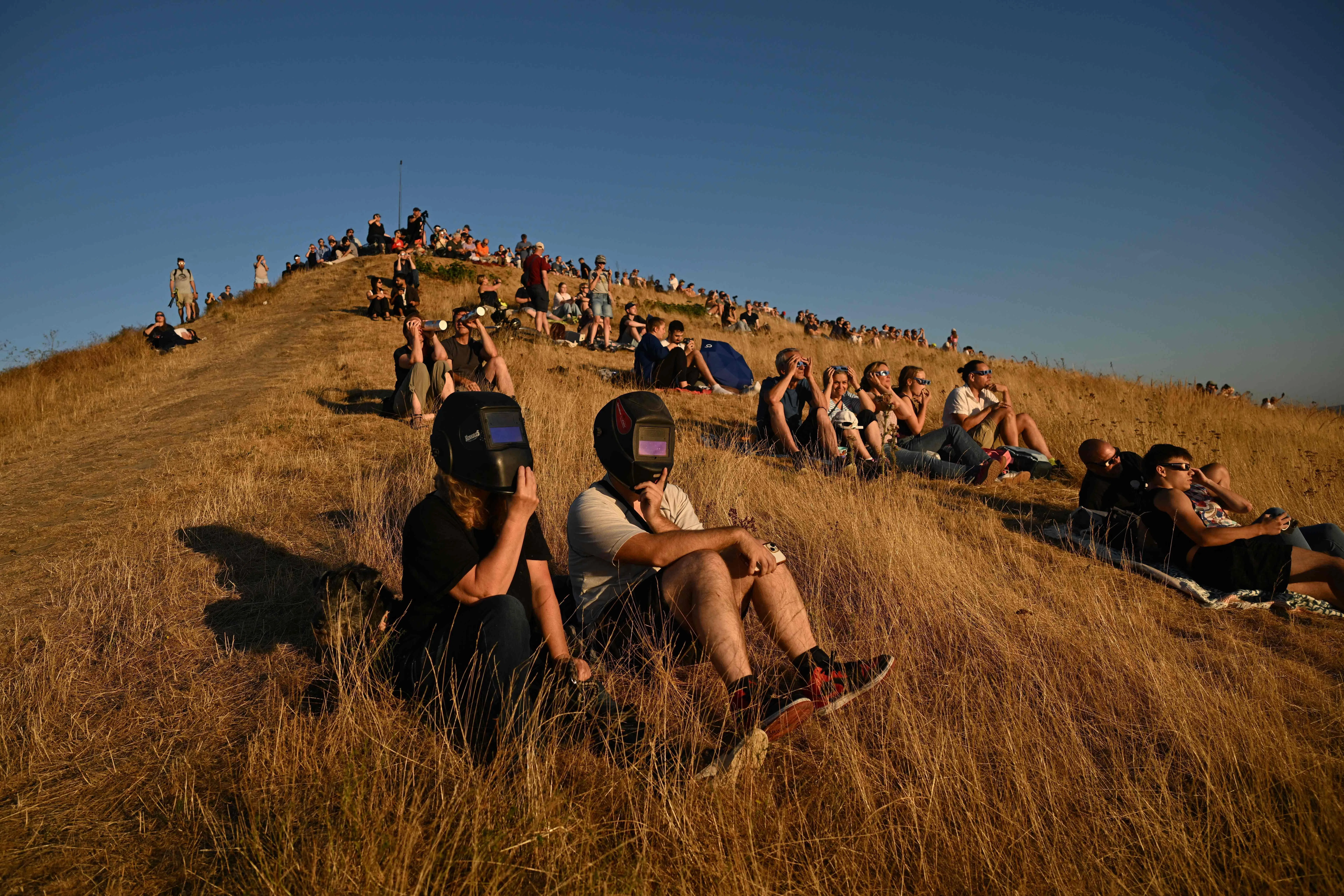
TOPSHOT - People look through welding shields during the solar partial eclipse in the landscape park Halde Hoheward in Herten, western Germany, on August 12, 2026. Millions of people turn their gaze towards the heavens on August 12, 2026 to witness one of nature's greatest spectacles -- a rare total solar eclipse -- as it sweeps over mainland Europe to briefly turn day into night. In Germany, the sun will be between 84 and 90 percent obscured from shortly after 7:00 p.m. until just before 9:00 p.m. (Photo by Ina FASSBENDER / AFP)

People looking through welding shields to protect their eyes while gazing at the partial solar eclipse from Halde Hoheward landscape park in Herten, western Germany.

PHOTO: AFP
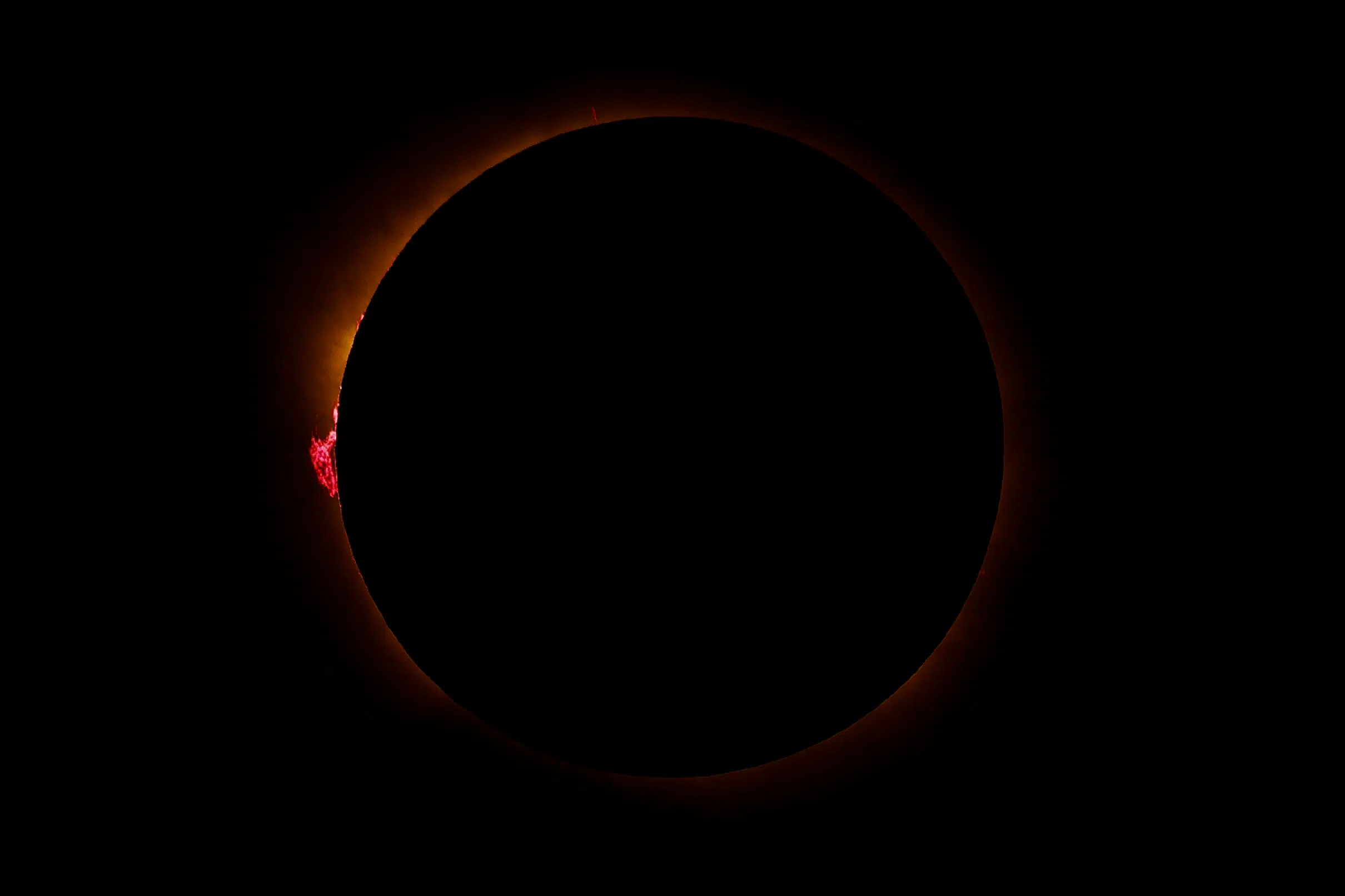
The Sun's corona glows as the Moon completely blocks the Sun during the totality phase of the total solar eclipse as seen from Berlanga de Duero, 240 km north-east of Madrid, on August 12, 2026. Millions of Europeans contemplated the sky in awe today during a rare total solar eclipse that will plunge a swathe of Spain into an eerie daytime darkness. The shadow cast when the Moon covers the Sun began in Russia's remote Arctic north at around 1700 GMT and continued in an arc through Greenland and Iceland. Spain is where most people viewed the total eclipse, which crossed the country diagonally from the northern Atlantic coast to the Mediterranean Sea, where it vanished at around 1830 GMT. (Photo by Oscar DEL POZO / AFP)

The sun's corona glowing as the moon completely blocks the sun during the totality phase of the total solar eclipse as seen from Berlanga de Duero, 240 km northeast of Madrid.

PHOTO: AFP

Spain is where most people viewed the total eclipse, which crossed the country diagonally from the northern Atlantic coast to the Mediterranean Sea, where it vanished at around 1830 GMT.

PHOTO: AFP

People react as they observe the total solar eclipse from the sea port of Tarragona, northeastern Spain, on August 12, 2026. Millions of Europeans contemplated the sky in awe today during a rare total solar eclipse that will plunge a swathe of Spain into an eerie daytime darkness. The shadow cast when the Moon covers the Sun began in Russia's remote Arctic north at around 1700 GMT and continued in an arc through Greenland and Iceland. Spain is where most people viewed the total eclipse, which crossed the country diagonally from the northern Atlantic coast to the Mediterranean Sea, where it vanished at around 1830 GMT. (Photo by Josep LAGO / AFP)

People reacting as they observe the total solar eclipse from the sea port of Tarragona, northeastern Spain.

PHOTO: AFP

People gather on Skinnarviksberget in Stockholm to watch a partial solar eclipse that covered about 81 percent of the sun at its peak shortly before sunset on August 12, 2026. Millions of people turn their gaze towards the heavens on August 12, 2026 to witness one of nature's greatest spectacles -- a rare total solar eclipse -- as it sweeps over mainland Europe to briefly turn day into night. (Photo by Jonathan NACKSTRAND / AFP)

People gathering at Skinnarviksberget in Stockholm to watch a partial solar eclipse that covered about 81 percent of the sun at its peak shortly before sunset.

PHOTO: AFP

A girl observes the total solar eclipse as seen from the sea port of Tarragona, east of Spain,, on August 12, 2026. Millions of Europeans contemplated the sky in awe today during a rare total solar eclipse that plunged a swathe of Spain into an eerie daytime darkness. The shadow cast when the Moon covers the Sun began in Russia's remote Arctic north at around 1700 GMT and continued in an arc through Greenland and Iceland. Spain is where most people viewed the total eclipse, which crossed the country diagonally from the northern Atlantic coast to the Mediterranean Sea, where it will vanish at around 1830 GMT. (Photo by Josep LAGO / AFP)

A girl with a home-made viewing glass observing the total solar eclipse from the sea port of Tarragona, eastern Spain.

PHOTO: AFP

epa13164553 Festival-goers take pictures with a mobile phone and a pair of protective eclipse viewing glasses while observing the Sun during a partial solar eclipse at the 30th Venoge Festival in Penthaz, Switzerland, 12 August 2026. A total solar eclipse will sweep across parts of Europe and the North Atlantic on 12 August, with the path of totality moving through Greenland, Iceland, Spain, and a small section of northeastern Portugal, while surrounding areas across Europe experience a partial solar eclipse, according to the European Space Agency (ESA).  EPA/LAURENT GILLIERON EDITORIAL USE ONLY

Festival-goers taking pictures with a mobile phone and a pair of protective eclipse viewing glasses while observing the sun during a partial solar eclipse at the 30th Venoge Festival in Penthaz, Switzerland.

PHOTO: EPA
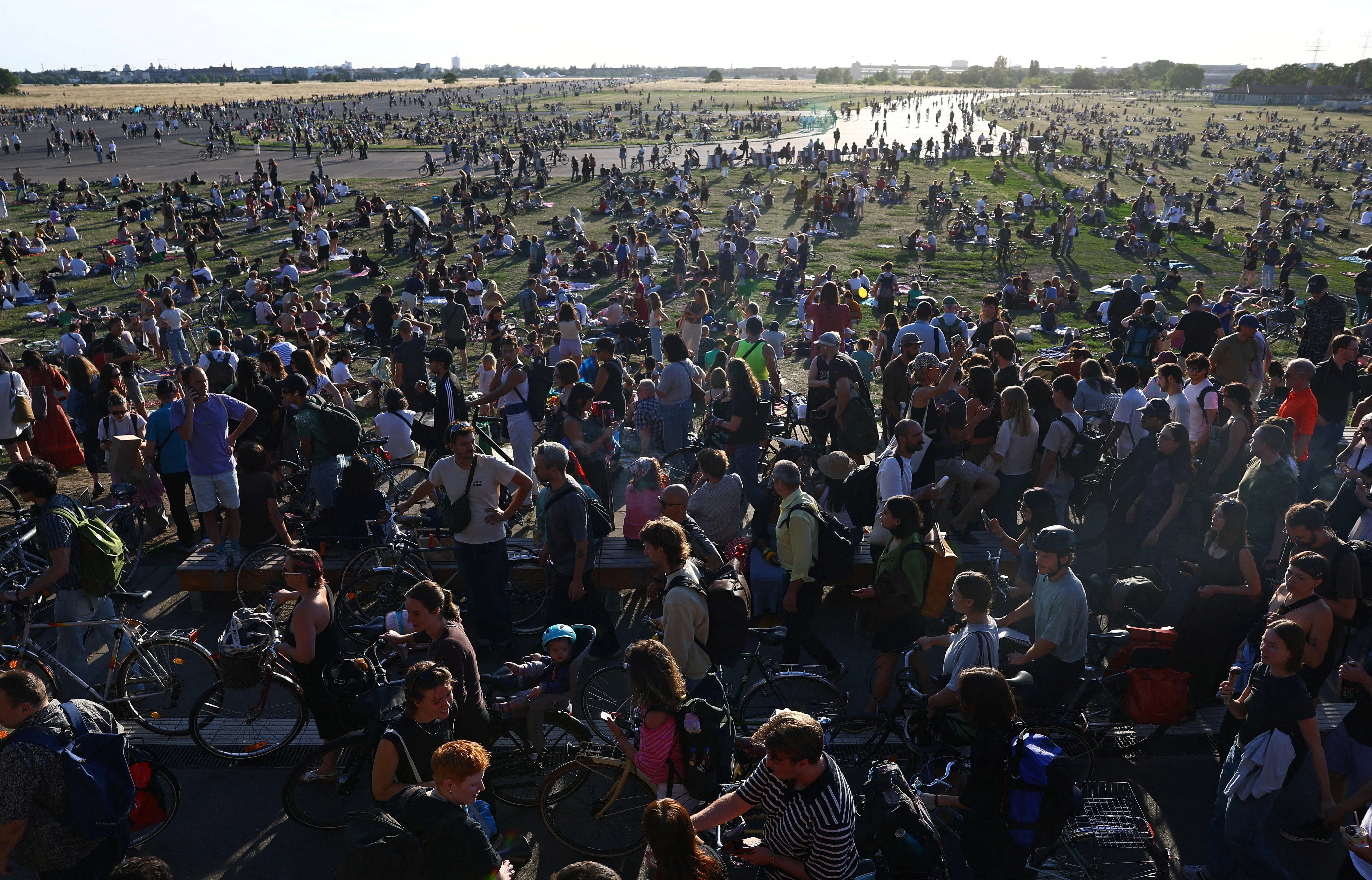
Thousands of people gathering to watch the partial solar eclipse at Tempelhofer Feld in Berlin, Germany.

PHOTO: REUTERS
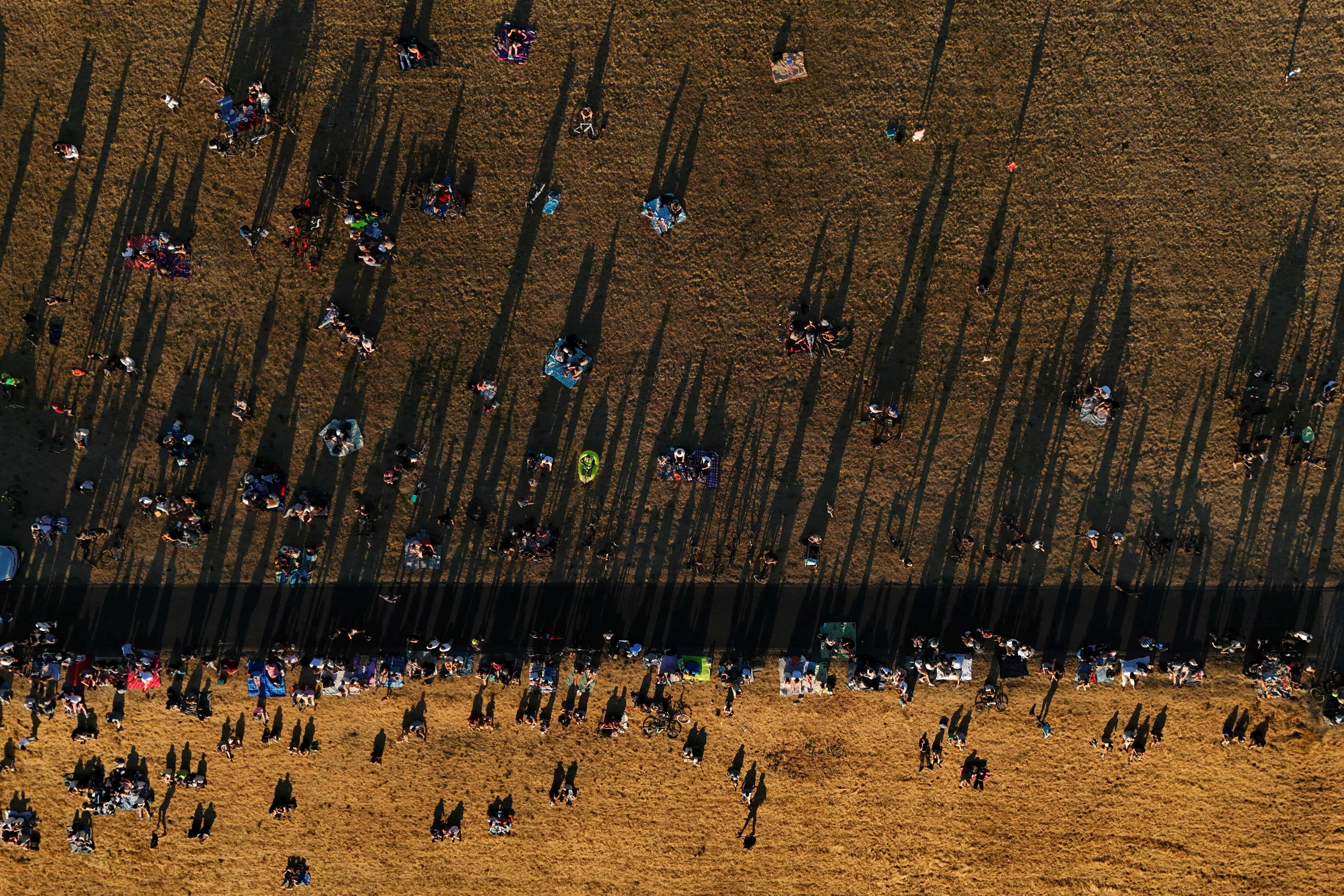
An aerial view of people watching the partial solar eclipse at the Halde Hoheward landscape park in Herten, western Germany.

PHOTO: AFP

A composite picture made available by NASA showing the progression of a total solar eclipse over a field of sunflowers in San Millan de los Caballeros, Spain.

PHOTO: NASA

This handout image from NASA showing the sun during a partial solar eclipse, partially obscured by clouds, and the International Space Station in silhouette (speck in the middle) as it transits at roughly five miles per second on Aug 12, 2026, near Hodgdon, Maine.

PHOTO: NASA
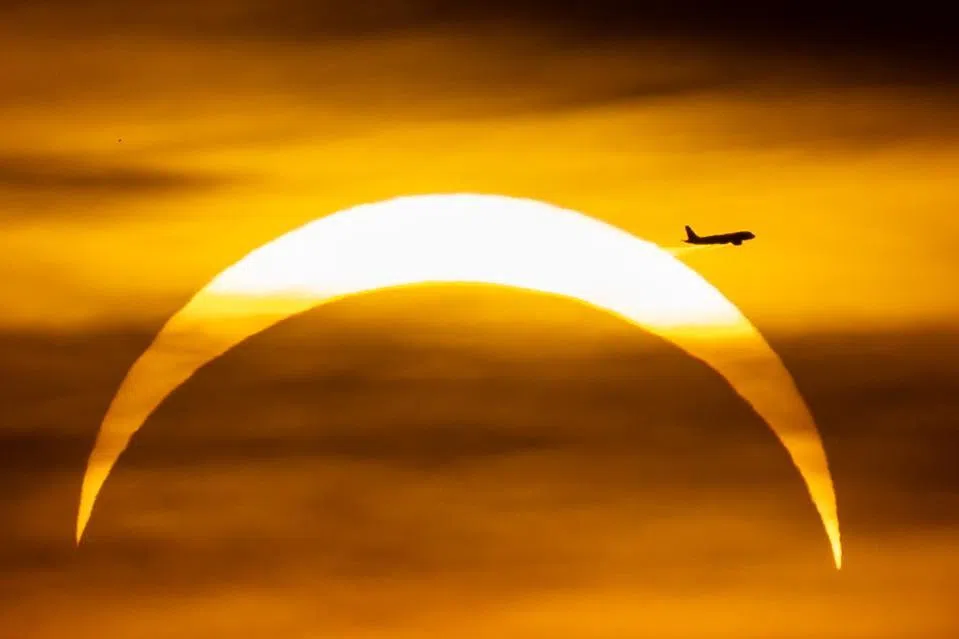
epa13164595 A plane flies during a partial solar eclipse in Prague, Czech Republic, 12 August 2026. A total solar eclipse swept across parts of Europe and the North Atlantic on 12 August, with the path of totality moving through Greenland, Iceland, Spain, and a small section of northeastern Portugal, while surrounding areas across Europe experienced a partial solar eclipse, according to the European Space Agency (ESA).  EPA/MARTIN DIVISEK

A plane flying during a partial solar eclipse in Prague, Czech Republic.

PHOTO: EPA
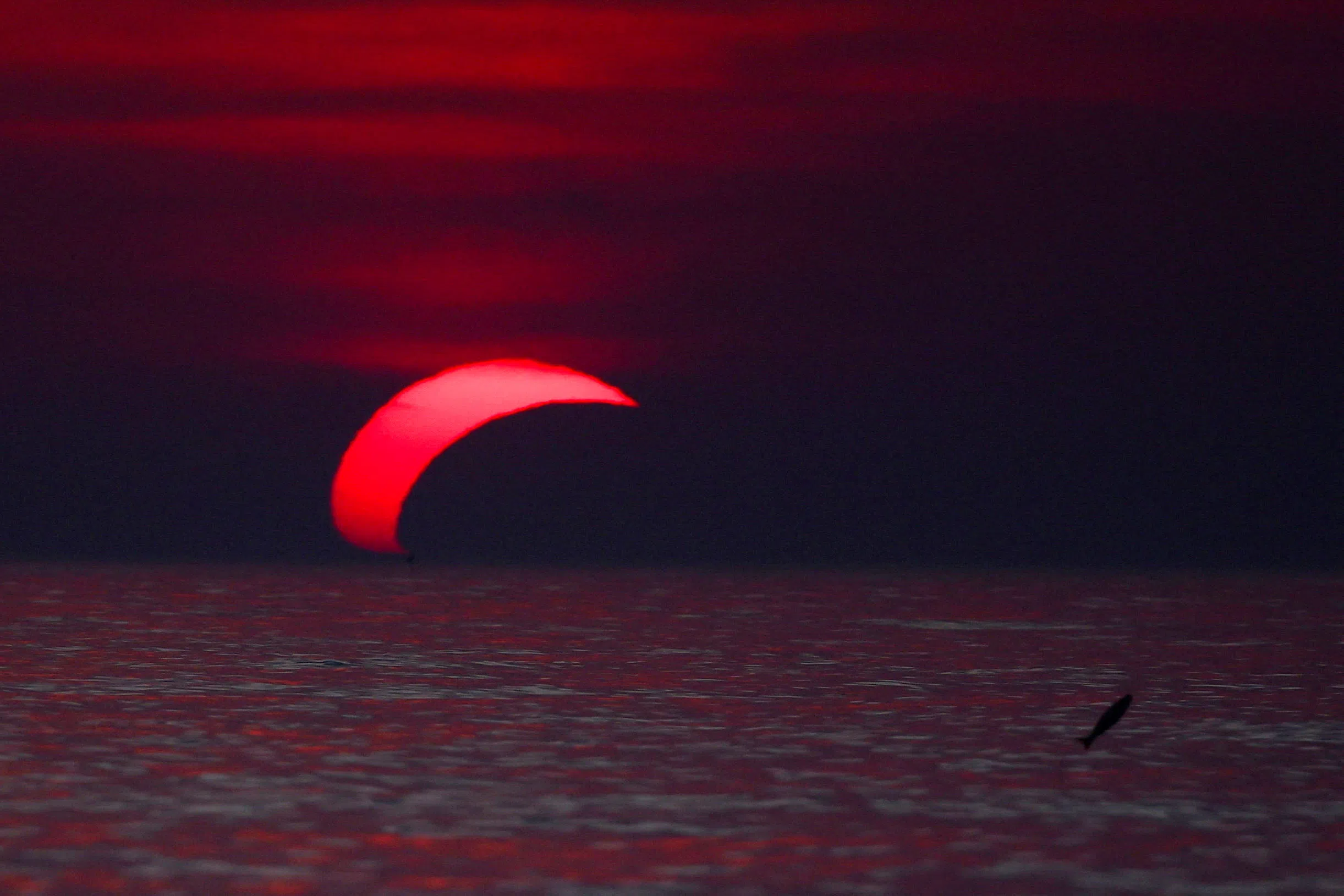
A fish jumps out of the water during a solar eclipse as the moon partially covers the sun and briefly dims the afternoon light along the coast of Fregene, near Rome, August 12, 2026. REUTERS/Guglielmo Mangiapane TPX IMAGES OF THE DAY

A fish jumping out of the water during a solar eclipse as the moon partially covers the sun and briefly dims the afternoon light along the coast of Fregene, near Rome.

PHOTO: REUTERS
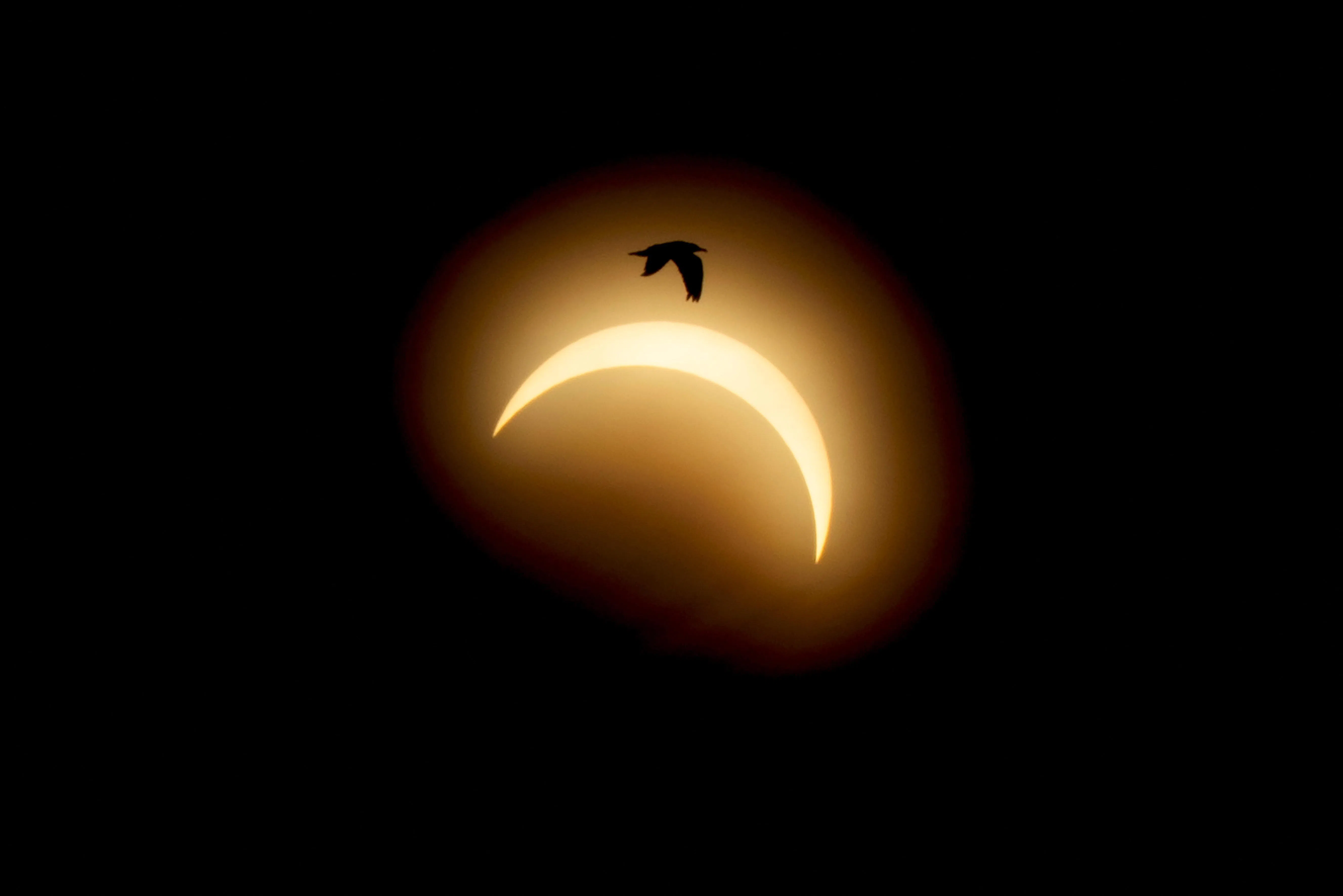
Solar eclipse in Denmark at Mariager, August 12, 2026. Ritzau Scanpix/via REUTERS    ATTENTION EDITORS - THIS IMAGE WAS PROVIDED BY A THIRD PARTY. DENMARK OUT. NO COMMERCIAL OR EDITORIAL SALES IN DENMARK.     TPX IMAGES OF THE DAY

A bird silhouetted against a partial solar eclipse in Denmark at Mariager, a town that sits on the southern shore of the Mariager Fjord.

PHOTO: RITZAU SCANPIX VIA REUTERS

Trees and clouds are silhouetted as the moon partially covers the setting sun, during a solar eclipse, as seen from Osorno, Spain, August 12, 2026. REUTERS/Jon Nazca

Trees and clouds are silhouetted as the moon partially covers the setting sun, during a solar eclipse, as seen from Osorno, Spain.

PHOTO: REUTERS

The moon partially covers the sun during a solar eclipse, in Piran, Slovenia, August 12, 2026. REUTERS/Borut Zivulovic

The moon partially covers the sun during a solar eclipse in Piran, Slovenia.

PHOTO: REUTERS

The moon completely covers the sun during a total solar eclipse as seen from Osorno, Spain, August 12, 2026. REUTERS/Jon Nazca

The moon completely covering the sun during a total solar eclipse as seen from Osorno, Spain.

The Moon partially covers the Sun before the total solar eclipse as seen from La Zurriola beach in San Sebastian, on August 12, 2026. Millions of Europeans contemplated the sky in awe today during a rare total solar eclipse that will plunge a swathe of Spain into an eerie daytime darkness. The shadow cast when the Moon covers the Sun began in Russia's remote Arctic north at around 1700 GMT and continued in an arc through Greenland and Iceland. Spain is where most people viewed the total eclipse, which crossed the country diagonally from the northern Atlantic coast to the Mediterranean Sea, where it vanished at around 1830 GMT. (Photo by Thomas COEX / AFP)

The Moon partially covering the Sun before the total solar eclipse as seen from La Zurriola beach in San Sebastian.

PHOTO: AFP

epa13164822 The Moon obscures the Sun during a partial solar eclipse from the summit of Niesen in the Bernese Oberland, Switzerland, 12 August 2026. A total solar eclipse will sweep across parts of Europe and the North Atlantic on 12 August, with the path of totality moving through Greenland, Iceland, Spain, and a small section of northeastern Portugal, while surrounding areas across Europe experience a partial solar eclipse, according to the European Space Agency (ESA). EPA/ANTHONY ANEX

The moon obscuring the sun during a partial solar eclipse from the summit of Niesen in the Bernese Oberland, Switzerland.

PHOTO: EPA

The Moon uncovers the Sun in the moments following totality of the solar eclipse as seen from La Zurriola beach in San Sebastian, on August 12, 2026. Millions of Europeans contemplated the sky in awe today during a rare total solar eclipse that will plunge a swathe of Spain into an eerie daytime darkness. The shadow cast when the Moon covers the Sun began in Russia's remote Arctic north at around 1700 GMT and continued in an arc through Greenland and Iceland. Spain is where most people viewed the total eclipse, which crossed the country diagonally from the northern Atlantic coast to the Mediterranean Sea, where it vanished at around 1830 GMT. (Photo by Thomas COEX / AFP)

The moon uncovering the sun in the moments following a full solar eclipse as seen from La Zurriola beach in San Sebastian, Spain.

PHOTO: AFP
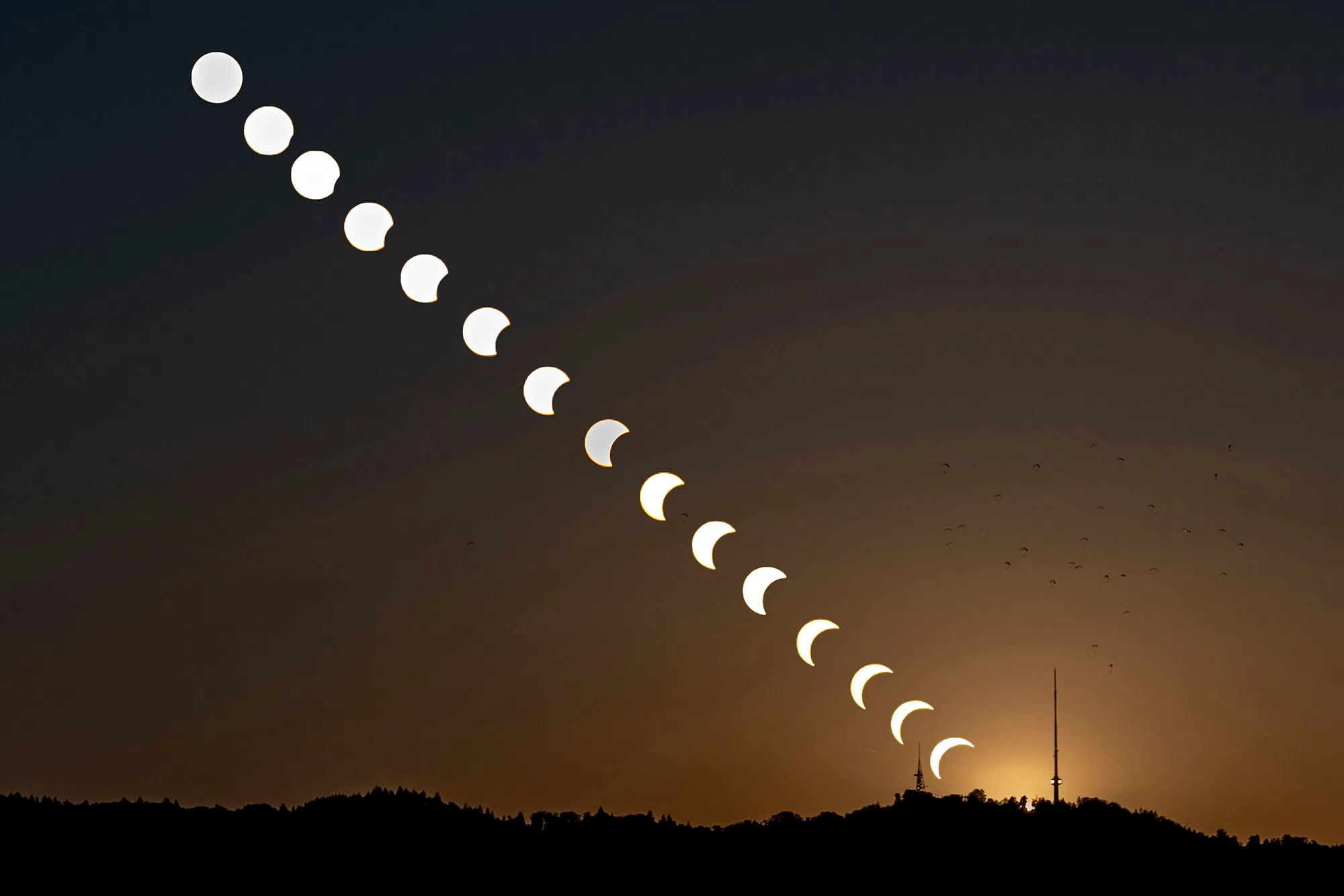
A composite image created by combining 16 separate photographs as the moon obscures the sun during a partial solar eclipse over the Uetliberg in Zollikon, Switzerland.

PHOTO: EPA
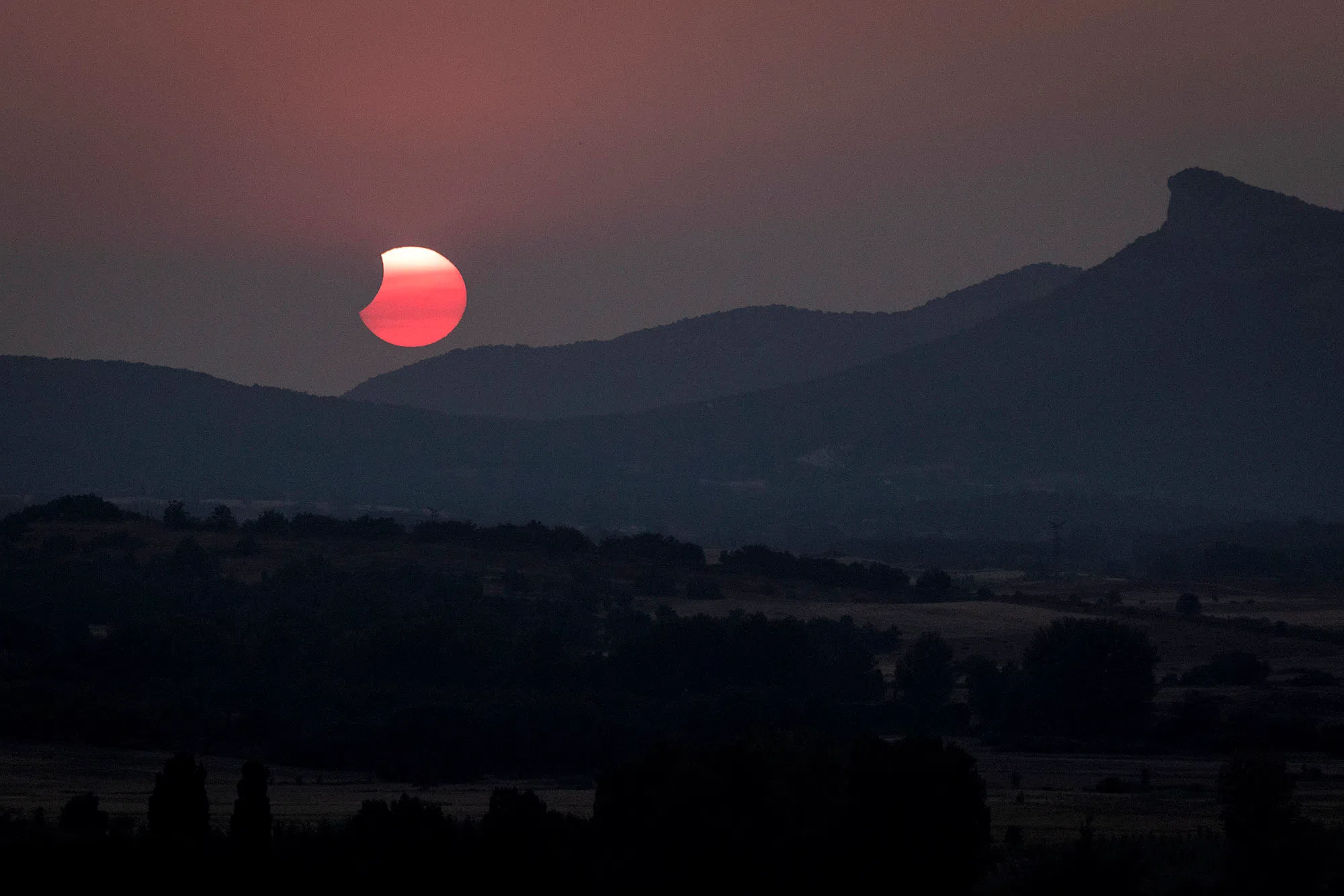
The moon moving away from the sun after a total solar eclipse in Castrillo de la Reina, Spain.

PHOTO: NYTIMES
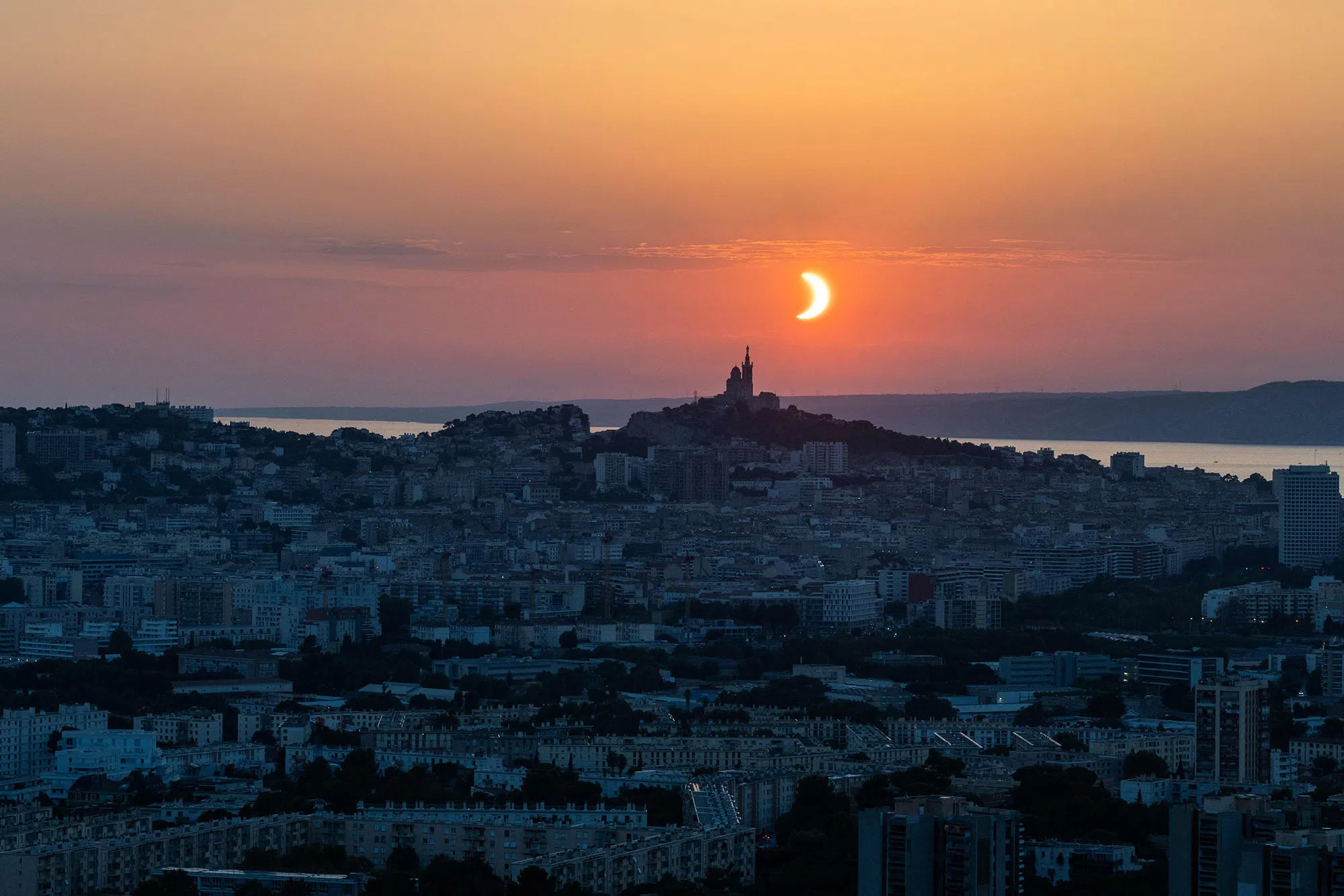
The moon passing over the sun’s horizon behind the Notre-Dame de la Garde Basilica, nicknamed the “Bonne Mère,” during a partial solar eclipse in Marseille, in southeastern France.

PHOTO: AFP

TOPSHOT - The moon passes over the sun's horizon behind the Pyramide du Louvre, designed by Chinese-US architect Ieoh Ming Pei, during a partial solar eclipse in Paris on August 12, 2026. In France, the solar eclipse was not total - after the total solar eclipse of 1999 France will not see another total eclipse for another 55 years in 2081. (Photo by Simon WOHLFAHRT / AFP) / RESTRICTED TO EDITORIAL USE - MANDATORY MENTION OF THE ARTIST UPON PUBLICATION - TO ILLUSTRATE THE EVENT AS SPECIFIED IN THE CAPTION

The moon passing over the sun’s horizon behind the Pyramide du Louvre, designed by Chinese-US architect Ieoh Ming Pei, during a partial solar eclipse in Paris, France.

PHOTO: AFP

TOPSHOT - The Moon uncovers the Sun behind Torrespana TV tower, nicknamed "El Piruli" in the last moments of the solar eclipse as seen from the Cuna Verde viewpoint in Madrid, on August 12, 2026. Millions of Europeans contemplated the sky in awe today during a rare total solar eclipse that will plunge a swathe of Spain into an eerie daytime darkness. The shadow cast when the Moon covers the Sun began in Russia's remote Arctic north at around 1700 GMT and continued in an arc through Greenland and Iceland. Spain is where most people viewed the total eclipse, which crossed the country diagonally from the northern Atlantic coast to the Mediterranean Sea, where it vanished at around 1830 GMT. (Photo by JAVIER SORIANO / AFP)

The moon uncovering the sun behind Torrespana TV tower, nicknamed El Piruli in the last moments of the solar eclipse as seen from the Cuna Verde viewpoint in Madrid.

PHOTO: AFP

epa13164647 The Prague Castle is silhouetted during a partial solar eclipse in Prague, Czech Republic, 12 August 2026. A total solar eclipse swept across parts of Europe and the North Atlantic on 12 August, with the path of totality moving through Greenland, Iceland, Spain, and a small section of northeastern Portugal, while surrounding areas across Europe experienced a partial solar eclipse, according to the European Space Agency (ESA). EPA/MARTIN DIVISEK

The Prague Castle is silhouetted during a partial solar eclipse in Prague, Czech Republic.

PHOTO: EPA

A partial solar eclipse is seen above Wetstraat/Rue de la Loi from the EU district in Brussels, Belgium.

PHOTO: EPA
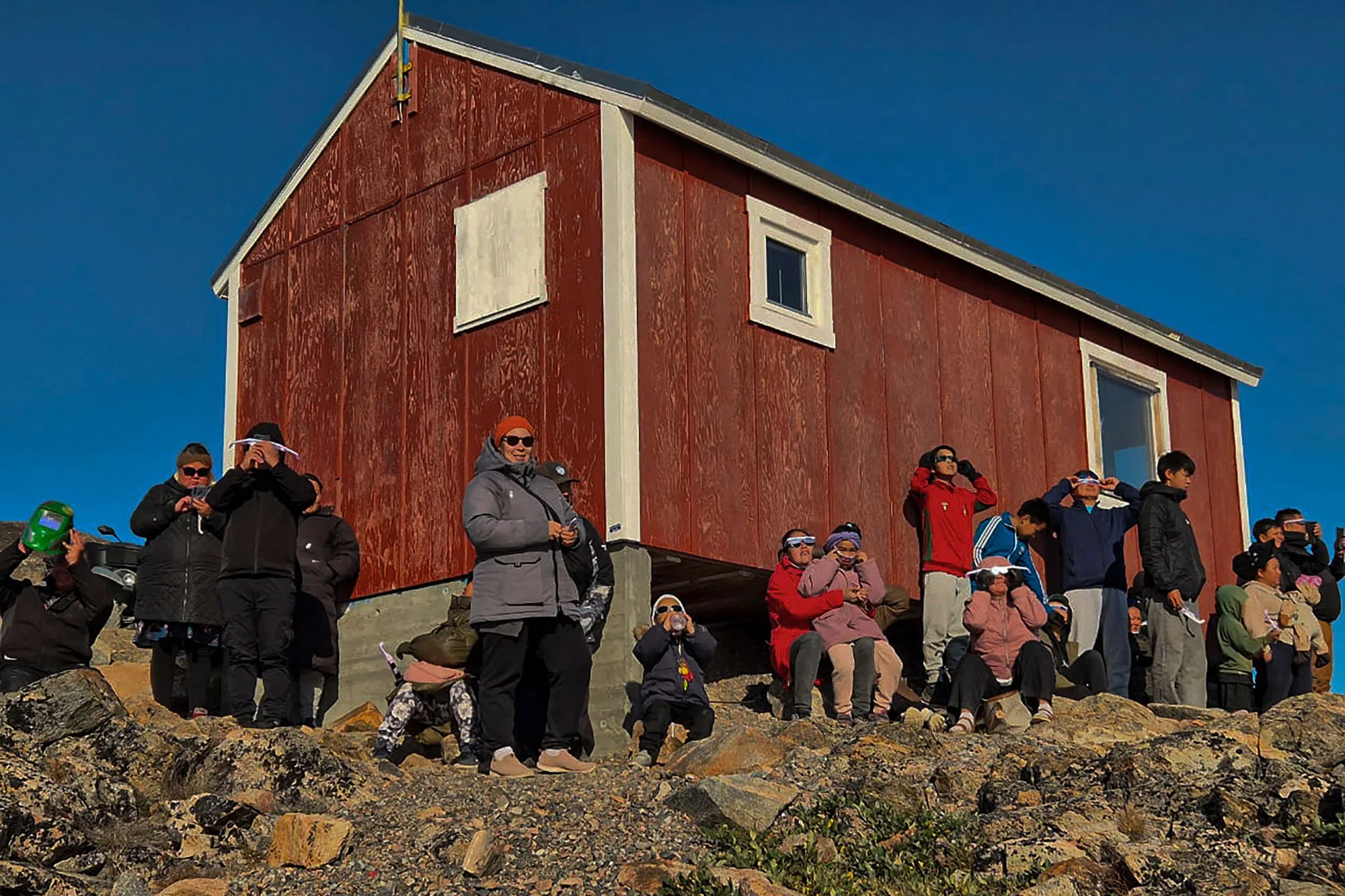
TOPSHOT - Inuit people look at the total eclipse on August 12, 2026 Ittoqqortoormiit, the only Eastern village in Greenland. The eclipse was mainland Europe's first total eclipse since 2006. Throughout human history eclipses have stirred amazement, fear and reverence, as they appear to momentarily halt the normal course of nature, creating a strange twilight during which temperatures drop, shadows appear at strange angles and some animals go to sleep. (Photo by Charlotte Pike / AFP)

Inuit people looking at the total eclipse in Ittoqqortoormiit, the only Eastern village in Greenland. The eclipse was mainland Europe’s first total eclipse since 2006.

PHOTO: AFP
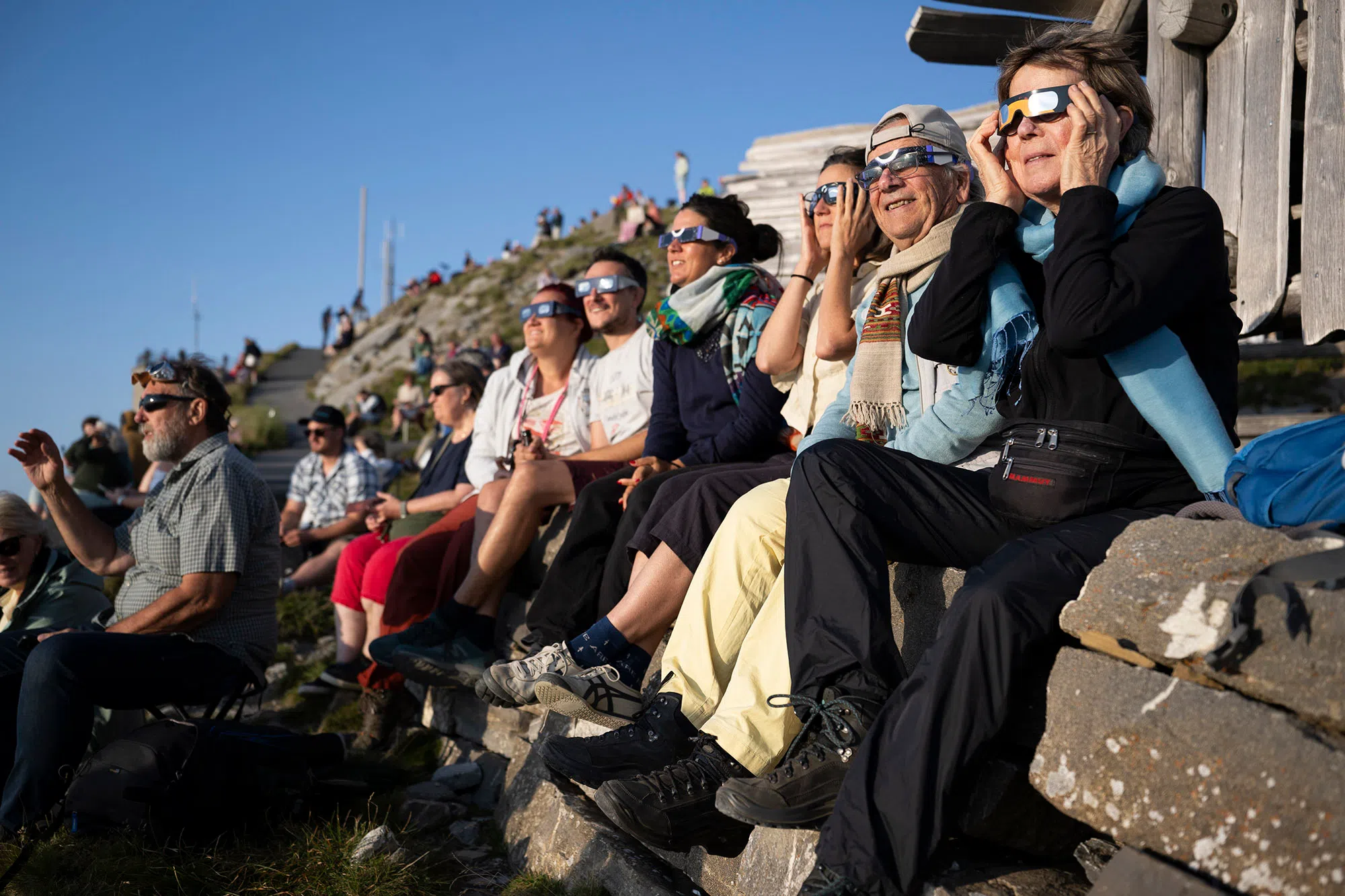
epa13164866 People observe the Moon obscures the Sun during a partial solar eclipse from the summit of Niesen in the Bernese Oberland, Switzerland, 12 August 2026. A total solar eclipse will sweep across parts of Europe and the North Atlantic on 12 August, with the path of totality moving through Greenland, Iceland, Spain, and a small section of northeastern Portugal, while surrounding areas across Europe experience a partial solar eclipse, according to the European Space Agency (ESA). EPA/ANTHONY ANEX

People observing the moon as it obscures the sun during a partial solar eclipse from the summit of Niesen in the Bernese Oberland, Switzerland.

PHOTO: EPA

epa13165320 People watch a partial solar eclipse in Sidi Mechreg, Bizerte Governorate, Tunisia, 12 August 2026. A total solar eclipse swept across parts of Europe and the North Atlantic, with the path of totality crossing Greenland, Iceland, Spain and a small section of northeastern Portugal, while surrounding areas experienced a partial solar eclipse, according to the European Space Agency (ESA). EPA/MOHAMED MESSARA

People watching a partial solar eclipse in Sidi Mechreg, Bizerte Governorate, Tunisia.

PHOTO: EPA
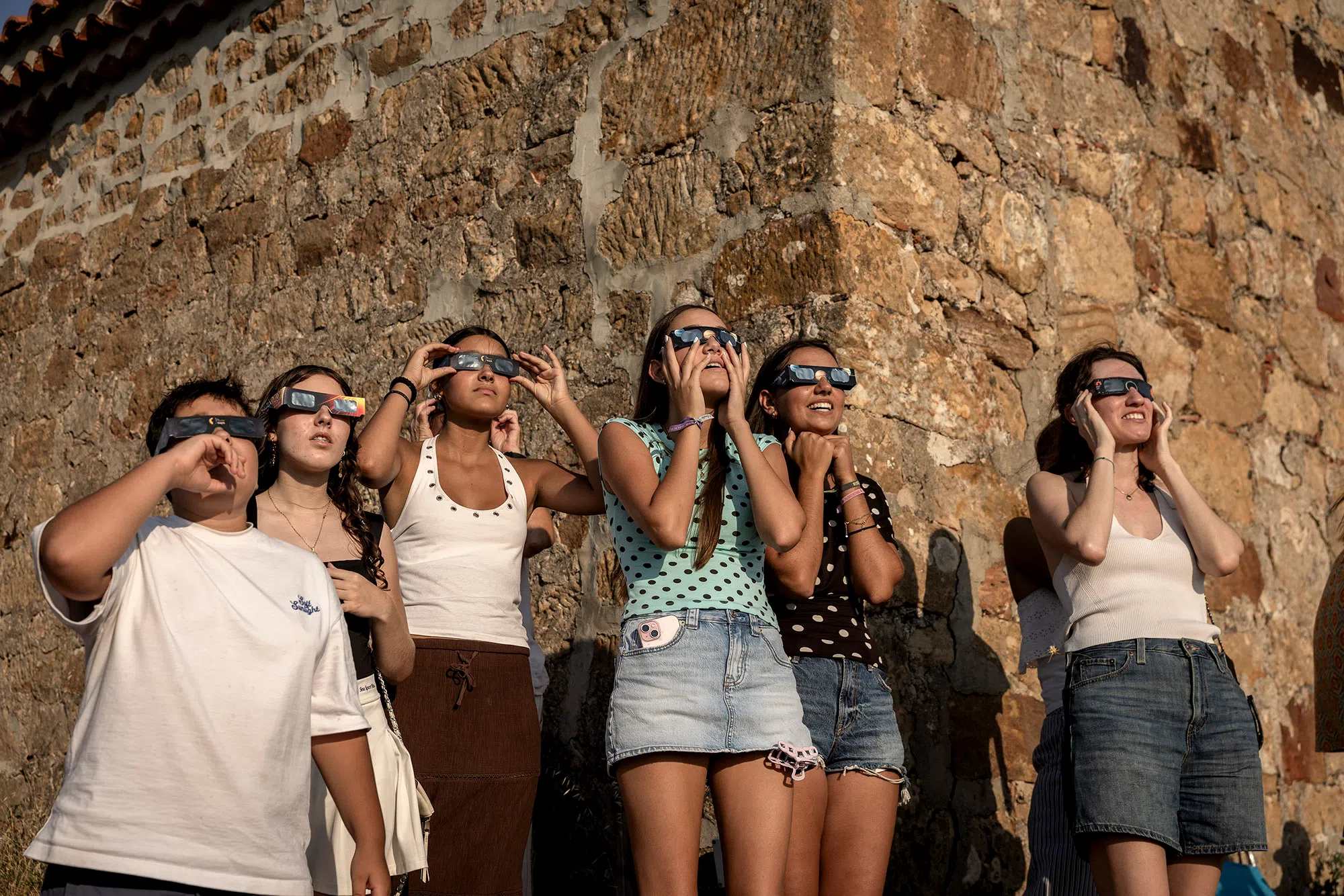
NYTSELECTS – People watch a total solar eclipse in Castrillo de la Reina, Spain, on Wednesday, Aug. 12, 2026. From Iceland to Spain, people flocked to viewing spots to see the moon completely block out the sun. (Finbarr O'Reilly/The New York Times)

People watching the total solar eclipse in Castrillo de la Reina, Spain.

PHOTO: NYTIMES
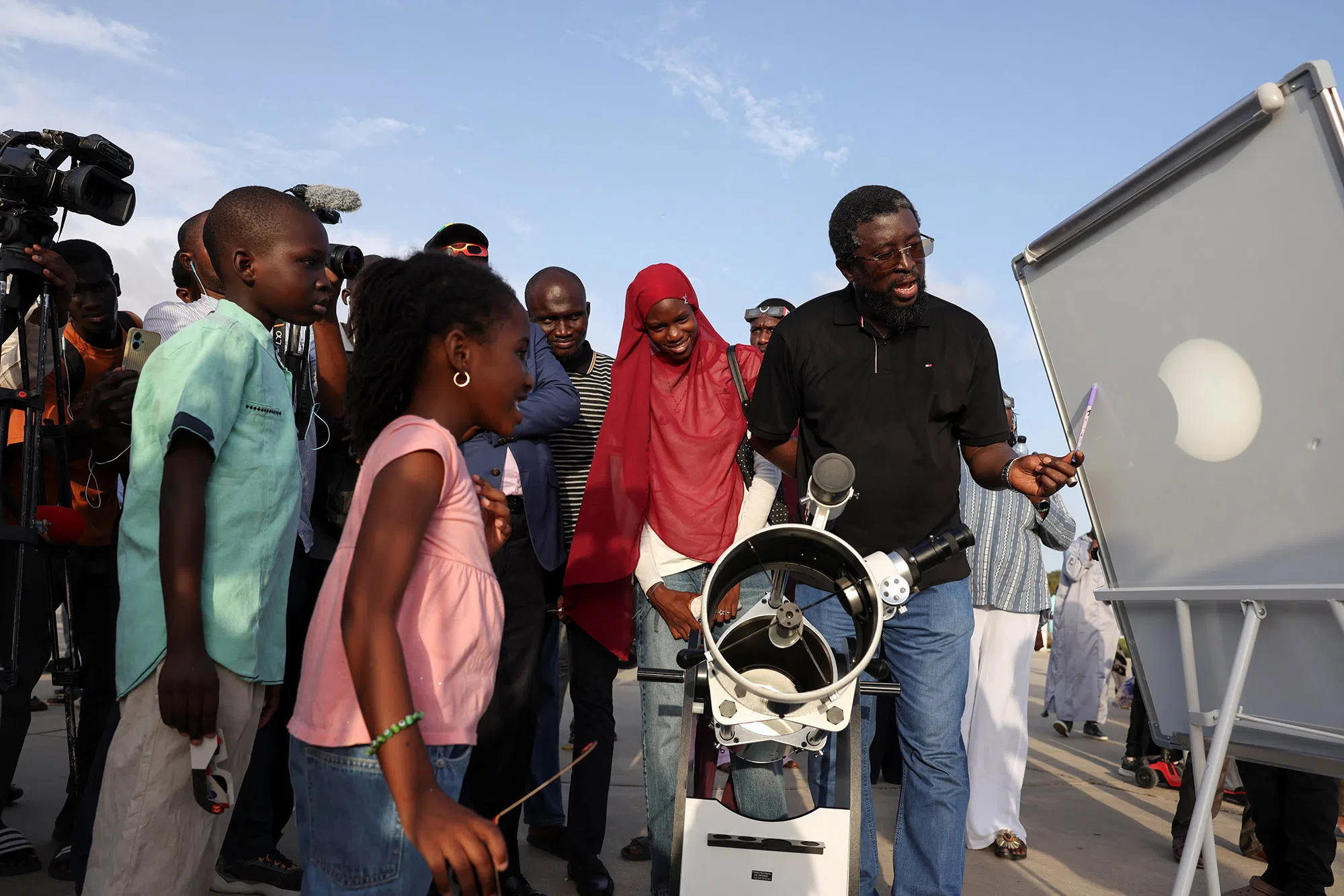
A man projects an image of the sun onto a screen via a telescope with a solar filter as people observe, in Dakar, Senegal, August 12, 2026. REUTERS/Misper Apawu

A man projecting an image of the sun onto a screen via a telescope with a solar filter and explaining the phenomenon to children and adults as they witness the spectacular event in Dakar, Senegal.

PHOTO: REUTERS
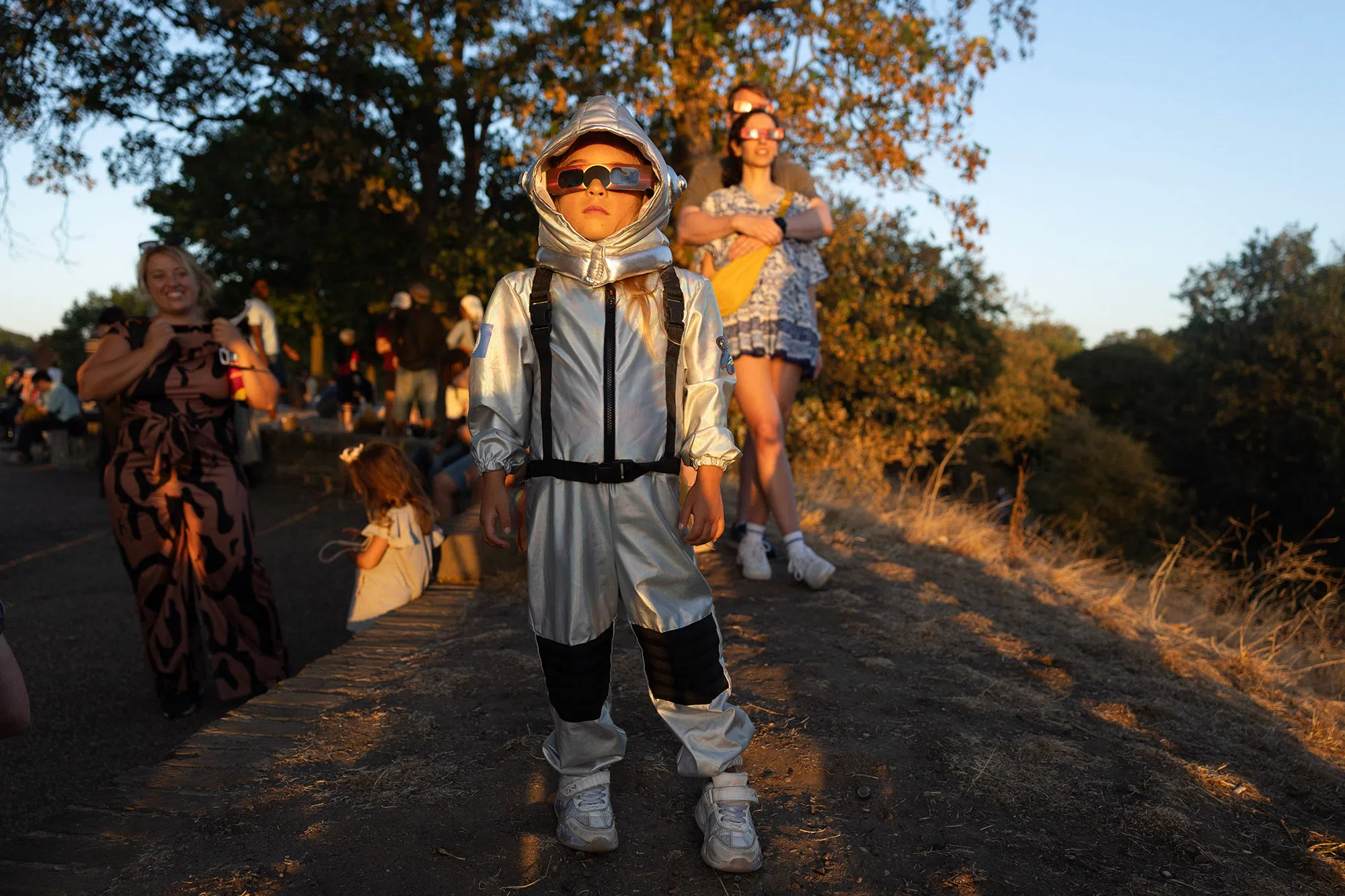
epa13165229 An observer dressed as an astronaut watches a partial solar eclipse at Greenwich Park in London, Britain, 12 August 2026. Around 90 percent of the Sun was obscured at the eclipse's maximum at approximately 19:12 local time, according to the Royal Observatory Greenwich. The eclipse was visible in London from approximately 18:17 to 20:06. EPA/NEIL HALL

A girl dressed as an astronaut watching a partial solar eclipse at Greenwich Park in London. Around 90 percent of the sun was obscured at the peak of the eclipse at approximately 7.12pm local time, according to the Royal Observatory Greenwich. The eclipse was visible in London from approximately 6.17pm to 8:06pm.

PHOTO: EPA

epa13164975 People watch the solar eclipse, in Paredes de Coura, Viana do Castelo, Portugal, 12 August 2026. A total solar eclipse will sweep across parts of Europe and the North Atlantic on 12 August, with the path of totality moving through Greenland, Iceland, Spain, and a small section of northeastern Portugal, while surrounding areas across Europe experience a partial solar eclipse, according to the European Space Agency (ESA). EPA/ESTELA SILVA

People watching the solar eclipse in Paredes de Coura, Viana do Castelo, Portugal.

PHOTO: EPA

Share this story