
Beyond the glass
Two hours before the first visitors arrive, the Singapore Oceanarium’s food preparation kitchen has come to life.
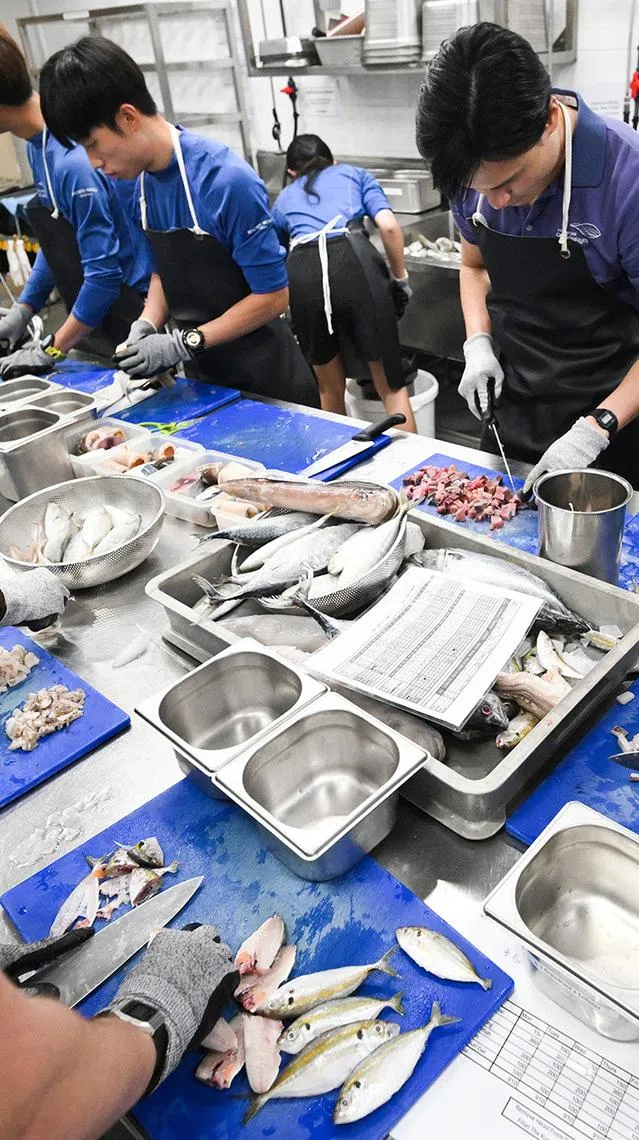
From 8am, aquarists clad in latex and cut-proof gloves prepare the day’s meal in a silence punctuated by rhythmic chopping and the clinking of metal trays.
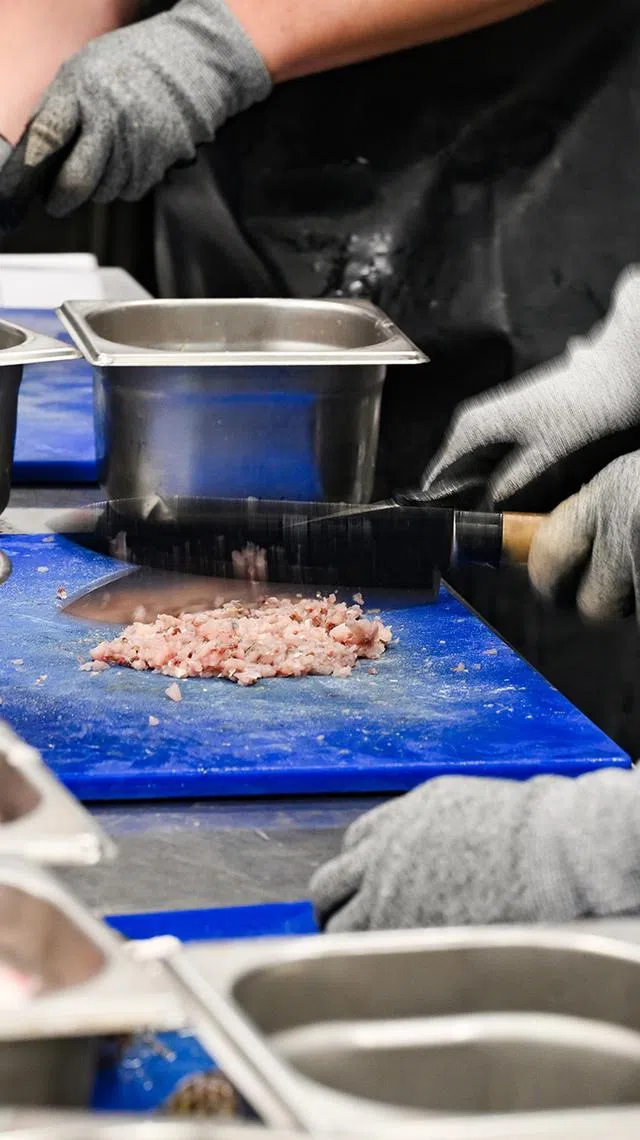
During the visit on May 26, the salty tang of the ocean filled the air, as the team unboxed at least 160kg worth of human-grade seafood such as flower crab, squid and tuna, as well as slabs of the tiny, shrimp-like crustaceans krill, and turned them into bite-sized chunks for their charges.
Among those fed was the first critically endangered bowmouth guitarfish bred for release in the waters off Taiwan.
Spiny parts that could injure the animals are removed and supplements added, said nutrition manager of veterinary care Shaun Wee, noting that quality food is a form of preventive medicine.

Krill being stuffed into the feeding syringe for the manta rays during food preparation in the kitchen.
Charts and whiteboards covered in numbers and letters remind the team of the right nutritional balance that they know by heart, ensuring that no animal is overweight, or as Wee put it, “over-conditioned”.
Within an hour, the first tubs – their destinations indicated by the containers’ shape and colour – fly out of the kitchen.

Coral green inside a feeding device for grazing fish.

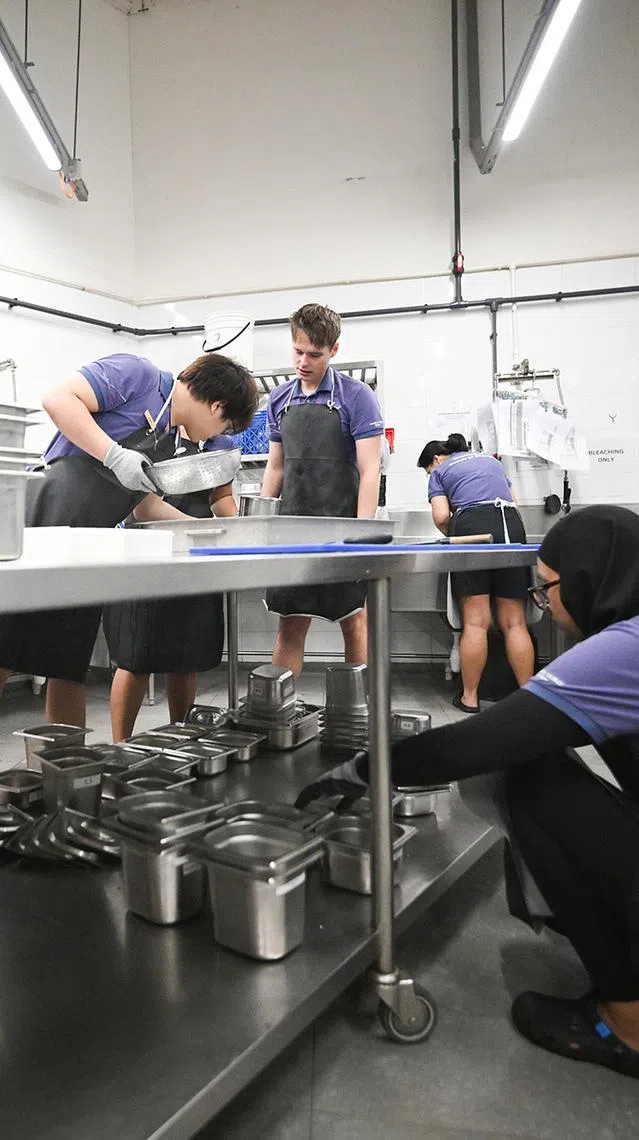
The kitchen being cleaned up after food preparation.
Push for conservation
Dedication to diet is just a facet of what it takes to look after more than 1,000 species of marine animals at the Singapore Oceanarium, which live in over 40 habitats supplied by treated water from Keppel Harbour.

An animal care specialist cleaning one of the habitats in the Singapore’s Coast zone at the Singapore Oceanarium.

Animal care specialist Hairati Mohd Noor cleaning the Razorfish habitat at the oceanarium.
Ranked as the world’s fourth-largest oceanarium by water volume, the Singapore Oceanarium hopes to become a strategic stronghold that breeds animals for marine conservation, assistant vice-president of life sciences Grant Abel told The Straits Times.
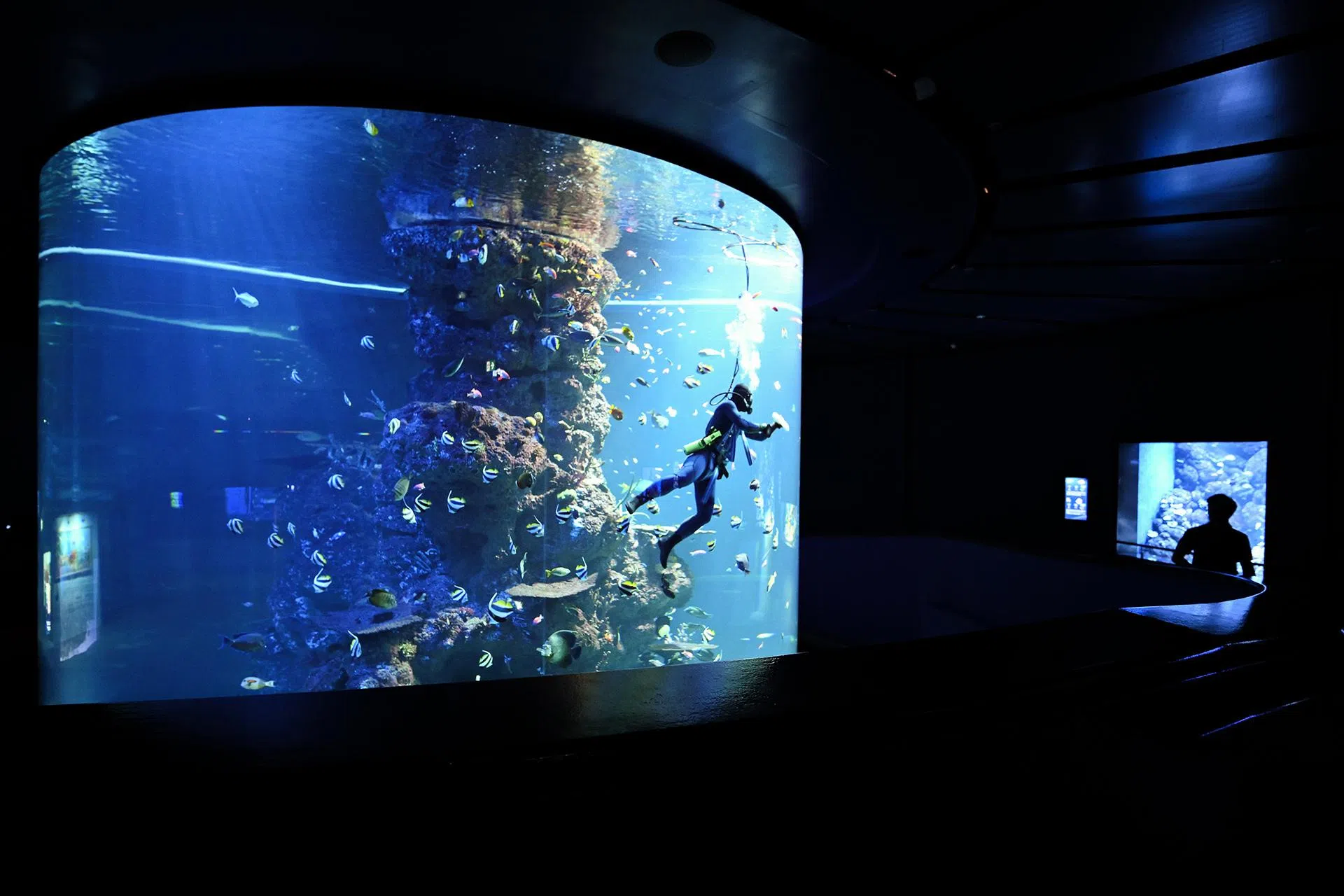
Animal care specialist Justin Tan Chin How wiping the panel of the oceanarium’s Coral Garden. The Singapore Oceanarium hopes to become a strategic stronghold that breeds animals for marine conservation.
“In our facilities, we’re seeing marine tropical fish and even the elephant shark breeding naturally as they would in the wild,” said Abel, who has spent more than five decades working with oceanariums and aquariums around the world.
Singapore’s position in a global biodiversity hot spot provides a logistical advantage for returning marine life to surrounding regions, he added.
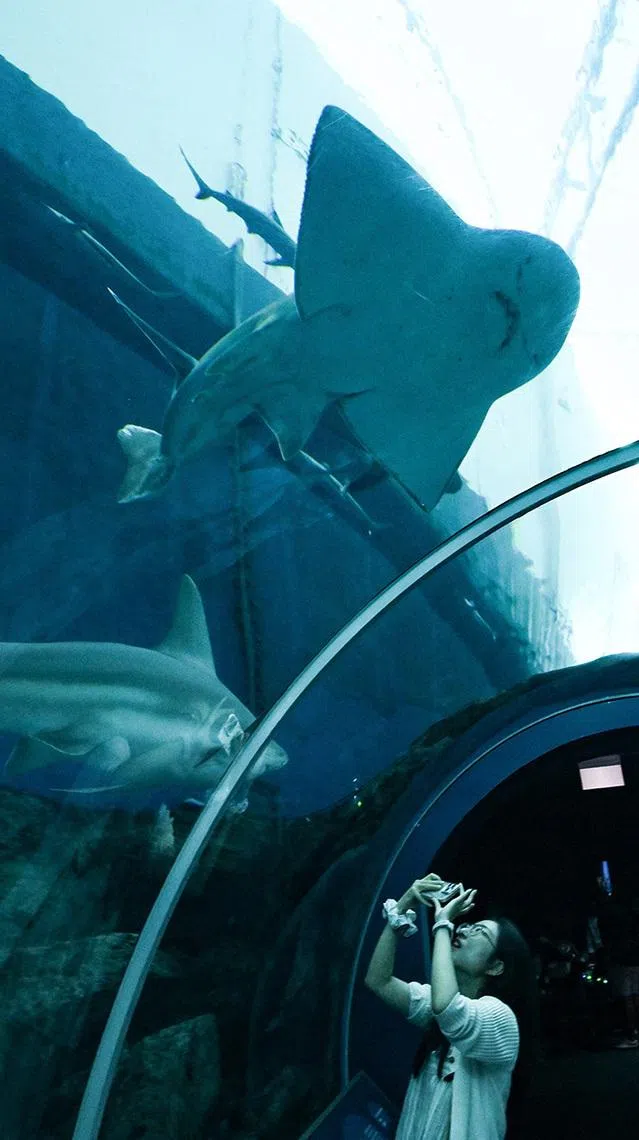
Such attractions are being seen as more than animal showcases.
In 2020, the International Union for Conservation of Nature issued resolutions calling on member governments and civil society organisations to interact more proactively with aquariums to support wild populations facing extinction.

(From left) Assistant manager of veterinary care Shereen Tan Ming Yan, senior director of veterinary care Alfonso Lopez and veterinary care executive Isabel Monteiro conducting a gill endoscopy on an epaulette shark at the oceanarium’s veterinary care centre.
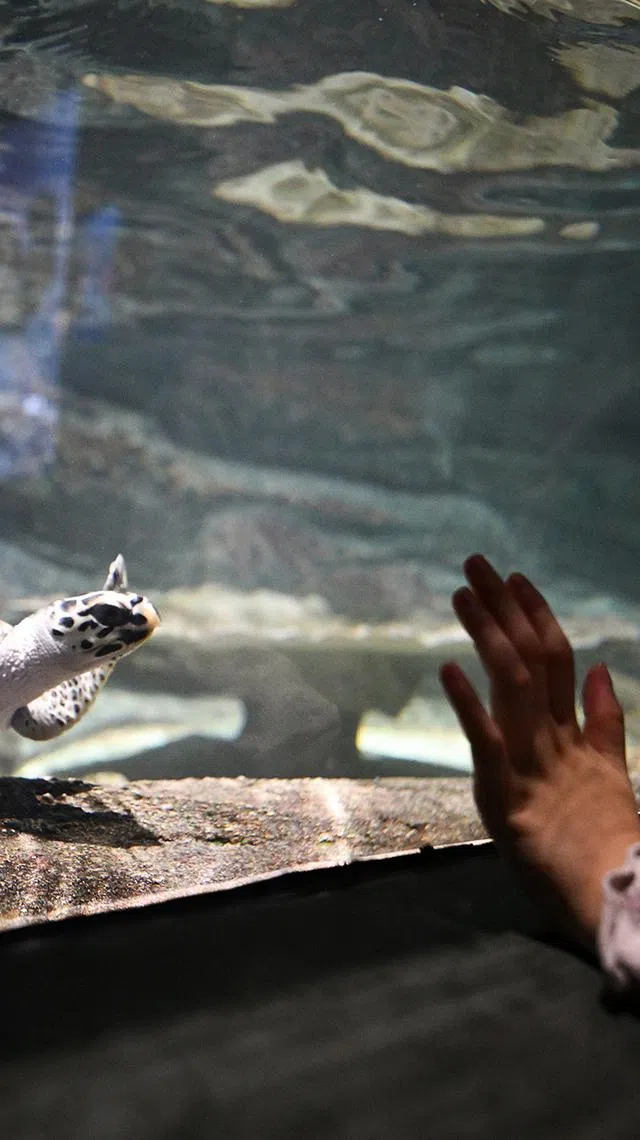
At the end of June, the Singapore Oceanarium released a bowmouth guitarfish into its natural habitat in Taiwan, making it the first ever facility to breed, raise and release the animal. Threatened by habitat loss, overfishing and the wildlife trade, the species is in danger of extinction worldwide.

A bowmouth guitarfish at the Singapore Oceanarium. Threatened by habitat loss, overfishing and the wildlife trade, the species is in danger of extinction worldwide.

Food for the bowmouth guitarfish includes crab, squid, mackerel and prawns.

Animal care specialist Darren Sia throwing food into the pool for the bowmouth guitarfish.
The rewilding of the one-year-old male pup in its ancestral home marked the next step for the team, which spent about a decade studying the best ways to care for and rear the shark ray. Satellite tags attached to the animal will help guide plans for future wild releases of the species.
“We’re looking for a proof of concept, a route to rewilding these animals,” said Nick Derbyshire, senior director of animal care. But the ultimate ambition lies closer to home.
“While we may not see them every day through the waters of Singapore, these animals are still here, and their numbers are significantly dropping,” he added.
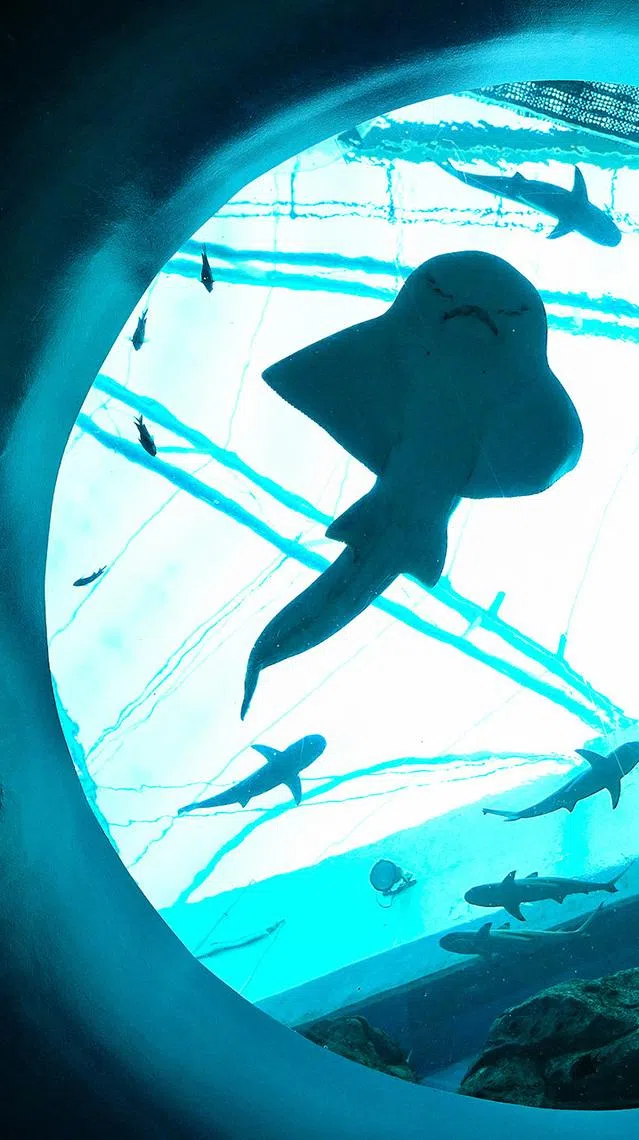
“If there is anything we can do to help boost those numbers in Singapore, it would be a major milestone.”
The oceanarium’s programme has already reshaped scientific understanding of the bowmouth guitarfish. Researchers previously thought the animals took eight to 12 years to mature.

Laboratory technician Nicholas Ng counting the red blood cells of a bowmouth guitarfish while examining them through a microscope in the Environmental Health Lab at the oceanarium’s veterinary care centre.
“Working with the vets, they’ve discovered that these animals become sexually mature from the age of four,” Derbyshire said.
To ensure that the shark ray was ready before it flew to Taiwan, the team conducted one last health check in April.

Animal care specialists getting ready before helping to conduct a physical health check on the bowmouth guitarfish at the Singapore Oceanarium.
While the pup was inverted to induce a hypnotic state known as tonic immobility, a team of vets and divers sprang into action to take its measurements, draw blood, and conduct a gill endoscopy.
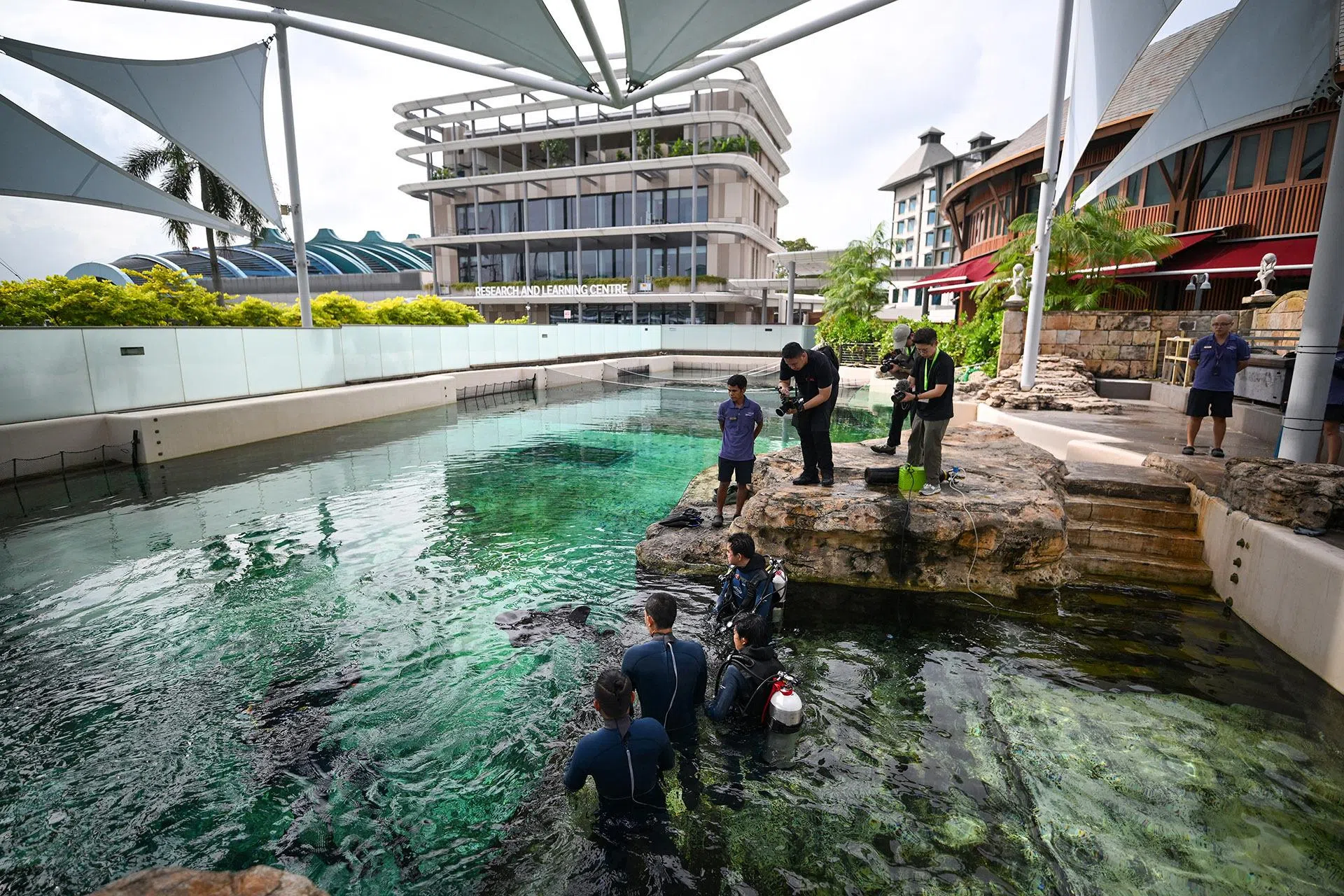
A specialised team of animal care specialists, vet and executives from the veterinary care team at the bowmouth guitarfish’s physical health check.
“Gill endoscopy is very important in fish,” said Alfonso Lopez, senior director of veterinary care. “The gills need to be symmetrically arranged. That will tell us if there is any irritation, and if the animal is sick.”

Assistant director of veterinary care Komsin Sahatrakul (centre) performing a cardiac ultrasound examination on a bowmouth guitarfish, with veterinary care executive Isabel Monteiro holding an ultrasound machine and veterinary care executive Alberta Sugianto checking her watch to time the animal’s heart rate, at a support area of the oceanarium.
Pronouncing the pup as the strongest among the litter of four, Lopez smiled wistfully as he showed this reporter a photograph of the animal as a baby.
“It’s a great, sensational feeling because we have been tracking this animal since he was inside the uterus of the mum, since it was an embryo,” he added. “I feel like a very proud dad now.”
Anything but routine
Earlier in May, the Singapore Oceanarium also announced a partnership with the National Parks Board to give critically endangered hawksbill turtles a stronger start in life by rearing wild hatchlings to a larger size before releasing them off Singapore’s coast.
The facility conducts routine veterinary check-ups to ensure the juveniles remain healthy, as it does for most animals in its care.

Nutrition manager of veterinary care Shaun Wee taking photos of one of four hawksbill turtles undergoing physical examination at the veterinary care centre, assisted by animal care specialist Amelia Hong Tze Qi.
“Sometimes when they do show symptoms, it’s already at the point of no return,” explained Chris Torno, assistant director of veterinary care. “That’s the difference between veterinarians and human doctors; you can’t talk to your patients.”

A hawksbill turtle undergoing physical examination at the veterinary care centre at the Singapore Oceanarium.

Animal care specialist Finn Cheng Wei Jian with one of the hawksbill turtles undergoing morphometric examinations (to measure their size).
As with data collected from other species during check-ups, the turtle’s blood samples will help profile what a healthy animal of its kind will look like at a cellular level.

One of the four hawksbill turtles having its blood collected for testing at the oceanarium’s veterinary care centre.

Assistant manager of veterinary care Shereen Tan Ming Yan holding a syringe with blood collected from one of the four hawksbill turtles for testing.
Said Lopez: “In the future, if we do find sick animals (in the wild), we can compare that to the normal values, and then we can make a diagnosis based on that.”

Nutrition manager of veterinary care Shaun Wee watching from the door as a hawksbill turtle undergoes an X-ray procedure at the veterinary care centre.

Assistant director of veterinary care Komsin Sahatrakul looking at the X-ray result of one of the hawksbill turtles at the veterinary care centre.
These efforts are supported by a biobank kept at minus 80 deg C. Samples dating back to 2012, when the former S.E.A. Aquarium opened, act as a database for vets and researchers.
Underpinning these check-ups is the environment the animals live in, noted Lopez, adding that over 6,000 water samples are tested weekly to maintain optimal conditions.
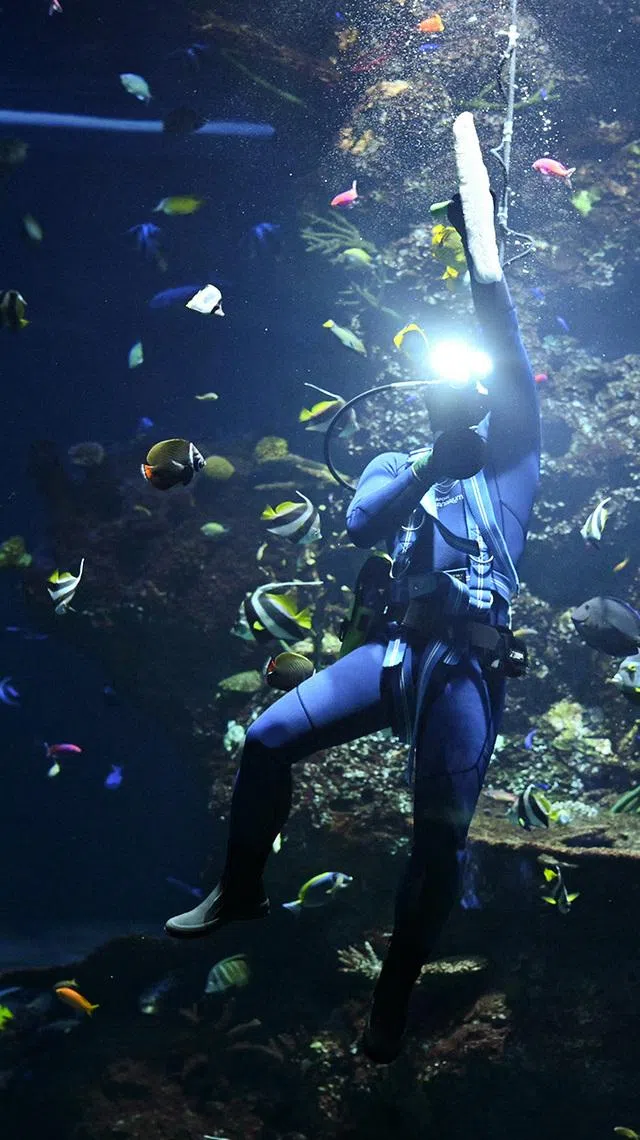
“It’s like preventive medicine programmes. You don’t need the vaccine; you need good water.”
Building future knowledge
Beyond physical health, the Singapore Oceanarium trains its animals to make medical procedures less stressful.
Claudia Tay, senior manager of animal welfare and behaviour science, oversees positive reinforcement training with three of the facility’s most intelligent residents: reef manta rays Manja, Mika, and Mako.

A manta ray undergoing behavioural training at the Open Ocean habitat. Such training helps make medical procedures less stressful on the animals.
Using patterned bodysuits and krill-filled syringes, the team is conditioning the animals to participate in their own medical care. Mika, the most advanced of the trio, recently learnt to swim onto a medical stretcher.
“To do an ultrasound of the rays, we have to take equipment to the open ocean habitat,” said Tay. “But the stretcher training allows for them to be brought to the building.”
In another corner of the oceanarium, animal care specialist Hairati Mohd Noor is trying to breed another local species: the spotted seahorse.

A spotted seahorse in the Seahorse Support Area at the Singapore Oceanarium.
Her work has yet to yield success, but she continues to adjust the animals’ living conditions and monitor their courtship dances.

Animal care specialist Hairati Mohd Noor feeding the spotted seahorses crustaceans such as krill in the Seahorse Support Area.
It is all part of a larger shift in the industry. As Abel noted: “Now more than ever, oceanariums are truly becoming more like zoos.”
“They’re breeding animals to help restore populations, and they’re helping to ensure that marine biodiversity genetics do not get lost during the current extinction crisis we are all witnessing.”
Produced by: Ang Qing, Chang Ai-Lien, Irene Ang, Jamie Koh, Jordan Lee, Lim Yaohui, Neo Xiaobin and Philip Cheong
Main photographs and videos by: Lim Yaohui, Jamie Koh and Jordan Lee
