
‘Can make money meh?’: Meet Jonathan Goh, Singapore’s first degree holder in circus arts
Sign up now: Get tips on how to grow your career and money

Singaporean circus performer Jonathan Goh in action during Lisboa Magica in Lisbon in August 2024.
PHOTO: ANADIASPHOTOGRAPHY
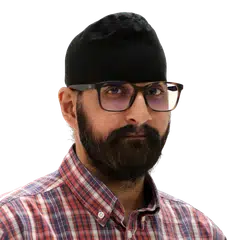
- Jonathan Goh is Singapore’s first degree holder in circus arts, graduating from the National Centre for Circus Arts in London in 2025 with an Honours degree.
- He pursued formal education after performing professionally, despite high tuition fees and limited income, believing the degree honed his skills and creative process.
- Goh actively contributes to Singapore’s circus community by leading workshops and nurturing new talent, becoming a key figure in the local arts scene.
AI generated
SINGAPORE – With dozens of eyes trained on him, Jonathan Goh scales a wobbly, unsupported ladder to the top rung before gracefully guiding himself back down to earth with a deft front somersault close to the crowd, as the ladder crashes behind him.
While it is clear that hours of training have gone into this and other stunts he performs as a busker, what spectators may not know is that the 30-year-old has a degree in his craft.
In response to The Straits Times’ queries, the National Centre for Circus Arts in London confirmed that Goh is the first Singaporean to graduate with its honours degree in Circus Arts – in July 2025.
His field of study might make him an outlier, but his mindset then was quintessentially Singaporean.
Said Goh: “I was like ‘Okay, die die must at least have good results.’ Throughout my studies, most of the time I’m the just-pass, average kind of student.
“But there was a lot of pressure when I went to circus school knowing that I’m the first Singaporean... If you don’t do well, then what’s the point of being the first?”
Xyn Foo, an independent circus producer and director whose master’s thesis was on Singapore’s circus landscape, believes Goh is the first person here to earn a degree in circus arts from any institution, let alone one recognised by FEDEC – the international network for professional circus education.
“To have someone who’s willing to invest both finances and time to pursue a degree, especially in Singapore, where we may not truly value arts as a career, I think it is a very significant thing,” said Foo, who is in her 40s and a member of the local circus collective Bornfire.
From performer to full-time student
Goh picked up circus arts at the age of 11 after being mesmerised by a fire-spinning performance, and dreamt of pursuing a formal circus arts education when he was in secondary school.
But he chose instead to go straight into performing, as he thought a formal education in the field had passed him by, until the Covid-19 pandemic struck in 2019 and left his career in limbo.
That was when Goh, who is also co-chairman of Buskers’ Association Singapore, decided to take “a leap of faith”. But that leap also meant a hit to his pocket – the three-year course at the National Centre for Circus Arts had annual fees set at around £18,000 (S$30,500) for overseas students.
These days, Goh said his income fluctuates, ranging between $6,000 and $12,000 a month.
The question he gets asked the most about his career choice is “Can earn money, meh?” But he said that when people find out the amount he earns, “it’s hard for them to give disparaging remarks”.
During his studies in London, however, with classes five times a week for seven hours each day, he could not perform full time, so he had to “scrimp and save”.
He did perform at Covent Garden – a haven for street performers – as often as he could, earning between £200 and £400 a week, which he used for living expenses, such as rent and groceries.
During summer term breaks, he would perform in Europe, including at the renowned Edinburgh Festival Fringe.
During the winter holidays, when shorter daylight hours and colder climes meant there was less appetite to watch street performers, he would fly back to Singapore to perform.
Ultimately, Goh believes the full-time study has been invaluable to honing his craft, including apparatuses like the trapeze, aerial and Chinese pole, and teeter board, as well as ball, club and ring juggling.
He said: “Before circus school, it was a lot of trial and error, a lot of guessing – just doing and hopefully, it works for the best.”
He now thinks more deeply in terms of the creative process, trying to tell a story rather than just execute moves. He says his better understanding of body mechanics means he knows the ways “to train your mind and body to get the trick faster”.
Foo says Singapore’s circus arts community is reaping the rewards of Goh’s learning.
She said: “He is very excited about giving back – holding creation labs, sessions for circus practitioners and trying to nurture practitioners who may take interest in his speciality.
“He is a community leader, one way or the other. He has always been.”