
Singapore artist Ho Tzu Nyen is first Singaporean to win grand prize at the Fukuoka Prize
Sign up now: Get ST's newsletters delivered to your inbox

Ho Tzu Nyen at his solo show, Ho Tzu Nyen: Time & The Tiger, at the Singapore Art Museum in 2023.
PHOTO: ST FILE
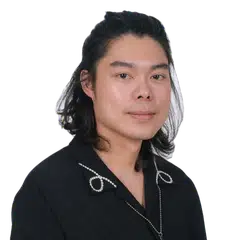

SINGAPORE – Singapore artist Ho Tzu Nyen has been selected as the grand prize laureate of the Fukuoka Prize, which recognises those who have made outstanding contributions to the fields of Asian studies and arts and culture.
The secretariat of the Fukuoka Prize Committee announced the prize in Fukuoka, Japan, on May 22. Ho is the first Singaporean to be selected for the grand prize, which comes with a money award of 5,000,000 yen (S$40,200), in its 36-year history.
Artist Tang Da Wu, singer-songwriter Dick Lee and theatremaker Ong Keng Sen were also laureates of the Fukuoka Prize in 1999, 2003 and 2010, winning in the arts and culture category.
Ho, 49, tells The Straits Times the “extraordinary honour” was beyond his wildest dreams. His win is all the more striking in the context of the prize’s alumni.
He says: “I’m deeply humbled when I look at the list of past recipients across its various categories, among them scholars like Benedict Anderson, James C. Scott, Reynaldo Ileto and Joseph Needham, whose writings have opened pathways for me over decades; and film-makers like Akira Kurosawa and Hou Hsiao-hsien, whose works first made me dream that I, too, might one day express myself with moving images.”
He also paid tribute to artists Nam June Paik and Tang, who have long been his models and heroes. “In a way, I would like to thank them all. Receiving this award encourages me to continue, to strive to do better and, hopefully, to go further.”
The prize secretariat describes his work as uniquely offering “multifaceted, fluid perspectives on fundamental questions of Asian identity and Japan’s position in Asia”.
It cites Ho’s work on figures that move between reality and fiction like the yokai, Japanese folkloric spirits, which Ho has reimagined as anime characters marching through Malaya in a mini-theatre in Night March Of Hundred Monsters (2021).
The citation also mentions his exploration of technology through generative programmes in projects like The Critical Dictionary Of South-east Asia (2017 to present). In it, an algorithm continuously shuffles texts, images and music to create new entries referencing South-east Asian motifs and histories.
Ho says he was never drawn to his subjects because they were Asian, but because they are part of the fabric of the world he inhabits.
Nor does he think of Asian culture as something that requires preservation. “What interests me more is invention: What is possible, what something might become, the capacities it contains. History is not the opposite of transformation. It is what we carry with us as we move through it.”
The academic prize laureate of the Fukuoka Prize went to Filipino author and literary critic and scholar Caroline Sy Hau. Thai dancer and choreographer Pichet Klunchun was selected as the arts and culture prize laureate.
Ho has had an excellent few years, beginning with his 2023 Singapore Art Museum solo touring Seoul and New York, and winning the 2024 Chanel Next Prize that comes with a cheque for €100,000 (S$148,000).
His video work Night Charades was the centrepiece during Hong Kong art week in 2025, beamed on the facade of contemporary art museum M+ across the city’s waterfront.

Night Charades by Ho Tzu Nyen lits up the M+ facade in 2025.
PHOTO: M+
In 2025, he leapt from 72nd to fifth spot on art magazine ArtReview’s closely watched Power 100 list, and was one of six medallists in the established artist category at the inaugural Art Basel Awards, alongside China’s Cao Fei and Ghana’s Ibrahim Mahama.
He is the artistic director of the 16th Gwangju Biennale, set to open in September 2026.
