
‘I don’t want my children to grow up in a broken family’: Abused husbands in S’pore who are unseen
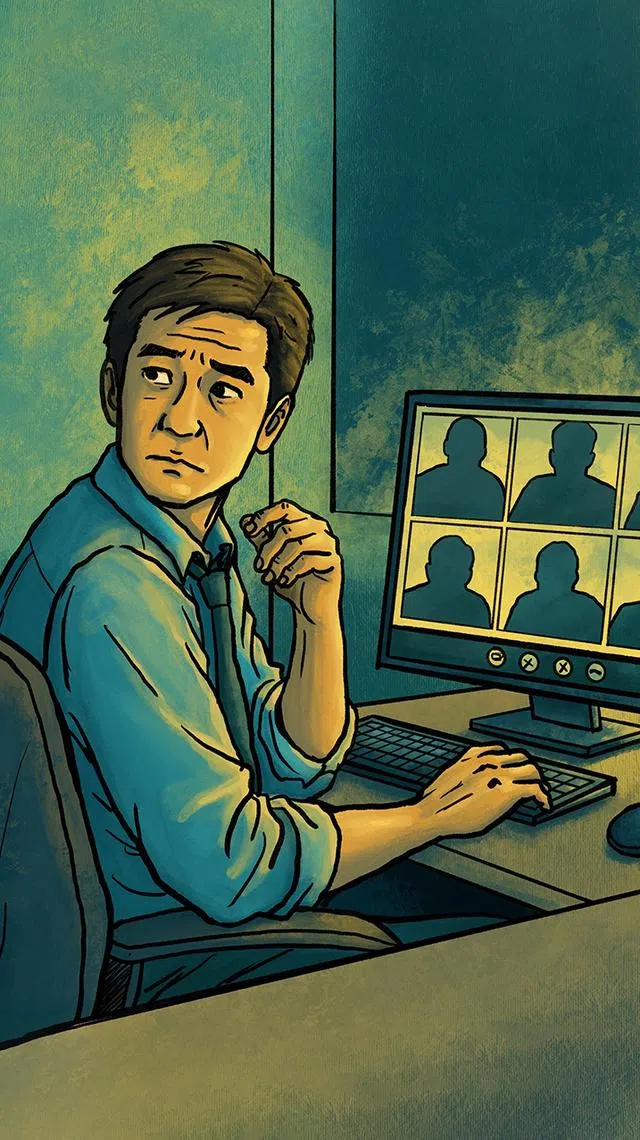
SINGAPORE – Once a fortnight, a handful of men secretly log online for 90 minutes of honest sharing and the relief of being understood.
The session happens over Zoom during lunch and could pass off as a routine “work meeting”. For some, it has to.
These meetings are part of the Men’s Kinship Circle, a support group run by Lutheran Community Care Services (LCCS) for men in abusive marriages or relationships. Since it was formed in 2022, the group has supported 21 men, all in heterosexual relationships.
Some still live with their partners, who may be closely monitoring their movements, making in-person attendance difficult. Face-to-face meetings are held every other month, as facilitators acknowledge the challenges of showing up. Some participants have had to invent excuses to leave the house; one even brought his dog so that his wife would think he had just gone out for a regular walk.
Such precautions reveal a reality that often goes unseen: Men, too, can be victims of domestic abuse. However, they are rarely recognised, and even more rarely believed when they speak up.
Official data reveals only a partial picture. The Ministry of Social and Family Development’s (MSF) latest report on domestic violence trends, released in December 2025, found that spousal abuse cases rose 6 per cent from 2,008 in 2023 to 2,136 in 2024. While it didn’t provide a breakdown of the cases by gender, an MSF spokesman said 75 per cent of applicants for personal protection orders (PPOs) between 2021 and 2024 were women.
Studies overseas, however, suggest that male victims may make up a far larger proportion of cases than commonly assumed. In the United States, for example, official statistics estimated that one in three domestic abuse victims in 2020 were men.
Counsellors speaking to The Straits Times note that the trend of male victims of family violence is likely underreported.
Men who experience violence at the hands of their spouses have few dedicated avenues to turn to, says Daniel Lopez, an executive committee member of the non-profit Society Against Family Violence (SAFV), which was founded in 1991.
Part of the challenge, he adds, is that the issue remains “very rarely spoken about”, a silence that shapes both public awareness and the resources devoted to tackling it. SAFV works closely with LCCS to support these men, many of whom struggle in isolation.
Advocates tell ST that abuse is not limited to physical harm. It includes patterns of coercion, control, intimidation and emotional degradation – behaviour that can be just as damaging, if not more so, over time.
However, they caution against false equivalence, and stress that women still account for the vast majority of severe domestic violence cases, especially those involving serious injury or death.
Recognising male victims, they say, should not detract from that reality, but broaden support systems so abuse is acknowledged and addressed wherever it occurs.
Hanging on for love
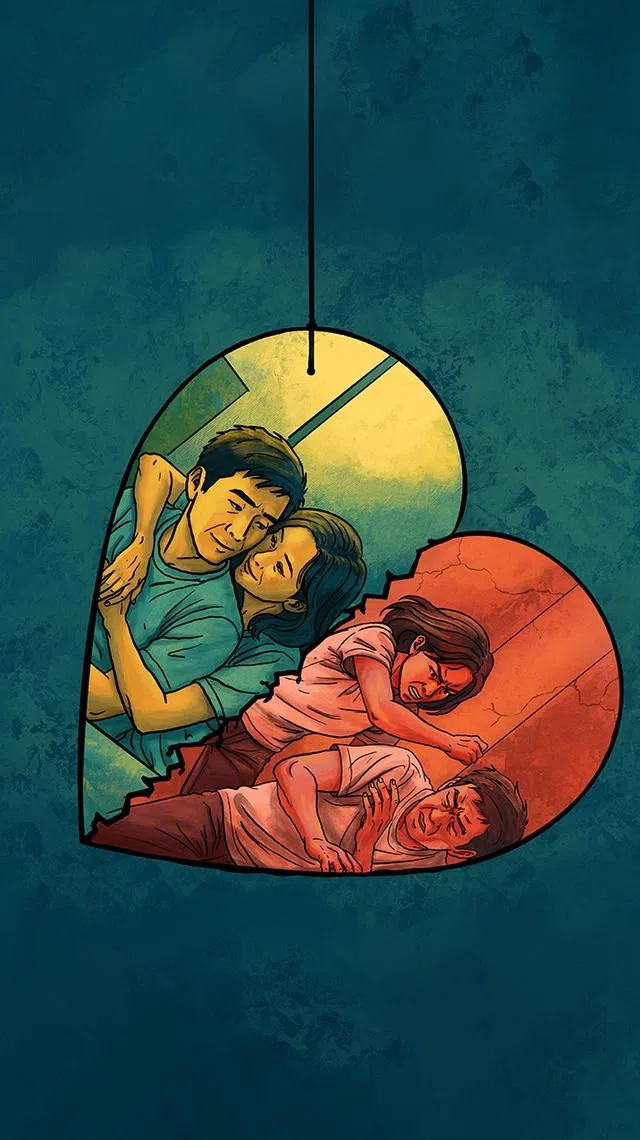
Recent retiree Bruce (not his real name) has been married for more than 20 years, a tempestuous union marked by his wife’s fiery temper and cutting attacks on his insecurities, including telling him that nobody loves him.
When he confided in female friends, she accused him of having affairs with them. Attempts to yell back at his wife to protect his self-esteem make things worse: one retort could quickly spiral into a screaming match.
The arguments follow a familiar rhythm: weeks of attack, followed by a brief “reconciliation period” before the cycle repeats itself.
“When things start to mellow and she starts being nice and looking after me, that’s her way of saying sorry. This is a person I love and I’m very attracted to, so I start giving in, because I miss all the love and care,” he says. “When she’s loving, she’s very loving.”
For a long time, his solution was to run away, literally.
“I leave the house or lock myself in my room and try to block out the noise by turning the radio on or using headphones,” he says.
“I also tell myself that she has deep-seated issues and her own struggles too, and she may not have learnt to cope with her anger issues. In the same way, I also have my own anger issues. So I try to look at the situation objectively.”
Though persistent, the abuse remained psychological until earlier in 2026 when his wife took a swing at him.
He called the National Anti-Violence and Sexual Harassment Helpline (NAVH), and eventually applied for a PPO, a court order to protect victims from further harm by abusive family members, against her.
“I didn’t actually want to take out the PPO. I just wanted her to know I can’t take this anymore, and there had to be some way to protect myself,” he says, his voice cracking.
His reluctance to look for help is not unusual.
Low Jin Liang, who heads family law at PWKA Law Practice, adds that it is rare for clients – regardless of gender – to apply for a PPO without also seeking a divorce.
Bruce resists divorce, partly fearing he will “die alone”. His children are grown with their own families. But since finding the Men’s Kinship Circle earlier in 2026 – and meeting others in similar circumstances – he has rebuilt his self-confidence. It has also steeled him to take “a more prominent step” if his wife’s abusive behaviour continues.
He adds that a divorcee in the group advised him to be cautious about “small recoveries”. These could just be “an illusion” amid a pattern of mistreatment.
Keeping the family intact
Aaron (not his real name) has a marriage that has been marked by violence for nearly a decade. While it began before they became parents, the 50-something believes his marriage can still be salvaged for the sake of his two children, who are both under 10 years of age. He also believes he can resolve his family issues without help from the authorities.
Around a year after they tied the knot, his wife started to “bang on doors and slam things” to express her irritation and get his attention. She would also throw “anything that was within her reach” across the room in anger.
He has repaired the toilet door twice, and there is a dent in their refrigerator. Still, he downplayed her behaviour “because no one got hurt”, and he thought it was a “personality trait”.
But the incidents escalated after they became parents. He remembers carrying their younger child, a baby then, when his wife threatened suicide for the first time. With his free arm, he used “a fair amount of force” to yank her away from the window ledge, leaving marks on her hand.
She said, “Oh now I have evidence”, he recalls, still visibly shaken by her response.
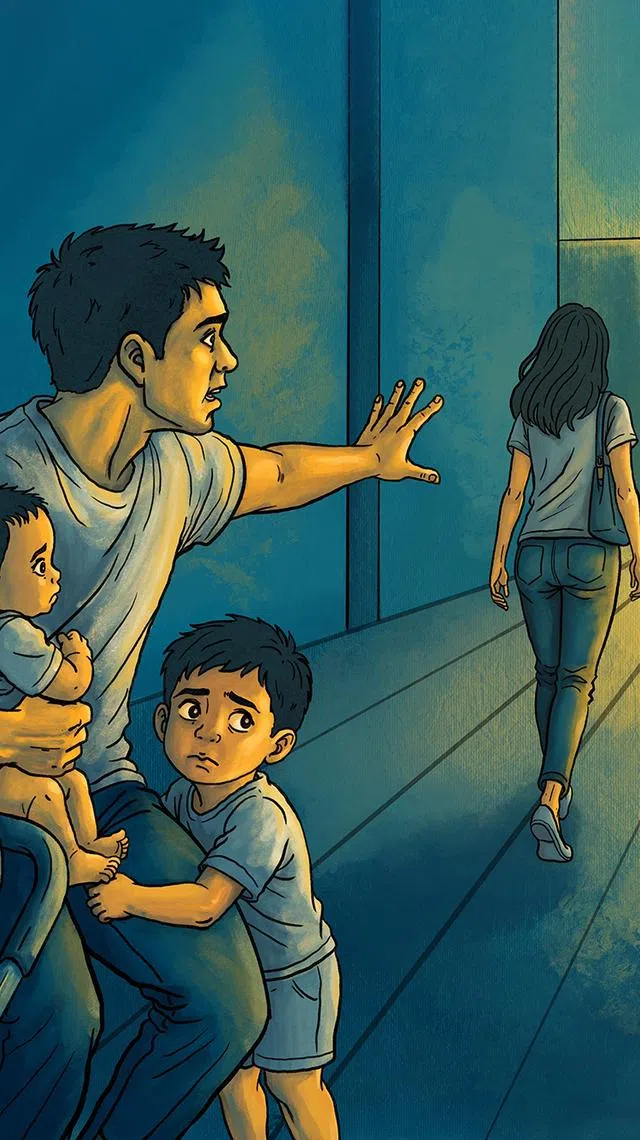
In another instance, during a public argument, she stormed off. He stayed with their children, one a toddler and the other a baby, unable to follow. That made her more furious, he says.
Then a few years ago, in the middle of a fight, the violence turned more direct when his wife – who had slapped his back before – punched him in the chest.
An X-ray showed no physical damage but a few weeks later, a previously scheduled full-body MRI scan revealed a hairline fracture on his fourth left rib.
When he was punched in the chest again in 2025, he counted the blows as they landed: five to his back and seven on his chest. He also took pictures of the bruises that appeared a few days later. They formed a faint, but clearly visible, blue-black constellation across his upper torso.
What hurt more was the memory of his two children witnessing the incident. His older child covered their ears and watched from the living room, while the younger one, oblivious to the seriousness, simply laughed at the commotion.
Despite what he is going through, Aaron is determined to stay. As a Christian, he takes his vows “very seriously”. He also does not want to risk shattering his children’s idea of a whole family.
“I don’t want them to grow up in a broken family, and carry the baggage into their marriages and relationships in the future. I want them to learn – and so I must also learn – how to deal with this and navigate this.”
To outsiders, such decisions can be hard to understand. But within the Men’s Kinship Circle, they are deeply familiar.
One of the group’s facilitators, Matthew Au, points out a common reality: All of the participants have it hard, but their pain comes from the desire, for whatever reason, to hold on to their relationships.
He says children are a crucial factor. Many men fear losing access or worry that their children’s final memory of their father is one of abandonment.
Complicated hurdles
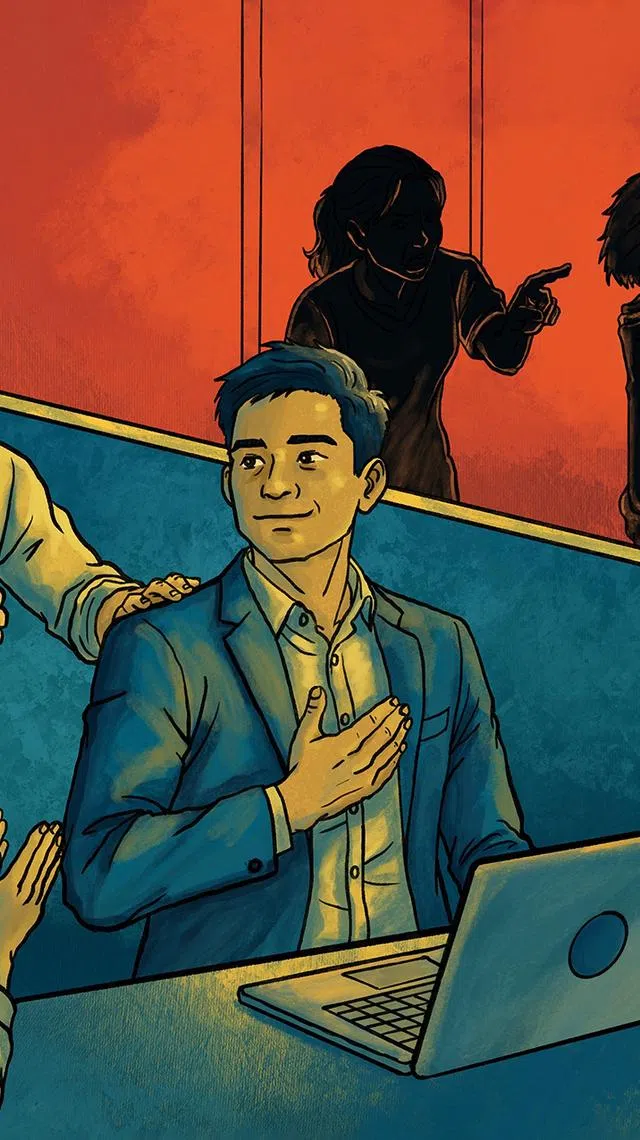
There are also practical concerns. About 90 per cent of those in the Men’s Kinship Circle are professionals, such as doctors, lawyers, pilots and teachers, and there is often a “huge disjoint” between their professional identity and how they are treated at home.
This disconnect usually affects their relationships at work too. They tend to isolate themselves, as they fear reputational damage or workplace fallout if their domestic situation becomes known.
A 2021 UK study on the barriers men face in seeking help for intimate partner violence found that many feared coming forward could undermine their standing at work and damage how they were perceived professionally.
There is financial loss, too, for employers. An opinion piece in The Business Times in 2020 by the Association of Women for Action and Research (AWARE) highlighted that the lifetime economic cost of domestic violence is estimated to be US$3.6 trillion (S$4.65 trillion) across the US population. This toll is due to reduced productivity, absenteeism, employee turnover, medical and other costs.
Apart from these concerns, there are deeper, more entrenched beliefs.
Many men who are shaped by religion or their upbringing hold fast to the idea of marriage as a permanent union, which compels them to endure their partner’s abuse.
Others are driven by trauma, such as growing up without an “intact family”, to prioritise marital stability. This desire can overshadow expected dealbreakers like infidelity, even without children in the picture.
And then there is identity.
Lopez of SAFV says deep-seated ideas about masculinity often stand in the way of men seeking help. The expectation that men must be the provider and protector, as well as the pride they take in this identity, can make it harder to admit vulnerability.
He observes that the few male abuse victims he has met come from social circles with a “tahan lah, bro” mentality, implying that men have to endure pain. Along with a perception that society sees divorced men as “losers”, this makes quitting a marriage feel unacceptable.
Even when they decide to seek help, the path is rarely straightforward.
One obstacle is recognition. Many men do not see themselves as abuse victims.
Ruth Ng, principal social worker and senior case manager at AWARE, says: “Instead, they couch the issue as ‘I need help, I’m depressed, I’m anxious’, so it appears as a mental health problem. But if mental health practitioners aren’t skilled in assessing for violence dynamics, they won’t realise this man is actually a victim.”
It does not help that those who speak up sometimes encounter scepticism.
Even after his divorce, one participant in the Men’s Kinship Circle found it necessary to carry his medical report detailing the grievous harm inflicted by his ex-wife because the people he had to speak to about his situation often doubted the severity.
Josiah Yeo, another facilitator and an LCCS social worker, tells ST that many who attend the support group have met counsellors who “insinuate or hint” that they contributed to their own abuse and are wary that they will be let down again.
Because men are not usually socialised to express vulnerability, their extreme emotions often show up as anger, “which works against them in counselling sessions”, he adds.
For instance, Bruce, who attended counselling with his wife, found it hard to convince counsellors that his experiences amounted to emotional abuse. They usually asked him where exactly the violence was.
“When they hear my wife’s story, (what she says) is very different from the reality I am facing,” he adds.
Legal fears also loom large. Lopez says many men believe the legal system is stacked against them, and that they would be automatically seen as the “less capable” caregiver, especially when it comes to custody of their children.
Low, the family lawyer, notes that the Women’s Charter does not stipulate the mother always gets the children in a divorce. The court considers all factors in prioritising a child’s welfare, and fathers have occasionally been granted custody.
He concedes, however, that outcomes can reflect traditional caregiving norms. That means men may need to show they have been a “more than an equal” caregiver.
Meanwhile, the nature of domestic violence itself is rarely a simple, clear-cut divide between perpetrator and victim. Some situations involve retaliatory violence, where one partner lashes out in response to perceived betrayal or emotional hurt.
For example, if a woman discovers her husband has a secret compulsion, like gambling or sexual transgressions, it can feel like the rug has been pulled out from under her, says Tham Yuen Han, an addictions counsellor and executive director of WE CARE Community Services.
“They’ll often be in shock, and we can expect anger (that could) escalate into outbursts of rage. These are unexpected reactive behaviours when the person is emotionally dysregulated.”
Sometimes, the man feels such strong guilt that he will accept “any behaviour and response from their partner”.
Some practitioners acknowledge that traditional frameworks for assessing domestic violence were largely designed around female victims, and may not fully capture how abuse presents in men, especially when distress shows up as anger rather than fear.
AWARE’s Ng says a woman may turn to violence as a last resort because of a deep power imbalance in the relationship. “So we need to assess that and get it out of the way, without minimising the victim’s experience.”
Others are cases of mutual aggression, also known as bilateral violence, where both parties cross the line. Ng adds that this type of violence is “fairly common but takes time to assess”, as it involves distinguishing between partners who are equally combative and situations where one partner is acting in self-defence. She recalls a case from her 19-year career in social work, where a man said his wife visited his workplace with a knife because he was not returning home on time. The woman would also cut herself and send him pictures, saying “if you don’t come home right now, I’ll kill myself”.
The woman said she resorted to violence solely because her husband was not listening to her, and she was “suffering” because of their communication breakdowns. When her husband could not get his way, he would use physical violence, too.
Essentially, situations are rarely black and white when it comes to male victims. And no one knows this better than George (not his real name), a divorcee in his 70s, who has lived both sides of it.
He grew up watching his father beat his mother, and rule through fear. As a child, he learnt to listen for the sound of his father’s keys outside their house, a signal for the family to be silent and brace themselves. His mother stayed, a “martyr” in her marriage, he said. His father’s controlling behaviour mellowed when he was about 50 and eventually stopped.
But George carried the trauma into adulthood, becoming both his father and mother, drawn to emotionally damaged women, yet capable of the same destructive rage. In one relationship, his then girlfriend screamed into his face, the trigger that used to set his father off.
“For about five minutes, I blacked out, and I demolished the house. The couch was overturned. I hurt her very badly, and she was bleeding,” he recalls, adding that he took her to the hospital.
His ex-wife’s weapon was withdrawal. She would give him the cold shoulder and withhold intimacy, as part of a repeated cycle of punishment and normalcy. And though the psychological abuse resulted in chronic depression, which he still struggles with, he says, he admits he still loves her.
George knows an upbringing like his does not excuse abusive tendencies, but it helps to explain why a dysfunctional marriage is all some people know. It is also the reason he does not have children.
“I want the generational abuse to end here. I think I’ve done well for myself, but if you put me in a situation with crying kids and a wife who doesn’t understand me, I don’t want to risk hurting my kids. I don’t want to set a bad example. So staying childless is the choice I’ve made,” he says.
“I think a good family upbringing means not showing aggression and fighting in front of your children. Children become what they learn. That’s how violence starts.”
In the end, says Ng, intimate partner violence work must ensure both men and women know that “regardless of how horrible the other party is, there’s this line that you cannot cross”.
Finding a safe space
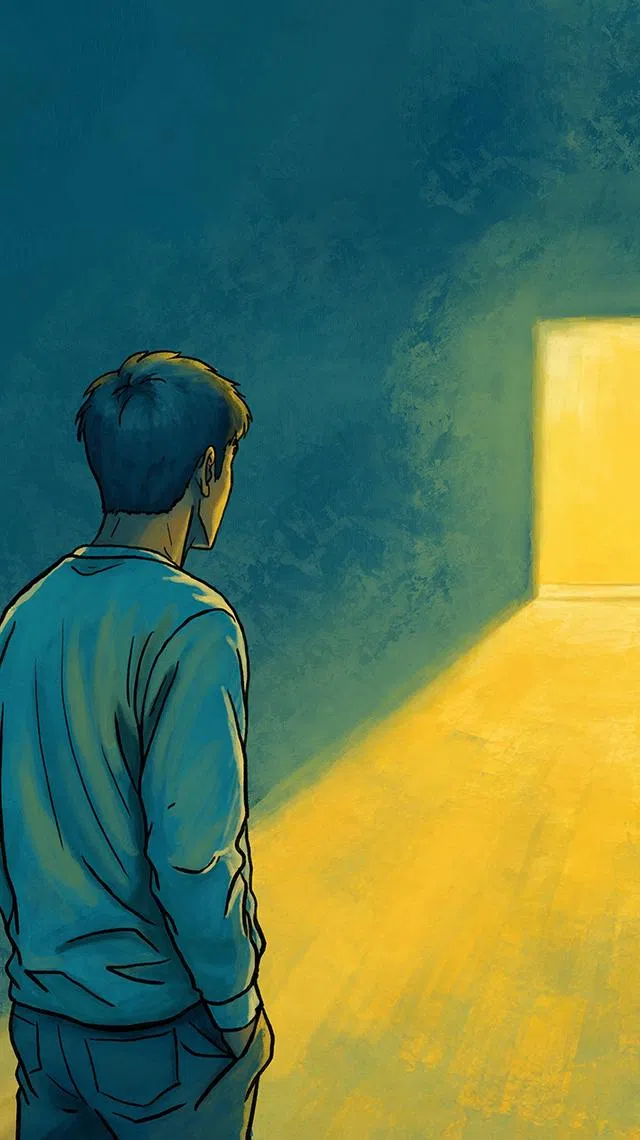
Against this backdrop, the Men’s Kinship Circle offers something deceptively simple: recognition.
The men have been married for between five and 25 years, and about 85 per cent have children.
Most only find their way to the group when their marriages reach a legal tipping point – a PPO or a divorce filing – moments that force them to confront what comes next, says Yeo.
Aside from getting tips on how to inform their extended family, they also want to be prepared for how their career may be further affected.
Participants meet not to vilify their spouses or partners but to share their experiences and know they are not alone.
Yeo says: “When they share, it’s more well received. It comes from someone who’s gone through the same situation, not someone speaking about the issue from a cognitive level.”
Beyond the group support, facilitators would have taken time to understand each man’s situation when he signs up, including whether he already has formal support in place. Where it seems helpful, or at his request, they may also point him towards counselling options or protection specialist centres.
Progress is measured in small steps. For one of them, reconciling with his son after prolonged separation was a cause for celebration within the group.
“If staying is their choice, at least we give them a space to speak about it and make it an informed choice. Because ultimately, they should also know what may happen and what they must deal with, if they choose to stay and the situation continues,” says Yeo.
“We just want them to have a place where they can be human and not have to wear a mask.”
For Bruce, the group has helped more than the counsellors he has tried. It reminds him that he has the strength to find his way but that he needs to be honest and vulnerable with himself. “Manning up” is an “antiquated idea”, he adds.
Bruce says he was once a “very capable” tutor before he retired, but his wife’s denigrating remarks chipped away at that self-esteem. Hearing others articulate similar experiences has helped him to see his situation more clearly.
He believes that all it takes sometimes is just one person to remind you of who you are. For him, it was a close friend who validated his struggles and introduced him to the Men’s Kinship Circle.
Advocates say there is also a need for society to develop a more nuanced understanding of intimate relationships that is not just about spotting abuse.
The 2021 UK study, for instance, pointed out that educating children in schools about healthy relationships and challenging gender stereotypes, while a longer-term endeavour, may ultimately better tackle the perpetration of abuse and reduce the stigma associated with seeking help.
This mirrors findings from AWARE’s 2021 study, with all male participants, on how men can advocate for gender equality. It called for a holistic approach to dismantling narrow definitions of masculinity, from education to National Service to the media and legislation.
Among their policy recommendations were dedicated reporting and support services for male victims of sexual harassment, a thorough re-examination of National Service, and a review of how gender, sex and sexuality are taught in schools.
SAFV’s Lopez adds that in their excitement to get married and start a family, many couples overlook potential hurdles, such as relationship dynamics, the stress related to taking care of a child, marital literacy, emotional availability and vulnerability.
“No one just gets it; these things need to be coached. Because these issues add up. Abuse doesn’t just happen out of the blue.”
For now, the change is incremental.
Aaron still believes he can repair his marriage but acknowledges that he and his wife may not be able to completely return to who they were. While he is in counselling, his wife does not think they need external intervention.
Their conflict styles differ greatly, too. He prefers alone time and space to mull over the issue first, while she likes to hash it out then and there. Even when he has managed to postpone an argument until their children were asleep, she often used that time to also dredge up past issues that she felt were unresolved.
“It’s like playing chess in a very narrow chessboard, trying to find a way to resolve the issue at hand,” he says.
“If the hole continues to grow, it gets to a point where the love diminishes, and we’re here only because we want to make sure that our kids grow up well.”
Bruce, too, remains in limbo.
“I think if my wife and I can both work this through, then we still have so many years to go. I’m not trying to change her; both of us need to relearn our skills. My reactions allow me to become hurt, so I need to find ways to react differently and protect myself.”
In the end, the men in the Kinship Circle are not united by a singular outcome but by a shared experience: of enduring something few expect, and fewer understand.
For 90 minutes every fortnight, they log online, speak openly and, for a while, stop pretending that everything at home is fine.
Illustrations by: Bryandt Lyn
Produced by: Grace Yeoh, Bryandt Lyn
