
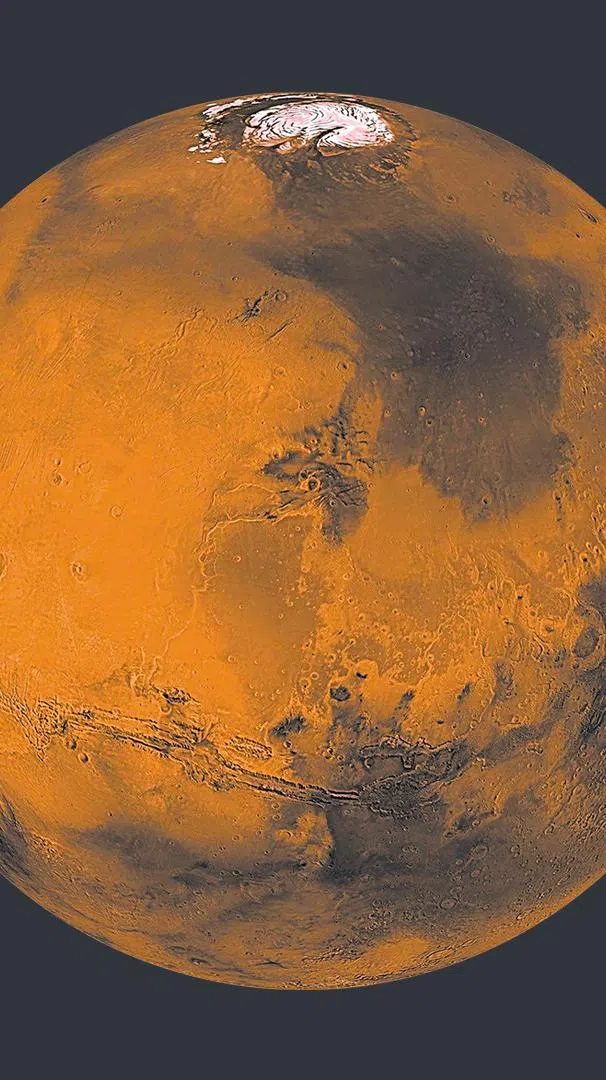
50 years ago, Viking 1 landed on Mars
GETTING TO THE RED PLANET
In December 1971, the Soviet Union’s Mars 3 probe soft landed on the planet’s surface, but controllers lost contact with it 110 seconds after touchdown while transmitting a partial image.
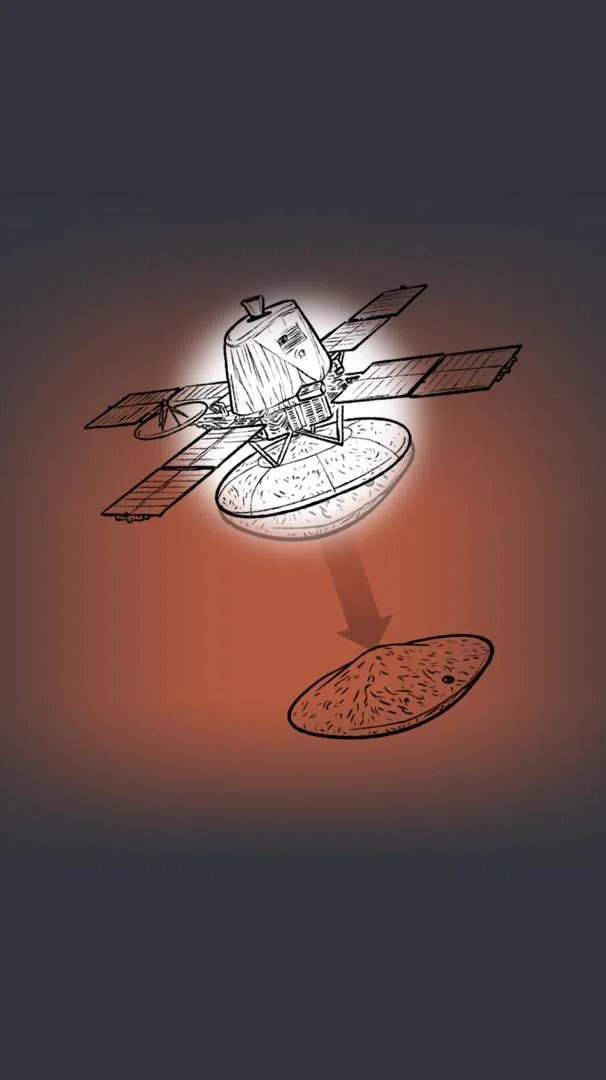
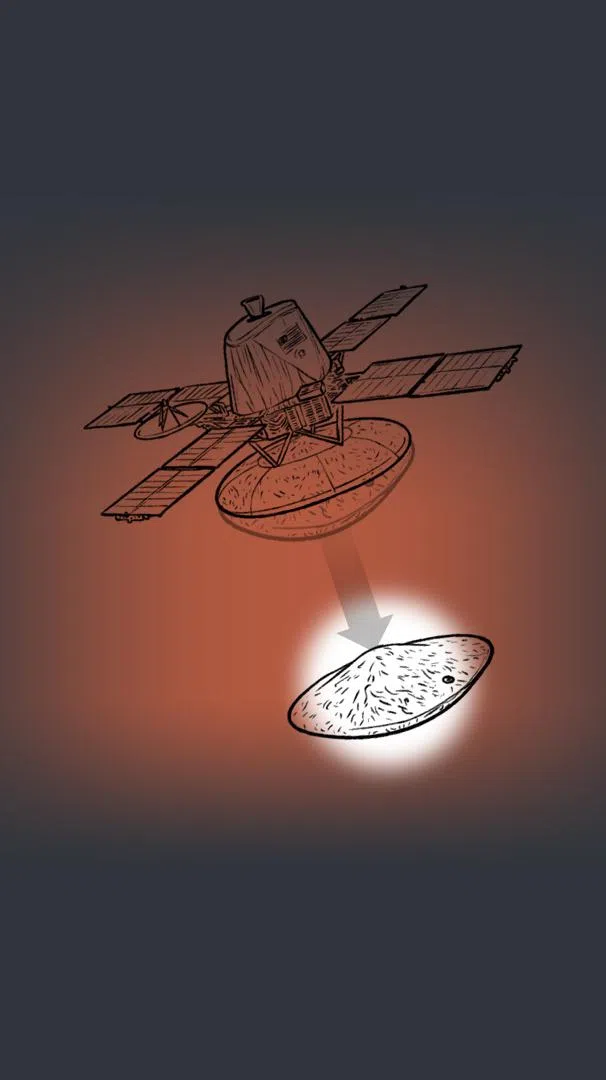
NASA launched two identical missions, Viking 1 and Viking 2, in 1975. Each consisted of an orbiter that operated from above to image the planet, and a lander that detached to conduct experiments directly on the surface.
The orbiter-lander pair were sent to conduct the first comprehensive search for extraterrestrial life and to gather detailed data about the planet.
The Viking Project is the first US mission to land a spacecraft safely on Mars and return images of the surface. The missions revolutionised humanity’s understanding of Mars and laid the groundwork for future exploration there.
ORBITERS
Transported the landers during the 10-month- plus journey.
LANDERS
Upon arrival, they separated and dived towards the planet, then slowed using a parachute and retrorockets.
TOUCHDOWN
Viking 1 landed on July 20, 1976 on the western slope of Mars’ Chryse Planitia region, while Viking 2 landed six weeks later, 6,500km away in an area called Utopia Planitia.
Just minutes after its historic landing, the Viking 1 lander’s camera took this picture pointing straight down. NASA did this to check the spacecraft’s landing pad and the immediate soil to ensure it was safe for the lander’s robotic arm to operate.
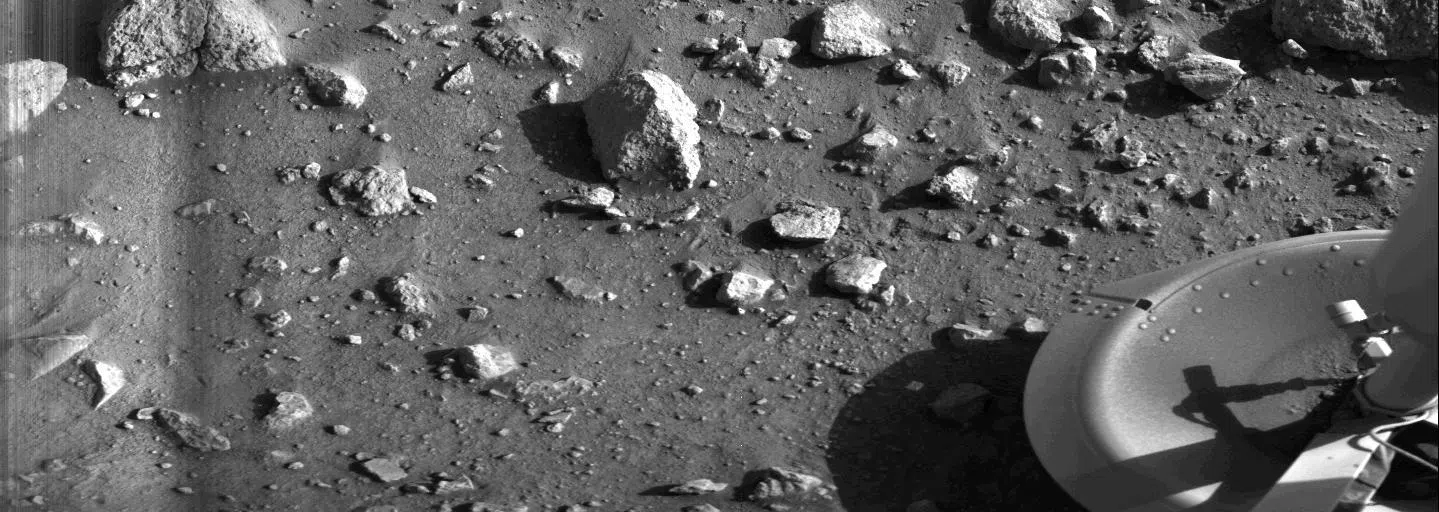
This is the first photograph ever taken on the surface of Mars. It was taken by Viking 1 minutes after landing. The centre of the image is about 1.4m from the lander’s camera.
PHOTO: NASA
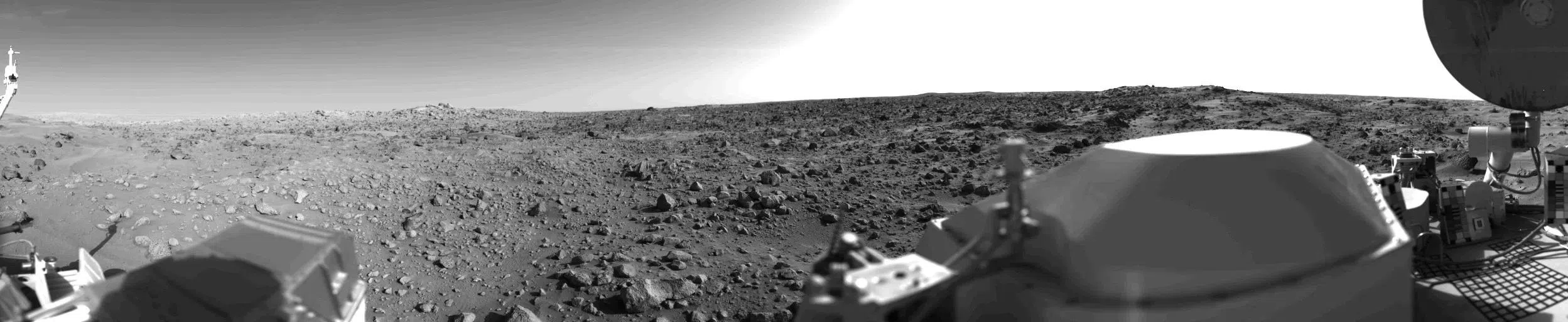
This is the first panoramic view ever returned from the surface of Mars. This view from Camera 2 on Viking 1 shows Chryse Planitia on July 20, 1976, shortly after Viking landed.
PHOTO: NASA
A COMPLETE PICTURE OF MARS
The results from the experiments gave us our most complete view of Mars. Volcanoes, lava plains, immense canyons, cratered areas, wind-formed features and evidence of surface water are apparent in the orbiter images.
The biology experiments produced no definitive evidence of life at either landing site.

This is the first colour picture of Mars, taken by Viking 1 a day after touchdown.
PHOTO: NASA

This Viking 1 image is one of first images of a sunset as seen from the surface of Mars. It shows the Chryse Planitia region of Mars about 15 minutes before sunset on Aug 21, 1976. The camera is pointed south-west and the Sun is at an elevation angle of 3 or 4 degrees above the horizon and about 50 degrees clockwise from the right edge of the frame.
PHOTO: NASA
Both missions lasted far beyond their planned 90-day lifetimes. The Viking 2 orbiter mission ended on July 25, 1978, while the Viking 1 orbiter lasted until Aug 7, 1980.
The Viking 2 lander operated until April 11, 1980, and the Viking 1 lander lasted two more years, ending on Nov 11, 1982.
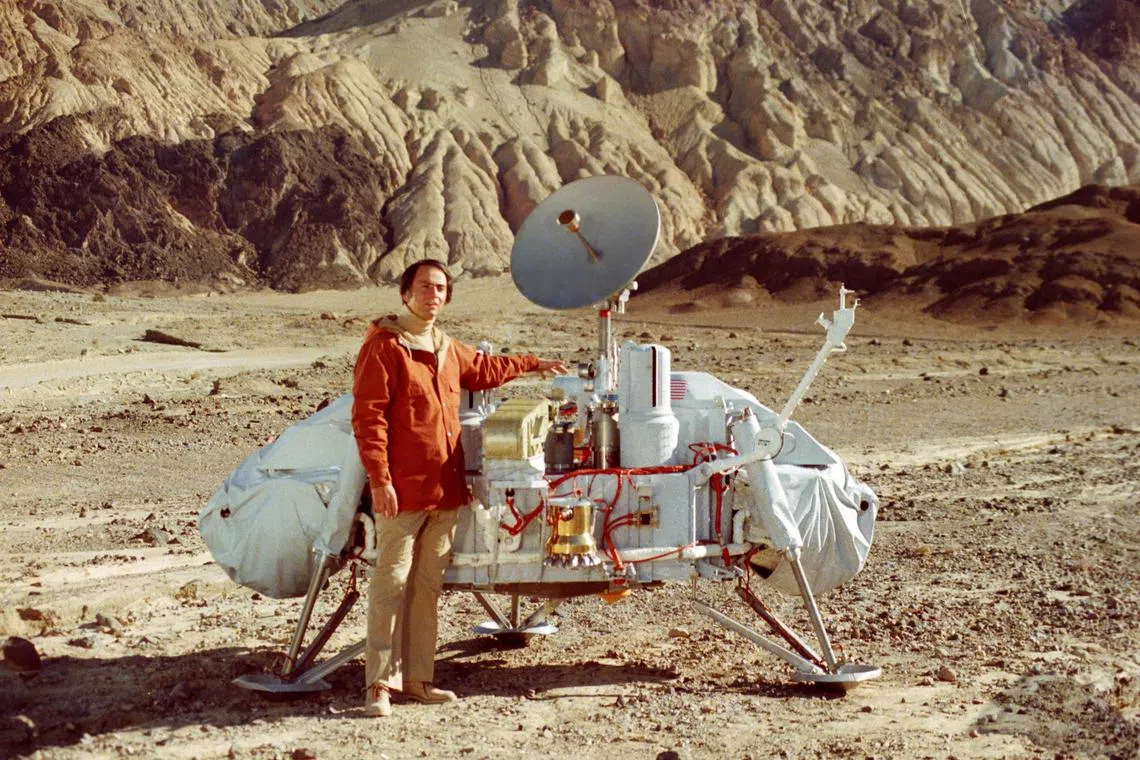
Carl Sagan, American astronomer and popular science communicator, was a visiting scientist at NASA’s Jet Propulsion Laboratory who helped design, manage and plan the Viking 1 and 2 missions to Mars. He is seen here standing next to the Viking Lander replica in Death Valley, California, in 1980.
PHOTO: THE PLANETARY SOCIETY
By the numbers:
Cost of the missions: US$1.06 billion
Viking remains NASA’s most expensive robotic planetary mission of all time
In total, the two Viking orbiters took 52,663 images of Mars
They also mapped about 97 per cent of the surface
The landers returned 4,500 photos of the two landing sites
OTHER SUCCESSFUL MARS LANDINGS
The surface of Mars is notoriously difficult to reach. There have been 16 failed landing or surface impact attempts on Mars out of some 32 total attempts since 1971. Successful uncrewed Mars landings have been achieved by only three space agencies: the Soviet Union’s, NASA and the China National Space Administration.
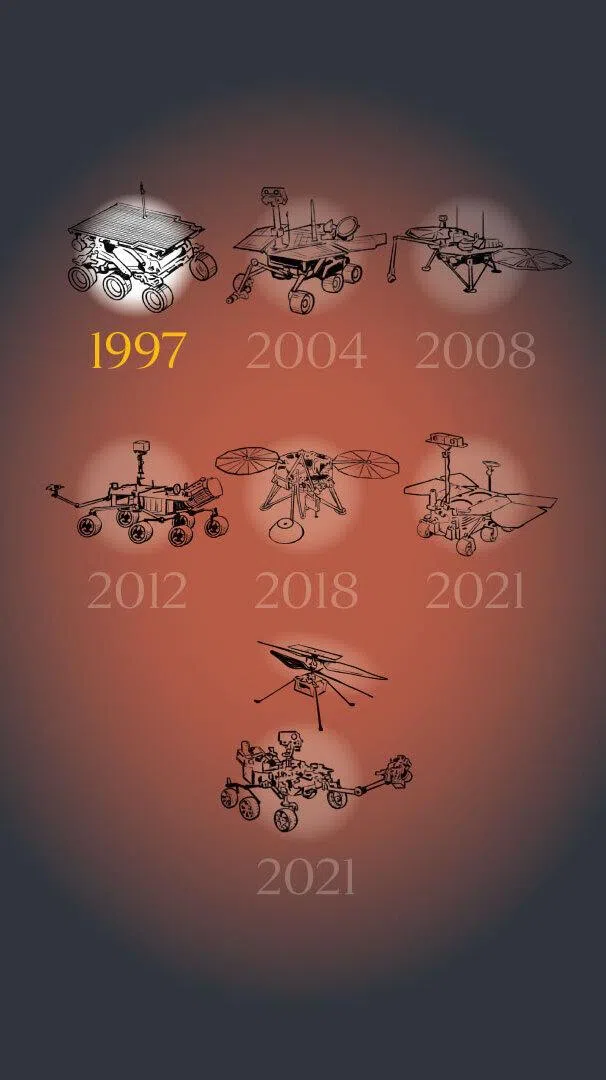
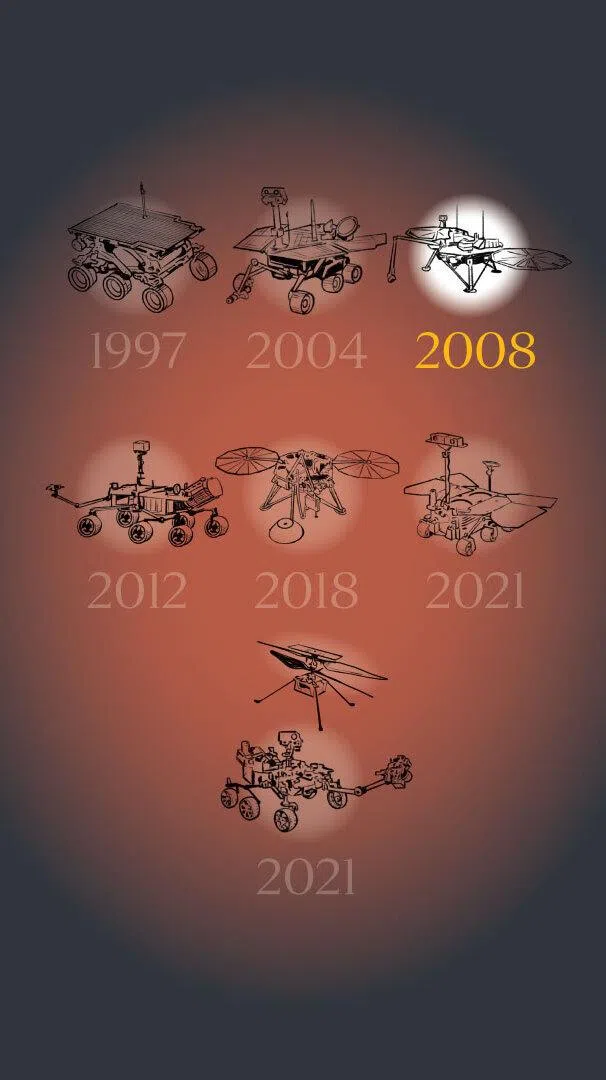
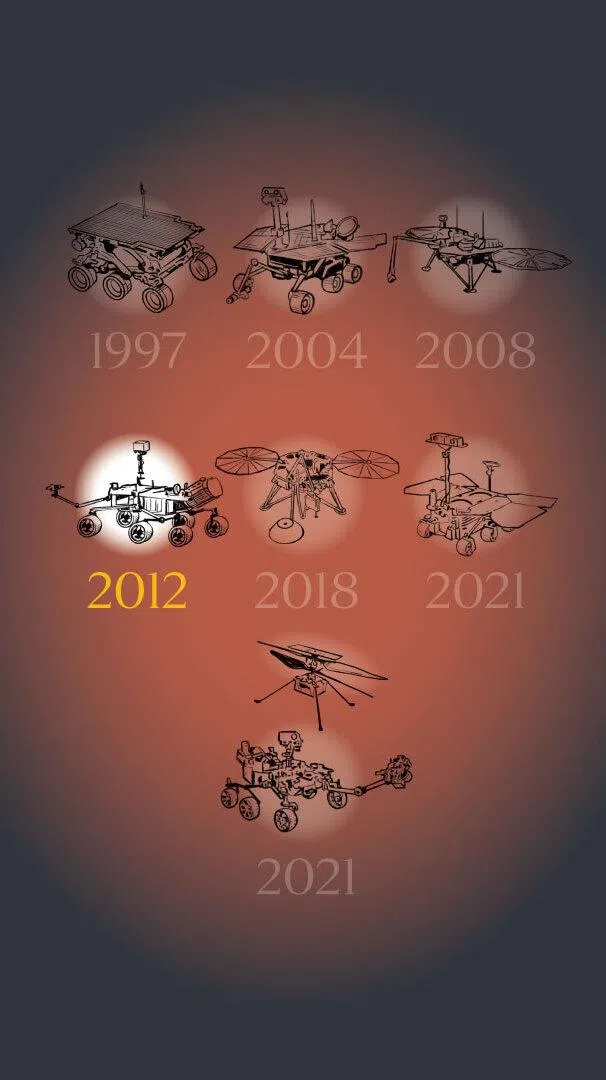
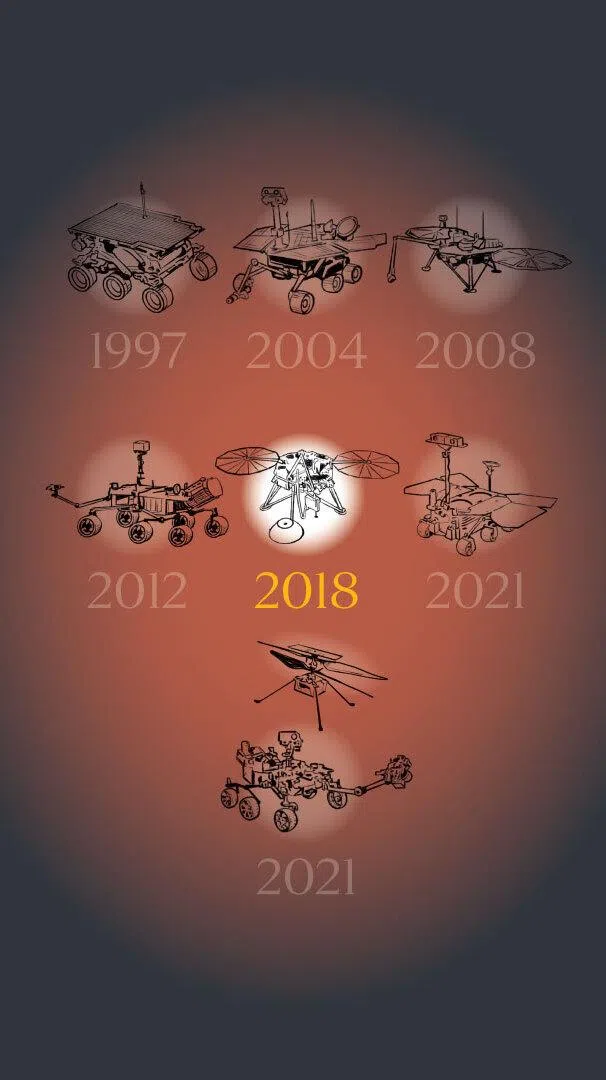
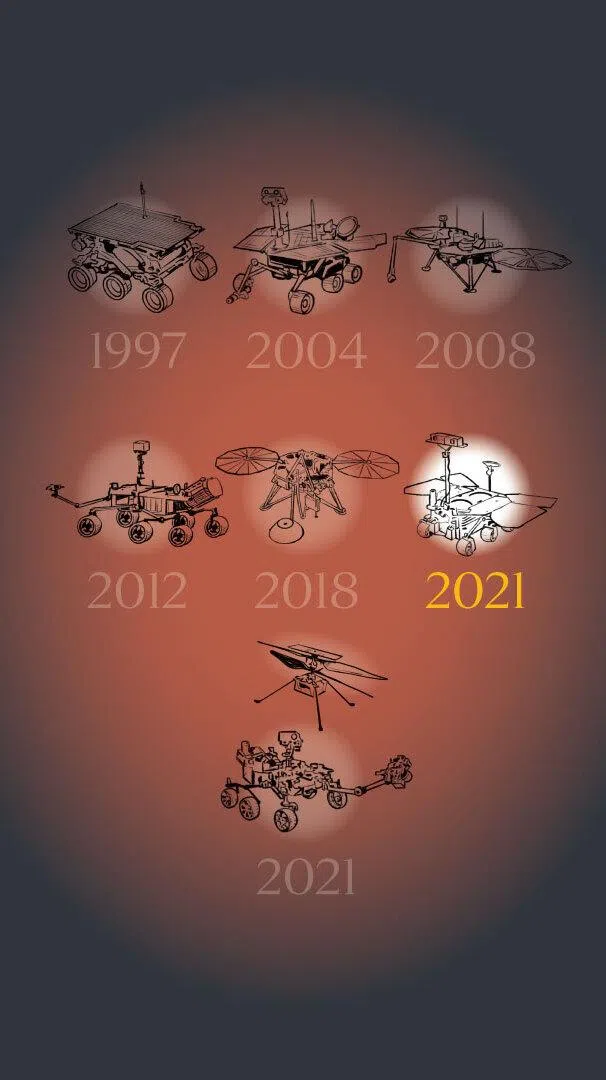
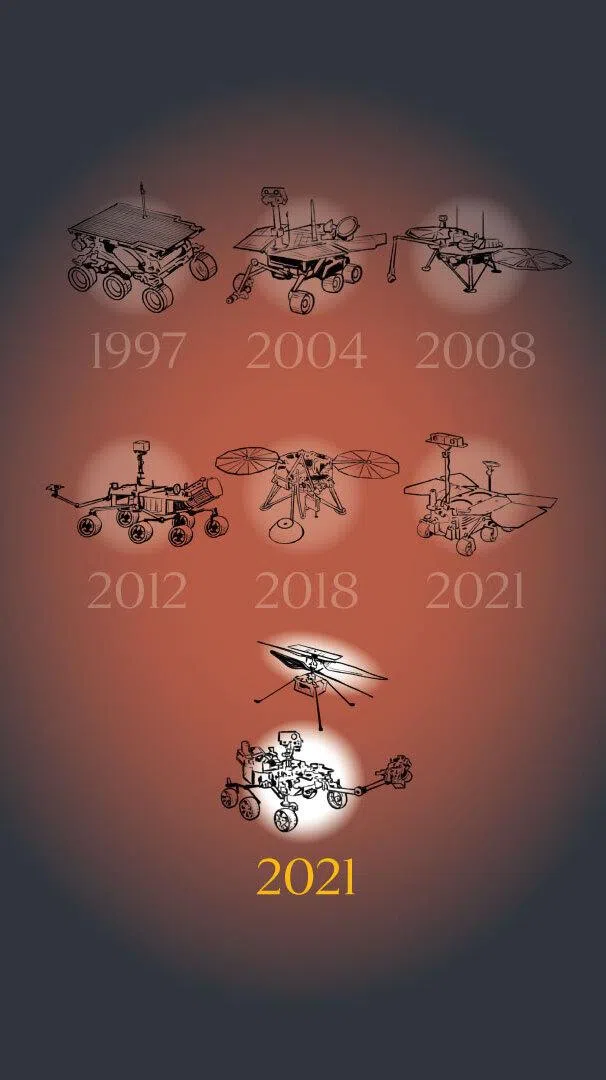
Mars Pathfinder (1997)
NASA’s Mars Pathfinder mission is famous for its airbag-cushioned landing system and for deploying Sojourner, the first wheeled rover. The mission concluded in September 1997.
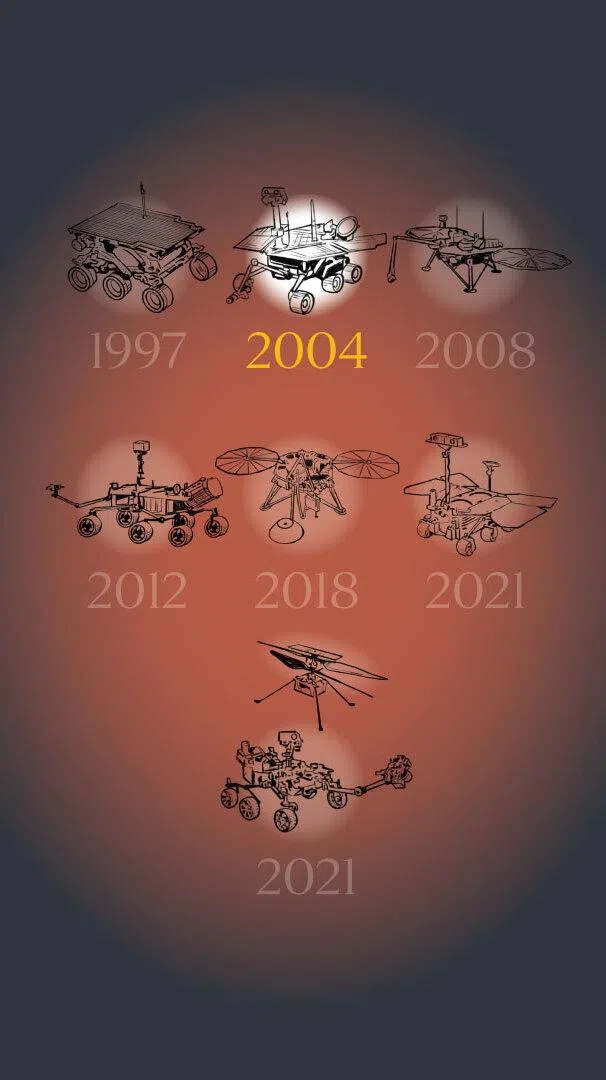
Spirit and Opportunity (2004)
NASA’s twin rovers landed in January 2004, uncovering definitive evidence that liquid water once flowed on Mars. Spirit retired in May 2011. Opportunity’s mission ended officially in February 2019.
Phoenix (2008)
NASA’s stationary lander touched down near the Martian North Pole, successfully digging trenches to discover and analyse buried water ice. The mission concluded in November 2008.
Curiosity (2012)
NASA’s car-sized rover discovered that its landing site, Gale Crater, once had a calm lake that could have supported life. The rover is still exploring Mars.
InSight (2018)
This NASA lander was the first outer space robotic explorer to study in-depth the deep interior of Mars: its crust, mantle and core. The mission concluded in December 2022.
Tianwen-1 and Zhurong (2021)
China successfully placed an orbiter, lander and the Zhurong rover on the Martian surface, making it the second nation to successfully operate a rover on Mars. The mission ended in May 2022.
Perseverance and Ingenuity (2021)
Perseverance is NASA’s most advanced rover. Ingenuity helicopter is the first powered aircraft on another planet. It flew 72 times until January 2024. Perseverance is still active.
WHAT’S NEXT
Future exploration of Mars focuses on returning Martian samples to Earth and advancing towards crewed missions. NASA’s Mars Exploration Programme hopes to understand whether Mars was, is, or can be, a habitable world. The science and technology developed through Mars Exploration missions will enable humans to survive and eventually build self-sustaining settlements there.
Sources: NASA, The Planetary Society
